
…It is now widely recognized that an unprecedented level of collaboration and innovation will be needed, involving many beyond the public sector, to advance the major, systemic transitions required in industry, technology, and the design of consumer goods and services to keep global warming below 1.5 degrees Celsius…
From a presentation by Klaus Schwab, executive director of the “World Economic Forum”, January 14, 2019.
Ever-present, portable supercomputers. Smart robots. Self-driving vehicles. Neurotechnological enhancements of the human brain. Genetic cut-and-paste. Three-dimensional printing. The futurism of the capitalist world can enchant or frighten. However, it is much closer than the average repulsion (or the average provincialism…) assumes.
However, does this whole parade of mechanization of everything have to do with the mythical “climate change”? Or, to put it the other way around: is “climate change” the advertising harbinger, the moral-ideological preemptive legitimization, the obligation for mass (social) adoption of the “brave new world” of the 4th industrial revolution? Is “climate change” simply THE problem and the 4th industrial revolution THE solutions, or perhaps the reverse is true, that is, the rapid and mass acceptance of the applications of the 4th industrial revolution requires the recognition (even the construction) of such a huge, global, dangerous problem so that the “solutions” are adopted en masse and without particular objections as Salvation?
We prefer this dialectical (and complex) relationship between “climate change” and the “4th industrial revolution” rather than the one-way, linear (and ideological) “problem-solution” relationship that is being increasingly promoted worldwide. Not only for reasons of political or/and theoretical accuracy; also for historical reasons: climate, in the unfolding of its great rhetoric of dangerous “changes”, is an abstract (and only occasionally tangible) allegory for Nature. Consequently, the relationship between “climate change” and an “industrial revolution” is already inscribed in the history of capitalism, as the complex relationships of this particular mode of production and consumption with natural resources; including in these the human species itself.
Mother Nature appears periodically as a limit to capitalist development; more dramatically portrayed as its punisher. Immediately afterwards capitalism restructures itself, not so much to become “smarter” towards “Mother Nature” but, mainly, to exploit her even more effectively and efficiently.
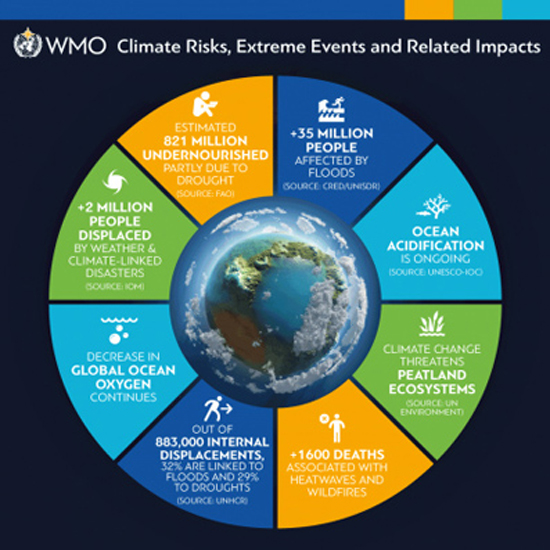
The old “Revelations”…
At the heart of the “climate change” threat (whether it is entirely anthropogenic, i.e., capitalist-induced, or partially so) lies capitalism’s energy model: moving beyond the centrality of hydrocarbons (and coal, where it is still used, although it is no longer at the center of the 20th-century energy model).1
Coal was the energy heart of the 1st industrial revolution: steam engines. Hydrocarbons, mainly oil, were the energy heart of the 2nd: internal combustion engines, and not only. Additionally plastics, chemistry (from fertilizers to…), mass electrification coming from thermal power plants (electricity partly produced by burning coal, partly from burning fuel oil, and – in the second half of the 20th century, from nuclear energy…) And not even only these. Internal combustion engines in the form of the car, the bus and the train reshaped cities, movements and transports, working times, the perception of utilizing “free time”, types of entertainment, etc.
George Caffentzis, in an article of his 40 years ago, guides us through the capitalist discontinuities around the energy/work duality:2
The litany of natural raw materials—oil, natural gas, uranium, coal, wood, water, solar light—the struggle over their limits, the enjoyment of their abundance, the skepticism about their benefits, are all included in the volume of “analyses” on the “energy crisis” we are facing. While in the 1950s and 1960s Nature was “under control”… now it seems that Mother Nature is changing her face. Instead of being the obedient, invisible, and eternally malleable material of social development, the planet appears as a whimsical and cunning witch. And this is because the energy crisis is usually identified in two problems:
a) the “limited” or “finite” quantity of fossil fuels and uranium on Earth;
b) the increasingly “surprise-filled” discovery of the interactions between the use of these fuels and the biological and social consequences they have.Although the analyses place different emphasis on these two “problems”, the “solutions” they propose address both. Thus, the “great energy debate” (or what appears as such) is a clash between supporters of “there are no limits”, who worry about the approaching abyss of zero oil-coal-natural gas-uranium and are willing to adopt any “way out”, even untested solutions, and those who say there are limits, who argue that the “balance” or “structure” of Nature is so complex and fragile that any of the solutions proposed by supporters of “there are no limits” could drive Mother Nature into a schizophrenic collapse.
Because of this opposition, one might think that we live in unique times. We do, but not in the way it is presented. On one hand, supporters of unlimited growth shudder with fear at the coming of the day “when the earth will stand still,” the day when “civilization” (sometimes with the addition “as we know it”) will collapse and an era of social anarchy—famine, rape, murder, and cannibalism—will follow.3 Opposite them stand the equally apocalyptic supporters of limits, who predict terrible floods due to CO2 and the “greenhouse effect”; or the end of biological life due to the depletion of the ozone layer, leading to a tidal wave of high-energy solar radiation that will penetrate chromosomes and dissolve proteins; or the explosion of a jungle of mutations from radiation leaks of nuclear reactors. Conclusion: either social collapse or natural collapse. “Choose,” they tell us. But why should we have to choose?
This confrontation, with its revelatory exaggerations, indicates a crucial crisis for capital and its attempts to achieve a major restructuring in the process of accumulation, in order to overcome current difficulties. Revelation is not an accident. Whenever the current model of exploitation becomes unsustainable, capital begins to hint at death in the form of the end of the world.
Midnight Oil… page 215 – 216.
Every period of capitalist development has its revelatory visions… I refer to the functional Revelations that mark each period of significant changes in capitalist development and thought. Because Revelation appeared in other periods of capitalist history when (as is happening in the last decade) class competition reached a level of intensity that challenged capital’s control…
The realization that the “Revelation” about impending disaster—if not of the planet as a whole, certainly of large parts of civilized societies—due to “climate change” (formerly known as the “greenhouse effect”) has been around for decades should not come as a shock. There is a tight relationship that makes the dramatized representation of an Approaching End necessary every time capitalism’s masters restructure it: it is the relationship between energy and work. Human labor. No energy restructuring would be needed under capitalist conditions if it were not aimed at increasing the produced work.
And because every such (technologically, mechanically) organized wave of increasing produced work (labor) causes major and serious social upheavals (not necessarily pleasant or/and desired by the masses of citizens), the “Revelation,” the Approaching End if restructuring does not occur, functions as the necessary and sufficient mega-extortion.
Does this mean that “climate change” is non-existent, a constructed idea? Not exactly. There is indisputable evidence that massive changes of this kind have occurred on planet Earth many times, both in the prehistory of our species and in its recorded history; massive changes whose causes were not anthropogenic. The fact that capitalism “self-incriminates” in a way by looking at its previous phase and promises that all wrongs will be corrected in the new one (thanks to technological development, that is, the adoption of a new kind of machines) is irrelevant, unrelated to any “climate change.” It is, rather, a political change (in the sense of techniques of power…) that invents its more or less metaphysical arguments, not so much to convince of its necessity as to impose itself without objection.
That is why the current debates about whether “climate change” is real or not, and whether it is man-made or not, are rather debates about the gender of angels… What is actually happening is first the 3rd and now the 4th industrial revolution, which is presented as Salvation. It could even appear as Salvation from Death, not the collective but the individual – if this involved “salvation” goods for sale.
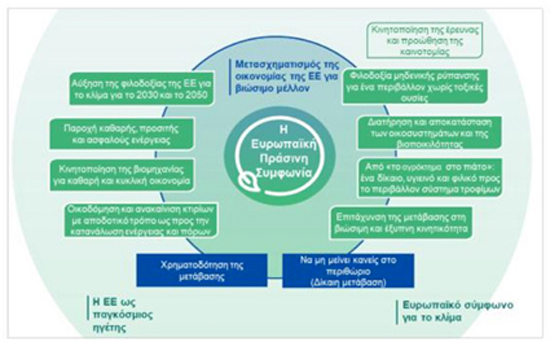
The new climate economy4
“The history of development in the 21st century will unlock unprecedented opportunities that will shape a strong, sustainable and inclusive economy. The benefits from climate action are greater than ever before in the past, while the costs of inaction continue to rise. It is time for a decisive leap towards a new climate economy”.
The specific report from which we are quoting various excerpts, 208 pages, completed with the additional help of the governments of Germany, Denmark, Norway and Sweden, is available (in English) here.
The almost exclusive centrality of energy in connecting the 4th industrial revolution and “climate change” (but not, correspondingly, work/ labor…) has not escaped anyone in charge! In the multi-page report on the “new climate economy,” energy is the first chapter:
Energy is deeply rooted in all aspects of human life: it is the way our homes, schools and hospitals work, our businesses, factories and our transport. But today 1 billion people live without access to electricity, and almost 3 billion people live without access to clean cooking. Even in developed economies, about 200 million people, over 15% of the population, suffer from energy poverty. Fossil fuels, which have been fundamental in fueling development so far and account for 80% of global primary energy consumption, have led to economies that are vulnerable to fuel price shifts and dependent on energy imports. Fossil fuels are also responsible for 75% of greenhouse gas emissions, as well as air pollution that is responsible for 4.2 million deaths every year.
Ensuring access to affordable, reliable, sustainable and modern energy for all is fundamental to our economies and human development. The challenge is not only to meet our current energy needs, but also those that will affect 10 billion people by 2050, and to achieve this from low-cost and zero-carbon energy. Given the inextricable links between energy, food and water, increasing energy demand and the energy challenge must be understood in the broader context of both wise water management (chapter 4) and sustainable use of food and land (chapter 3). Together, they will largely shape the global economy.
Transitioning to a low-carbon energy system to meet current and growing needs is not only technically feasible, but also economically and developmentally desirable. Reducing the use of fossil fuels, for example, can improve human health and quality of life, and reduce public healthcare costs. According to an analysis in this report, over 700,000 premature deaths due to air pollution could be avoided by 2030 compared to continuing as we are now, if a global climate action plan is implemented. Additionally, shifting to low-carbon energy sources—primarily through decarbonizing energy and using electricity in a broader set of economic activities, first in buildings and light urban transport (Chapter 2) and later in heavy transport and industry (Chapter 3)—would deliver about two-thirds of the carbon emission reductions required in the energy sector by 2040 to stay on the 2°C warming pathway; energy efficiency improvements could contribute the remaining one-third, according to the Energy Transition Commission.
Many technologies that can accelerate the energy transition in the coming decades are already known, proven, and beginning to be deployed at scale; however, there are still deterrent factors. Effective policies are needed both to intensify private investments in low- or zero-carbon innovations, such as emissions pricing, and to directly fund research, development, and deployment of clean energy technologies, sometimes in collaboration with the private sector. For example, the development of digitalization, smart grids, and battery technologies can play a significant role in increasing grid flexibility and its ability to smoothly adapt to demand.
… Although we still have a long way to go, the momentum away from fossil fuels is building very rapidly… The cost of solar and wind turbines fell by 86% and 67% respectively between 2009 and 2017. Even without subsidies, renewable energy is becoming increasingly competitive with energy from fossil fuels in more and more parts of the world. As a result, the development of renewables is accelerating in many regions of the world: more annual production is now added from renewable sources than from all fossil fuels combined. Ensuring supply when there is no sun or wind remains a challenge, but the storage technologies that ensure the integration of intermittent renewable supply into the grid are becoming cheaper and cheaper, as is happening with battery prices. Combined with other sources of flexibility, such as existing hydropower and better demand response ensured by the Internet of Things, along with the development of smart grid applications, all these together will make it possible to manage almost fully renewable energy systems by 2035 in many zones.
… Meanwhile, the rate of improvement in energy productivity5 has started to accelerate, rising from 1.4% per year during the period 1990 – 2005, to 1.7% over the last decade, mainly due to rapid progress in China. The reduction of energy waste in buildings, industry and transport sectors contributes to the increase in global economic productivity, as does the improvement in energy efficiency, and especially the efficient use of energy-intensive services, such as energy production, transport/refrigeration and products such as steel.
…
“Smart” devices, “smart” homes, “smart” cities, internet of things, big data, new materials: here is a good part of the vanguard not only of the 4th industrial revolution but also of dealing with “climate change”.
In 2015, the Alliance of CEOs Leading on Climate Change was created.6 On December 12, 2018, 51 executives from corresponding companies (chemical, construction, energy, banking, transportation, etc.) participated in the “alliance” – according to themselves – who have operations in 20 sectors of capitalism, in more than 150 countries, with revenues of over 1.3 trillion dollars in 2017.
In a report published in January 2018, they present the successes of restructuring their production, with examples; as well as the prospects of responsible capitalism for the salvation of the planet.7 Indicatively:
… Many companies are limiting their emissions. This action is significant, but it is not sufficient on its own to create a low-carbon economy. The latter requires changes not only at the level of the individual company, but throughout the entire economy. The greatest potential for this transformation lies in 5 trends:
- Reinventing business: companies must change their mindset and ambitions to reinvent what they are and what they offer. Only through fundamental reassessment of the nature of businesses can we move towards a low-carbon future.
- Bridging sectors: businesses from different industries must meet to develop low-carbon products, production processes and technologies.
- Creating sustainable value chains: businesses must collaborate with governments and civil society organizations to develop new approaches to address challenges in adding value to production and consumption sequences.
- Data collection and connectivity: research on how the technologies and data aggregation of the 4th industrial revolution can be applied to manage raw materials in a more sustainable way.
- Changes in funding: finding new ways for private investments in the low-carbon economy.
The members of the alliance work on all these areas, throughout the world, to achieve the transformation that the planet requires.
…Businesses that are leaders in their sectors must continuously renew the direction taken by the markets they have created, as well as seek opportunities in new products and services. Addressing climate change has created a wealth of opportunities and new markets. Many of these challenge existing businesses to continue finding new ways of thinking. New products, services and systems press for changes. Businesses that do not pay attention to shifts in the economy and emerging opportunities for growth will tend to disappear in the next decade.
This “get on board or else you’ll disappear,” from boss to boss and CEO to CEO, could indeed indicate a business/capitalist Armageddon for the indifferent and the apathetic! The pioneering allies continue, with some examples:
… ING Group [major Dutch insurance/financial multinational] announced that from 2025 it will not provide loans to clients of its financial arm with more than 5% of the value of carbon usage in their energy mix. It will of course continue financing their energy projects that are purely coal-based…. ING Group also supports projects and clients that fight climate change. In November 2017, it financed with over 2.9 billion euros renewable energy projects, and provided 4 billion euros in direct loans to such ventures. This represented 60% of the group’s infrastructure financing.
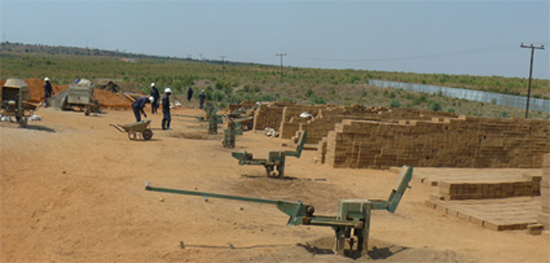
…Cement production is responsible for 5% of global carbon dioxide emissions… In 2016, LafargeHolcim [a large French multinational cement company] created a joint venture named 14 Trees with the British development finance institution CDC Group. It centers on DURABRIC, a low-carbon building material. As a result of compressing a specific type of soil, sand, cement, and water, it emits 1/10 of the CO2 gases compared to common bricks, and is 20% cheaper per square meter of wall. Moreover, since it does not require firing, it saves the equivalent of the metabolism of up to 14 trees per household during its production. DURABRIC is already being used in Malawi, Rwanda, Tanzania, and Zambia. Through this joint scheme with CDC Group, LafargeHolcim aims to increase production in sub-Saharan Africa.8
…
More than half of the global population lives in cities (by 2050 this could reach 66%) and they produce 80% of global GDP. At the same time, they consume 75% of the planet’s natural resources and produce more than 70% of carbon dioxide emissions. New ways to reduce this impact are emerging, including smart grids, electric transportation, and low-carbon homes.
The Indian government announced the Smart Cities Mission in 2016, focusing on sustainable, inclusive development for a better quality of life… If electric bicycles replace all 250,000 petroleum-powered tricycles currently in use in India, this would cut more than 2 million tons of emissions per day….
…
People inside buildings receive less than 40% of the sunlight they could enjoy, leading to significant costs in terms of both energy and human health. BASF has developed a system that collects 95% of daylight throughout the day, using energy-free technology, and channels it into buildings without the use of windows. The system can be used to bring daylight into the interiors of offices and residential buildings, factories, schools, hospitals, as well as ships and airplanes. Beyond energy savings, the use of natural light has positive effects on productivity, quality of life, and recovery from illnesses.
At the end of last year, an ambitious plan was presented for a European capitalism that by 2050 will have eliminated “net greenhouse gas emissions” – proving that indeed the “salvation” enterprises will have alongside them the “salvation” states and their budgets.
The European “green [new] deal” which initially provides for public and private investments of 1 trillion euros is a multi-target capitalist restructuring plan. “Climate protection” is, of course, the banner. However, the substantive elements are:
a) The convergence (and a developmental leap) of European digital technologies and applications, with the first (though by no means unique) step being the creation of the European Open Science Cloud (EOSC) as a platform for exchanges and syntheses between researchers, universities and businesses;
b) The increase in productivity of both labor and capital, within the 4th industrial revolution, mainly against Chinese competition;
c) The exercise of strong “climate” trade policy against competitors of European companies, by increasing tariffs on imports from states / capitalisms that do not advance as quickly towards “climate neutrality” – let’s say the USA. Here a new key concept is “carbon leakage”, which means that if other capitalisms continue to produce carbon dioxide, this will inevitably affect European efforts (the “quality of life” in Europe…), therefore they must be pushed back…
Some (who have in mind the role played by the automobile and the automotive industry in the 2nd industrial revolution) consider that at the core of the European “green new deal” lies a mobility revolution. This presupposes the generalization of the use of “artificial intelligence”, which in turn requires the generalization of 5G communications. Bela Galgoczi9, focusing initially on the field of transport, noted in early December 2019:
The acceleration of the EU’s climate ambitions is, without doubt, a priority. But we must pay attention to what it means to reduce greenhouse gas emissions over the next 30 years at four times the rate that the EU achieved in the previous 30 years, from 1990 to 2020. Such a goal requires a fundamental revision of the linear, extractive, and fossil fuel-based development model of the past, involving the restructuring of the entire economy. This will lead to major changes and adjustments that will affect jobs, lifestyles, working conditions, job qualifications, and employment prospects.
…
A “mobility revolution” is underway, which, together with extensive digitalization and vehicle electrification, will boost the development of new business models and service sectors based on connectivity and autonomy features. Such changes are genuinely revolutionary insofar as they have the potential to upgrade vehicle usage and ownership models, along with the traditional business models of the respective companies.
The digitalization along the automotive industry’s value chain promises to push the physical limits of flexible production even further, with significant consequences for work environments. Smart production systems create an interface between production machines and workers through an upgraded communication network. Alongside the new automation opportunities they open up, these systems will contribute to establishing comprehensive control over the production process…
Obviously, this is not merely a “mobility revolution,” although 5G communications do primarily concern mobility to begin with. There will certainly also be a corresponding “healthcare revolution,” an “entertainment revolution,” a “food revolution,” and who knows what else…
The Croatian Prime Minister Andrej Plenkovic was (surely not illogical..) very specific and straightforward in early January 2020:
…
We believe that the fact that Ursula von der Leyen’s commission announced the “green deal” so quickly in relation to the duration of the commission, that it didn’t take a hundred days but adopted it within 10 days [note: meaning ten days from the assumption of duties of the new European commission], gives an opportunity for the development of our economy. Which means that we must start in those areas of the economy and in those industries that will give us a good boost to synchronize with the challenges of the 4th industrial revolution…

The energy chain is not a “knight on a white horse”
The shift in the energy model of the capitalist world, encoded as “let’s address climate change before it destroys the planet,” that is, “let’s drastically reduce carbon dioxide emissions from the use of fossil fuels and raw materials,” should more accurately be called generalized electrification. Wherever anyone can imagine replacing internal combustion technology with the use of electricity, one can marvel at a decisive step against the Armageddon of the previous energy model. Given that the 4th (as well as the 3rd that preceded it) industrial revolution promises electric miracles, it is not difficult to understand the convergence of these two: the 4th capitalist mechanical revolution and climate care from the perspective of atmospheric temperature.
Of course, the question remains as to how this electricity will be generated, the demand for which will inevitably increase, possibly even exponentially, when, for example, transportation moves toward full electrification. There, the answer emerges as a strategy: renewable energy sources. That is: photovoltaics, wind turbines, hydroelectric power. (At another level: nuclear energy. In the future, if corporate interests allow it; cold fusion. We will come to these shortly).
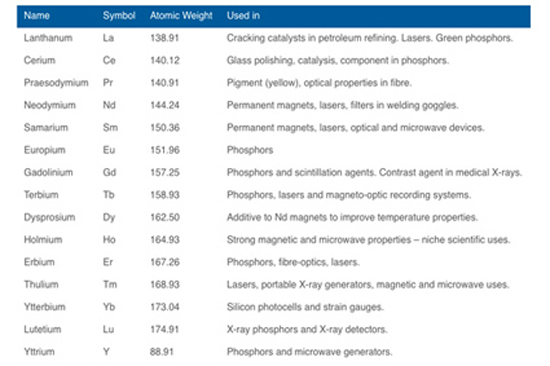
There are individual issues regarding the environmental “innocence” of each of these forms (photovoltaic parks, arrays of wind generators, hydroelectric dams), which are interesting but will not be examined here. What we consider important is that the entirety of the wonders of the 4th industrial revolution is based on a range of materials (metals) with exotic names which, collectively, are called rare earths.
The acquisition, for use, of each of the materials belonging to the “rare earths” and overall the extraction and processing of them is a relatively new kind of “classical” industry, whose characteristics are rarely (if ever) taken into account both in technological marvels and in the philology regarding climate and the environment. It seems as if someone is commenting on the “ecological footprint” of oil, but removing the oil wells, tankers, refineries and fuel trucks.
…
It is true that certain rare earth deposits contain significant concentrations of thorium (Th) and other radioactive elements, the environmental management of which has special licensing requirements (at least in North America and the E.U.) while at the same time being particularly expensive… It is also true that the subsequent separation and recovery of rare earth metals (enrichment, metallurgy) involves the use of chemical substances that are potentially gaseous or liquid pollutants, in the event that proper environmental protocols are not meticulously followed. And here we must initially distinguish the use of a rare earth metal that may be beneficial to the environment (e.g., the use of lanthanum in hybrid electric vehicles, the use of neodymium in renewable energy sources, etc.) from the production technology thereof, which, on the contrary and under certain conditions, can be particularly hazardous to the environment!For example, the mineral monazite 10… is often radioactive due to its thorium content. This can cause environmental problems during mining. The Bayan-Obo, the world’s largest rare earth deposit, located in Inner Mongolia, China (it contains more than 40 million tons of rare earth minerals, and after more than 40 years of mining, only 35% has been extracted) contains monazite-bastnasite and light earths of cerium, yttrium and lanthanum. However, it also contains thorium, which is detected in the waste from the operation, creating pollution hotspots in the soil and waters of the wider Baotou region.
Petros Tzefiris, head (at the time) of the Directorate of Political Mineral Raw Materials, the five truths about rare earths, 24/10/2014, capital.gr.
Larger issues with thorium and uranium exist in some existing or developing rare earth mining projects outside China, such as those in Malaysia and Australia (at Mount Weld), in the USA (at Mountain Pass in California), as well as in Greenland.
Specifically in Malaysia, significant deposits with xenotime as the main mineral, with high uranium (2%) and thorium (0.7%) content, were abandoned in the past due to reactions…11
None of the rare earth oxides are found anywhere “alone,” in pure form. Practically, various such oxides are “mixed” with each other, and furthermore, they are “mixed” with other materials considered useless. From extraction to the commercialization of enriched versions of rare earths, which are subsequently utilized not only in the energy transition but also in the entirety of constructions of the 4th industrial revolution, processes intervene that belong to the most “dirty” and “energy-intensive” versions of capitalism. (The separation between them serves not only the “purity” of each material, but also the fact that they do not all have the same price in the international market…)
What lies precisely behind the energy model shift and the 4th industrial revolution is the noticeable removal of the “dirty” and even toxic links of “addressing climate change” far from the oversight of metropolitan citizens, who are the main ones alarmed by the outcomes of the previous (hydrocarbon) model. A kind of outsourcing (even pseudo “de-materialization”) of the material energy basis through which the planet’s atmospheric temperature will be kept within tolerable limits (if its increase is indeed anthropogenic/capitalist-induced and not mainly or largely due to other causes, e.g., solar flares…)
Temporary epilogue
The era of the steam engine and coal as the central energy raw material ended not because the coal mines ran out. The era of the internal combustion engine and oil/natural gas will end not because the deposits will run out. The threat of a kind of mass “thermal death” on Earth, which is symbolically and conventionally called “climate change,” appears as the cause of the energy model change. But are things really as they seem and as they are served to us?
In Cyborg no 14 (spring 2019), under the title engineering of everything: the atmosphere, we made a brief overview of the genealogy of blaming CO2 in the Earth’s atmosphere for increasing its surface temperature. Paradoxical or not, this is an idea from the mid-19th century, by the Irish natural philosopher John Tyndall. Who formulated the theory of “global warming due to carbon dioxide” in 1859, when the 1st industrial revolution was still an exception on the planet. Tyndall’s idea didn’t “catch on”, but from time to time, in the following decades, someone would revive it. We wrote:
…
At the end of the 19th century, the Swedish physical chemist Svante Arrhenius, with the same prehistoric interests as Tyndall, supported that if the amount of carbon dioxide in the atmosphere increases in the future, this might affect the climate. Retrospectively, according to Arrhenius, the end of the ice age should be attributed to carbon dioxide that had been released from volcanic eruptions.
Why, however, did Arrhenius place such emphasis, in relation to heat on the surface and lower layers of the atmosphere, on carbon dioxide and not on the much more abundant water vapors? For humble reasons: the amount of water vapor in the atmosphere changes continuously, therefore such an unstable factor could not become an object of measurement and, consequently, a scientific element… According to Arrhenius’s view, the increase in CO2 concentration would not directly but indirectly affect temperature, because it would reduce the evaporation of water – which, otherwise, remained the basic (but immeasurable) regulator of the planet’s temperature.These ideas were not accepted as real science for several decades, although occasionally various physicists brought them back into the spotlight. In the 1950s, the issue of rising temperatures remained a rather marginal topic in scientific circles; however, it was the media coverage that began to attract attention. In November 1957, the Indiana newspaper The Hammond Times reported on the position of an academic geologist/oceanographer, Roger Revelle, according to whom CO2 emissions cause a “greenhouse effect”… which could lead to drastic changes in climate… The concept of the “greenhouse” should already have been socially established, on one hand; and interest (and anxiety) regarding issues beyond the Earth’s surface should have increased (the superpowers’ space race), for the atmosphere to start becoming an object of interest and, potentially, a source of danger. The mid-20th century was a “ripe” era for this…
Ultimately, while global anthropogenic warming revolved around industrial CO2 emissions, it remained on the relatively lower shelves of scientific interests. Other more tangible issues, such as the (also industrial) origin of urban air pollution (including, of course, the rapid increase in the use of A.C.), made the air (and climate) tangible health issues—and matters of political interest.
The summer of 1988 was particularly hot in the U.S., and severe drought emerged in various regions, as the preceding winters had seen little rain. NASA climatologist James Hansen was called to testify before the U.S. Congress with scientific explanations. On June 23, 1988, Hansen declared that “… global warming has reached a point where we can say with a high degree of certainty that there is a cause-and-effect relationship between the greenhouse effect and the observed temperatures…”
The date could be considered a political birthday: the media (newspapers and television) massively broadcast the expert’s opinion, the public showed great interest, public debates ignited… From that point on, the capitalist planet began to feel as if it were covered by a massive but invisible nylon veil—of its own making.
The very long history (over 1.5 centuries!) of the idea of planetary atmospheric warming due to CO2 and its revival in the ’90s (when the 3rd industrial revolution was beginning to “spread its wings”) does not mean for us anything more and nothing less than that there is no “coincidence” in the fact that it is now being organized, under the title of climate change, as the “steam engine” (outdated analogy!) of the acceleration of capitalist restructuring… A restructuring which, regardless of any climate change, has already begun.
Was / is, however, the change of energy model necessary, the energy restructuring within the broader capitalist restructuring, which began with the 3rd industrial revolution and accelerates / concentrates with the 4th? In other words: even if the relationship between the rhetoric about “climate change” and the 4th industrial revolution is not symptomatic, is this relationship indeed organic? Our answer to both questions is “yes”.
One element of the “yes” relates to what experts have called since the 1960s oil peak. The peak, that is, of the extractive / productive capacity of deposits; however, under conditions of constantly increasing demand for energy. Depending on the method of analysis and the available data, forecasts for this peak placed it between 2020 and 2040.
New deposits are certainly being discovered; mainly natural gas. But to the extent that energy demand on the capitalist planet was increasing faster than the discovery of new exploitable deposits; and to the extent that energy raw materials remained hydrocarbons and nuclear energy, the prices of the former would increase significantly; causing serious malfunctions in the entire capitalist accumulation / exploitation.
Although the theory of the impending “peak” in the availability of hydrocarbons has been disputed from time to time by scientists of similar stature to those who supported it, the pollution of internal combustion engines and the reduced energy efficiency of internal combustion were not disputed by anyone. These, combined with ecological protests (especially regarding air quality in ever-expanding cities) and the geopolitics of hydrocarbons (the increased weight of Middle Eastern regimes in oil supply) transformed the energy paradigm of the second industrial revolution into a problem for capitalist development; a problem of the kind that can become a first-rate opportunity for the bold and the “pioneers.” This regardless of whether carbon dioxide is responsible (and to what extent) for “global warming”….
The second element of the “yes” concerns the characteristics of the 3rd and, even more so, the 4th industrial revolution. Generalized mechanical mediation, the mechanization of everything, requires even more energy – electrical energy. And/or different uses of it, with higher demands for energy efficiency and stability.
For example, various “experts” who simultaneously worship the 4th industrial revolution and addressing “climate change” consistently comment on how working from home (via 5G communications, the cloud, robot remote control, augmented reality, etc.) will significantly reduce travel to and from workplaces, contributing (beyond electrification) to reducing atmospheric warming… The same could be said about virtual shopping or virtual travel (although we are not aware of specific studies that estimate the results with numbers).
Therefore, it is not the “increase in atmospheric temperature” that is the cause and the change in the energy model that is the result. The cause is the mechanization of everything, as an expansion of the possibilities of capitalist exploitation. And “climate change,” however it may be defined, measured, proven, or disputed, is the ideological-moral packaging and legitimization of the acceleration of this mechanization of everything. A kind of mass-imposed push toward the technological/capitalist leap.
If things were different, the ideas of John Tyndall and Svante Arrhenius would not have remained on the shelf for so many decades. They would have been remembered again and again as the unresolved problem of survival on the planet since the early 20th century…
Ziggy Stardust

- More on cyborg 16, the ideological management of climate change. ↩︎
- The Work / Energy crisis and the Apocalypse, November 1980, from the collective volume Midnight Oil, work, energy, war, 1973 – 1992, of the American collective Midnight Notes. ↩︎
- The first Australian-produced Mad Max thriller was released in cinemas worldwide in 1979, and was a huge success. It was followed by 3 sequels, Mad Max 2 (1981), Beyond Thunderdome (1985) and Fury Road (2015). ↩︎
- New Climate Economy: this is a project of the Global Commission on the Economy and Climate, established in 2013 by the governments of Colombia, Ethiopia, Indonesia, Norway, South Korea, Sweden, and the United Kingdom. Another intergovernmental think tank, composed of 28 former heads of state and finance ministers, various associations and institutes, and prominent names in the fields of economics, business, and finance, with the purpose of exploiting “climate change” for the capitalist transition. ↩︎
- Energy productivity is measured as a percentage of GDP (of each state) per energy equivalent to that produced by one kilogram of oil. In the EU member states, there are large variations in this indicator, as well as interesting differences in the trend of its increase (or lack thereof). Indicatively, in 2018, the most “energy productive” capitalism in the EU was that of Ireland (18,800 euros per kilogram of oil equivalent), followed by Denmark (14,682), Italy (10,122), and Germany (9,404). In terms of improvement of this indicator between 2008 and 2018, the worst performing were Malta (from 3,460 to 3,447), Iceland (from 2,002 to 2,082), and Greece (from 7,267 to 7,387). ↩︎
- Alliance of CEO Climate Leaders. ↩︎
- Two Degrees of Transformation: Businesses are coming together to lead on climate change. Will you join them? Available here.
The young Swedish Greta Thunberg, who first appeared in August 2018, was very late… ↩︎ - From the construction materials of this “eco-brick”, what turns out to be important is the type of cement. Lafarge is a cement industry, not a brick industry; consequently – for – the – sake – of – addressing – climate – change, it extends its business cycle to a new field…. In the end, what it sells as “ecology” are the well-known cement blocks in our parts, which are made pressed (with mortar that necessarily contains cement, along with various earthen materials, even of volcanic origin…) and dried in the sun. They do not require, that is, firing. (Cement pipes are constructed similarly).
In this way, Lafarge will also increase its sales in cement – which requires firing!… How much this increase will be “climate-friendly” will not, of course, be stated by the pioneering company… ↩︎ - Researcher at the European Trade Union Institute (ETUI). ↩︎
- Mineral phosphoric oxide of cerium, lanthanum, praseodymium, neodymium, yttrium and thorium. ↩︎
- What the specialist aptly calls “reactions” was the significant increase in various forms of cancer among the residents of cities and towns in a large area around the rare earths mine in Bukit Merah, in central Perak of Malaysia. The majority of the mine’s shares were held by the Japanese Mitsubishi Chemical, of the namesake group.
The struggles and lawsuits of the locals against the mine lasted a decade. The mine finally closed in 1992. Meanwhile, radiation measurements near its landfill showed radiation levels 90 to 800 times higher than the highest (international) permitted limits. Mitsubishi paid the staggering amount of 164,000 dollars in compensation for the schools in the area, while denying any responsibility for the cancers… ↩︎