
A real encounter with non-existent worlds for our Western rational civilization—and yet existent, if you accept the effort to discover them. Genuine experiences of contact with things behind the apparent, in our own eyes and perceptions, the surface of things. This experience is recounted by Carlos Castaneda. His wonderful initiation into the world of magic by Don Juan—an man of knowledge and a man of power. A magic that is more of a new worldview and life stance than a practice of otherworldly mystery.
The Teaching of Don Juan, The Way of the Knowledge of the Yaqui
An initiation that is by no means an evocation of supernatural images and sounds, before eyes and ears that maintain intact the filters of Western thinking. But rather an unveiling of the eyes and unblocking of the ears, an inconceivable expansion of their field of perception, to the regions where knowledge is the lived experience of the incomprehensible—where power is the substance of uninterrupted wonder. From this world, they who are “uninitiated” stand aside, willing or not. Yet, it is accessible to every will that truly desires it. Carlos Castaneda, through his books, shows both the transformations of ways of thinking and perceiving, and the techniques that make access to this other world possible—which is absolutely real, provided you accept and seek to experience its existence…
(From the presentation on the back cover of the book, in its Greek edition – first edition in English from the University of California, 1968)
stormy weather
Augmented… Parallel… Alternative… Virtual…: If the word reality acquires (and will acquire even more intensely in the 4th industrial revolution) a debatable meaning and content, its accompanying adjectives clarify nothing. They simply organize areas of the Entertainment industry based on a technical division: reality, more correctly realities, is constructible by those who give them adjectives, baptizing them, end of story!… Through the mechanization of everything and their representations, welcome to the universal political economy!
At the starting point of modern sociological thought concerning reality, stands, not unjustly, a banker-philosopher phenomenologist. The Austrian Alfred Schutz (Vienna, 1899 – New York 1959) began to wonder about human consciousness and the notion of reality in the trenches of World War I: the endless hours in the mud, the fraying of nerves, the massacres of the dead, the fatigue and hallucinations of the recruits, the chemical gases, were naturally causing existential questions in everyone about who we are and what we are doing here. From this starting point, many soldiers organized refusals, uprisings, revolutions… For Schutz, the way out of danger was philosophical/sociological inquiry.
A little later, in 1932, in the troubled and dangerous period of fascism’s rise in Europe, shortly before Schutz and his family left Vienna seeking asylum in Paris (and in 1939 in New York), he published his first book in English, The Phenomenology of the Social World. Although he did not deny the existence of one and only reality (as it could be determined scientifically), what he considered more important was how people “construct their own consciousness” of this reality. In his opinion, these individual and different consciousnesses-of-reality do not stem from scientific theory and knowledge, but from the dialectical relationship of experiences with the social and ideological environments within which people grow up and live…
As a full-time employed banking executive until the end of his life, Schutz could certainly observe the different social determinations in the notion of money and, mainly, its utilization. War and the market were the ground upon which reality became relativized…
Nearly 35 years later, in 1966, influenced by Schutz’s views, Austrian-American sociologists Peter L. Berger and Thomas Luckmann published the book The Social Construction of Reality. The book (which in 1998 was considered the fifth most important sociology book of the 20th century) argued that knowledge and human conceptions and beliefs about what reality is are shaped by the fabric of social institutions. Reality is not “in itself.” It is a social construction… The languages, meanings, and significances that shape it are social constructions… There is no objective reality in everyday life; there are (socially constructed) subjective conceptions of it.
Regardless of the degree of “truth” one would ascribe to this relativism, the shift in “center of gravity” is clear—the displacement of the scientific (sociological in this context) focus onto the question of what reality is, what truth is, what consciousness is. The 19th century was a period of glorious certainty that reality was one, scientifically discernible/analyzable, objective. And that the duty of human knowledge/experience was to strive toward understanding this one, unique, objective, and scientifically explicable reality, abandoning social prejudices and preconceptions, empirical half-truths, the deliberate or inadvertent interest-driven distortions of it…
Many decades later, in the second half of the 20th century, this arrangement had been reversed: subjective, deficient, often distorted, socially and ideologically preconditioned conceptions of reality were acknowledged as truth claims; and science should strive to study, explain, even highlight them… Even if the certainty that, ultimately, reality is one and objective had not been definitively abandoned in the ’50s and ’60s, it was displaced into the interior of the developing techno-sciences of the second capitalist revolution, as their legitimizing “secret”… It facilitated the absence of something common as a social demand—the Truth… Leaving room and acceptance not only for (social) subjectivism and relativism but even for ignorance; that which had been the bane of the Enlightenment in its heyday…
Within this intellectual, ideological and aesthetic environment, which in the 1960s raised the banners of rejection of the one and only reality (shaped by the state, the family, the wage relationship…), there emerged and was mainly popularized a culture of mythologizing altered states of consciousness; the creation or reconstruction of different realities (or different perceptions of what is “real,” “true”) through more or less chemical means.
LSD or the mescaline praised by Castaneda were not considered hallucinogens, that is, ways to distance oneself from the one, unique, and objective reality. But the opposite: means, ways, gateways into other, alternative realities; from some perspectives even more “real” than that of ordinary sensory experiences.
Timothy Leary is one of the personalities who crossed and bibliographically empowered this culture from the 1960s onwards, in the western capitalist world. Psychologist, philosopher, guru of drugs and psychedelia, in an era where the “one and only reality” had become unbearably conservative, linear, conformist, he rightfully earned the title of the most dangerous man in the world – as bestowed upon him by American president Nixon. A look at the principles of his writing/research work shows how contemporary he was with an era that was already willing to privatize what until then had seemed solidly public and common: reality.
- The Psychedelic Experience (1964)
- Instructions for Psychedelia (1965)
- Psychedelic prayers from the Tao Te Ching (1967)
- The Politics of Ecstasy (1968).
He himself writes about his journey:
… In January 1960, I accepted an invitation to come to Harvard University to work on new programs that had the general title “Behavioral Change.” I was convinced that psychological illnesses could be cured; that rigid constraints on human intellectual and emotional functioning were caused by rigid states of the mind, neural circuits that remained static, creating and maintaining artificial and problematic states of reality perception.
I believed that the nervous system was a bio-chemical-electrical network capable of receiving and creating a series of adaptable realities, if and provided that there was a chemical key to modifying consciousness, and it was used within the framework of appropriate theory.
…
To put it as simply as possible, I believed that people do not know how to use their heads; that the static, repetitive circuit known as the normal mind is itself the source of illnesses; and that the duty of the psychologist-neurologist was to discover the neuro-chemistry for changing the mind, that is, to allow the imprinting of new realities and new correlations. Our initial experiments at Harvard showed that LSD could be the suitable drug.
In the early 1960s, we tested these hypotheses with a series of controlled LSD experiments involving hundreds of individuals, under the following conditions: the aim was philosophical exploration and self-discovery; the use was supported, safe, and respectful. There was no accident or “bad trip.” The subjects of the experiments could regularly experience meta-discursive states and were encouraged to consider the personal and social consequences of these new signals.
The results of these and other experiences with psychedelic drugs led us to the conclusion that organic neuro-chemical substances could be used as tools for studying the nervous system, for releasing the brain from the limits of thought, for educating human beings in developing new neural circuits (and new thoughts).
…
From 1960 to 1963, we tested these theories with a series of objective studies on the social reintegration of released prisoners, psychedelic psychotherapy, and personality change. Our hypotheses were confirmed. We reduced re-incarceration by 90%. We achieved qualitative psychometric improvement in personality. It was a noble research effort worthy of recognition. The individuals involved in these experiments shared our enthusiasm, but the official medical community did not. We were naive: we were surprised that many medical administrations did not actually want to reduce the pathological conditions that constituted their clientele…
…

The events of the 1960s were a rebirth of action and creativity. Beyond anything else, the ’60s showed us that we can modify our consciousness. Rapid changes in behavior, more sex, and drug use brought unprecedented results in personal freedom, responsibility, and choices…
Indeed, the mainstream medical environment of that period was not ready to accept what Leary and several others (mainly anti-psychiatrists) easily spread to such a youth audience thirsty for innovation and experimentation: that chemicals are a method of expanding consciousness.1 In hindsight, one is entitled to be amazed by the then (and ever since…) easy and rather convenient belief that the chemical or any other means of short-circuiting sensory signals has something “liberating” about it. That in the 1960s (with the 3rd “cold” world war in full swing…) propaganda and, above all, propagandists would have every reason for alternative forms of brainwashing, and that experiments with LSD were conducted at a reputable university (perhaps even more than one) long before they became a commonplace element of youth culture, does not seem to have been reason enough for people like Leary to worry about the possibility of underestimating aspects of reality that one can only understand if one has no illusions.
However, the shift from the certainty of the existence of a reality to the relativity of subjective perception (preferably through various chemical aids) of what is real, had come to stay. It was a strategically significant shift; it proved to be the introduction, the antechamber of postmodernism as well as various social aspects of neoliberalism.
Timothy Leary together with Robert Anton Wilson published in 1977 a book titled Neuropolitics. They always believed that the human nervous system is the field of freedom. And even more so: that what is generally considered reality, THAT is the illusion! Wilson could not be clearer:
… Every kind of ignorance in the world stems from the fact that we have not understood that our perceptions are a gamble. We believe in what we see, and then we believe in our interpretation of it, without realizing that, practically speaking, most of the time we are making interpretations. We think we understand reality…
With a certain degree of irony, we would say that in this way, the senses (which for some critical decades from the 19th to the mid-20th century were considered a safe initial relationship with the knowledge of reality and material for thought) were declared either suspicious or limiting; opening not just paths but highways to metaphysical dogmas, even to “conspiracy theories.”
However, perhaps more than the liberation of humankind from the conventions of thinking, the pioneers of Neuropolitics were interested in their personal careers and establishment—something that today would be considered absolutely normal. In 1978–1979, Walson completed his PhD at Paidea University in California, with the title The Evolution of Neuro-Sociological Circuits: A Contribution to the Sociobiology of Consciousness. With such a title, one might contribute to the “progress of science”—but one does not become a recognized guru in Western societies…
In 1982, he revised his doctoral text, changed his writing style, and published it a year later as a book under the clearly more catchy title Prometheus Rising. It was a blend of Timothy Leary’s theories on the eightfold circuit of consciousness, self-monitoring exercises, magical theorems, sociobiology, yoga, relativity, and quantum mechanics—which for Walson was “the individual’s manual for managing the human brain.” Faithful to the potential of Neuropolitics, Walson was convinced that not only is it possible, but also necessary, to “reprogram” the human brain through neuro-linguistic programming, cybernetics, hypnosis, and other means, so that “…everyone can expand the tunnel of reality” within which they operate…
The objective truth was buried deeper and deeper, already from the 1980s, under increasingly compact layers of illusions, perceptions, arbitrary beliefs, fluid conventions about what is what… Chemistry, neurology and, subsequently, the electromechanics of what was still called “consciousness” but was evolving into its opposite, became fashionable…
Two observations are important at this point. First, the problematic issues concerning “truth”, “knowledge”, “reality” and “consciousness” as developed in the West since the 1960s and after, had nothing to do with what was formerly called wisdom. Whether it was about searching for alternative realities or seeking to expand consciousness, the goal was a youthful, vigorous (intimidated by death or decay) accumulation of experiences that would have a counterpart in the existing, capitalist world. Thus, despite all the reverent beliefs in favor of the Others (realities) or the Great (visionary consciousnesses), the subjects generally remained faithful not only to their era but also to their society.
This allowed many, when they grew tired of marginal experiments, to easily transition from the communes of the “return to nature” to the management of companies in the “new economy” of the 80s and 90s.
Secondly, drunkenness, perceptions, hallucinogens are not at all unknown to human cultures. The opposite. There is ample evidence and documents showing their usually ritualistic character—as an exception. And in any case, there is no evidence indicating that these states ever had claims to truth.2
The momentum with which a large part of protocosmic societies turned to perceptions as “sources of knowledge and truth” has nothing to do with the hallucinogenic substances themselves. On the contrary, it arose from extremely real developments:
- The great influence of Freudianism and psychoanalytic theories on sex (in general) but also on dreams as sources of revelation of the truth about the Ego (specifically);
- The emergence of an increasingly cohesive demand for non-binding individualism, which in turn was a direct result of capitalist development and the increased centrality of (private) consumption in everyday life;
- The ever-increasing trust in intermediations, which was the funnel of intensified commodity fetishism.
Consequently, the same questions (about “truth” and/or “reality”) that in other eras and cultures were subjects of reflection and systematic observation—and of life confronted with many difficulties—since the 1960s have shifted into the domain of chemical means, within the framework of programmable Self-Development. Moreover, the legendary Western rationalism, tested by the crimes of two world wars and the threats of a potential third and nuclear one, had lost all ideological luster: the quest for “truth,” whether in sensory irrationalities or in mythologized Eastern philosophies, was, from several perspectives, the reverse side of the moral decline of that intellectual endeavor which, just a few centuries earlier, had promised not only the liberation of humankind from religious obscurantism but also harmony in human relationships.
from chemistry to mechanics
These are good times for programmers. And they are even better for those programmers who deal with virtual or augmented reality.
How tech companies are trying to make augmented and virtual reality a thing, again – Vox, February 11, 2020.
In recent years, major technology companies such as Google, Facebook and Apple have been investing in virtual reality (VR) and its offspring, augmented reality (AR). Google has just released a new application titled “Live View” for its popular maps, which uses augmented reality to overlay information onto your field of vision when you look through a smartphone camera. There are already similar examples of simple uses of augmented reality, such as the IKEA “Place” application, which works through the smartphone camera and allows you to virtually place various pieces of furniture in your home, to see if they fit. Google also continues to improve the ARCore platform, so that every phone can do various things, such as measure depth.
…
When it comes to the capabilities of virtual reality in relation to those of augmented reality, it is becoming increasingly clear that AR is the one that will have the greatest social outreach. While the use of VR is limited to gamers wearing special devices, the major technology companies consider virtual reality as the gateway to a wide range of augmented reality capabilities. The idea is that AR can become more widely accepted in our daily lives…
For now (and based on what companies say), it seems that “augmented reality” is offered as additional information / awareness, while “virtual reality” is for “entertainment”. This division, however, has a common technical and ultimately political background: the colonization of the senses, the human nervous system and perception through mechanical means. This colonization / mechanization will certainly reach the reorganization of work sectors, into new categories of distance working.3 This includes war “innovatively”: virtual reality is already used as a “training environment” (without risks) and augmented reality as an “enhancement of capabilities” on the battlefield…
Augmented reality is better, says a slogan, implying that if what was historically called reality is sufficiently informed (and is perceived only as data and algorithms for processing it), then its augmentation with unlimited additional information and algorithms is “better”…
At this historical stage, the continuous reconstruction of reality 2.0 (reality 3.0, 4.0 etc.) – even if it appears as an informatic extension / informational inflation all around, above, below and within “classical reality” – surpasses what in the hype of the ’60s and ’70s was called hallucination. The technologically mediated reshaping / representation or the technologically mediated extension of the (former) real means generalized hyper-encoding: of time, space, things, people, relationships, of everything. The senses, the nervous system, thought / the mind increasingly perceive as “real”, as “existent”, as “true” not the animal processing of sensory stimuli but the representation; and the virtual construction. These are fluid, ephemeral, often momentary conditions, produced by companies (through applications); and, moreover, they can be interrupted at any time, for any reason (malfunction, malicious action or simply electrical blackout). Maintaining historical and cultural proportions, it is as if a cinema spectator were to perceive his entire life as a movie; including the “coming attractions”, the “intermissions” – and “the end”…
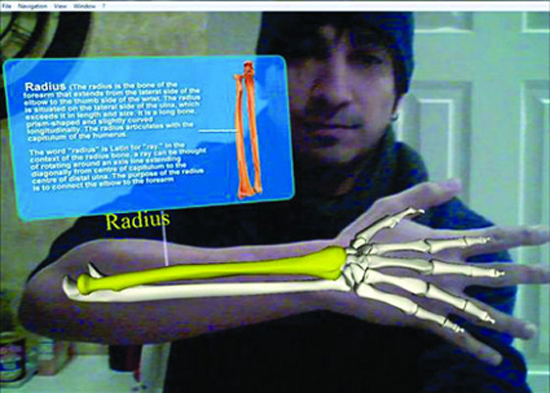
An example is capable of indicating what the above mean. It is already known that those who move either in cities or outside them with the guidance of GPS and “traffic assistance” applications practically do not know where they are moving from the perspective of “physical” space; they move guided almost like blind people. An augmented reality application would be the movement (e.g. in a city) either through a smart phone or, even better, through smart glasses,4 to be reading successive “information cards” for anything the glasses “see”; furthermore, the user to be able to “mark” (virtually) anything they want on the route, to make a virtual backtrack to the points they “marked”, or to send these “spots” to third parties.
Practically in this process the (formerly) “real” city, the “real” roads, etc. are simply a surface of action for quantities of data of various kinds. What is called (informatics) augmentation functions from an intellectual and aesthetic point of view like a kind of plant – parasite that grows fed by its host, on it, until it covers/hides it completely.
The rhetoric for AR (or even VR) is almost the same as that of the ’60s and ’70s, with a small shift. More information (more “accompanying” realities) means expansion of information and therefore knowledge they say now; where the gurus of psychedelia spoke about expansion of consciousness.5
Even the most well-intentioned among the “old timers” (there surely were such people) could not exclude the possibility that the trade of (plant or chemical) means for “expanding consciousness” would evolve into trade of consciousnesses… What is certain now (witness is the origin of the development of “new realities”) is that the 4th industrial revolution (will) mean not only trade within formal reality, but trade of realities. If this is already happening in the discrete area of gaming (each adult chooses the game/virtual reality they like), the technological developments that have triggered the 4th industrial revolution will make possible the trade of “worlds”, preferably, on demand…
The universality of digital hyperencoding is synonymous with the universality of mechanical mediation; the engineering of everything. But this latter is nothing but the attempt to universalize capitalist imperatives.
Neuropolitics in all its authoritarian grandeur!
Ziggy Stardust

- In the ’60s and ’70s, Leary had various problems with the American police, mainly due to drug legislation. ↩︎
- The priestesses of the oracle of Apollo at Delphi, who went down in history by the name “Pythia”, were said to be found in ecstasy, uttering incomprehensible phrases… But it is generally accepted that this was the ritual, theatrical element of constructing the oracles. These were crafted by the priests of the temple, who formally appeared to “translate” the incomprehensible phrases, but practically and substantially had ample time to learn, for each case, what the question would be that would be directed to the oracle, as well as the parameters of the ambiguous answer that should be given, so that it would prove True in any case. ↩︎
- The cinematic film Sleep Dealer (directed by Alex Rivera, 2008) will prove to be prophetic… ↩︎
- Although some augmented reality applications are available or will be available for smart phones, supporters of the genre say (and they have a point) that the real development of AR requires glasses no matter what. From this perspective, Google glasses were pioneers. So pioneering that they “suffered” because, as it is said now, IoT applications had not been developed yet (in 2013). ↩︎
- The highly problematic, anyway, step regarding “expanding consciousness” was soon abandoned by drug users. For at least three decades now, “smart drugs” have served a much more humble goal: the intensification of performance.
It is a reasonable (from the perspective of critical analysis) consequence that the abandoned and now socially/politically uninteresting field of consciousness is occupied effortlessly, easily, quickly, without obstacles and opposition, by the generalization of mechanical mediation… ↩︎