
Death in the twentieth century has become a taboo…
Philippe Ariès
it has replaced sex as the quintessential forbidden subject.
The image of death seems to be omnipresent in contemporary Western societies. From the literature of fantasy, heir to the Gothic literature of the 18th and 19th centuries, to the countless horror films and series now produced en masse, it leaves no corner of the collective imagination untouched. Entire genres of music (dark ambient, industrial, noise, as well as various colorful permutations of metal) have developed based on an obsessive relationship with the theme of death and the corresponding “dark” imagery—with Lustmord, S.P.K., Throbbing Gristle, and My Dying Bride, to name just a few of the more well-known acts, rendering the “Gothic” music of Joy Division akin to a child’s lullaby, suitable only for moments of relaxation. Every middle-class adolescent with “existential concerns” and fantasies of “deviant” behavior can now have their favorite paranoid killer—fictional or even real, since the mass media industry was quick to follow that of mass culture, transforming real violence and actual death into an equally profitable spectacle1.
However, this omnipotence of death is virtual; it is the image of death, as part of the spectacle, that is voraciously consumed—not death itself as experienced in everyday life: the “natural” death from old age, death due to accident, death following illness, the expected death after a full life, the unexpected and “unjust” death, the death that in any case violently or more subtly disrupts a daily routine, tears apart the fabric of social relationships, and leaves a permanent imprint on those who are “left behind,” bereft and emotionally maimed. Faced with this “trivial” death, Western chatter hits a wall. The taboo of silence is so strong that even words are banished. Death is now alluded to periphrastically, especially in public discourse. Instead of “so-and-so died,” it is often preferred to say “so-and-so left life,” “he left us,” “he lost the battle,” etc. Even mourning must be expressed in a measured way, without exaggerations or emotional outbursts—behaviors that may only be allowed when one is alone (almost as in masturbation, as Philippe Ariès aptly observes). Children must be protected from real death and from adult reactions to it, to such an extent that they often reach adulthood without ever having seen a dead person in their lives, not even at funerals.
Engaging with death therefore, so forgivable in popular culture when it recycles its image, resembles a macabre, pathological obsession when it concerns the real, lived event of a life coming to an end. Or perhaps a suspicious (at least for those with a Marxist background) tendency toward the metaphysical. However justified the Enlightenment’s suspicion toward engaging with death, especially against the proclamations of a church that loaded death with fear of the fires of hell and purgatory, behind today’s silence it is difficult to discern an enlightened stance. On the contrary, it rather suggests the existence of new fears that feed attitudes far less metaphysical.
It would be difficult for it to be otherwise. Nothing at all can be said about death itself. However, the awareness of death constitutes the source from which a vast spectrum of social attitudes toward it are nourished. A proper understanding of them can provide keys to comprehending the very life of societies, precisely because only the black hole of death could allow such large-scale collective acts of “transmission.” If there is one behavior in the animal kingdom that could be characterized as uniquely human, it would probably be the awareness of death. Neither technology and the use of tools (many species demonstrate high constructive skill, even humble ants), nor art (the ability to sing is not exclusively human), nor perhaps even language itself (communication among animals undoubtedly exists, although it is probably not symbolic, though even this is not absolutely certain) are elements found exclusively in the human species. However, caring for the dead, a reliable indicator of the development of an awareness of death, constitutes a uniquely human behavior. With a touch of exaggeration, one could argue that without an awareness of death, politics itself would be impossible. If behind Hegel’s famous analyses of the dialectic of master and slave there always lies in the background a conflict between two consciousnesses, it should be added that these consciousnesses, at the very least, must be consciousnesses of death. The submission of one of them is conceivable precisely because within it emerges the specter and possibility of its own death. A conflict that results in death, without being mediated by the awareness of death, belongs rather to the realm of the merely natural, biological, and animal, but certainly not to that of the social and political.
No matter how abstract and philosophical the above may seem, they nevertheless constitute the possession of every authority. Every authority knows, even if only instinctively, the power of death and its representations, as well as the need to manage them. Such management may not always be directly obvious, being limited to cultivating various kinds of micro-phobias at a low intensity, but when circumstances demand, it becomes not merely obvious, but blatantly and utterly totalitarian. Such a case of undisguised use of the threat of death for overtly political reasons was undoubtedly the management of the coronavirus—only the intellectually blind can still afford to believe that its handling was a matter exclusively, or even primarily, of medical concern (among whom are also many saviors of the oppressed and the working class who (all of a sudden) found themselves in harmony with the usual suspicious saviors of the nation). To understand, however, the state-organized Danse Macabre that has been parading for months across television and computer screens, one must first understand the background upon which it was staged, the socially accepted perceptions of death upon which it relied, and the fears it exploited. And for this task, a historical eye2 is required.

The “natural” death and its history
A first question that can serve as a guide for analyzing today’s perceptions of death is the following: who is considered the ideal death in Western societies today? What is that kind of death that leaves the least bitter aftertaste? It is undoubtedly what is called “natural” death, that is, the death that comes in old age, without suffering for the dying person and their circle, and after a “full” life3. However large the temptation to consider such a perception of “natural” death as absolutely “natural” itself (that is, diachronically dominant), historical reality dates its birth relatively recently (speaking in historical time scales). It began to be cultivated from the 16th century, finally prevailing as something self-evident only in the 20th. For medieval Europe, natural death was simply one type of death among others, and not necessarily the most honorable. Death in war, death from accident, and especially in the late Middle Ages, death from illness were equally, if not more, common and certainly not experienced as something “unfair” and unexpected. They were equally socially physiological as the “natural” death.
Assuming that it was simply violence and diseases that had relegated natural death to the margins, and that once these factors subsided it physiologically returned to the foreground, is a rather simplistic explanation. The absence or presence of violence and diseases, although they certainly have a significant impact on attitudes towards death, are not sufficient on their own to explain them. For a large percentage of “primitive” societies, in which violence and (infectious) diseases claim very small percentages of deaths, death, regardless of causation, is always experienced (also) as an external intervention in the life of the tribe from the “world of spirits.” Behind every death, there is always a human or anthropomorphic cause, a will that causes it. Death has nothing inherently “natural” about it.
What then was this additional factor that acted catalytically in the emergence of the concept of natural death? A crucial role seems to have been played by the re-conceptualization of the concept of time as well as the position of the individual within it, according to the broader perceptions of the then emerging urban class. On one hand, time became measurable and linear, a canvas upon which human progress unfolds through labor and technical mastery over nature. On the other hand, the individual himself ceased to be, at least for the urbanites, a mere incident within God’s cosmic designs. Through a gradual process of individuation, he acquired a self-worth and an inimitable uniqueness. Death can no longer be the end of a small cycle within a larger divine plan. It has become something unintelligible, the breaking of a linear course and the erasure of an individuality that is difficult to justify based on known religious arguments. What an urbanite can at least do is resist death “until the end” and continue to work until the last moment (there are clear Protestant echoes here). And to achieve this, he mobilizes the services of doctors, who through increasingly sophisticated interventions can keep him alive. The “natural” death is the death of the urbanite who has given everything to his life and eventually dies in his old age rather from exhaustion and in any case not from any disease or violence.
At its inception, this stance primarily concerned 19th-century urban dwellers, who were the only ones with the economic means to support it. During the 20th century, however, it became universally accepted as a quasi-right that every society was obliged to secure for its members. Although the liberation of Western societies from the most virulent infectious diseases was undoubtedly a significant achievement (which, incidentally, is primarily due to improvements in urban hygiene and nutrition, and only secondarily to medical discoveries), the logic of “natural” death, when examined in terms of its ultimate consequences, reveals a problematic relationship between these societies and medical authority that borders on dependence. If “natural” death is defined negatively (as is often the case) as death not caused by violence or disease, what exactly does this mean in practice? It refers to death that occurs when the dying body is no longer amenable to further medical interventions. If medicine has succeeded in extending life expectancy in some cases, even if only by a few years, this has been made possible because continuous medical interventions keep death in the waiting room. Thus, the dead can also be defined as follows: the dead is the one who can no longer consume medical services. If he had been ill, the all-powerful medical gaze would at least have attempted to confront the illness, and the dead would have been recorded as its victim and, naturally, as a respectable consumer of drugs and interventions. Death from “natural” causes marks that point where medical care completely ceases.

The naked life ends with a naked death
Even the bourgeois, however, despite his agonizing investments (literal or symbolic) in medicine in order to secure a few more years of life, had managed, at least until the 20th century, to maintain some fragments of autonomy in the face of death. And this autonomy concerned the moment of his death. Continuing the medieval tradition, the event of death was a transitional ceremony that usually took place in the dying person’s home (unless it was something unexpected). Especially in the Middle Ages, the dying person did not simply adopt a passive stance of waiting and resignation, but rather functioned as a hierarch, observing a specific Christian protocol himself and guiding the attending relatives and friends as to their own duties. It was a public ceremony in which relatives and neighbors could participate, and from which children were by no means excluded. The moment of death was the great scene in which the dying person played his final performance. This excessive power of the dying person was gradually alienated for the benefit of his family environment, without however the ceremony being displaced outside the home. The transition to the mass death of hospitals would only occur in the first half of the 20th century, in synchrony with the emergence of mass production, mass consumption and the paternalistic state. It is not only labor and health that fall under the direct jurisdiction of the bureaucratic state, but also death itself.
The following excerpt from M. Vovelle’s work, “Death and the West from 1300 to the present day”, is telling:
“Hospitalization, medicalization, two patterns that combine here and define a new component of the modern system in the constellation of death-taboo.
… The problem is general and extends to the entire privileged segment of the population that has experienced the benefits of the medical revolution of recent decades. At its base lies the real and newfound authority of the doctor, the surgeon, and the intensive care nurse, as well as the increased responsibility of the hospital world, with all its supporting staff—from the nurse to the cleaner—in organizing the final passage. At the elementary or everyday level, the ‘terminal’ patient, as it is now called according to American standards, is cut off from traditional appeals to the family group. Hospital death is solitary death; its solitude takes on a material symbolic form with the screen placed inside the ward, perhaps ridiculously concealing the psychic struggle underway. And yet this is increasingly replaced by the isolation room of the dying. The dedication of overworked staff, who are often subjected to exploitation in the old hospital systems of aging Europe, changes nothing in the fundamental problem of the sick person about to die: namely, that they have become a case, an object, stripped of all autonomy and of their right to know their condition. Here, as is well known, many strategies clash. American medical ethics demands that the truth be told to the patient, sometimes brutally, while most French doctors hide it from them, or at least insist on remaining the masters of a secret which they reserve the right to reveal, partially or fully, to the family and possibly to the patient. Thus, solitude is compounded by the infantilization of a dependent and passive patient, from whom the right to manage or even minimally direct their own death has been taken away.”
Not coincidentally, the hospital, medicalized, and solitary death reached its zenith with the coronavirus. The patient enters quarantine, into a complete isolation that even their closest relatives are not allowed to break. They become a mere object of medical interventions over which they not only have no say, but any reaction from them might brand them as a potential threat to public health. And if death finally ensues, it is not merely a solitude, but a profound loneliness, immersed in complete social alienation. Reversing Agamben’s concept of “bare life,” we could now also speak of the concept of “bare death”4.
The coronavirus patient constitutes the mirror image of the homo sacer. While the latter, according to Roman law, could be killed with impunity by anyone but could not be ritually sacrificed, the coronavirus patient enjoys a sort of “protection” by the institution of medicine. They are not even allowed to commit suicide. They are under the complete jurisdiction of medicine, which is the only authority entitled to decide how they will die, if they die. They have become the sacrificial offering on the Hippocratic altar. Thus, they resemble those condemned to death penalty for whom special care is taken to ensure they do not find the means to commit suicide before the penalty is carried out. Because what matters is not so much their execution and society’s relief from their presence, but the affirmation of state and judicial authority. Suicide would constitute a challenge against this authority. After bare life, bare death from coronavirus has become the final stage to which medical-political authority has advanced, unmistakably transforming into death-political authority. It should not come as a surprise. When someone accepts to live like a pet in quarantine, their dead body can do nothing but be treated as a carcass.
The State Danse Macabre
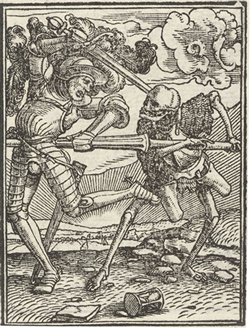
By no means, however, does this naked death from (or even just with) coronavirus remain a private matter. Here, on the contrary, a seemingly paradoxical reversal of the usual practice in Western countries is observed, where death is silenced and mourning is suppressed. Naked death is paraded in public view. As a body hermetically sealed (as if it were a deactivated biological bomb), as mass graves, as trucks carrying coffins, even as chest X-rays and case curves. A state-orchestrated revival of the Danse Macabre, yet governed by an exactly opposite logic and purpose. The medieval Grim Reaper who accompanied mortals in their final dance had nothing macabre about it, at least based on contemporary connotations of the concept. The purpose of representations of Death – a skeleton embracing its victims – was not to tickle “dark” instincts nor to provoke that kind of sweet, sticky “depression” often caused by today’s engagement with “dark” and macabre themes. Death was a rather familiar figure, not only through its depictions but also in everyday life. The Danse Macabre had a function of emphatic affirmation of life, almost like a festival, through the reminder that death was always near and made no distinctions. In some cases, it even carried subversive elements, insisting on the “democratic” nature of death and reserving ample doses of irony for the great and powerful who, before Death, behave like frightened children. Between the 16th and 18th centuries, moreover, the imagery of Death was enriched with erotic scenes, systematically presenting it as inherently connected with Love itself.
The 21st-century state Danse Macabre, this merciless carpet bombing with the spectacle of death, of course has nothing to do with any, even indirect, celebration of life and love. It comes to trample upon and exploit an entire substratum of insecurities that the state itself had systematically cultivated for decades, since the late 20th century. The permanent refrain of state proclamations from Thatcher onward always included the apotheosis of the individual, a hypertrophic Self with inexhaustible individual rights. Any grievance and the slightest discomfort, to be incorporated into public discourse, had to be necessarily expressed as a claim for individual rights through organized pressure groups. It is precisely this deeply petty-bourgeois and delusional feeling of megalomania and overvaluation of the Self that the state’s death policy comes to shatter in the most emphatic way, with its faithful manipulation mechanisms. Mass graves were common practice in the Middle Ages, since almost nobody (beyond the high-ranking) considered themselves so important within the worldly system as to believe they deserved a personal space after death. Modern mass graves as spectacles on television screens come to remind us that nobody is so significant before the state Leviathan. The emerging neo-statism found an ideal opportunity to show its teeth and ceremonially confirm the absoluteness of its power. It resembles almost a dress rehearsal for a necessary mutation of 4th industrial revolution capitalism toward a more totalitarian form (especially since China has proven such a successful model5).
The new fears need their own metaphysics
This care of the Self and the pampering of the Ego, no matter how much they hide behind the masks of medical science and hygiene, carry a heavy metaphysical burden. The worship of the body and especially of the athletic, invulnerable body that is untouched by diseases and must remain forever youthful cannot be socially sustained unless there exists, at its core, some internalized and diffuse guilt syndrome (and not merely an external compulsion). A paradigmatic mechanism for constructing and cultivating such syndromes has naturally been Christian theology, with all its terrifying imagery of the Second Coming and the Final Judgment. Today’s guilt toward the body that is allowed to decay resembles far too much the guilt toward the soul that succumbs to the temptations of sin.
Although belief in a posthumous continuation of existence is almost universal in all religions and in various versions, the connection of the individual’s posthumous fate with his moral conduct in life, as well as the perception of a single and final judgment, constitute uniquely Christian motifs. Neither the culture of ancient Egypt nor the cultures of Central America or the Indian subcontinent ever developed such perceptions. For many of these cultures, the posthumous fate is completely disconnected from the moral element and depends on the manner of death, the social position of the deceased and the successful or unsuccessful observance of a protocol with whatever technical details it may have6. Even where the moral element is present, such as in Hindu concepts of karma, the idea of a final judgment and eternal punishment is absent. The cycle of reincarnations ends with final liberation. The pattern of final judgment appears to have been first introduced into Judaism after the Babylonian exile (in the 6th century BC, a large number of Jews had been forced into exile in Babylon), when it came into contact with Zoroastrianism (which had inherently developed similar ideas) and as a reaction to what the Jews experienced as cosmic injustice that was impossible to explain logically. If redemption was not possible in this world, it had to be transferred to the next. From there, the idea of a final moral judgment appears to have passed into Christianity, where it also remained dormant for centuries, until almost the end of the Middle Ages. Until then, the Second Coming meant that those who were Christian would be almost automatically transferred to paradise, while hell awaited the unbelievers who had not accepted the Christian preaching. Only with the beginning of individualization in Western societies towards the end of the Middle Ages was the individualization of the posthumous judgment made possible.
Gradually, European societies shed the religious guise of the guilt complex they developed as a reaction to the idea of individual final judgment. With the help of Protestantism, this guilt complex was largely secularized to take the form of work ethic. We have already mentioned it: the ideal for the classical bourgeois of the 19th century was to die, if possible, at work; and for this purpose, he was willing to pay dearly for whatever medical services were available. The modern worship of the body, as a symptom of the fear of disease and ultimately of death itself, constitutes the latest metamorphosis of the Christian guilt complex. With the additional note that it does not differ much from Protestant work ethic: the body must be kept in good condition by following a quasi-ascetic lifestyle (e.g., not smoking) in order to remain productive, not to be able to enjoy (pleasure has little to do with health and in any case rather indirectly). A demand that will become increasingly urgent as the technologies of the 4th industrial revolution will require a body in continuous over-intensity7.
If something became evident in light of the coronavirus, it is also the extent of all these essentially metaphysical fears and syndromes that citizens of Western societies have developed regarding the body and death – and which have now become almost a global norm. They could not, of course, go unnoticed by state services. The fact that ideological positioning seems to be an almost indifferent factor regarding the extent to which someone can succumb to such fears and their state management, beyond the thorough bankruptcy of both reformist and “revolutionary” left, shows something else as well: that these fears have now become second nature to an overwhelmingly large percentage of modern Western societies. The ritual of the naked death, however, is the only thing that now suits societies so faithfully devoted to the worship of the body and the exorcisms of diseases.
Separatrix
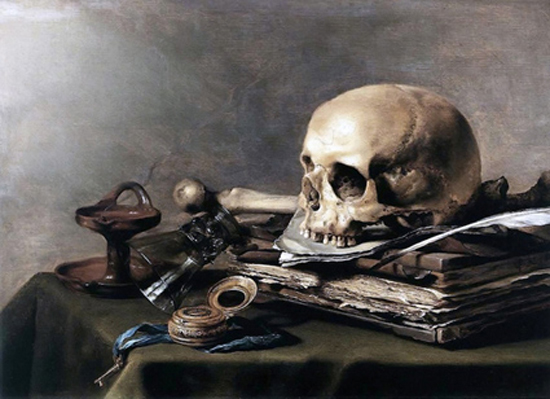
- The irony of history: S.P.K., notorious for their aggressive sound and provocatively macabre appearances, had once declared that they adopted this particular stance precisely in order to, through extreme provocation, avoid being absorbed into the commercial circuit. They found it difficult to grasp that even provocation itself can be transformed into a commodity and into yet another lifestyle. A stroll through the “dark” nightclubs of any western metropolis can convince anyone of the truth of this matter. ↩︎
- The works of Philippe Ariès are the most well-known regarding the history of Western perceptions and practices surrounding death. See his work L’homme devant la mort, published by Éditions du Seuil, translated by Th. Nikolaïdis. Less known but also significant is the work of M. Vovelle, La Mort et l’Occident depuis le Moyen Âge jusqu’à nos jours, published by Nefeli, translated by K. Kourmenos, edited by G. Lykiardopoulos. ↩︎
- See the relevant analyses on death in Ivan Illich’s book “Medical Nemesis. The Expropriation of Health.”, ed. Nisides, transl. V. Tomanas. ↩︎
- See the well-known book by Agamben, Homo Sacer, ed. Ermis, trans. P. Tsiamouras, ed. N. Katsiounis. ↩︎
- Some “radicals” in our circles saw in the Chinese state’s interventions for managing the coronavirus a confirmation of state superiority over private initiative, almost implying that this could be read as the superiority of communism over capitalism. Not only have they failed to understand the slightest thing about the evolution of capitalism in the 21st century, but moreover they are rushing headlong backwards. Foolish Lord… ↩︎
- For related studies regarding perceptions of death in various cultures, see the book “Death and Apocalyptic Visions,” published by Archetype, edited by F. Terzakis. ↩︎
- Something that is already happening, even in low-paying jobs. As paradoxical as it may seem, the 4th industrial revolution will not result in immaterial capitalism. The demands on bodies, although of a different quality compared to previous industrial revolutions, can be equally heavy. See the article in this issue of Cyborg, “The robots don’t take our jobs. They become our supervisors.” ↩︎