
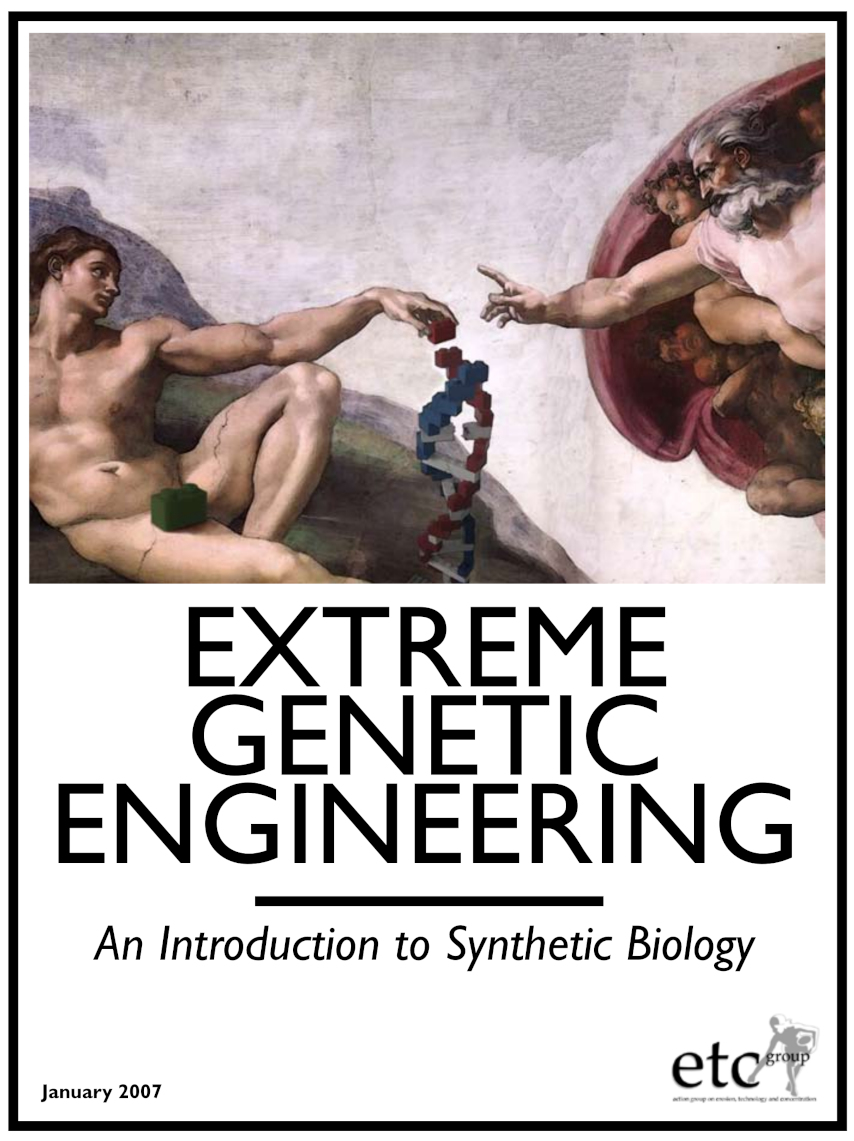
Is it biotechnology? Is it nanotechnology? Or perhaps it is information technology? The field of synthetic biology is practically all three together – an example of “converging technologies”, another one of the business / industrial strategies that began to develop exponentially from the beginning of the 21st century.
“The boundaries between technologies are truly ‘blurring’,” says Mark Bunger, a market analyst. Technologists from fields such as biotechnology and physics intersect with their counterparts from neuroscience and materials science. All of them manipulate matter at the scale of atoms and molecules, at the nanometer (nm) scale, which is one billionth of a meter: a DNA molecule is 2.5 nm, and an iron atom is 0.25 nm in diameter. The construction of DNA, for example, involves building a biological molecule that incorporates information; this is nanotechnology, biotechnology, and information technology all together.

Governments and related industries have shown great enthusiasm for technological convergence at the nano scale. They have funded it with enormous amounts. The American government, perhaps the most vocal supporter of this convergence and its strategies, baptized it NBIC, the initials of the technologies involved: nanotechnology, biotechnology, information technology and cognitive sciences. In Europe, convergence was called CTEKS, and in Canada, biosystems synthesis. Others may speak of GRAIN (genetics, robotics, artificial intelligence and nanotechnology), COMBINE (congo, meets bio, info, nanotech) or GRIN (genetics, robotics, informatics and nanotechnology). Without the mysticism of these acronyms, the “materials” of synthetic biology are bits, atoms, neurons and genes. The different techno-scientific fields are the constituent starting points of convergence:
Nanotechnologies serve the control of matter through the manipulation of atoms;
Biotechnologies serve the control of life through the manipulation of genes;
Information technologies serve the control of data through the manipulation of bits;
Neurosciences of consciousness serve the control of thought and senses through the manipulation of neurons.
Anyone who systematically examines the scientific profiles of those involved in synthetic biology will find many doctorates: in chemistry, electrical engineers, biochemical engineers, physicists, pharmacologists – and a few molecular biologists. The last thing anyone could accuse this technological/business sector of is being anti-scientific.
The cornerstone of western science as a whole and, consequently, of synthetic biology is the belief that everything can be broken down into its “smallest basic constituent elements”; and then, subsequently, be reassembled to recreate the initial state. What in the West is called Scientific Truth (with capital letters please!) is this process towards increasingly smaller in size and simpler “basic constituent elements.” What are these constituent elements of language, for example? At one time phrases; later words; later phonemes (or letters/graphemes in written language). What are the smallest constituent elements of matter? Initially molecules; later atoms; later atomic particles; then subatomic particles; and we see.
Despite the mathematical investment this theorem has regarding “resolution into elements,” it is deeply political—in the sense that it perceives “order” (the order of matter, language, bodies, or societies) by analogy to the possibilities of projecting a tangible analogy of it. Democritus supported the composition of matter from atoms (a-tomos, indivisible quantities) not because he had seen them, but because in his historically determined conceptual field, analogy and metaphor were the democratic city/state and its citizen as “the indivisible unit” of decisions.
In the development of medical sciences, such analogies are well known. The impression caused by the invention of the steam engine and the first mechanically operated tools was transformed into a view of the body. Later, the invention of electricity became the analogy for understanding what nerves are and how they work; this “electrical” theory still holds true in part…
For the most recent convergence of various technologies in synthetic biology, the analogy is the invention of computers, circuits, semiconductors. The basic idea that it is feasible to chemically construct from scratch the “minimal components of life” was born in the circles/communities of Silicon Valley programmers; although the idea of how DNA “functions” (as an “information system”) was held by those who supported that this is the “minimal basic component of life,” since the 1950s, again drawing an analogy to the early steps of cybernetics/informatics. Based on these developments, DNA, even before it was “decoded” (and certainly much more so after), was proclaimed the software of life, while cells with all their “machinery” were deemed the hardware.
The tests began shortly after. In the 1960s, an Indo-American chemist (who was later awarded the Nobel Prize) named Har Gobind Khorana1 created a protocol for constructing the “minimal building blocks of DNA,” the nucleotide bases (adenine, cytosine, guanine, and thymine, A, C, G, T) at will and in any order. In 1970, together with a good team, he managed to artificially create a sequence of 207 pairs of these bases in the lab; and in 1976, he succeeded in making a completely synthetic gene (a sequence of bases, that is) to “function somewhat” — to exist as a form of life, in other words. At that time, creating a sequence of seven base pairs required a year’s work by a biotechnologist. Thirty years later, the same work could be done mechanically in a few minutes, at a cost of 200 dollars: several parallel research efforts and applications had intervened to mechanize and accelerate this chemical process. The California-based Genentech became the world’s first commercial company for genetic material synthesis in the 1980s… (It was acquired by the pharmaceutical company Roche in 2009…)
The launch had begun. In December 2006, for example, John Mulligan, CEO of Blue Heron Biotechnology, speaking at a conference in Washington with the characteristic title Synthetic Genomics: Governance Options, could declare:
… We can make you whatever you want: complete plasmids, complete genes, gene segments… and in one or two years it is very likely that we will be able to make you a complete genome.
That year (2006), there were at least 66 commercial genetic synthesis companies, most of them in the US, followed by Western Europe, plus 2 in Russia, one in Iran, two in India, three in China, one in South Korea, one in Japan, one in Australia, and one in South Africa. Although their turnover was still only about 30 to 40 million dollars per year (a small fraction of the overall 2 billion dollars in DNA sequencing and synthesis), the sector of synthetic production of “life’s basic components” was already experiencing explosive productivity growth. In July 2006, Codon Devices announced that it had constructed and sold a DNA sequence of 35,000 base pairs. Geneticists in the field were overly optimistic. They predicted that a sequence of 1 million base pairs would be constructible by 2008, and a complete genome by the end of the decade. Drew Endy, a mechanical engineering professor at M.I.T. (we’ll encounter him again), stated:
… There is no technical limit to synthesizing plants and animals from scratch. It will happen as soon as someone appears who is willing to pay for it…
Then these could be characterized as overambitious. It wasn’t… Meanwhile, for the facilitation of orders, transactions, costings, the «unit of measurement» of synthetic «minimum components» was also created: kbp. One kbp is 1000 base pairs, a thousand «base pairs». If the unit reminds you of something else, the affinity is obvious.
Ten years later, in 2016, the 66 commercial genetic synthesis companies had become more than 350. And the 15 countries had become 40. As for their turnover in the market? It had optimistically reached 4 billion…
Life is cheap – and can be fixed quickly
… Some scientists predict that the cost of DNA synthesis will drop to 1 cent per base pair in a couple of years. This means that a good gene will cost $10. You will be able to buy the genome of a bacterium at the price of a car…
This was written in January 2005 in the well-known Wired by Oliver Morton, in an article titled The Reinvention of Life2. Because it is so old (and could cause today’s 35-year-olds the awkward thought “Wow, I was 20 years old then, my blood was boiling… And I didn’t get a clue about anything, neither then nor to this day… For the older ones? Not even worth mentioning…”) it is worth transferring a few more excerpts:
… Drew Endy, assistant professor of biological engineering, is the latest recruit to a group of MIT engineers who have gathered around a guru of computer science at the university, Tom Knight. Their goal is to create a field of engineering that will do with biological molecules what electronics do with electrons. They call it synthetic biology.
“I think this will be the most important thing I’ve done,” says Knight, whose biography already includes some of the first web interfaces, advanced screens, and workstations. “We are at the forefront of some dramatic changes.”
If the idea of hacking DNA sounds like genetic engineering, think again. Genetic engineering generally involves moving a pre-existing gene from one organism to another, an activity that Endy calls DNA woodworking. Despite the impressive and profitable results, DNA woodworking hardly proves to be creative. Timely mechanization, on the other hand, means designing what you want to create, analyzing the design to ensure it will work, and then building it from scratch. This is what synthetic biology does: it specifies every bit of DNA that goes into an organism to determine its form and function in a controlled, predictable way, much like building a microcomputer. The goal, as Endy puts it, is “to rebuild life the way we want.”
And where will the experts of this emerging science with such divine capabilities go? Within a decade, some hope to create bacteria that can mass-produce drugs whose active ingredients must now be gathered from rare plants. Others speak of constructing viruses hidden in protein shells that could be used to produce tissues with molecular circuits. In the more distant future, synthetic biologists envision creating more complex organisms, such as supercorals that would absorb carbon dioxide from the biosphere and convert it into structural components… And there’s always the opportunity to add new chromosomes to the human genome, creating a suite of human enhancement and improvement…
The least one should acknowledge is that 20 or 15 years ago, when synthetic biology was the pursuit of “bold visionaries,” their words were not sugar-coated. This current demagogic, public relations “sanctimoniousness” of presenting mRNA platforms or DNA plasmids as innocent “vaccines,” as if it were a simple matter, was not needed then. Back then, they could speak and communicate about DNA hacking… They could also perform linguistic acrobatics, considering “mutation” only as the exchange of “natural” genes from one organism to another; and not the work done toward the same goal through synthetic genes.
Meanwhile, the sharply declining price of synthesizing genetic sequences was already showing something nightmarish. Since the beginning of the 21st century, there had been explosive development in related technologies combined with an equally rapidly growing market. The year that Morton wondered “where this divine ability would go,” the Craig Venter company held the speed record for constructing synthetic monoclonal DNA by building the genome of the virus/bacteriophage phix 174, consisting of 5,386 base pairs in two weeks (and with quite a few errors…). If someone ordered the same genome from the company Epoch Biolabs, they would pay something less than $6,000, although they would have to wait a few more days for delivery. Anyone wanting something more complex, such as a synthetic copy of the smallest bacterial genome, that of Carsonella rudii (with 159,622 base pairs), would pay (then) around $125,000. And the construction of the complete human genome (3 billion base pairs) would cost around $2.5 billion—a sum relatively small for various large treasuries.
Closer to the target: RNA
In any case, the synthetic construction of DNA from scratch would be useless if it were not designed in such a way as to give correct instructions to the cell’s RNA; to make the desired protein. As Francis Crick had put it, one of the two who were recognized as the founders of the idea that DNA has a double helix arrangement: … DNA builds RNA, RNA makes proteins, and proteins make us. These are the desires of technologists / gods!
Science, in the meantime, has descended much lower, to an even “smaller” scale, seeking the “minimal basic components of life” in order to appropriate them. The “building blocks” of proteins are amino acids (20 + 2 have been recorded in genetic codes), organic compounds produced in cells under the instructions of codons (not a particularly imaginative name!), which are included in RNA as triplets of chemical bases called nucleotides. Whoever follows the (synthetic) path DNA > RNA > preselected, desired proteins, takes the longest route. If it were possible to directly “synthesize” RNA in a controlled and predictable manner, not only would one stage be saved, but also potential errors in it. Of course, this is valid if one does not intend to create a “new organism” from scratch, but simply and merely to intervene in an existing one…
The technologists of synthetic biology were quick to embrace this line of work. For example, in September 2004 (in a paper published in the journal Nature) under the title “Exogenous control of mammalian gene expression through modulation of RNA self-cleavage,” one could read the following:
Recent research on the control of specific metabolic pathways in bacteria has confirmed the existence of mechanisms located exclusively in RNA for gene expression. These mechanisms standardize translation, the completion of transcription, or the self-hydrolysis of RNA through the direct interaction of specific intracellular metabolites and RNA sequences. Here we show that a similar RNA-based gene regulation system can be effectively designed for mammalian cells… through the integration of specific sequences that cause the self-hydrolysis of RNA sites… When these sequences are properly positioned, they lead to the potential inhibition of a specific genetic expression, due to the temporary cancellation of a portion of RNA function…
You have the right not to understand everything that this paragraph says (and implies), except for the following four things. First, that our species is mammalian…. Second, that the design of specific RNA sequences is called synthetic biology and is exactly what is advertised as salvation with mRNA platforms (and DNA plasmids in relation to DNA hacking)… Third, that tampering with RNA in order to alter its function was a subject of serious research and discussions long before any covid appeared on the horizon… And fourth, that gene expression is … what you are doing at this moment: the fact that you are reading these lines!… To put it another way: life is “the expression of genes”!… For someone to get their hands on the second means that they gain control of the first.
Two years later, in May 2006, in another paper with the more approachable title “RNA synthetic biology,” one could read:
RNA molecules play an important and wide-ranging regulatory role in the cell, through their interactions with other nucleic acids, proteins and small molecules. Inspired by this natural multifunctionality, researchers have constructed RNA molecules with new biological functions. In the past two years, synthetic biology efforts have created innovative, synthetic RNA components capable of regulating gene expression in real life, mainly in bacteria and fungi; which is the basis for larger-scale programmable cellular behavior. The immediate challenges facing this emerging field include determining how computational and designed techniques can be utilized to increase the complexity of mechanized RNA systems, as well as clarifying how these systems will be used on a large scale in mammals. Additional challenges are the design of RNA molecules that will act as sensors of intracellular and environmental stimuli, as well as experiments to investigate the behaviors of biological networks and the components of mechanized cellular control systems.
There should have been some savoir vivre of “political correctness” terminology created among geneticists that imposes that if the discussed technological developments and applications cannot from the beginning “be about creating a therapy for Alzheimer’s” then no reference is made to “people” but to mammals. Generally…
Review? Opposition?
If the above text, as well as anything else related to biotechnologies, had been written just 2 years ago, it would have met with general indifference.3 Today, for special reasons (: hygiene terror campaign…) it might attract some interest; however, there would also be quite a few who would denounce it as “conspiracy theorist,” “terrorist,” or “technophobic.” As evidence, they are either unrelated, or affiliated, or professional biotechnologists, genetic specialists, who make their living, or their penthouse, and certainly their careers from such research and applications.
It wasn’t always like this! Even until the early ’90s there was knowledge, counter-information, competitive criticism, even organized actions within the ranks of anti-authoritarian and environmentally-oriented subjects. Outside Greece, even within the (establishment) left, one could find criticism of biotechnology developments with broader social appeal. In short, until about 30 or 25 years ago it wasn’t difficult to find people who were following elementary techno-scientific developments in this field and had formed a critical, even well-documented hostile opinion.
For example today (it’s as if we hear it…) some ignorant or entrenched people would say: but how can you do this? These things (with RNA or/and DNA) happen this way and that in nature too! Where is the problem? Come on!!! There is also natural radioactivity; therefore nuclear power plants and nuclear/atomic bombs are something “natural” – so what’s the issue?
The problem with the problem is that while the masters of capitalism have always promoted the idea that “it is natural,” with theorems that started from the “jungle” (where the strongest animal eats the weakest…) and led to the exploitation of labor (aren’t ants the ones that “exploit” aphids?), there has always been a sufficient number of workers (and not only) who responded appropriately. Not only with words, but also with actions.
Afterwards? Afterwards “something happened”! Many things happened. One of them (not the only one…) was the systematic academicization and institutionalization of most of the critiques and contents that had emerged from the 19th century as the competitive movements of the ’60s, ’70s, and ’80s in the 20th century. From Marxism to feminism and ecology. Forming political collective action or/and political oppositional discourse (with a movement-oriented approach, that is) on these issues ceased to be valuable; in contrast to doing a master’s or a doctoral degree. Thus, critique became virtual, toothless, a privileged appendage of the system.
It is not our job to blame anyone. There is, however, an objective fact, a specific “trend,” that moved simultaneously from above (from the institutions) downward and from below (from individuals) upward: the “head” (intellectual work, the work of criticism, analogous to state and capitalist reality) was severed from the “body” (social beliefs, knowledge, relationships, the life of the working class) – much to the delight of bosses of all kinds. And their experts too. Because they were relieved of having to account for what they research, what methods they employ, “where they’re going.”
In place of social knowledge and cinematic criticism, academic institutions and initiatives have developed over the past two decades, completely detached from the social movement (and fully integrated into the sterilized environment of debates among specialists), as well as some institutions of “civil society” (non-governmental organizations and think tanks), with subjects such as “bioethics.” What would happen then? It may be unbearable but it holds true: social position determines interests, orientations, and conclusions.
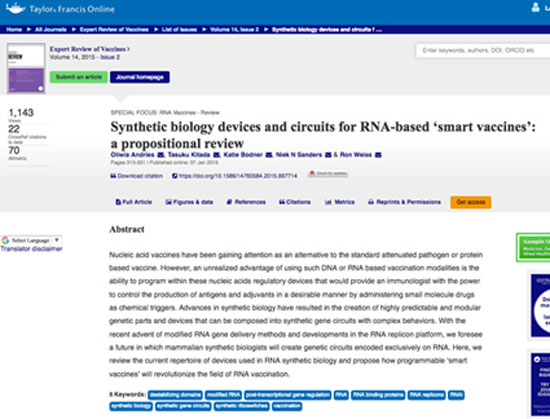
An example: the American Hastings Center presents itself as:
… A non-partisan, non-profit organization, created by various academic fields including philosophy, law, political science and education. The Hastings Center was instrumental in establishing the field of bioethics in 1969 and has been evolving ever since. Founded by philosopher Daniel Callahan and psychoanalyst Willard Gaylin, the Hastings Center is the oldest independent, non-partisan, and interdisciplinary research institute of its kind in the world.
This center assigned in 2008 four experts to study “the risks and outcomes of synthetic biology, namely: biosecurity issues, environmental issues, intellectual property issues, and possible theological questions.” Among the quartet, the center’s management also selected Drew Endy himself, the very same Drew Endy of “we can build whatever you pay us to build”… Of the remaining three, two (Michele Garfinkel and Robert Friedman) were high-ranking officials at the J Craig Venter Institute… which advertises itself as a world leader in genetic research… And to leave no room for complaints, the fourth member of the team tasked with drawing conclusions about synthetic biology (Gerald Epstein) belonged to the notorious CSIS (Center for Strategic and International Studies), and specifically to its hard core, in the US “homeland security program”… What would one expect this group to conclude about synthetic biology, its risks, and its “ethical” issues;
> Regarding “biosecurity,” they concluded that there is currently (in 2008) no issue, there might be in 5 or 10 years, but biotech companies are aware and vigilant…
> Regarding “environmental impacts,” there is no issue, because the FDA and the U.S. Department of Agriculture, which are responsible for oversight, are paying attention…
> Regarding “intellectual property issues,” the only issue is that companies that have or will patent anything genetic may not want to cooperate with each other, which could delay the sector’s development.
> Regarding “theological questions,” they concluded that biotechnologists working in synthetic biology have no ethical problems. They additionally noted that there are “of course also people who disagree that creating organisms is an ethical act,” but there are no guidelines on what should be done, given that “scientists who support it have greater influence than those who disagree.”
No comments needed: the wolves guard the sheep… And this happens steadily, permanently, without objections for decades. It is understood that it happens during the sanitization terror campaign as well, which together with the rest (it has many sides and many beneficiaries) is a massive psyop promoting the mass application and acceptance of synthetic biology. Together, of course, with its experimental dimension. As well as the geopolitical one.
Both in the EU and in the USA, the main interest of various state, para-state, or non-governmental organizations since the late 2000s, whether explicitly stated or not, has been the reconciliation of populations with synthetic biology. In the EU, two related projects were constructed, SYNBIOSAFE in 2007, and COSY later, with the sole purpose of the latter being the “public uptake of the issue.” In the USA, then-President Obama established in 2009 a “Presidential Commission for the Study of Bioethical Issues” in relation to synthetic biology. In its wise finding a year later, the “presidential commission” concluded that “we cannot speak of creating life” – therefore, there is no issue. And that state funding should continue for this “emerging sector” for its research – as well as for public education.
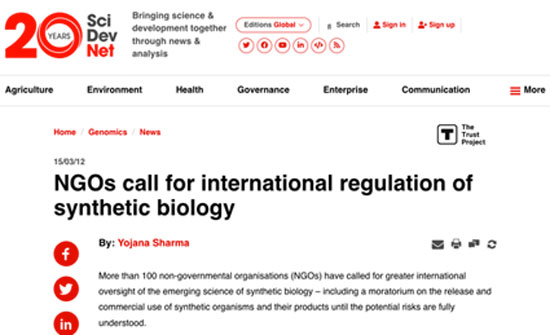
Finally, on March 13, 2012, over 100 “environmental organizations and civil society organizations” issued a manifesto titled Key Issues in the Oversight of Synthetic Biology4 (The principles for the oversight of synthetic biology). They called for a freeze on research and commercial exploitation of anything related to humans (: one of the mammals) until the risks are investigated and understood. The most someone could say is that “they did their duty,” because apart from that, despite their heavy names, these organizations had and still have the power of public relations. Generally debatable, specifically negligible.
As Richard Lewontin observed regarding this particular manifesto “These are correct, but the problem is that people don’t understand what it’s about”…
He wrote this in May 2014, in the New York Review – it was something like an obituary, even if that wasn’t its intended purpose.
And it still holds true.
Ziggy Stardust
- In 1968, Khorana, together with Nirenberg and Holley, shared the Nobel Prize in Physiology or Medicine for their research on the control of cellular protein synthesis. Forty years later, the theory had been massively put into practice, with research on genetic piracy either in the RNA or DNA of cells… ↩︎
- Available here ↩︎
- We could say the same for the entire cyborg material, from its first issue. Unfortunately, very few have realized that this endeavor, with its social/class/anti-state and anti-capitalist orientation, is unique in Greece and one of the few in Europe; to not go further. It requires large doses of voluntarism from those involved in such endeavors to give them life.
Or large doses of working-class integrity… ↩︎ - Available here ↩︎