
In June 2020, we closed the text for “plague’s political dream” as follows:
Certainly, reality is not that universal. The questioning of experts is one example, and the world circulating outside, after quarantine, another. However, it was never the complete universality of power that imposed discipline/punishment; but the legitimization of an already cultivated (not necessarily majority) social behavior, which separates the legitimate from the illegitimate, the healthy from the sick, assigning to each their own reality.
In a way, this special issue is a continuation of the above, and an introduction to an issue that we will find (and are already finding) before us in the coming years. The practical application, that is, of identity attribution, through the recording and collection of data and information, from new (and old) surveillance technologies. Which results in the attribution of an “individual reality”, since the stored and categorized personal data in databases define who each one is; or at least, they define the “digital self”, which ends up being the true expression of oneself, in the sub-formation of tele-societies.
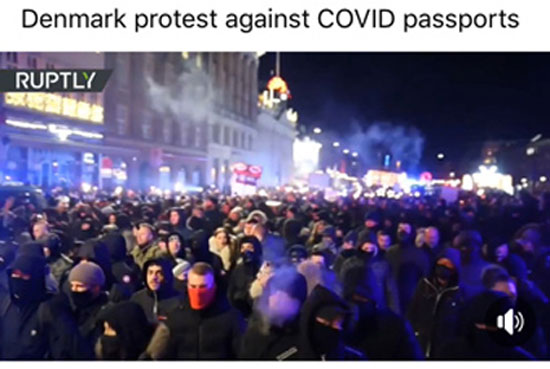
In Denmark, procedures have already begun for the creation of a “digital vaccination passport” for covid-19, with the corresponding reactions (and) on the way. Although the issue of identification and freedom of movement has been critical since the time the first borders were formed, and particularly in relation to “invisible” populations, the overall paradigm shift and the violent restructuring that has been happening lately places it on a new basis; the policy of marginalization and exclusion itself is being equipped with new means, but also acquires new terms.
The four texts that follow sketch out these media and terms in part. (A relevant reference also exists in “biometrics, digital identities and vaccines” Cyborg 18):
The first text is a report by Irma van der Ploeg, from the Italian health institute, in 2007, on the use of genetics in biometrics, making reference for the first time to the concept of “body information”.
In the second text, the use of biometric data by employers is presented. It was written in 2011 by a privacy issues committee of the American Bar Association (ABA).
The third text concerns developments in the creation of a mega-database in Europe, and is a selection of news and texts that descriptively compose the course of this development up to today.
Finally, in the fourth text, an analysis is made of the identification and surveillance practices of migrants, in recent years in Europe, by the electronic journal First Monday.
Wintermute