
Names matter
It was called the “greenhouse effect” and it was the Fear and Trembling of the coming Apocalypse! So much fear and so much trembling that, on the one hand, it was logical and desirable for huge amounts of money (that lie around here and there) to find an outlet in real “green” investments; and on the other hand, we had to change (as citizens) behaviors and practices of daily life in order to contribute, as “socially responsible individuals”, with our small forces each and every one of us, to the salvation of the planet…
It was (and remains) a useful (for the bosses) attempt at mass mobilization towards Changing the Capitalist Model, an identification between “green” industrialists and “green” consumers; a campaign for social peace under the threat of rising ocean levels. This campaign had everything except the essential: it could not force each individual separately to obey! No matter how spectacular the sight of icebergs breaking off in the Arctic1, it could not grab anyone by the throat, throw them down and force them to become an “obedient soldier”…
This (the experts knew) was the advantage and necessity of a well-directed “pandemic,” a well-staged Black Death Spectacle: in absolute contrast to the height of the sea and the large-scale of the Catastrophe due to Thermal Death, one or more viruses and their small scale can be sold (imposed, that is) at retail: You are sick! You will die! You, careless villain, will kill a grandmother somewhere in the depths!!!
Undoubtedly, “health” (and not “heatstroke”!) took the reins of discipline in the norms of the 4th (capitalist) industrial revolution from the “greenhouse phenomenon.” It was easy… Meanwhile, the “phenomenon” changed its name. It became climate change. We suspect why: while capitalism of internal combustion engines, oil and its derivatives, which passes into human history (and certainly loses its strategic significance in many sectors), serious and non-propagandistic forecasts by experts leave open the possibility, in the coming decades, not of “warming” but of relative “cooling” of the planet!!! You see: as useful as it was to target carbon dioxide as the basic, if not sole, cause of the “greenhouse phenomenon,” as necessary as this directive was to ideologically/fearfully invest the Energy Model Change (as a fundamental component of Capitalist Model Change), the truth is that this planet here is small, very small to avoid the impact upon it of other cosmic phenomena, such as for example the 11-year periodic fluctuations of solar radiation.1 A “cooling” era would not fit into the “phenomenon,” and conversely the rhetoric of the “phenomenon” could not explain why icebergs in the Arctic are being recreated… On the contrary, the term climate change is much more open to both heat and cold; much more comprehensive. And a period of low temperatures will surely require even greater amounts of energy… Which will be to a sufficient degree green… Zero emissions!

Green smoothie ingredients
Let it be so… Will the planet at least be saved with this bold transition? Not exactly! The planet will remain capitalist, with all that entails. We publish translated an interesting article by (university professor) Michael T. Klare (from Global Research, May 20, 2021) titled Resource Wars in a Renewable Future? Lithium, Cobalt, and Rare Earths.
Thanks to its very name – renewable energy – we can imagine for a moment a not-so-distant future where our needs for non-renewable fuels such as oil, natural gas and coal will disappear. Indeed, the Biden administration announced an impressive target for 2035, the complete independence of the US from these non-renewable raw materials for electricity production. This will be achieved mainly through the exploitation of wind and solar power.
As other nations move in the same direction, there is a temptation to conclude that the days when competition for finite energy resources was a constant source of conflict will soon end. Unfortunately, think again: while the sun and wind are indeed perpetually renewable sources, the materials needed to convert these sources into electricity (materials such as cobalt, copper, lithium, nickel, and rare earth elements) are not unlimited at all. Some of these are, in fact, much rarer than oil, which means that global conflicts over vital raw materials are not going to disappear with the arrival of the Renewable Age.
To explain this situation, we must look at how wind and solar energy are converted into usable forms of electricity and motion. Solar energy is collected by photovoltaic cells, which are arranged in large arrays, while wind is harnessed by massive turbines, usually installed in large wind farms. For the generated electricity to be used in transportation, cars and trucks must be equipped with high-quality batteries capable of holding a charge for long distances. Each such installation uses significant quantities of copper for electricity transmission, as well as a range of non-renewable materials. Wind turbines, for example, require manganese, molybdenum, nickel, zinc, and rare earth elements to generate current, while electric vehicles need cobalt, graphite, lithium, manganese, and rare earth elements for their engines and batteries.
Currently, with wind and solar contributing only 7% of global electricity production and electric cars accounting for less than 1% of vehicles on the road, the production of these raw materials barely meets global demand. If the U.S. and other nations truly move toward a green energy future, demand for these materials will skyrocket, and global production will fall far short of projected needs.
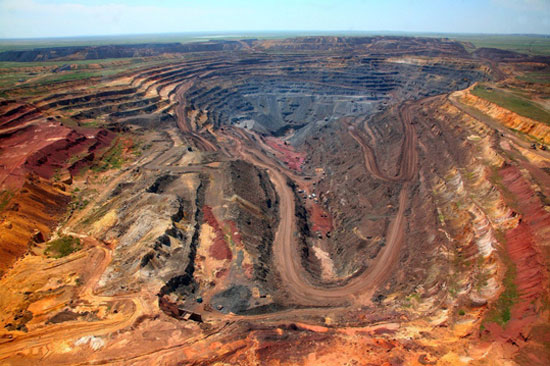
According to a recent study by the International Energy Agency (IEA) titled “The Role of Critical Minerals in Clean Energy Transitions,” lithium demand in 2040 will be 50 times greater than today, and demand for cobalt and graphite will be 30 times greater, if the world truly moves toward replacing internal combustion vehicles with electric ones. Such an increase in demand will, of course, push the relevant industries to develop new sources of these minerals, but those known so far are limited, and the process of mining and processing is expensive and complex. In other words, there could be serious shortages of critical minerals.And here the additional complications begin: for a number of critical minerals including lithium and cobalt, as well as rare earths, production is concentrated in few countries, a reality that could lead to geopolitical conflicts similar to those that occurred when the world depended on few key sources of oil. According to the IEA only one country, the Democratic Republic of Congo, currently supplies over 80% of global demand for cobalt; and another one – China – 70% of rare earths. Lithium production is concentrated mainly in two countries, Argentina and Chile, which together produce 80% of current global demand, while four countries (Argentina, Chile, Congo and Peru) produce most of the copper. In other words these raw materials that are already becoming strategic are far more concentrated in far fewer places compared to oil and natural gas, leading IEA analysts to concerns about future conflicts over access to them.
From oil to lithium: the geopolitical implications of the electric car revolution
The role of oil in shaping global geopolitics is well known. Since oil became essential for global transportation—and thus for the effective functioning of the global economy—it has been considered a “strategic” raw material. Given that the largest oil reserves were located in the Middle East, a region historically distant from the major centers of industrial activity in Europe and North America and subject to political manipulation, the major oil-importing countries made sure to exert some control over the production and export of oil from this region. This, of course, led to an intensification of imperialism, which began with the First World War, when Britain and other European powers clashed over colonial control of the oil-producing regions of the Persian Gulf. This intensification continued with the Second World War, when the United States entered this competition forcefully.
For the United States, securing access to Middle Eastern oil became a strategic priority after the oil shocks of 1973 and 1979—the first due to an embargo by Arab states in response to Washington’s support for Israel during the 1973 war; the second due to the Islamic Revolution in Iran. To deal with the endless gas lines at American gas stations and the recession caused by oil shortages, successive presidents committed to protecting oil imports “by any means necessary,” including the use of military force. This same rationale led President Bush to launch the first Gulf War against Saddam Hussein in 1991, and his son to invade and occupy the country in 2003.2
In 2021, the United States no longer depended on Middle Eastern oil due to its significant reserves of shale oil, the extraction of which is made possible through fracking technology. However, the relationship between oil and geopolitical conflicts has not disappeared. Most analysts believe that oil will continue to hold a large share in global energy production in the coming decades, and this will continue to fuel political and military conflicts over whatever sources remain. For example, there are already such conflicts over underwater deposits in the northern and eastern seas of China, and some analysts predict confrontations over control of oil and mineral deposits in the Arctic.
The question thus arises at this point: will the explosion of electric cars cause changes in the above? The electric vehicle market is already growing rapidly, and there is an estimate that it will reach 15% by 2030. The major automotive industries are investing heavily in this type of vehicle, anticipating a surge in demand. There were approximately 370 electric car models available for sale worldwide in 2020 (a 40% increase compared to 2019), and automotive companies are preparing to launch another 450 by 2022. General Motors announced that it intends to completely stop producing gasoline and diesel engines by 2035, while Volvo announced that it will sell only electric vehicles from 2030 onwards.
It is reasonable to conclude that this change will accelerate, with obvious consequences for global raw materials trade. According to the IEA, a typical electric car requires 6 times more minerals than a conventional petrol-powered car. This sixfold increase includes the copper for wiring, cobalt, graphite, lithium and nickel needed for batteries, and rare earths for the magnets in electric motors.
Lithium, the basic component of lithium-ion batteries used by most electric cars, is the lightest known metal. Although it exists in clay deposits or together with other ores, it is rarely found in concentrations that can be easily mined, although it can also be extracted from salt deposits, such as the Salar de Uyuni in Bolivia, the largest salt flat in the world. Currently, about 58% of global lithium is mined in Australia, another 20% in Chile, 11% in China, 6% in Argentina, and smaller percentages from elsewhere. An American company, Lithium Americas, is about to undertake the mining of significant quantities of lithium from a clay deposit in northern Nevada, but there are reactions from local ranchers and Indigenous people who fear water contamination.
Cobalt is another important component of lithium-ion batteries. It is rarely found in pure deposits and is usually extracted as a byproduct of copper and nickel processing. Today, almost all of its mining takes place in the chaotic Democratic Republic of Congo, mainly in the Katanga Province, which is known as the copper belt, a region that in the past attempted to secede from the Congolese state and where a separatist movement still exists.
Rare earths are a group of 17 metallic elements scattered across the Earth’s surface, but which are rarely found in extractable concentrations. Among these materials, some are critical for green energy production applications: dysprosium, lanthanum, neodymium and terbium. When used in alloys with other minerals, they help magnetize electric motors under high-temperature conditions, which is essential for both electric vehicles and wind turbines. Currently, nearly 70% of rare earths originate from China, approximately 12% from Australia and 8% from the United States.
A brief look at the locations of such concentrations shows that the transition to green energy can cause serious geopolitical problems, similar to those that existed in the past due to oil dependence. To begin with, the militarily strongest state on the planet, the USA, can obtain only minimal percentages of rare earths and other critical minerals such as nickel and zinc, necessary for green technologies, from its own territory. While Australia, as a close ally, will undoubtedly be a significant supplier of some of these materials, China, which is increasingly considered an adversary, is crucial when it comes to rare earths; and Congo, one of the most unstable regions of the planet, is the main producer of cobalt. Therefore, let no one think that the transition to a future of renewable energy sources will be easy and without conflicts.
The upcoming moment of truth
Facing the prospect of unequal or difficult supplies of such critical materials, strategic energy analysts are already calling for efforts to develop new sources in as many locations around the planet as possible.
“The current investment and procurement plans for many critical minerals are far behind what is needed for the accelerated deployment of solar panels, wind turbines and electric cars,” says Fatih Birol, Executive Director of the IEA. “These risks are real, but they can be overcome. The response of policymakers and businesses will show whether these critical materials will become a vehicle for the transition to clean energy or will become an obstacle in the process.”
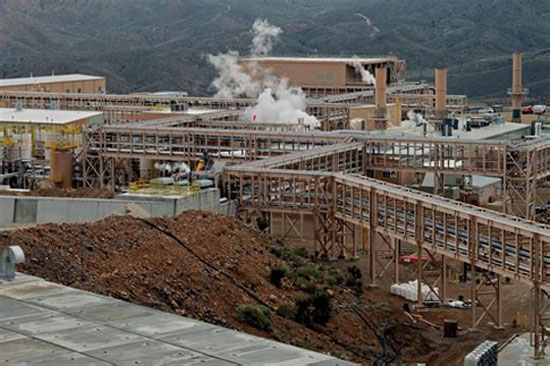
But as Birol so also the rest of the IEA officials acknowledge that overcoming the obstacles to increasing production will not be easy. For example, starting new mines is extremely expensive and has many risks. Mining companies may be willing to invest billions of dollars in a country like Australia, where the legal framework is friendly and where they can expect protection against future potential expropriations or war, but many promising deposits are located in countries like Congo, Myanmar, Peru and Russia, where these do not apply. For example, the recent unrest in Myanmar, a key producer of certain rare earths, has already led to concerns about their future availability, causing prices to rise.
The decline in ore quality is also a problem. When it comes to mining, this planet has been depleted of such resources since the Bronze Age, and many of the best deposits have been discovered and exploited long ago. “In recent years, the quality of metal ores continues to decline across a range of commodities,” notes the IEA in a report on critical minerals and green technology. “For example, the average concentration in Chile’s copper deposits has fallen by 30% over the past 15 years. Extracting material from low-concentration deposits requires more energy, increases pressure on production costs, and causes greenhouse gas emissions and waste volume.”
Moreover, mining metals from underground deposits often requires the use of acids and other toxic substances and typically needs large quantities of water that becomes contaminated and cannot be used elsewhere. This problem has become even more intense after the establishment of environmental legislation as well as local community mobilizations. In many parts of the world, such as Nevada for lithium, new mining and processing efforts face strong resistance from the local community. When, for example, Lynas Corporation, an Australian company, tried to circumvent Australian environmental legislation by sending metals from its Mount Weld rare earth mine to Malaysia, where the processing would take place, local activists organized a campaign to stop it.
For Washington, the biggest problem regarding the supply of critical materials for the green revolution is its deteriorating relations with Beijing. Ultimately, China currently produces 70% of the world’s needs in rare earths, and also has significant deposits of other essential metals. No less important is the fact that this country is responsible for processing many critical materials that are mined elsewhere. When it comes to processing, the numbers are impressive. While China does not produce significant quantities of cobalt or nickel, it accounts for 65% of global processing of the former and 35% of processing of the latter. And while China produces 11% of the world’s lithium, it is responsible for 60% of global lithium processing. As for rare earths, China is dominant in a staggering way. Not only does it produce 60% of raw materials, but also around 90% of processed rare earths.
To put it simply, there is no way for the US or other countries to make a massive transition from hydrocarbons to an economy based on renewable energy sources without having economic relations with China. It is certain that efforts will be made to reduce the degree of this dependence, but there is no realistic prospect that dependence on China for rare earths, lithium and other critical materials will decrease in the foreseeable future. In other words, if the US intends to go from a moderate Cold War stance towards Beijing to a more aggressive one, and if they intend to engage in Trump-style efforts to “decouple” the economy from the People’s Republic, as many “hawks” in Congress want, there is no chance: the Biden administration will have to abandon its plans for a green future.
We can of course imagine a future where states wage war against each other for these raw materials, just as they once waged war for oil. At the same time, it is extremely likely that a world will emerge in which countries like ours abandon their green energy plans due to the lack of necessary raw materials, and return to oil wars…. But the truth is that there is not much room in Washington and Beijing not to cooperate with each other to accelerate the green transition… Anything different would be certain destruction, or even worse.
Rather pessimistic is Klare: a “green” revolution can very well mean “green” wars, “green” weapons, etc…. From our side we maintain doubts as to whether sun and wind can constitute the main method of electricity production on the capitalist planet in the coming decades. Both belong to “weather”, something inherently unstable in the medium and long term.
There are other technologies, much more stable, which are comfortably considered CO2 free, and have considerable sympathies. A certain “energy crisis” could make them more widely acceptable, according to the standards of genetic engineering and mutations in human cells.
First of all, there is the technology of nuclear fission, the one already applied in nuclear power plants for electricity production on the planet. Only it cannot be considered “clean,” and the accident at Fukushima reminds us of this dramatically. Thus, while in Western Europe and North America there are indeed nuclear reactors, there is also the memory of the former anti-nuclear movement (hence these reactors are not increasing in number in recent decades), in Russia, China, India, South Korea, and Turkey the issue is approached differently. China, in particular, should be considered pioneering, since it built 20 new reactors in the five-year period 2016–2020 and plans another 20 in the period 2021–2025. Russia, for its part, exports nuclear reactors “with the key in hand” (Iran, Turkey), while it now also constructs floating ones, for electrifying isolated areas or for emergency situations. Of course, this not-at-all “clean” technology has its own demands for raw materials…
The technology of cold fusion is also emerging. Although considered a marginal idea (and had been abandoned in previous decades), it has once again drawn attention and some researchers. Its advantage is that the relevant reactor operates at room temperature.
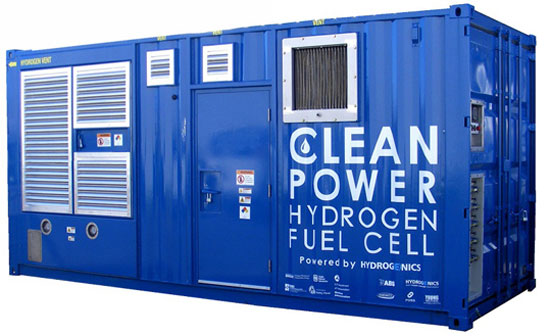
There is the technology of hydrogen fuel cells… And finally, there is the “artificial sun,” an advanced experiment by Chinese physicists who have made an impressive start (but still just a start). It is a project aiming to replicate the nuclear fusion reactions in the sun, using deuterium, which can be extracted from seawater, as the raw material. According to calculations by the Chinese physicists, the deuterium extracted from one liter of seawater can produce the energy equivalent of 300 liters of gasoline, cleanly and without radioactive or other waste.
If one assesses the issue of the New Energy Paradigm in the 4th industrial revolution from the perspective of capitalist necessities (and not the ideological campaigns of the system), its basic element is not its “greenness” but the generalization of electricity use in activities that belonged during the 20th century to internal combustion engines (hydrocarbons), wherever this electricity is produced. In this context, storage (batteries) is indeed a key issue (hence the materials they contain are equally important); but hydrogen fuel cells are an entirely different approach that does not require energy storage.
All these are open and evolving issues. Our conclusion is ultimately that if Washington is about to start an open, “normal”, “hot” war with Beijing, the raw materials for the energy “greening” will be of lesser (though not non-existent) significance.
Ziggy Stardust
- An interesting recent related study (in English) titled “Melting icebergs key to sequence of an ice age” is available at https://www.sciencedaily.com/releases/2021/01/210113120656.html ↩︎
- In our opinion, the American invasion of Iraq in 2003 and the military deployment in the broader region, whether direct or indirect (through proxies), was not intended, as many believed, to allow American companies to take the oil deposits, but rather to prevent competitors from exploiting them, keeping them as “reserves”. ↩︎