
The “new man” through the eyes of the most experts
“I don’t have much to say, actually I have only one thing to say: No one can make their own head. We are here to help, to explain, to assist, but no one can make their own head. Otherwise the areas will be sealed off, even house to house… It’s neither a threat, nor a warning. It’s a decision and it will be done that way if necessary.”
The Minister of Civil Protection, regarding the implementation of measures to restrict covid-19 – December 2020
In May 2021, the British Ministry of Defence’s think tank, the Development, Concepts and Doctrine Centre (DCDC), in collaboration with its German counterpart, the German Bundeswehr Office for Defence Planning, presented a report based on research and studies by “defence specialists” on the prospects of “human enhancement,” its current and near-future applications, as well as the questions and preconditions necessary for its “successful” implementation.
This 110-page report presents in a clear manner (without embellishments) the scientific approach to the “new paradigm” human, with the brutality characteristic of militaristic discourse, thus revealing the true nature of the “national interest” of Western liberal democracies. While some examples of “good use” of new technologies are employed (such as genetic engineering), the text as a whole constitutes a techno-military analysis of the concept of the body and the necessary restructurings within it, as a response to the demands of transnational (and not only) competitions in the 21st century.
Thus, a comparison of the violent restructuring taking place in the social factory triggered by covid-19, the military management of human relationships and behaviors for our “security” against the “invisible enemy,” and the promotion of the “scientific Truth of the experts” as the gospel of a new religion, with the “military sincerity” that characterizes the following reports, might help us see more clearly what war we are really talking about.
The exhibition is divided into six chapters, and we will initially present some key points related to the necessary framework for implementation, followed by the first two chapters that introduce the concept of human enhancement, describe its possibilities and necessity, and briefly present the available technologies. The information presented regarding the various technologies may be familiar to those engaged with new technology topics; however, our choice to present them as they are stems more from the perspective from which they are formulated. For instance, references from a military branch regarding the “necessity of constructing a more effective platform for introducing genetic material into the human body” carry greater weight than similar ones in a mainstream technology magazine like Wired. Or perhaps not?
Wintermute
The necessary framework for promoting human enhancement
Human augmentation constitutes the basic image of what lies beyond today’s Information Age – the dawn of the Biotech Age. The Biotech Age will focus on human augmentation. It will no longer be sufficient to consider people merely as users, for the operation of the machine. The interdisciplinary nature of human augmentation will render today’s defense model, based on the industrial age, ineffective. Defense must be reorganized to meet a future that will require a human-centered approach to warfare where the individual will be armed with capabilities fully integrated into a single platform.
Human enhancement brings the life sciences to the forefront. Defense will need to develop a more effective relationship with those working in the life sciences, as the dual use of emerging human enhancement technologies becomes clearer. Governments must collaborate with the scientific community to create a framework that ensures and supports national security while simultaneously fostering collaboration.
The reliance on personal data for the development of human augmentation will create significant challenges for data security and privacy protection. The frameworks for securing this data must be both national and international in nature, ensuring that it will be easily shared and used for the common good, but also well protected.
Economic forces will have a strong influence on the development of human enhancement and may not be in the interest of society. The private sector can use more resources and has greater organizational flexibility than state institutions, which means they will remain at the forefront of research for enhancing human capabilities. Improvements will be particularly profitable and companies are likely to focus on human enhancement that is profitable rather than what has the greatest benefit for humanity. The tension between states, societies, and market forces is nothing new, but the consequences of poor management could be more serious in the case of powerful human enhancement technologies.
We cannot wait for the “moral dialogue” on human enhancement to decide for us; we must be part of the discussion now. The ethical implications are significant but not insurmountable; timely and consistent commitment will be essential to remain at the forefront of this field. The “ethical perspective” on human enhancement will change, and this could happen quickly. There may be a moral obligation to enhance humans, particularly in cases that would promote well-being or protect us from new threats. It could be argued that therapies involving new vaccination procedures and gene and cell therapies are examples of human enhancement already underway.
The need for implementing human enhancement must ultimately be dictated by the national interest. Countries may need to develop and use human enhancement, or otherwise risk surrendering influence, prosperity, and security to those who will. National regulations that dictate the pace and scope of scientific research reflect societal views, particularly in democracies that are more sensitive to public opinion. The future of human enhancement should not, however, be decided by ethicists or public opinion, although both will be important voices. Rather, governments should develop a clear policy position that maximizes the use of human enhancement to support prosperity and security, without undermining our values.
Governance in western liberal societies and international organizations is already unable to keep pace with technological change, and the case of adopting human enhancement will exacerbate this trend. National and international governance will be challenged by the myriad implications of adopting human enhancement technologies. This could lead to a new arms race and interstate tensions if not carefully addressed through early and regular dialogue.
Chapter 1: Understanding human augmentation
Broadly speaking, human enhancement has been applied since the beginning of humanity. People have used cosmetics and clothing to improve their social status and artificial substances to enhance their physical performance or alter their emotional state. They have crafted weapons to increase their combat abilities and armor to protect themselves.
The effort to enhance physical, psychological, or social capability and resilience has been a source of influence and power throughout history. The paradox of war is that humans are central to it, yet they are also its weakest link. We want “warriors” – whether they are cyber specialists, unmanned aircraft pilots, or infantry soldiers – who are stronger, faster, smarter, more resilient, and agile enough to confront the environment and the adversary. Therefore, we have designed technologies to enhance endurance, survival, and mobility. As technology evolves, scientists have focused more on machines than on humans, but this has begun to change. Recent advances in the life sciences have led to the emergence of the interdisciplinary field known as human enhancement, which has the potential to disrupt every aspect of our lives.
Unit 1 – Definitions
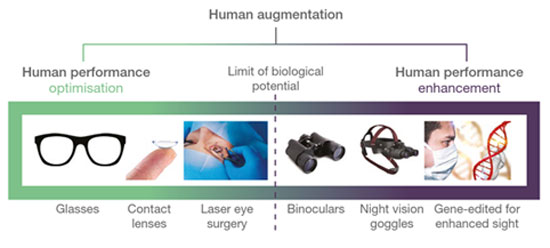
There are numerous and varied definitions around human enhancement, and most focus on the concept of improving performance. Human enhancement includes chemical, physical, and biological augmentation and modification of humans, but this does not exclusively involve adding “things” to humans; it also includes applying scientific studies in areas such as sleep management and personalized nutrition. This report proposes a definition for human enhancement as: the application of science and technology for the temporary or permanent improvement of human performance. This field can be further divided into optimization and enhancement of human performance. Optimization of human performance is the use of science and technology to improve human performance up to the limit of biological capabilities without adding new capabilities. Enhancement of human performance is the use of science and technology to surpass human performance beyond the limit of biological capabilities and may include new capabilities beyond those inherent in humans (for example, night vision).
Figure 1 shows that the distinction between optimization and enhancement of human performance is based on outcome. It does not recognize the complexity of the technology or whether the results are temporary or permanent, invasive or non-invasive. For example, eyeglasses have existed for about 200 years and passive night vision devices for nearly 60 years—and both are well-known technologies, but offer significant, albeit temporary, enhancement of vision. Similarly, laser eye surgery is only 35 years old, more advanced and permanent, but in most cases it only optimizes vision to the biological limit of the individual. Permanence and degree of invasiveness are also important aspects of human augmentation and will be discussed later in this report. Noting that eyeglasses and night vision goggles are included in the definition of human augmentation, this report will focus primarily on the impacts of new sciences and technologies that are more closely integrated into the human body.
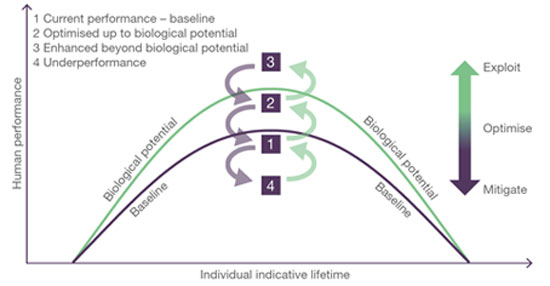
Human augmentation concerns the whole of society and defence. People are constantly affected by “internal factors” (for example, ageing, hydration or disability) and “external factors” (for example, weather conditions, pollution or diseases) that lead to variations in performance that can be temporary or permanent. The impact of human augmentation can therefore vary at any given time, as described in figure 2. For example, the same brain-computer interface can be used to mitigate the effects of a stroke, to improve a worker to perform a specific function or even to enhance a specialist to be even better. Human augmentation therefore concerns the whole of society and defence; it can mitigate deficiencies, optimize existing performance and extend performance beyond biological limits.
Unit 2 – The human platform
“The concept of Integrated Operating Concept emphasizes functionality, but also emphasizes adaptability – the ability to adapt to war. And this in turn highlights the importance of our people – who have always been our adaptive edge.”
Chief of the Defence Staff,
launching the Integrated Operating Concept, September 2020
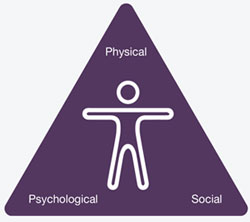
The perception of the human as a platform is fundamental in the field of human augmentation, and this exhibition offers a model concerning this. The performance of traditional military platforms—vehicles, aircraft, and ships—is regularly monitored and analyzed, but it is noteworthy that our understanding of our most critical resources—humans—has been researched very little. A central point in this exhibition’s approach is the idea that each individual must be understood at a personal level. The successful implementation of human augmentation requires a more advanced approach to understanding people, and one way to achieve this is by identifying the essential elements that collectively represent the human-platform: these are of physical, psychological, and social nature. It is recognized that it is impossible to separate the human into three distinct areas, and that this model is a deliberate oversimplification.
Unit 3 – Technology and Future Warfare
“While it is expected that humans will continue to be central to the decision-making process, conflicts conducted increasingly by robots or autonomous systems could change the very nature of war.”
Global Strategic Trends – The Future Starts Today
Developments in artificial intelligence and robotics show that human processing power, speed of action, and endurance are quickly surpassed by machines. Technology has already surpassed the role of humans in war, and many militaries have come to rely on this. It remains to be seen whether the Information Age will truly change the nature of war, but the role of humans is being questioned in three key areas: data, complexity, and speed.
Technology has exponentially increased the volume of data and the amount of data available to commanders. People do not have the ability to effectively process this large volume of data, which thickens the “fog of war” and increases the risk of information overload. Therefore, data must be secure, intact and reliable, otherwise not only is it useless, but it could be very dangerous.
The emergence of new domains and their deeper interconnection has increased the complexity of warfare. The information environment has also been overloaded by the proliferation of media, sensors, and global telecommunications. This has led to events that have nearly immediate strategic consequences and the reverse.
The speed of war increasingly surpasses the ability of humans to observe, orient, decide, and act. From a physical perspective, our hypersonic and space capabilities allow us to launch missiles near Earth at a speed of one mile per second, which is too fast for humans to make critical decisions on their own. Also, from a conceptual standpoint, battles in cyberspace occur at the speed of fiber optics.
Unit 4 – People and the future war
“As long as people have the advantage in the areas of creativity and judgment, we will have the important role at the front line… When missions have a significant degree of uncertainty, require the ability to adapt on the move and the opportunity for major reversals, the adaptability of people is invaluable.”
Herr, A., National Defense University Press, (2015), ‘Will Humans Matter in the Wars of 2030?
Technology offers significant advantages, but there are many cases in history where humans, not machines, have proven decisive. Perhaps the most striking example of the value of human judgment is the actions of Stanislav Petrov in 1983, when he prevented a nuclear war by dismissing the alarm of a Soviet automated early warning system that had mistakenly detected a U.S. missile attack. Today, the risk of over-relying on technology may be greater than ever, as its widespread use leads us to depend on “algorithmic judgment” in so many aspects of our daily lives. We must remember that humans still, at least for now, have an advantage over machines and will continue to play a role in future warfare for three key reasons.
War is, by nature, a human process. So far, technology has not changed the nature of war, but it has changed its character. Humans will continue to be central to warfare, but the way they play this role will change. This might mean fewer combat troops and more cyber specialists, drone operators, and computer technicians in the future, but stress and the threat to life will likely remain, albeit manifested in different ways. Warfare is likely to become more “remote” and psychocyber-intensive, but in the end it will still require “boots on the ground.”
Humans remain unmatched (for now) in their general intelligence. When the unexpected happens, humans must intervene to fulfill the mission, prevent crises, or seize unforeseen opportunities.
Technology will become increasingly capable, but society will influence the pace and extent of its adoption. Courage, ability, and honor have been rooted in our societies for centuries, and this will not change overnight. Entrusting war to machines so that no blood is shed may reduce the human cost of conflicts, but it will inadvertently increase their likelihood.
Unit 5 – The case for human enhancement
People are the most valuable element of defense but also a very basic vulnerability: people get hungry, tired, scared and confused. Machines on the other hand are incapable of these things but have their own disabilities. The winners of future wars will not be those with the most advanced technology, but those who can combine the capabilities of humans and machines more effectively at the right time, in the right place. The increasing importance of human-machine combination is widely recognized, but this has been discussed largely from a techno-centric perspective. Human augmentation represents the missing piece of the puzzle and will become increasingly important over the next 30 years due to three key drivers of change.
- The acceleration of progress in science and technology means that we can do more.
- There are opportunities and threats which means that we need to do more.
- Changes in society mean that we want to do more.
We can do more: There is a growing sense that we are moving toward an unprecedented opportunity to improve humanity, which means we can do more. The fields of biomedicine, neuroscience, synthetic biology, computing, materials technology, bionics, and social sciences have developed at a pace that makes possible what previously was the stuff of science fiction. Despite significant ethical and legal challenges, the science behind these technologies has advanced and cannot be reversed. The origin of many enhancement ideas lies in the field of healthcare. Major technological and pharmaceutical companies see the economic opportunity in human enhancement and are investing heavily in these technologies, while wealthy elites are also investing enormous amounts in developing life-extension technologies. These efforts will drive the evolution of human enhancement, making it more accessible. The key question is how societies will adopt it and for what purpose.
We need to do more: The therapeutic benefits of human enhancement could help us live a happier, longer, and healthier life, free from chronic and hereditary diseases. They could protect us from pandemics or at least provide us with the tools to respond more effectively. Brain interfaces combined with augmentation and virtual reality could dramatically enhance our experiences and our ability to express ourselves. New concepts of intelligence and higher levels of creativity could emerge by connecting the brain with other brains or/and computers. The benefits of human enhancement are so profound that they could be considered the stuff of science fiction, but perhaps no more so than the proposal of moon landing seemed in 1950. There are risks inherent in human enhancement. The Covid-19 pandemic exposed our vulnerability to pandemics, and the uncontrolled use of human enhancement could be used to increase their risk and severity. Threats could come from states, terrorist groups, criminals, lone actors, or even from the misuse of legitimate activities. Protecting ourselves may not immediately require human enhancement, but understanding the underlying technology and developing comprehensive policies and capabilities will be vital.
We want to do more: Happiness, prosperity and longevity are rising on the human agenda. There is also a growing awareness that wealth and productivity – the standard measures of individual and social success – do not necessarily equate to happiness or fulfillment. While most people still want to be wealthy and have good jobs, they also want to be more fit, healthier and more attractive. Human enhancement will be seen as a means of fulfilling these desires.
The spread of specialized knowledge about the human body will constitute a key lever for human enhancement. Social media platforms and algorithms designed to promote information to interested individuals lead to specialized information that is directly available. Although misinformation is also spread, in the overwhelming majority of cases societies are much better informed about how the human body works and how to take care of it. Social media also fuels people’s desire to be in better physical condition, and this will increase demand for human enhancement in the future. Increased awareness of the body, especially among young people, indicates a generational shift in attitudes toward health. The use of technology in professional sports has also increased significantly over the past 30 years, and as it becomes less expensive, it is flooding into sports and everyday life. This puts personalized biometric information in the hands of millions of people and allows them to monitor and improve their performance.
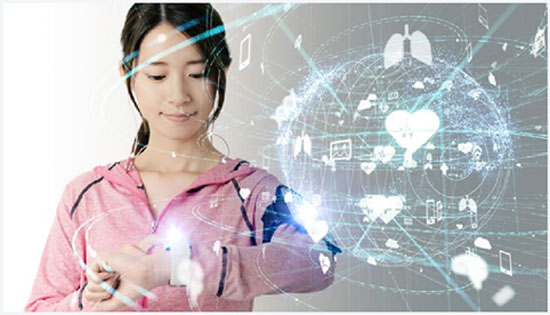
Current and emerging technology in this field includes: increasingly accurate heart rate monitoring, “smart patches” that measure body temperature and pulse, shoes that generate their own energy to sense body weight and movement, contact lenses that analyze tears to predict your emotional state and display relevant information, clothing that senses your physiology and gives you small guiding vibrations on your shoulders acting as a screenless GPS system, and “smart buttons” on clothes that collectively understand your habits and inform other connected technologies – from your car to your coffee maker – to optimize your life. Wearables for monitoring chronic health conditions, such as diabetes, are a notable area of development that could even evolve into “closed-loop systems,” which automatically detect and treat symptoms.
Chapter 2 – Human enhancement technologies
Understanding the human body is the critical foundation of human enhancement. The most advanced enhancement is not necessarily the most effective – the correct application of simply basic techniques could produce significant results. This section provides an overview of emerging human enhancement technologies that are most relevant to society and defense. And it will conclude with the basic prerequisites for implementing and evaluating the feasibility of these technologies.
Unit 1 – Understanding the human body
The human body is incredibly advanced, and understanding how it works is fundamental to successful enhancement. Our brain is more complex than any other known structure in the universe. Human bodies are complex ecosystems that host ten times more bacteria than their own cells. Humans are unique: each person smells different, walks differently, hears differently, and responds differently to drugs. Understanding how the body works is a monumental endeavor, but recent scientific and technological advances mean that we can increasingly unlock the secrets within the 3×10^14 cells of the human body.
Side effects and unintended consequences
The relationship between the costs and benefits of enhancement is not as straightforward as it might seem. An enhancement can be used to increase an individual’s resilience, but it might inadvertently impair their ability to think clearly and make timely decisions. In the context of a military battle, an enhancement could make a commander more intelligent, but less capable of leadership due to reduced ability for social interaction or because they make increasingly unethical decisions. Even a relatively non-invasive improvement such as an exoskeleton can improve physical performance for specific tasks, but unintentionally lead to loss of balance or reduced coordination when not worn. The concept of enhancement is further blurred by the complexities of the human nervous system, where a modification in one area could have unintended effects elsewhere. The variation among individuals makes the design of enhancements even more difficult.
Understanding
The answer to the puzzle of unintended consequences is to invest as much effort in understanding the human body as we do in optimizing or enhancing it. Therefore, we apply augmentation not only to improve human performance, but also to understand it. As our understanding of the human body improves, so does our ability to optimize performance without resorting to invasive, permanent, or controversial technologies. Collecting and analyzing data on human performance can identify aspects of individual behavior (such as diet, sleep, and activities) that can be appropriately adjusted to yield performance enhancement results equal to or better than drugs or surgical intervention. This is exactly where understanding the human genome and epigenome at an individual level is absolutely essential – one size does not fit all, and this aligns with the concept of “personalized medicine.” In other words, the right drug, at the right dose, for the right person, at the right time.
Data collection and analysis
Devices that monitor movement, heart rate, oxygen levels, and geographic location are already commonplace and will become increasingly accurate and sophisticated, enabling the collection of a broader range of real-time performance data. We can also analyze data in ways that were impossible even five years ago. Artificial intelligence can process vast amounts of information very quickly and convert them into results that will aid decision-making. This combination of data collection and analytics is the foundation of future human augmentation.
Unit 2 – Optimization Methods
Applying the basics correctly
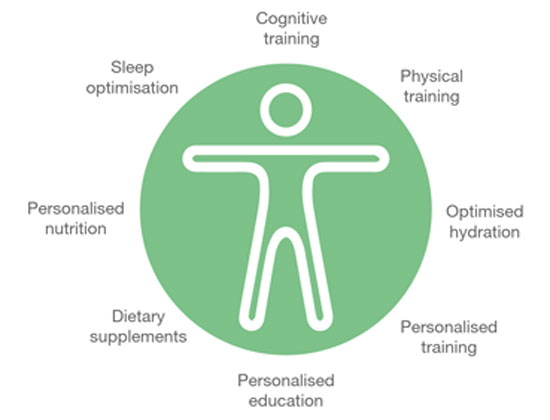
The enhancement with high-specification technologies will be significant, but the proper application of the basics can, in many cases, bring about substantial improvements at a lower cost and with less risk. Using high-specification human augmentation technologies to mitigate performance deficiencies that could otherwise be improved constitutes a poor use of resources and could undermine motivation and professionalism. The precise impacts of nutrition, sleep, and hydration and the relationships between them are not well documented, but we know there are untapped opportunities. An example is the connection between physical exercise and improved cognitive function. This phenomenon has been known for a long time, but only recently has it become possible to fully understand the science behind it. Improved monitoring technology will make it possible to tailor the benefits of nutrition, sleep, and other fundamental elements to each individual, leading to significant improvements in an organism at low cost and with limited ethical risk. While we are only just beginning to understand how improved monitoring can enhance performance, it appears there are significant prospects. The optimization methods are shown in figure 3:
Sleep
The increasingly sophisticated ways of studying the brain while we sleep are producing a wealth of data that we are only beginning to understand. The benefits of adopting good sleep habits will yield enormous benefits for both individuals and society. Almost every aspect of our daily lives, such as mental and physical health, public safety and productivity, would improve, yet many individual and organizational approaches fail to recognize this. In a military context, optimizing sleep is difficult to implement, but it is important to get it right, as it directly affects physical ability and endurance, as well as attention and decision-making.
Personalized nutrition
Improved understanding of genetics and general health could make “precision nutrition” a realistic possibility. Diets designed around an individual’s biology have been proven to help prevent diseases and improve physical and mental performance. For example, the trillions of bacteria, viruses, and fungi living in our gut—collectively known as the gut microbiome—vary among us all, and understanding the foods that interact best with them can yield significant benefits. This science is only 15 years old and further research is needed, but it has already shown how individuals respond differently to the same diet.
It is estimated that half of adults in the United Kingdom take supplements on a regular basis. This market is expected to grow to over £12 billion by 2023. This trend is repeated in other developed countries. Categories include sports nutrition, weight management, vitamins, and dietary supplements. However, there is considerable misinformation in the market and obstacles from various regulations, as well as different effectiveness rates of the various products. For example, while creatine has been proven to increase strength and endurance, results vary; for it to be effective, its use must be tailored to the individual.
Unit 3 – The core technologies of human enhancement
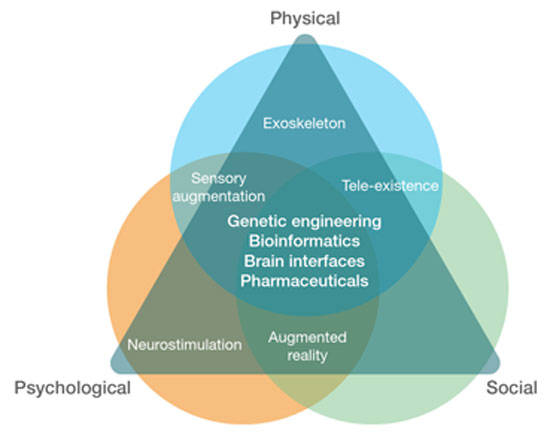
Figure 4 provides an overview of how human enhancement technologies are applied to each function and identifies four “core human enhancement technologies” – genetic engineering, bioinformatics, brain interfaces, and pharmaceutical products – that could improve psychological, physical, and social performance.
Genetic engineering
Genetic engineering refers to the modification of reproductive cells (germline engineering) or cells in the developed organism (somatic modification). Germline modification affects all cells of the organism and the change is passed on to the next generation. Somatic modification affects only the target cells and cells derived from them in the body, therefore it is limited to the individual receiving treatment. Genetic engineering has existed for quite some time, but until now it has been limited to relatively crude and simple modifications, which often involve only one or two genes.
The creation of genetically modified humans has been widely considered unacceptable for many years and is officially banned in more than 40 countries, but there are signs that this stance is being challenged with the advent of new technologies. For example, the development in 2012 of a technique called CRISPR provides a set of “molecular scissors” that are cheaper, faster and more accurate than previous methods of genetic editing. In 2019, CRISPR was used to treat a blood disorder in the first somatic modification of a person. In 2020, further trials will be conducted to restore vision in patients suffering from inherited eye disorders. This and other recent developments have begun to offer significant possibilities for various reasons:
a. Greater range: Gene editing can now add, delete or modify specific DNA elements in the target genome. CRISPR can create multiple changes simultaneously.
b. Increased precision and integration: Specific regions of DNA can be targeted with cutting tools, making changes more accurate and safer. Off-target effects still exist, but newer techniques such as “prime editing” are improving the targeting process.
c. Improved duration of results: The ability to target the genome instead of simply depositing DNA into cells means that modifications are reproduced as the cell divides and the result spreads.
d. Easier production: New production techniques are often easier, cheaper and faster to develop and implement.
Future opportunities
Genetic engineering could be used to prevent people from inheriting incurable diseases or traits that make them more susceptible to cancer and dementia. It also represents the first step towards liberation from generalized medicine, where people are treated based on population averages, towards precision medicine based on an individual’s personal biology. The combination of genetic engineering with artificial intelligence is likely to lead to radical improvements in medicine. However, genome editing as a means of developing human enhancement carries risks and vulnerabilities, as such changes could target “genetic” weapons.
Future challenges
Genetic engineering is still in its early stages of development and is only now transitioning from the laboratory to human trials. Many challenges remain, primarily the need to develop new delivery vehicles (e.g., the platforms used to introduce genetic material into the body, such as in mRNA vaccines) for transporting genetic code and improving understanding of potential side effects. The most significant challenges, however, are ethical and societal in nature.
Bioinformatics

The most controversial use of CRISPR occurred in November 2018, when Chinese scientists, led by He Jiankui, used it to modify the germline in human embryos to make them less susceptible to HIV. The procedure has not yet been independently verified, but nevertheless shocked the global scientific community amid concerns that the technology was too premature for human use and that it needlessly endangered the long-term health of the three resulting babies and their descendants. As a result of the experiment, He Jiankui was imprisoned for three years for “illegal medical practice,” and the scientific community proceeded to establish a moratorium on further work in this field. It is worth noting that Jiankui’s technique involved disabling a gene for a protein called CCR5, which, when deleted from mice in a separate study, was found to improve their cognitive abilities. This led some to speculate that CRISPR may already have been used, possibly inadvertently, to enhance human traits.
Bioinformatics is an interdisciplinary field that applies computational tools and analysis to collect and interpret large sets of biological data. It is closely related to collection and analysis, but takes the science of understanding the human body to the next level by examining molecular biology, macromolecular structures, and genomics. Bioinformatics could be the key to understanding how pharmaceutical treatments differ between individuals, thus laying the foundations for personalized medicine. Advances in artificial intelligence as well as improved understanding of the relationship between genotype (genetic lineage) and phenotype (physical lineage) genetics, make bioinformatics a rapidly accelerating field.
Brain Interconnections
The “neural revolution” could bring changes for advancing human prosperity that surpass those brought by the industrial and digital revolutions.
The Royal Society, iHuman Perspectives, September 2019
The science of decoding electroencephalography signals is evolving and could offer tremendous opportunities for combining the processing power of machines with the cognitive power of the human brain. Brain interfaces, also known as neural interfaces or brain-computer interfaces, allow direct communication between the brain and a computer. They can be unidirectional (for example, for understanding brain function) or bidirectional (for example, for creating a control and feedback system or a thought transfer system involving the donor’s brain).
Examples of unidirectional interfaces include the hearing aid for deafness. Bidirectional interfaces are in a very early stage of development and have only achieved limited results under narrow laboratory conditions. The most advanced examples, which have demonstrated the ability to transfer information, were with animals and the limited translation of thought-speech in humans. Non-invasive brain interfaces have also demonstrated results in human-to-brain communication as well as problem solving. Neurostimulation can be used to change brain function.
Non-invasive neurostimulation methods, such as transcranial magnetic stimulation, use electrical means to increase or decrease the stimulation of areas of the brain, potentially affecting mental processes such as neural plasticity and memory, attention, creativity and many others. Neurostimulation has the advantage that it is relatively non-invasive (although success is associated with the precise placement of electrodes in the correct area of the brain) and, so far, appears to be safe. It is also a flexible system, but can only operate on functions located in areas of the brain quite close to the skull wall. It is worth noting that it is used by DIY “brain hackers” and, according to reports, by some professional athletes.
Future opportunities.
The potential applications of brain interfaces are staggering. Therapeutic benefits could include: paralysis treatment, vision and hearing restoration, mental health management, and therapy for Alzheimer’s disease. Brain interfaces could also be used as powerful diagnostic tools and help in developing other technologies and methods for human augmentation. Regarding enhancement, brain interfaces could: enhance concentration and memory function, lead to new forms of collaborative intelligence, or even allow the “download” of new skills and knowledge. Handling the physical world with thoughts alone would also be possible; anything from a door handle to an aircraft could theoretically and practically be controlled from anywhere in the world.
Future challenges.
A huge portion of the brain remains unknown. It is not yet possible to combine stimuli to achieve more complex functionality, nor is it possible to target specific brain regions with absolute confidence outside of controlled conditions. Interpreting low-intensity brain signals originating from the brain’s surface is feasible, but capturing complex signals from deep brain functions without electrode insertion remains unattainable. There are also risks that brain interfaces could be compromised and exploited by malicious actors.
Pharmaceutical products
Pharmaceutical products play a role in many important forms of enhancement, including physical, cognitive, emotional and sensory processes. Pharmaceutical products are one of the oldest forms of human enhancement. Drugs that enhance knowledge range from caffeine, nicotine and various herbal supplements, to stimulants such as amphetamines, methylphenidate and modafinil. These typically affect simple, low-level functions, such as alertness and memory, and not high-level ones such as intelligence. Other types of cognitive enhancement include regulating blood glucose and hormones, such as adrenaline and testosterone.
Performance-enhancing drugs include anabolic steroids, which stimulate muscle growth (though they can have unpleasant or even fatal side effects). Creatine has been proven to provide increased power and resistance to fatigue, while simultaneously increasing the risk of obesity and muscle injury. Erythropoietin (EPO) is a hormone produced mainly by the kidneys and has been synthetically produced and illegally used in sports to enhance performance by increasing the blood’s oxygen retention capacity. The performance benefits can be impressive, but the side effects – even in cases where it is carefully monitored – can cause blood clots, stroke, and even death. Meldonium is a drug that has been legally prescribed for the treatment of coronary artery disease, but has been used by athletes (and Soviet soldiers in the Afghanistan War in 1979) to enhance physical performance. Meldonium, however, comes with adverse side effects such as nausea, headache, and dizziness.
Most pharmaceutical enhancement products originate from (conventional) drugs or are attempts to upgrade the natural and chemical substances that exist in the body. However, their use as enhancers, even in professional sports, has not been sufficiently understood in order to regulate dosage and improve the outcome. Although pharmaceutical products have applications in all three areas of human performance, they often come with side effects that cancel out potential benefits. Currently, pharmaceutical products have only limited use in human enhancement, but developments in biotechnology, nanotechnology and bioinformatics could allow the design of new pharmaceutical products that will have more powerful and precise effects.
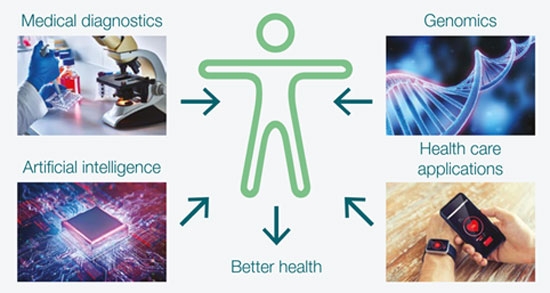
According to the Precision Medicine Initiative, a United States National Institutes of Health initiative, precision medicine is “an emerging approach for treatment and prevention of diseases that takes into account individual variability in genes, environment, and lifestyle for each person”.

The results of this research are likely to lead to new discoveries in genomics and epidemiology and will significantly contribute to increasing the effectiveness of healthcare.
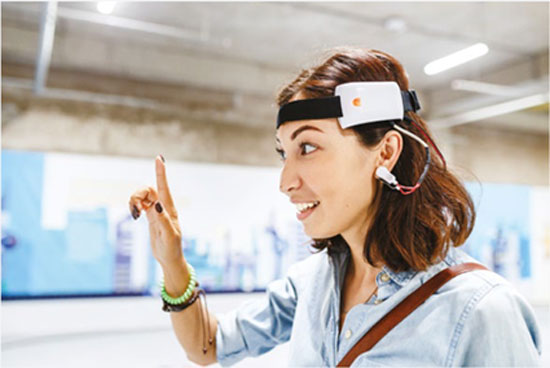
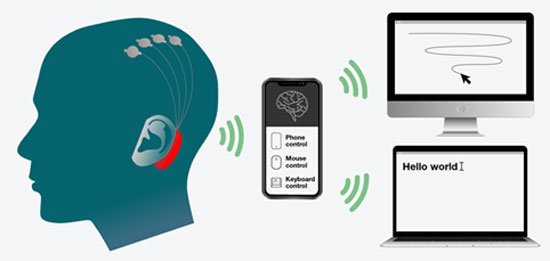
Non-invasive neural interfaces have been developed to expand human bandwidth and transform the way we interact with devices. These multi-billion dollar projects use advanced machine learning techniques to accelerate development and specifically aim to explore how interfaces can redefine the experience of augmented reality/virtual reality.
Several companies, as well as military research and development organizations, aim to develop a high-bandwidth data link between the brain and computer. So far, one company has developed a neurosurgical robot capable of implanting flexible polymer threads—each the width of a human hair and containing 32 microscopic electrodes—into the brain with micro-scale precision, in a 45-minute procedure. The threads feed into a small, low-power implant that amplifies and digitizes brain signals for broadcast across a broad spectrum. This technology is currently being used for research in rodents and is intended as a prototype for future human use.
Unit 4 – Additional technologies
Exoskeletons
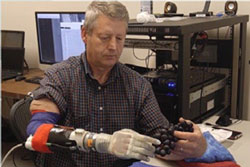
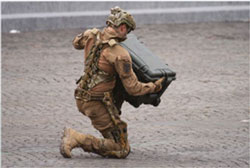
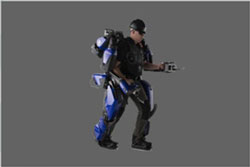
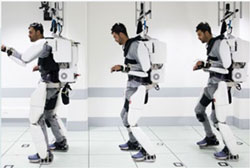
Exoskeletons are external, removable structures capable of supporting the human musculoskeletal system and have been under development for decades. They are categorized as either active (powered) or passive (unpowered). The driving force behind exoskeleton development has been the restoration or enhancement of mobility for therapeutic reasons, but industrial and military applications are becoming increasingly common. Passive exoskeletons can reduce body load and decrease the risk of workplace injuries. Active exoskeletons can convert brain signals into movement or enhance the user’s normal movement, providing rehabilitative or augmented mobility and strength. Fuel cell technology has so far proven to be an obstacle for active exoskeletons, but this is steadily being addressed. Providing functional limbs to amputated individuals was the driving force behind the development of prosthetics. The most advanced prosthetics use implanted microelectrodes to provide a bidirectional interface that allows the user to control and receive tactile sensations.
Exoskeleton technologies are improving rapidly, and the industry is attracting investments. This mutually reinforcing situation is likely to continue, leading to accelerated development. Current limitations include constraints on speed and range of motion, difficulty accessing confined spaces, and energy storage limitations.
Senses enhancement
The enhancement of senses aims at expanding the sensory range or acuity either through the use of gadgets or wearable devices for the “translation” of external information for human senses or by modifying innate senses. Information can be collected via a combination of sensors placed or implanted in the body. Senses can be extended by translating frequencies beyond the normal human range into frequencies that can be displayed, heard or detected in another way. This could allow the user to “see” through walls, perceive vibrations and detect chemical substances carried in the air and changes in magnetic fields. More invasive applications have also been presented to enhance existing senses, for example, coating retinal cells with nanoparticles to enable vision in the infrared spectrum.
Cross Reality
Cross-reality is an umbrella term for virtual reality, mixed reality, and augmented reality, and is a sector that will likely experience significant growth. Cross-reality has been used in military aviation for decades, but reduced costs are beginning to bring this expensive technology into broader applications. Virtual reality uses headsets and other wearables to provide an immersive computer-generated environment experience, while augmented reality overlays computer-generated images onto the user’s real-world environment, typically using glasses or headsets.
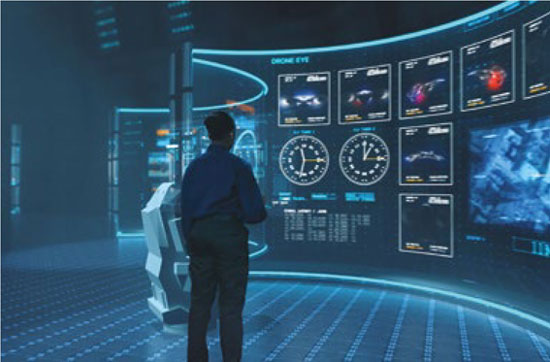
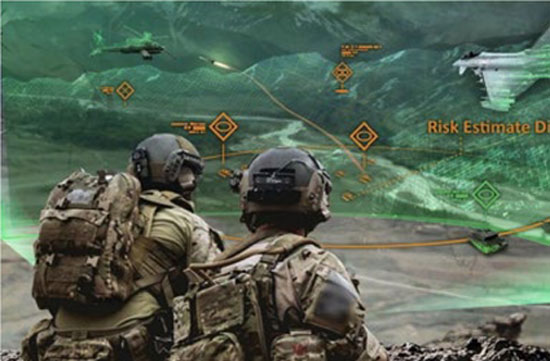
Virtual reality is widely used for education, medicine, gaming and entertainment, and augmented reality is increasingly used in advertising and retail. Defense applications could include training (virtual reality) and improving situational awareness in operations (augmented reality). Telepresence is a natural evolution of mixed reality and can be used to remotely operate robots, often using headsets and haptic gloves for tactile feedback. Telemedicine is paving the way in this field, allowing doctors to diagnose remotely and in some cases perform surgery. Mixed reality appears to have an increasing role in industry and defense, although energy sources, processing power and broadband network speeds are currently limiting the full implementation of the technology. Data networks are the upcoming “single point of failure” for mixed reality systems and protecting network integrity will be crucial for any defense applications.
Unit 5 – Combinatorial technologies
The potential of human enhancement is significantly enhanced when used in combination with other fields of science. In this context, nanotechnology, biotechnology, informatics and cognitive science (NBIC) are often referred to. This refers to the expected synergy of developments in these four areas of technology. Nanotechnology, artificial intelligence and three-dimensional bioprinting (3D bioprinting) are discussed here as specific examples.
Nanotechnology is the term given to those areas of science and engineering where phenomena occurring at the scale of individual atoms (dimensions on a nanometer scale) are used in the design, production, and application of materials, structures, devices, and systems. While there have been advances in certain fields, overall progress is slower than expected. This is mainly due to concerns regarding the harmful consequences of nanoparticles that are randomly released into the environment and the unstable nature of the science and engineering involved. Nanotechnological systems have significant potential for human enhancement technologies, for example, the use of energy or chemical transport nanoparticles to enhance sensors or produce surfaces that function as neural interfaces for implants. Nano-systems have the ability to reduce the size of many components related to human augmentation. Long-term possibilities include replacing organs with functionally equivalent or better systems, as well as adding new capabilities, such as “nano-blood.” However, such developments are likely to be far off.
Artificial intelligence is perhaps the greatest technological “wild card.” It is highly likely that even current machine learning techniques will have a transformative impact on many fields (for example, medical diagnosis, surveillance, management, and robotics). Artificial intelligence could enable the development of software that could: perform computations or simulations through a brain interface to free up the capacity of the human brain; learn individual abilities and peculiarities to provide personalized support and monitor improvements; enhance moral decision-making, which could also have significant implications in a military environment. It is likely that artificial intelligence will develop at a faster rate in the coming decades than it did in the previous decade. Even if it were to “progress only” at the current rate, we should expect a tremendous increase in “application ability” – the ability to design, develop, and adapt new technologies, including those related to human enhancement.
Three-dimensional bio-printing is a form of additive manufacturing that “layers” biological material to produce biological structures. It has been successfully used to produce skin, bone and heart tissue for transplants. Although in early stages, the technology could be used to produce complex organs in the future. Long-term, three-dimensional bio-printing has the potential to dramatically improve the complex bio-printed organs that are still far away. Successful grafts from heart structures have been printed on a small scale, but producing organs based on these is not yet compatible with an individual’s biology.
Section 6 – Prerequisites for implementation
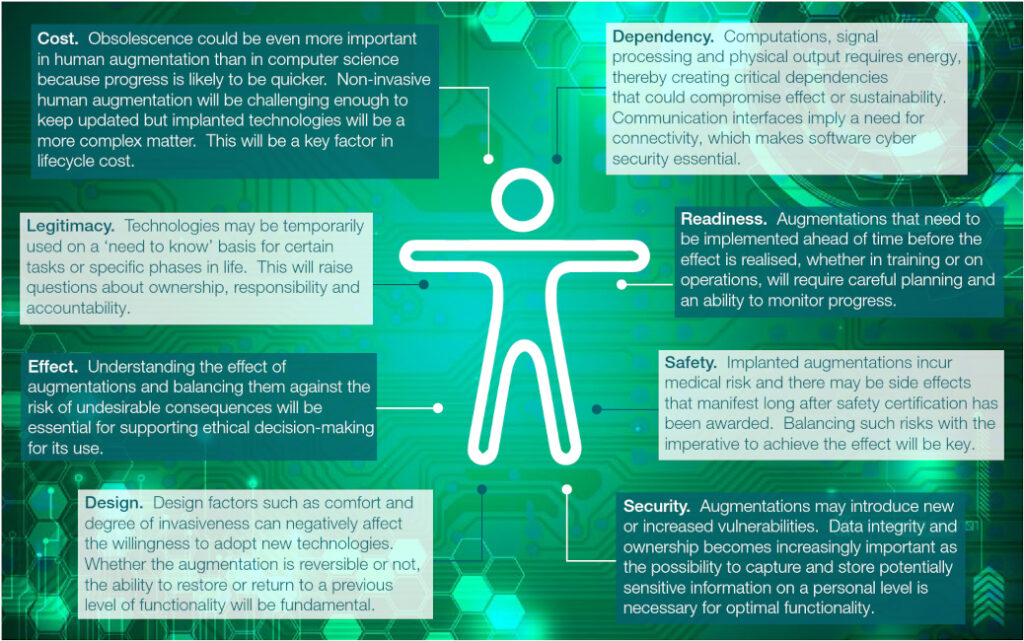
Discussing technology in isolation is necessary to understand what is possible, but it will be the practical, ethical, legal, and social conditions that fundamentally define its utility. Understanding the potential side effects and interactions with other aspects of human performance, work, organization, and the environment will be the key to evaluating the benefits of human enhancement and informing further research and experimentation. For example, improved body armor increases resistance to explosions and gunfire, but reduces speed, flexibility, and situational awareness. The negative effects of using body armor could therefore, in some cases, cancel out the intended benefits; the same could apply overall to human enhancement technologies if the conditions for implementation, as presented in Figure 5, are not met.
Unit 7 – Feasibility Assessment
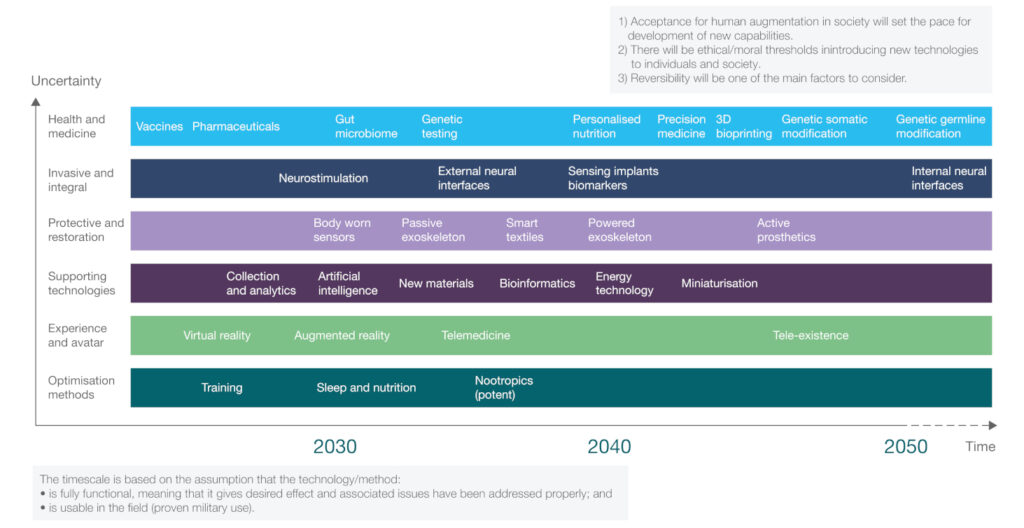
Considering human enhancement technologies in terms of their current technical level and the state of regulatory policies, it is possible to gain a broad perspective of opportunities for today and the future. The table in figure 6 illustrates the following conclusions and in figure 7 the implementation timelines for the various enhancement technologies are calculated.
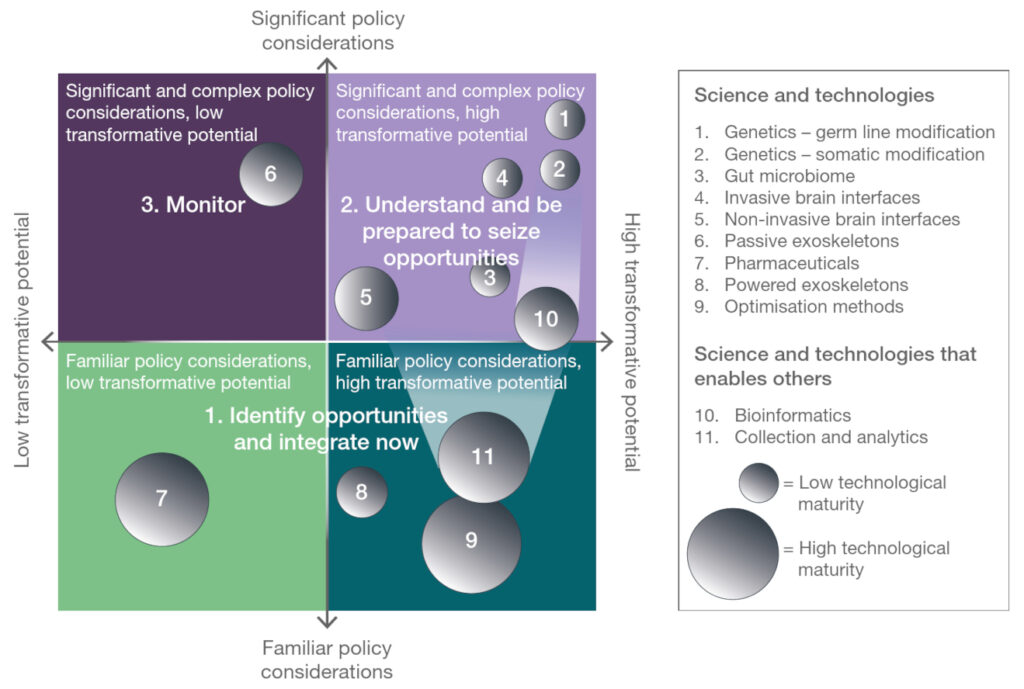
a. Mature technologies exist that can deliver transformative results and could be integrated today with manageable policy adjustments.
b. The most transformative technologies (such as genetics and brain interfaces) are currently at a relatively low level of maturity, and their implementation will require significant policy regulations. The potential impact of these technologies, however, means that defense must monitor them closely and be ready to seize the opportunities that will arise.
c. Pharmaceuticals are widely considered the archetypes of performance enhancers, but this field is changing rapidly, and new developments in brain chemistry, psychoactive substances, pharmaceuticals, cellular, and gene therapies must be closely monitored. Medical countermeasures are also relevant, as adversarial states or individuals may find easier solutions to these options.
d. No human enhancement technologies exist in isolation, and there are interconnections among many of them. Bioinformatics, data collection, and analysis (including sensors and artificial intelligence processing) are relatively undisputed but have high transformative potential. Moreover, they will support the use of other human enhancement technologies, as illustrated in the accompanying figure.