
You are more likely to be unfamiliar with the name Kees van der Pijl, and understandably so. Although he is a scholar with significant credentials in his field, he does not belong to those easily granted the profile of “celebrity” status and certainly is not among the group of “experts” who have lately acquired the status of unquestionable authority. The seventy-five-year-old Kees van der Pijl is a Dutch professor of international studies, with a distinguished academic career in the Netherlands and Britain, but also—and this characterizes him mainly—he is a communist of the “old school,” without belonging to any post- or neo- trend, and in his analyses he particularly focuses on the role of the state and international inter-state competition. Moreover, in his country he is an active anti-fascist, meaning he is not a detached academic. Until 2000, Kees van der Pijl was a professor in the Department of International Studies at the University of Amsterdam and co-director of the Dutch Research Centre for International Political Economy. At the same time, he was a member of the Dutch Communist Party. In 2000, he moved to Britain, where he took the chair of international studies at the University of Sussex, served as department head from 2002 to 2004, and from 2001 to 2006 was director at the university’s Centre for Global Political Economy. Upon returning to the Netherlands, he became involved in the organization Antifascistische Verzet (AFVN/BvA, named after the resistance communist organization during the occupation) and also participated in founding the Committee for Vigilance Against Emerging Fascism.
When the pandemic was declared and the wave of medical coups erupted, Van der Pijl acted as every honest leftist, communist, and anti-fascist should act (and additionally, in his case, an expert in geopolitical conflicts and interstate rivalries) in a state of emergency. Instead of succumbing to generalized fear or being flattered by the elevation of “scientists” into a new priesthood, he set aside the “medical” decrees and examined developments in the field of political economy, through the lens of sharpened inter-capitalist competition between the American state and its allies on one side, and China and Russia on the other. In April 2020, just a month after the pandemic declaration, Van der Pijl published an extensive analysis titled “Health Crisis or Seizure of Power? The Political Economy of Covid-19,” first on his personal page at academia.edu and subsequently on newcoldwar.org. The first part of the analysis is devoted to the dismantling of the formal liberal constitution, the state of emergency, the emergence of shadow power structures, and the West’s attempt to reaffirm and secure its wavering global hegemony.
The second part, which we present translated here, is dedicated specifically to Covid-19 and the origin of SARS-CoV-2. The view that Van der Pijl adopts and supports with evidence is that of the French virologist Luc Montagnier, namely that the virus was artificially constructed in a laboratory. The Frenchman Montagnier is yet another “Ioannidis case.” A prominent medical scientist, a leading virologist globally, researcher at the French Institut Pasteur and professor at Shanghai University, holder of the 2008 Nobel Prize in Medicine for the discovery of the HIV virus (what else should he have done, then, to be considered a reliable expert on viruses?). Montagnier made the fatal mistake of supporting with evidence the claim that the SARS-CoV-2 virus could not possibly be natural, that it was an artificial laboratory construct (of the Wuhan Institute of Virology), and furthermore, that nature itself would destroy this monstrosity—but only after the artificial virus had first wiped out thousands. As expected, Montagnier was vilified, disowned, stripped of his expert status, and accused of conspiracy theorizing and posing a threat to public health. Van der Pijl had no such problem; he had already been labeled a “conspiracy theorist” for having claimed that 9/11 was a joint operation by American factions and Israeli intelligence services—and had even been the subject of an internal university investigation on charges of “antisemitism” and “spreading fake news.” Van der Pijl adopts Montagnier’s view, although he does not conclude whether the virus was a product of American biological warfare laboratories or of the Wuhan Institute of Virology, in which, by the way, American researchers have been working for years. However, he does present detailed evidence regarding the scale of research conducted by the American military-pharmaceutical complex on biological warfare and the weaponization of pathogenic agents to the extent that they can target specific groups within the global population. Thus, he reveals yet another aspect of the accelerating biotechnological restructuring under the pretext of the pandemic: the intense preparation for intra-capitalist conflicts unimaginable in comparison to anything humanity has experienced thus far.
Van der Pijl’s analysis is written extremely early—timely, but before the health coups have yet been fully revealed in all their dimensions. Many details he understandably does not yet know, such as the ruthless manipulation of data, the different direction taken by the “war against the virus” in the West versus the rest of the world, or the imposition of genetic “vaccines” as “ready for some time.” Nevertheless, he presents and documents evidence regarding research and experiments in biological warfare that we must not ignore under any circumstances, so as not to be overwhelmed by what follows…
Hurry Tuttle
Health crisis or power grab?
The political economy of Covid-19
On March 11, 2020, the World Health Organization officially declared the outbreak of Covid-19 (the respiratory disease caused by the SARS-CoV-2 coronavirus) as a global pandemic, the first since the H1N1 swine flu in 2009. Within a short period of time, much of the world went into lockdown, forcing people to stay inside their homes, supposedly to ensure their protection. In this article I challenge this assumption. Just as with previous events indicating that the era of compromise politics in the West had come to an end and was replaced by the politics of fear, so now the way in which the event is being exploited for other purposes is far more significant than the event itself and its causes. In this case, the Atlantic ruling order that led the post-war liberal global order is exploiting an opportunity (not necessarily of its own making) in an attempt to reverse its loss of control both domestically and internationally.
As soon as the epidemic began (or rather: was declared to be developing into an epidemic), draconian measures were taken that were completely disproportionate to the actual threat to public health. Although ostensibly a global phenomenon, the focus of the reaction is the West, where the ruling classes seized the opportunity to try to radically reverse the trend towards “populism” both in the streets and in the form of uncontrolled leaders of the Trump type.
The fact that the new coronavirus was first identified in China at the end of 2019 simply shows that we are not necessarily dealing with a Grand Scheme devised by the West, but rather with an opportunity that was seized to promote an agenda, some elements of which were already gestating and others were later designed. Indeed, the initial outbreak of the epidemic in Wuhan and the Hubei province, to which the Chinese government responded with draconian measures that effectively halted the spread as well as all social activity, was not immediately repeated outside China. Britain and the United States were, in fact, among the last to enter lockdown. Nevertheless, the global freezing of normal life, which has catastrophic consequences for hundreds of millions of people and opens up the prospect of an authoritarian society for many more, reveals how, one after the other, governments (not all of them) saw an opportunity to resolve other issues, aligning themselves with the “fight against the pandemic.”
[…]
The origin of the virus and the US-China gap
Let me now refer to the real pandemic of the virus and how it followed the first SARS epidemic. This fact led to serious tensions between China and the West, which learned about it only with great delay. This in turn gave impetus to international cooperation for the study of the phenomenon of coronaviruses. Viruses are microscopic droplets of nucleic acid (DNA or RNA) wrapped in proteins. Compared to other coronaviruses, such as those that cause Severe Acute Respiratory Syndrome (SARS) or Middle East Respiratory Syndrome (MERS), SARS-CoV-2/Covid-19 proved to be more transmissible. However, for the development of respiratory complications, patients’ vulnerability is the key factor. Advanced age and existing underlying diseases are the main factors that explain the death rate of patients. In Italy, which was relatively hard hit, half of the deceased had three other diseases, a quarter had two, and the remaining quarter had one—only 0.8% of the deceased were in good health.
The previous coronavirus epidemic, SARS, erupted in Guangdong in November 2002, possibly in a market where animals had been slaughtered on site. At that time, the Chinese government took several months to report the disease’s emergence to the WHO. Meanwhile, a local doctor from Guangdong who had traveled to Hong Kong had infected several thousand others. The supposed cause of this SARS epidemic was the virus’s jump from bats to market animals and through them (or directly) to humans, followed by human-to-human transmission. The encroachment of settlements into forests, with cultivated land or pastures and urbanization following, and the enormous herds of domestic animals kept alive only with antibiotics to be slaughtered prematurely as calves, piglets, etc., have created bridges for viruses to jump to humans. Avian flu, inherent in waterfowl, jumped to chickens and mutated into H5N1, a virus that infects humans and kills half of its hosts, but so far, with only a limited rate of human-to-human transmission.
This jump was a subject of interest to scientists, and its emergence was expected to become more frequent given the ongoing process of habitat restriction. As a result of the destruction of wildlife habitats from deforestation, pollution, accelerated climate change, and other forms of biosphere destruction, hundreds of types of pathogenic microbes have appeared in areas where they were previously unknown, especially in recent decades. HIV, Ebola in West Africa, or Zika in the American continent are examples. Sixty percent of these originate from animals, one-third of which come from domestic animals and two-thirds from wild animals. Microbes that do not pose a problem for wild animals were more likely to come into contact with humans.
Viruses can also cause epidemics more easily due to the compression of time and space as a result of air travel in ever-increasing numbers. This has created a direct adjacency between regions that are susceptible to diseases with limited medical infrastructure and better-equipped, wealthier regions. Atmospheric pollution exacerbates the effects of a respiratory illness caused by a viral infection: if the lungs have been exposed to dirty air for decades, they will have greater difficulty dealing with pneumonia once they inhale a virus. The same applies to a weakened immune system as a result of poor nutrition, obesity, diseases, and age.
Thus, the biosphere crisis as a result of human development under conditions of industrialization and urbanization constitutes the general backdrop of every epidemic. Ebola, according to a 2017 study, emerged in areas of West Africa where deforestation was unchecked and bats, carriers of microbes to which humans should not be exposed, came into close proximity with human habitats. Apart from Ebola, the Nipah virus (in Malaysia and Bangladesh) and the Marburg virus (mainly in East Africa) have made this leap from species to species. In North America, birds are carriers of the West Nile virus, which, through peridomestic birds, can jump to humans via mosquito bites.
A laboratory virus?
Chinese virologists, writing in the journal Nature, conclude that “despite intensive research efforts, how, when and where new diseases emerge remains a significant source of uncertainty.” The first patient to be infected with what the WHO later named Covid-19 and hospitalized in December 2019 most likely contracted it at a seafood market in Wuhan where he worked. “The virus showed the closest genetic relationship (89.1% nucleotide similarity) to a group of SARS-like coronaviruses previously found in bats in China.” The subsequent infection of other individuals in the area indicates “that the ongoing ability of the virus to spread from animals may cause serious illness in humans.” It should be noted that, apart from fish and shellfish, a wide variety of live wild animals for sale at the market—including raccoon dogs, civets, snakes and birds (quails)—were available before the outbreak began, as well as animal carcasses and meat (but not bats).
From early on, there were voices claiming that this was not a natural virus. “Researchers around the world, including from the US and China, conducted studies involving the creation of hybrid coronaviruses.” In February [2020], it was reported that Steven Mosher, president of the Population Research Institute in Front Royal, Virginia, claimed that the new virus had accidentally escaped from China’s National Biosafety Laboratory at the Wuhan Institute of Virology, where scientists study bat coronaviruses. The Chinese ambassador to Washington, Cui Tiankai, called this theory “crazy,” but subsequently Luc Montagnier, the French virologist who won the 2008 Nobel Prize in Medicine (along with Françoise Barré-Sinoussi) for discovering the HIV virus, supported the claim that SARS-CoV-2 had been combined [spliced: fused] with HIV in vaccine research against AIDS at the Wuhan Institute. In India, other researchers had already found sequences of the HIV genome in the coronavirus (something that can only arise as a result of laboratory intervention at the molecular level), but were forced to withdraw their publication. According to Montagnier, nature itself will eliminate this molecular impurity, but in the meantime the virus will kill many people – and therefore China should bear its responsibility.
The objection that laboratories have strict safety protocols is unfounded, because after the first SARS outbreak, the virus reappeared as a result of poor safety practices in laboratories in Singapore, Taipei, and Beijing. For this reason, the WHO updated the guidelines for SARS surveillance, and China replaced the responsible official.
None of the findings of the Chinese researchers mentioned come into conflict with Montagnier’s conclusion itself. The RNA of the first patient in Wuhan was closely linked to an isolated strain of coronavirus resembling the bat SARS virus previously sampled in China. By tracing the evolutionary relationship between Covid-19 (which they still referred to as WHCV), the researchers concluded that while it is close to the SARS and MERS viruses, recombination had occurred within this group of viruses in the past.
The high sequence similarities of the amino acids and the predicted protein structures of the RBD domains of SARS-CoV-2 and SARS-CoV suggest that SARS-CoV-2 can efficiently use human ACE2 [angiotensin-converting enzyme 2] as a receptor for cellular entry, which could potentially facilitate human-to-human transmission. There were no significant indications of recombination across the entire genome. However, some evidence of past recombination was detected in the S gene of WHCV, SARS-CoV, and SARS-type CoVs of bats.
A preliminary study on Covid-19 found that the ACE2 receptor, which is identical to the one used by the SARS coronavirus, is more prevalent among East Asians. “East Asians show a much higher proportion of lung cells expressing this receptor compared to other groups (Caucasians and African Americans) included in the study. However, these findings are preliminary and the sample size too small to draw definitive conclusions from this preliminary data.” Moreover, Western societies (Spain, Italy, USA…) have been hit much more so far [April 2020].
The possible recombination events in the evolutionary history of sarbecoviruses [sarbecoviruses: the subgenus to which SARS-CoV and SARS-CoV-2 belong], the whole genome sequence of SARS-CoV-2 and four representative coronaviruses – CoVRp3, CoVZC45, CoVZXC21 and SARS-CoVTor2 – were analyzed using the Recombination Detection Program v.4 (RDP4). The new coronavirus was more closely related to the bat SL-CoVZC45 and SL-CoVZXC21. However, although recombination events appear relatively frequent among sarbecoviruses, “there is no evidence that recombination facilitated the emergence of Covid-19.” Apart from SARS, the MERS outbreak in 2012 also served as a precursor to Covid-19. Even so, “the exact origin of human-infecting coronaviruses remains unclear.” According to one of the most authoritative voices in this field, Professor Montagnier, “SARS-CoV-2 was created in a laboratory and escaped from it.”

Chinese/North American interest in the study of coronaviruses
Immediately after the initial SARS epidemic, researchers from the United States joined forces with their Chinese colleagues working at the Wuhan Institute of Virology to study the virus’s origin. Scientists from the virology and infectious disease facilities of the U.S. Army at Fort Detrick in Maryland (which, as we will see below, is also the center of U.S. research on biological warfare) had been working for decades in close collaboration with the Wuhan University Medical Virology Institute, which is located near the alleged epicenter of the Covid-19 epidemic. In 2018, a study jointly funded by the Chinese government’s Ministry of Science and Technology, USAID, and the U.S. National Institutes of Health (both institutions with a long history of involvement with American intelligence services and engagement in biological warfare research) resulted in the sequencing of complete genomes for two coronavirus strains. The study concluded that existing vaccines for MERS would be ineffective in targeting these viruses, leading them to recommend the proactive development of a vaccine.
The Wuhan Institute conducted experiments on bats in caves in China’s southernmost province of Yunnan, a thousand miles south of Hubei province, with the support of a $3.7 million American grant. Another study, which focused on bats in Kazakhstan with coronaviruses, was fully funded by the Pentagon’s Defense Threat Reduction Agency (DTRA) within a project investigating MERS-like coronaviruses. Kazakhstan is scattered with biological research laboratories funded by the United States. Duke University in the USA, a key partner of DARPA’s P3 (Pandemic Prevention Platform) program, is involved in this project – it also collaborates with Wuhan University in China. Duke was a partner in establishing Duke Kunshan University (DKU) in China as recently as 2018. The Institute of Medical Virology at Wuhan University in fact collaborates closely with USAMRIID, the U.S. Army Medical Research Institute for Infectious Diseases, at Fort Detrick, since the 1980s.
However, the collaboration seemed to enter troubled waters during 2019. In July, an alleged “breach of rules” at the Canadian National Microbiology Laboratory (NML) of the University of Manitoba led to the exclusion of a Chinese-Canadian virologist, her Chinese husband (a biologist), and some students from Canada’s only high-containment disease laboratory. According to a former scientific director of the NML, the laboratory was not a likely target for academic or industrial espionage, as little was secret and most or all of the work was published in open literature.
The particular Chinese-Canadian virologist, Dr. Xiangguo Qiu, was working on a therapy for the Ebola virus, which was rapidly developed during the 2014-16 epidemic and had already earned her numerous awards. Whether the measure of her exclusion was related to the deterioration of relations with China due to the Canadian arrest of Huawei’s chief financial officer, Meng Wanzhou, in December 2018, at the request of U.S. authorities, cannot be confirmed. Undoubtedly, however, there were forces, such as the Canadian Security Intelligence Service, which had been warning about Chinese industrial espionage for a long time. It was also discovered that the NML had sent Ebola and Nipah viruses to Beijing in March 2019, although the relevant Canadian authorities denied that any risks had existed. However, the U.S. Centers for Disease Control and Prevention (CDC) classified these viruses, which can spread very easily, as category A and B bioterrorism agents, respectively. As pathogenic agents of risk group 4, they are only allowed to be handled in laboratories with the highest level of biosafety controls. Moreover, the shipment sent to China did not have the necessary intellectual property rights certificate to confirm Canadian ownership.
Although China acceded to the Biological Weapons Convention in 1984, Dany Shoham, a former colonel in the Israeli military intelligence service, microbiologist and researcher at the Begin-Sadat Center for Strategic Studies, has made extensive claims regarding China’s capability for biological warfare. Shoham became widely known for his claim, during the vote on the Patriot Act following the September 11 attacks, that the anthrax letters sent to American senators had been sent by Saddam Hussein (later found to originate from the American biological warfare laboratory at Fort Detrick in Maryland). Shoham also supported the claim that the viruses sent to China by NML and Dr. Qiu were sent secretly. He further claimed that the Wuhan Institute of Virology is one of four biological warfare laboratories in China and that Dr. Qiu collaborated with them to produce a drug against Ebola and other viruses, which was successfully tested by the Chinese Academy of Military Medical Sciences. Even this clearly anti-Chinese source admits that Dr. Qiu collaborated, within the framework of a study supported by the U.S. Defense Threat Reduction Agency (DTRA), with three scientists from Fort Detrick in Maryland, the American center for biological warfare.
A strange and possibly unrelated incident to this topic occurred when a Harvard nanotechnology scientist, Charles Lieber, was arrested by the FBI in January 2020. In 2013, Lieber signed an agreement between Harvard and the Wuhan University of Technology to work on nano-wired lithium-ion batteries for electric vehicles, although none of Lieber’s approximately 400 scientific papers make any reference to batteries, vehicles, or other aspects of this specific application. A few years ago, Lieber’s laboratory at Harvard had actually shifted its focus toward integrating nanowires into biology. The wires are inserted “into the brain or retina of animals, unfold, and wrap around neurons, covertly capturing the electrical communication between cells.” It has not been determined whether this groundbreaking research was directed by China and enlisted American academics or the opposite.
It is clear that the Covid-19 pandemic erupted during a period of tensions in the scientific field, exacerbating the intensities between the US and China in the geopolitical and economic sector. At the time these lines are being written, Gilead Sciences is also in a legal dispute with the Wuhan Institute of Virology to secure the exclusive patent for the drug for Covid-19, Remdesivir. Trump’s insistence on calling SARS-CoV-2 the “Chinese virus” has not gone over well on the other side of the Pacific. The question, therefore, is to what extent the US-China rift, which includes both intellectual property rights and espionage issues, is also related to the actual research for biological warfare.
The role of American research on biological weapons
Biological research involving viruses, bacteria and other microbes serves many purposes, from searching for vaccines and drugs to developing pathogenic microorganisms that are used in combination with explosives, as aerosols or transmitted in other ways to military targets. As with previous incidents that occurred along the fault lines of geopolitical rivalry, China responded to allegations that it was responsible for the outbreak of the virus with the counter-argument that US research on biological warfare was to blame. Indeed, the United States has a huge infrastructure within its borders, as well as in Eurasia and Africa, dedicated to military biological research. This is not easy to classify as offensive or defensive, as the same research can serve offensive purposes, but also protection, e.g. by finding vaccines or therapies. Given that the United States closed the main biological warfare laboratory at Fort Detrick, Maryland in July 2019 for violating safety rules, the Chinese claim was not simply a matter of propaganda.
Pathogens for military use
Exposure to viruses (with which our body is filled) has been a given since humans transformed from groups of primitives into communities occupying distinct social spaces and geographic conditions (climate, topography, exposure to microbes) and consider each other as intruders. Exposure to categories of microbes unknown to a specific population can result in mass extinction, as when European explorers encountered the indigenous peoples of America.
Today, the experience of encountering “foreigners” often takes the form of what anthropologists call “pseudo-speciation,” the tendency to see different peoples as different species. In the modern world, the Nazis and other racist movements regarded others as subhuman in this sense. Such an attitude makes acceptable the use of extremely harsh types of weapons, and just as chemistry placed chemical weapons in the hands of warring parties in World War I, so too has the progress of molecular biology and medicine made it possible to use pathogenic microorganisms for military purposes. Thus, there are two levels at which racist pseudo-speciation is involved in the development and use of biological weapons: one, the development and use of any such weapons against others because they are enemies, and two, the development and use of specific biological weapons designed to target only those others (as foreigners/enemies/subhumans).
In 1925, the Geneva Protocol was agreed upon for the prohibition of biological weapons. Japan signed but did not ratify the Protocol – in World War II it bombed Chinese cities with pathogenic microorganisms, while its scientists experimented with cholera and hemorrhagic fever on prisoners. Unit 731 of the Japanese imperial army collected data by conducting fatal experiments on humans and testing “plague bombs” on Chinese cities to see if they could cause disease epidemics. The Nazi experiments in concentration camps on Jews and other “subhumans” were of the same order.
Since 1942, the United States had its own biological warfare laboratory at Fort Detrick in Maryland, where experiments were conducted with anthrax, botulism, plague, tularemia, Q fever, equine encephalitis, and brucellosis. Other Allies [of WWII], Britain and the USSR, also had biological warfare departments, but not as extensive. After the war, the United States granted asylum to Japanese and Nazi scientists from prosecution for war crimes on the condition that they hand over their findings. During the Korean War, the U.S. Army waged biological warfare against both North Korea and China, “dropping infected insects and bombs carrying a variety of disease-causing microorganisms—including bubonic plague and hemorrhagic fever—from airplanes in the middle of the night,” writes Whitney Webb. “Despite the mountain of evidence and testimony from American soldiers who participated in this program, the American government and military denied the allegations and ordered the destruction of relevant documents.”
The CIA’s post-war MKULTRA program (experiments with LSD and other substances, under the pretext of the alleged communist “brainwashing” operations during the Korean War), which was coordinated with the U.S. Army’s biological warfare laboratories, was, according to Stephen Kinzer, author of the book *Poisoner in Chief: Sidney Gottlieb and the CIA Search for Mind Control*, “essentially a continuation of the work begun in Japanese and Nazi concentration camps. Not only was it roughly based on these experiments, but the CIA actually hired the vivisectors and torturers who had worked in Japan and the Nazi concentration camps to come and explain what they had discovered, so that we could rely on their research.” Gottlieb, a CIA employee with credentials as a top chemist who joined the agency in 1951 as a poisoning specialist, participated in MKULTRA. He also worked on poisons intended for use against Fidel Castro and Congolese independence leader Patrice Lumumba, and was also employed by the Lockheed war industry. Frank Olson, one of the biowarfare scientists and CIA employees in the program, who died under mysterious circumstances in 1953, may have been a potential government informant regarding the CIA’s activities and the U.S. biowarfare crimes.
In 1969, President Richard Nixon ordered the destruction of all U.S. biological weapons. In his declaration regarding chemical and biological defense policies and programs, he stated that the United States would renounce the use of lethal biological agents and would conduct only biological research for protective purposes, such as immunization and safety measures. The ratification of the 1972 Biological Weapons Convention should have ended the biological warfare programs of the major signatories (including the USSR and the UK) once and for all. The U.S. Army Biological Warfare Laboratory at Fort Detrick then changed its name to the U.S. Army Medical Research Institute of Infectious Diseases (USAMRIID). “The CIA simply transferred its biowarfare programs to USAMRIID and continued biowarfare research under the guise of research for non-proliferation enforcement,” writes Wayne Madsen. The Agency maintained “anthrax toxins and shellfish toxins and cultures for tularemia, brucellosis, equine encephalitis, and glanders” – eventually in 2001 it was revealed that the U.S. continued to work on biological weapons.
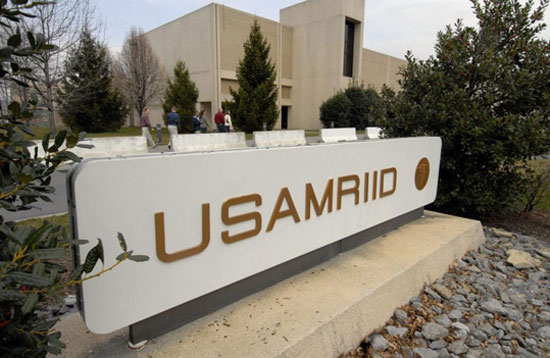
According to questions posed to the House of Representatives in July 2019, during the period between 1950 and 1975 the United States may also have experimented with arming insects and Lyme disease. In a letter from CIA director Stansfield Turner to Senator Daniel Inouye on August 2, 1977, Turner explained that Fort Detrick was working on research that was part of the MKULTRA program, with biological warfare falling within the framework of the MKNAOMI project.
MKNAOMI was the code name for a joint research program of the Department of Defense and the CIA that lasted from the 1950s to the 1970s. The unclassified information regarding the MKNAOMI program and the related Special Operations Department is minimal. Generally, it is referred to as a successor to the MKULTRA program and that it focused on biological programs that included biological warfare agents – specifically, on storing materials that could either incapacitate or kill a test animal, and on developing devices for dispersing such materials.
Apart from the pathogenic organisms that target humans, the project also involved substances intended to affect animals and crops. Richard Helms, who was CIA director from 1966 to 1973, ordered the MKNAOMI files to be destroyed.
Madsen suggests that Gottlieb may have been involved in the emergence of two new viruses in the 1980s during the CIA’s illegal war in Zaire and Angola, Ebola and HIV, but according to Wikipedia, Gottlieb resigned from the CIA in 1972. Towards the end of the Cold War, the microbial stockpile for biological warfare that was accumulated by the apartheid regime in South Africa and developed under “Project Coast” was transferred to Fort Detrick and USAMRIID. It included the West Nile virus and anthrax. As Max Parry writes, the documentary Cold Case Hammarskjöld, which won an award at the 2019 Sundance Film Festival, “puts forth a chilling theory that a South African white supremacist organization deliberately spread HIV/AIDS to black Africans through vaccines in previous decades. In 1998, a document emerged (in the context of the work of the Truth and Reconciliation Commission in post-apartheid South Africa) that was drafted by a paramilitary unit called the South African Institute of Maritime Research (SAIMR) and contained evidence about this program.”
Under Clinton, but unbeknownst to him, the U.S. military worked on a variety of anthrax resistant to vaccines. When the president was informed, he ordered it to stop, but the new Bush administration reversed the decision and ordered the work to continue. Furthermore, in July 2001, the U.S. withdrew from negotiations for a verification system regarding biological weapons.
After 9/11, Fort Detrick made headlines when letters containing active anthrax were sent to American media outlets and to two members of Congress, including Senate Majority Leader Tom Daschle. The strain of anthrax (Ames) made it clear that it was of domestic origin—Webster Tarpley considers this delivery of lethal pathogens to politicians who might delay the passage of the Patriot Act as the clearest sign that 9/11 was an internal coup within the United States. It was found that the anthrax originated from USAMRIID, and a scientist working there, Dr. Bruce Ivins, was identified as a suspect by the FBI despite limited evidence. Ivins committed suicide in 2008 when he learned that the FBI was about to charge him with terrorism. Fort Detrick was placed under stricter restrictions, and the FBI declared the case closed, naming Ivins as the main perpetrator (according to investigations, there is evidence suggesting that Ivins was framed by the FBI). The role of Israel should also be considered here: the false claim by the aforementioned Israeli military intelligence agent and biological warfare expert, Dany Shoham, that the 2001 anthrax letters had been sent from Iraq was obviously part of propaganda to strengthen plans for an invasion of that country. In reality, it was Israel, which, according to reports from the late 1990s, had developed “a genetic biological weapon that would target Arabs, specifically Iraqis, while leaving Israeli Jews unaffected.”
The continuation of research into biological warfare, according to Wayne Madsen, can be inferred from a highly classified special intelligence bulletin dated November 6, 2003, issued by the Directorate of Information. In this bulletin, the National Security Agency (NSA), headquartered at Fort Meade, Maryland—not far from USAMRIID—refers to it (without using the acronym USAMRIID) as the “U.S. Army biological weapons research center.” The bulletin also noted that this facility works closely with the Armed Forces Medical Intelligence Center (AFMIC) of the Defense Intelligence Service. Of course, this was the year when the invasion of Iraq was justified, among other reasons, by the alleged threat of biological warfare posed by Saddam Hussein.
The Project for a New American Century (PNAC), which played a significant role in the pre-election period before George Bush’s election in 2000 and 9/11 (and has since been revised), among its proposals in “Rebuilding America’s Defense” included the development of ethnically specialized biological weapons, following the example of Israel’s alleged biological warfare program against Arabs. Thus, it was reasoned that in the future, “battle will likely take place in new dimensions: in space, in cyberspace, and perhaps in the microbial world… advanced forms of biological warfare that can target specific genotypes may transform biological warfare from a matter of terror into a politically useful tool.”
There are several examples of suspected ethnic targeting. According to Russian military sources, the DNA collection from Russians and Chinese is part of a secret biological weapons program. The U.S. Air Force specifically collects Russian RNA and joint tissue samples, raising fears in Moscow about a secret American ethnic biological weapons program. DNA from Chinese individuals was obtained through a Harvard research program in China, which involved 200,000 farmers, whose data was collected without their consent. I have already mentioned that a preliminary study found that the enzyme-receptor of SARS-COV-2 (and SARS) in lung cells is more prevalent among Asians, although this requires further study.
Officially, of course, there is no research and development of ethnic biological weapons, however journalist Dilyana Gaytandzhieva found documents showing that the US collects biological material from certain ethnic groups – again, Russians and Chinese. The US also collects cancer patient data in China. Still according to Gaytandzhieva, the [American] National Cancer Institute has collected biological samples from 300 individuals from the cities of Linxian, Zhengzhou and Chengdu in China. In another federal program titled Serum Metabolic biomarkers, a study on esophageal cancer, includes the analysis of 349 serum samples collected from Chinese patients. The US National Cancer Institute also collects biological material from patients at the Chinese Anti-Cancer Hospital in Beijing. The Chinese biological material, including saliva, cancerous tissue, etc., has been collected within the framework of a series of federal programs.
In 2004, the United States supported the adoption of UN Security Council Resolution 1540, which strengthened the regime for controlling weapons of mass destruction, including biological weapons. This targeted “pariah states” that supported terrorists—while at the same time the U.S. withdrew from a global regime for such weapons. Indeed, in 2010, a report on the U.S. Air Force made speculations about the threat of “binary biological weapons, designed genes, gene therapy as a weapon, stealth viruses, host-switching diseases, and designed diseases,” indicating continued interest in this type of weaponry.
Given that the NSA also monitors all communications of the WHO, Doctors Without Borders, and the International Red Cross, it learns without delay about any outbreak of infectious disease anywhere. Thus, in 2003, the NSA and AFMIC [Armed Forces Medical Intelligence Center] knew about the SARS epidemic in China, cholera in Liberia, and a series of epidemics in Iraq. The NSA’s Target Office of Primary Interest had under constant surveillance the health ministries, hospitals, international and local branches of the Red Cross and Red Crescent in affected countries.
The American army produces and tests biological agents at a special military facility located at Dugway Proving Ground (West Desert Test Center, in Utah), as proven in a 2012 U.S. Army report. The facility is supervised by the Military Test and Evaluation Command. The Life Sciences Directorate (LSD) at Dugway Proving Ground is responsible for producing biological agents. According to the army report, scientists from this department produce and test biological agents in aerosols at the Lothar Saloman Life Sciences Test Facility (LSTF). The Life Sciences Directorate consists of an Aerosol Technology branch and a Microbiology branch. The aerosol technology branch aerosolizes biological agents and stimulants. The microbiology branch produces toxins, bacteria, viruses and organisms resembling agents, which are used in laboratory and field tests.
The “new” H1N1 swine flu strain of 2009, which caused a global pandemic in 2009, was the product of resurrecting the deadly 1918 Spanish flu from DNA extracted from the corpse of a teenage Inuit who died from the disease in 1918 by scientists from the U.S. Armed Forces Pathology Institute in Rockville, Maryland, not far from Fort Detrick. Although there were the usual denials from the U.S. government regarding genetic engineering of various pathogens, on October 16, 2014, the White House announced that it was halting funding for dangerous government experiments that studied certain infectious agents by making them more dangerous.
In fact, in 2018, after Trump took office, DARPA began spending millions on research into new coronaviruses and again, especially those transmitted from bats to humans. At the same time, “DARPA-supported companies are developing controversial DNA and mRNA vaccines for this particular coronavirus strain, a category of vaccines that has never been approved in the past for human use in the United States.” I return to military vaccine plans in a separate section below.
At least two of DARPA’s studies that used this controversial technology were classified and “focused on the potential military application of gene drive technology and the use of gene drives in agriculture.” The co-director of an NGO that obtained emails through the Freedom of Information Act (FOIA) documenting this stated that the dual-use potential of this technology, both for altering genetic traits and eliminating entire populations, poses a threat to peace, food security, and ecosystems. “The militarization of funding for gene drives may even violate the convention against military uses of environmental modification technologies.” A participant in one of the projects confirmed that “the central role of the U.S. military in funding gene technology meant that researchers dependent on grants for their research might redirect their projects to meet the narrow objectives of these military services.” Between 2008 and 2014, the U.S. government spent approximately $820 million on synthetic biology, most of which was spent through DARPA and the military services.
A private company, the Battelle Memorial Institute, also operates at the National Biodefense Analysis and Countermeasures Center (NBACC) at Fort Detrick, under a Department of Homeland Security contract that was established for the period 2006-2016 and a smaller contract for the period 2015-2026. Experiments at Fort Detrick include aerosol toxin testing, dust dispersion, and experiments with melioidosis, a viral disease with biological weapon capabilities, in primary mammals. At Fort Detrick, Battelle has proceeded to produce other bioterrorism agents that reach biosafety level 4 (the highest).
Insects also constituted a field of military interest for the United States. New recombinant DNA technologies have also made it possible to use insects for disease transmission. Genetic manipulation of wasps, bees and mosquitoes could be developed to transport protein-based biological agents on a large scale. The U.S. Army’s Biological Weapons Branch of the Chemical Research and Development Command studied the biting activity of mosquitoes in outdoor areas in a series of field trials at Dugway Proving Ground in 1960. USAMRIID experimented as late as 1982 with fleas and mosquitoes as carriers of the Rift Valley fever virus, dengue fever, Chikungunya and equine encephalitis – viruses that the U.S. military was researching for their potential as biological weapons. Gaytandzhieva writes that “a 1981 U.S. military report compared two scenarios – 16 simultaneous attacks on a city by Aedes aegypti mosquitoes infected with yellow fever, and an aerosol tularemia attack, and evaluated their effectiveness in terms of cost and casualties.” The Zika virus, which causes birth defects in newborns and recently emerged in Latin America, was among the diseases transmitted by the Aedes aegypti mosquito, also known as the yellow fever mosquito. Also, in 2003 during the U.S. invasion of Iraq, American soldiers were severely bitten by sand flies and infected with leishmaniasis, which if not treated, the acute form can be fatal.
A military-pharmaceutical complex?
Above, I mentioned the fact that the American military worked on a variety of anthrax strains resistant to vaccines during the 1990s and 2000s. This highlights the offensive nature of military biological research, and this one published case may not have been the only one. However, it would be more logical for new pathogens developed by biowarfare laboratories to be accompanied by specific vaccines to prepare for the unintended spread to the population itself. The same applies to other treatments besides vaccines.
In the case of Covid-19, the U.S. Army Medical Research and Development Command signed an agreement with the aforementioned Gilead Sciences. Gilead’s Remdesivir was initially developed for the treatment of Ebola and by chance had some proven success in treating infections from coronaviruses, including MERS and SARS. It was approved for clinical research regarding its effectiveness against Covid-19 by the Food and Drug Administration last February, and the U.S. Army plans to make it available to its units as soon as it is approved.
Under the agreement between Gilead and the US Army Medical Materiel Development Activity, remdesivir will be provided to the Department of Defense at no cost. “Together with our government and industry partners, we are moving at an almost unprecedented pace to provide effective treatment and prevention products that will protect the citizens of the world and maintain the readiness and lethality of our service members,” said Army Brigadier General Michael Talley, commander of USAMRDC and Fort Detrick, in a statement.
Clinical trials of the drug have been conducted in China and the United States, which until today has been provided free of charge to the American military, in order to be released to the market as soon as possible, although, as noted above, a legal dispute has erupted with China over intellectual property rights.
Meanwhile, the Pentagon has also reached out to other industries, not strictly pharmaceutical, to work on drugs for epidemics. Thus, DARPA has invested a large amount in research for vaccines from tobacco plants. It is not unexpected that the companies involved are subsidiaries of the major tobacco industries – Medicago is co-owned by Philip Morris, Kentucky Bio-processing is part of Reynolds, which belongs to British American Tobacco. As Dilyana Gaytandzhieva found, these companies produce flu and Ebola vaccines derived from tobacco plants. The Blue Angel program, a $100 million project, began as a response to the 2009 H1N1 pandemic. With proper handling of tobacco plants, an antigen is obtained that activates the human immune system against a virus. The fact that the Pentagon chose the tobacco giants is partly in response to intense pressures: Medicago spent half a million dollars on lobbying efforts targeting the Department of Defense and Congress, and this will pay off manifold (for the companies) once successful vaccines are developed.
In another project, DARPA’s “Pandemic Prevention Platform” is trying to shorten the research for a treatment for today’s Covid-19 virus. A vaccine may take years to produce and then again a certain amount of time to act in the body – instead, the research aims to identify specific monoclonal antibodies that the human body naturally produces against a virus. This could provide temporary protection, even against Covid-19, if the antibodies are found quickly enough. […]
CEPI [Coalition for Epidemic Preparedness Innovations], founded in 2017 by the governments of Norway and India, the World Economic Forum and the Gates Foundation, funds two pharmaceutical companies (Inovio Pharmaceuticals and Moderna) and the University of Queensland in Australia to develop a vaccine for Covid-19. As has been reported, Inovio and Moderna have close ties and/or strategic collaborations with DARPA. They are developing vaccines that involve genetic material and/or gene editing, an area that overlaps with biowarfare research (the University of Queensland also has links with DARPA).
DARPA and the aforementioned Defense Threat Reduction Agency (DTRA) are funding Inovio, which specializes in DNA immunotherapies and DNA vaccines, to develop a vaccine against Ebola. The company also has a DNA vaccine for the Zika virus, which however has not yet been approved for use in humans in the United States. USAMRIID at Fort Detrick is another sponsor of Inovio’s work, among other things for developing a small portable device for administering DNA vaccines. With its experience in DNA vaccines for coronavirus infections, such as MERS, as well as funding from CEPI, Inovio can very well proceed to produce a vaccine for Covid-19, although the viruses are likely very different. The MERS-DNA vaccine is currently undergoing tests in the Middle East. Moderna, the other company at the CEPI-DARPA intersection, does not develop DNA vaccines, but “messenger RNA”, mRNA. However, DNA and mRNA vaccines would involve the introduction of foreign elements into the human body and could have potentially unexpected results.
Both Inovio and Moderna, although funded by the “global” CEPI, are primarily part of the American military-pharmaceutical complex.
Inovio’s collaboration with the U.S. Army regarding DNA vaccines is nothing new, as its previous efforts to develop a DNA vaccine for both the Ebola virus and the Marburg virus were also part of the … “active biodefense program” that has received multiple grants from the Department of Defense, the Defense Threat Reduction Agency (DTRA), the National Institute of Allergy and Infectious Diseases (NIAID), and other government services.
The fact that the U.S. Army promotes permanent genetic modifications as a means of protecting its troops from biological weapons and infectious diseases highlights that research is never defensive or offensive—it is a deployment on the battlefield that allows the U.S. Army to prevail in a situation where chemical and biological weapons are introduced. U.S. research centers for biological warfare abroad are also involved in the effort to develop vaccines for the military. As Dilyana Gaytandzhieva notes, this primarily concerns the Lugar Center in Tbilisi. In 2007, Georgia terminated its mandatory animal vaccination program against anthrax—as a result, anthrax-related morbidity increased, peaking in 2013. In the same year, two major American defense research programs were launched in Georgia. One involved trials of anthrax vaccines for human use, initiated under NATO auspices—the other a DTRA project titled “Epidemiology and Ecology of Tularemia in Georgia,” which lasted until 2016.
US biological warfare research abroad
The Pentagon considers Russia and China as the two greatest threats to its military superiority, and the incorporation of biotechnology into its defense research is clearly directed against them. The international dispersion of American biological warfare facilities has been thoroughly analyzed by Bulgarian journalist Dilyana Gaytandzhieva, who has already been mentioned several times. The larger part of this section summarizes her work.
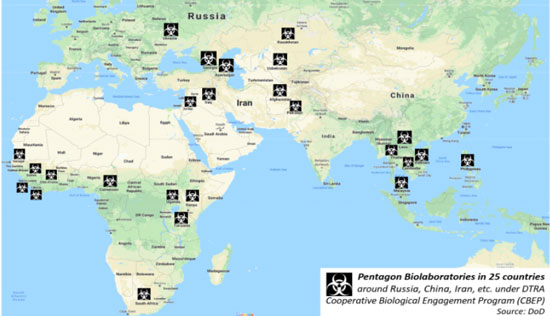
Article 8 of the Rome Statute of the International Criminal Court (ICC) defines biological experiments as war crimes. The US, however, is not a state party to the treaty and cannot be held accountable. The 1972 United Nations Convention on the prohibition of biological weapons is violated with impunity, as the American military routinely produces deadly viruses, bacteria and toxins, exposing hundreds of thousands of people to dangerous pathogens and the often incurable diseases they cause. The Pentagon operates biological warfare laboratories in 25 countries around the world. These laboratories are funded by the DTRA (Defense Threat Reduction Agency) through the CBEP (Cooperative Biological Engagement Program) with 2.1 billion dollars and are located in countries of the former Soviet Union, such as Georgia and Ukraine, in the Middle East, in Southeast Asia and in Africa. Notable is the location of biological warfare laboratories on the borders of Russia and China, as well as on the northern perimeter of Africa.
The map below shows US laboratories abroad.
Among the former Soviet republics, Georgia holds a prominent position as a field for testing biological weapons. The Lugar Center, named after the American senator Richard Lugar, is located 17 kilometers from the American military air base Vaziani, near the capital Tbilisi, employs biologists from the US Army Medical Research Unit and private contractors. The federal contract registry of the US consulted by Gaytandzhieva reveals that the research included work on biological agents such as anthrax and tularemia, as well as viral diseases (e.g. Crimean-Congo hemorrhagic fever, CCHF, a type of hemorrhagic fever). During the period before the US invasion of Afghanistan, CCHF appeared among civilians there, as well as in Pakistan.
Assigning the research to private contractors from DTRA has the advantage of bypassing Congressional oversight and freeing it from legal restrictions. Gaytandzhieva identified three private American companies working at the American bio-laboratory in Georgia’s capital, Tbilisi: CH2M Hill, Battelle, and Metabiota. The diplomatic status for all researchers, based on the 2002 agreement between the U.S. and Georgia on their defense cooperation, also provides immunity from Georgian law enforcement. Besides the Pentagon, private contractors conduct research for the CIA and various other U.S. government services. CH2M Hill also has contracts with DTRA for work in Uganda, Tanzania, Iraq, Afghanistan, and Southeast Asia, but the contract concerning Georgia is the largest, covering half of the total budget. In 2014, the Lugar Center in Georgia was equipped with a facility suitable for insects, which, among other things, may have been related to the fact that the mosquito problem in Tbilisi worsened from 2015. Non-endemic insects similar to those in Georgia have appeared in neighboring Dagestan. Also, in 2014, within the framework of another DTRA program, a tropical mosquito, Aedes Albopictus, appeared in Georgia, as well as in the Krasnodar region of Russia and in Turkey.
Scientists from bioweapons laboratories also work for the Battelle Memorial Institute, a subcontractor of the Lugar Center. The institute operates biological laboratories that work for the Pentagon and other U.S. government services in many other countries, and ranks 23rd on the list of the top 100 U.S. government contractors. It has also collaborated with the CIA, in a program to reconstruct and test Soviet-era anthrax bombs. Metabiota, finally, also had contracts under the Pentagon’s DTRA program in Georgia and Ukraine for scientific and technical advice. Its work focused on global field research of biological threats, pathogen discovery, epidemic response, and clinical trials. During the Ebola crisis in West Africa, it was awarded a large contract for work in Sierra Leone, one of the countries at the epicenter of the 2012-2015 epidemic.
Apart from Georgia, Ukraine, another former Soviet republic bordering Russia, also hosts American laboratories for biological warfare experiments. The DTRA has funded eleven biological laboratories in the country, which Kiev does not control. In 2005, an agreement was signed between the Pentagon and the Ukrainian Ministry of Health, which prohibits the Kiev government from “disclosing sensitive information regarding the American program,” and Ukraine is obligated to transfer dangerous pathogens for biological research to the American Department of Defense (DoD). The Pentagon has been granted access to certain Ukrainian state secrets regarding the programs under the framework of their agreement. One of the Pentagon’s laboratories is located in Kharkov, where in January 2016, at least 20 Ukrainian soldiers died from a flu-like virus infection within two days, and another 200 were hospitalized, but Kiev did not report this incident. In March 2016, across Ukraine, 364 deaths were reported, most of which were caused by swine flu (H1N1), which according to information from the authorities of Donetsk, who lead the separatist uprising there, was due to a leak from the U.S. biological laboratory in Kharkov. A suspicious outbreak of hepatitis A infection in southeastern Ukraine, where most American laboratories are located, as well as cases of cholera, were reported to have been caused by contaminated drinking water.
Finally, a new, highly infectious strain of the cholera-causing Vibrio cholerae, with strong genetic similarity to the strains reported in Ukraine, struck Moscow in 2014. According to a study by the Russian Research Institute of Epidemiology that year, the strain isolated in Moscow was similar to the bacteria that caused the epidemic in neighboring Ukraine. Furthermore, according to Gaytandzhieva, the Southern Research Institute, a U.S. contractor working in laboratories in Ukraine, has programs for cholera, as well as for influenza and Zika—all pathogens of military significance to the Pentagon. The Southern Research Institute has been a major subcontractor under the DTRA program in Ukraine since 2008. The Southern Research Institute was also a subcontractor in a Pentagon program researching anthrax, at a time when the prime contractor was Advanced Biosystems, led by Ken Alibek (a former Soviet microbiologist and expert on biological warfare issues from Kazakhstan, who moved to the U.S. after the collapse of the USSR). There were also claims that field tests were conducted within Russia itself: “In the spring of 2017, citizens reported that an unmanned aircraft dispersed white powder near the Russian-Georgian border. Neither the Georgian border police nor the U.S. personnel operating at the Georgia-Russia border commented on this information.”
Covid-19: Result of American military research?
The most recent phase of DARPA-funded biological warfare research happened to involve bats as carriers of deadly human pathogens. Since 2018, claims have emerged that this research, which oddly matches the origin of coronaviruses, was underway. According to the Washington Post, the Pentagon’s interest in this research direction was motivated by Russian attempts to weaponize bats. However, as Whitney Webb writes, although the Soviet Union engaged in secret research involving the Marburg virus, it did not involve bats and ended with the collapse of the USSR.
Bats are reportedly the reservoir of the Ebola virus, MERS, and other deadly diseases. Bats have also been accused of the deadly Ebola outbreak in Africa. However, given that no convincing evidence has ever been provided on exactly how the virus jumped to humans, this confirms Montagnier’s conclusion that in the case of SARS-CoV-2, we are dealing with an artificial and not a natural virus.
The Pentagon and its biological warfare laboratories at Fort Detrick and abroad have conducted numerous studies under the DTRA’s CBEP program, searching for deadly military-significance pathogens in bats. MERS has also been the subject of experiments under the Pentagon’s auspices, as have influenza and SARS. Confirmation of this practice was Obama’s temporary ban on federal funding for such “dual-use” research. The moratorium was lifted in 2017 by the Trump administration and experiments continued. Experiments with enhanced potential pandemic pathogens (Enhanced Potential Pandemic Pathogens – PPPs) are legal in the US – they aim to increase the transmissibility and/or virulence of pathogens.
The Pentagon’s claim that its research is intended for defensive purposes, as a response to fictional Russian efforts, is a familiar refrain from the era of Cold War arms races. The most recent DARPA program, the Insect Allies program, is also not a defensive program at all – it aims at a “new category of biological weapons.” This was the conclusion of a group of scientists who wrote in Science, led by Richard Guy Reeves, from the Max Planck Institute for Evolutionary Biology in Germany. They warn that using insects as vehicles for horizontal environmental genetic alteration agents (HEGAAS) reveals “an intention to develop a means of delivering HEGAAS for offensive purposes.”
The same applies to DARPA’s research on bats. Whitney Webb lists a series of research projects under this umbrella that aim «to uncover the complex causes of bat-borne viruses that have recently jumped to humans, causing concern among global health officials». Other studies funded by the U.S. military discovered various strains of new coronaviruses carried by bats, both within China and at its borders.
The DARPA Preventing Emerging Pathogenic Threats (PREEMPT) program was officially announced in April 2018. It focuses on animal disease reservoirs, specifically bats. This is an example of “gain-of-function” studies, which are defined as a…
type of research… seemingly aimed at trying to stay one step ahead of nature. By constructing super-viruses that are more pathogenic and easily transmissible, scientists are able to study how these viruses can evolve and how genetic changes affect the way a virus interacts with its host. Using this information, scientists can try to prevent the natural emergence of these characteristics by developing antiviral drugs capable of preventing a pandemic.
It doesn’t take much imagination to understand that the same research allows for the weaponization of discovered pathogenic microorganisms. The DARPA PREEMPT program and the Pentagon’s open interest in bats as biological weapons were announced in 2018, and the U.S. military – specifically the Department of Defense’s Cooperative Threat Reduction Program – began studying bats and the MERS and SARS coronaviruses they carried.
This research was halted when Fort Detrick, the army’s main laboratory dealing with the study of deadly pathogenic microorganisms, including coronaviruses, Ebola and others, was closed in July 2019 by the Centers for Disease Control and Prevention (CDC) due to significant “lapses in biosafety.” USAMRIID was forced to stop all research on deadly pathogenic microorganisms at Fort Detrick, as it lacked “adequate systems for wastewater decontamination,” although in November it was allowed to “partially resume” the research. A USAMRIID spokesperson stated to a local newspaper that “no disease-causing materials were found outside the approved areas of the construction site,” but this would not have been sufficient to address the allegation later made by the spokesperson of the Chinese Ministry of Foreign Affairs. This was not the first time the laboratory had closed: Fort Detrick’s research on biological warfare had also been suspended in 2009, the same year as the last swine flu H1N1 pandemic, after the Pentagon discovered discrepancies in its inventory of infectious agents. The most recent closure came after Fort Detrick’s sterilization system had broken down a year earlier.
The New York Times, citing a statement from USAMRIID, report that the laboratory received a partial shutdown order because the CDC found that it did not have “adequate systems for disinfecting liquid waste” from high-security laboratories. A USAMRIID spokesperson told the Times that the facility’s steam sterilization unit was damaged in a flood in May 2018 and that it has since used a chemical disinfection method.
Failure to follow standard procedures and lack of periodic retraining for personnel working in biological containment laboratories were also cited as reasons for the shutdown. Perhaps most importantly, the laboratory’s wastewater disinfection system also failed to meet the standards set by the federal program for select agents. USAMRIID spokesperson Caree Van der Linden stated to the local newspaper that many projects had been suspended due to the CDC’s order.
From Fort Detrick to Wuhan: coincidence or fatal path?
After the outbreak of Covid-19, the closure of Fort Detrick in July 2019 was inevitably placed at the center of discussions regarding the actual origin of the virus, a laboratory-manufactured, artificial virus. In August 2019, the first death with characteristic symptoms of Covid-19 had been recorded in the United States, though it was attributed to “vaping” (smoking electronic cigarettes). The 2019–20 flu season in the United States was unusually severe: over 26 million Americans became ill, 250,000 were hospitalized, and at least 14,000 people died according to CDC estimates, but the “deadly respiratory virus… circulating throughout the United States [alongside the flu wave]… was not the new coronavirus.”
On the other hand, the “mysterious and life-threatening” vaping illness spread rapidly during the summer and “became an epidemic” according to a doctor cited by the New York Times. “Something is going very wrong”: most patients suffered from difficulty breathing, chest pain, vomiting and fatigue, all symptoms of Covid-19, but the patients were mainly teenagers or young adults. In Italy, on the other hand, general practitioners observed strange forms of pneumonia among the elderly as early as November 2019.
A Chinese newspaper in March 2020 also noted the high rates of flu patients in the US and reported that a request submitted to the White House website on March 10 required the US government to clarify whether the closure of Fort Detrick facilities was related to the virus epidemic.
The report also noted that many English-language news stories about the closure of Fort Detrick were deleted amid the worsening Covid-19 pandemic, raising suspicions about the laboratory’s connection to the novel coronavirus. The reporters asked the US government to publish the real reason for the laboratory’s closure and clarify whether the laboratory was related to the novel coronavirus and whether there was a virus leak.
Until then, however, the US and China had been engaged in a war of words over this issue.
The global military games in Wuhan
The global military games were held in Wuhan from October 18 to 27, 2019. When American officials accused China of delaying its response to the virus and being insufficiently transparent, China retaliated by suggesting that the U.S. participation in those games might be linked to the outbreak of the epidemic. When U.S. National Security Advisor Robert O’Brien stated that China’s delayed response to the emergence of the coronavirus “likely cost the world two months, when it could have prepared for the outbreak,” Chinese Foreign Ministry spokesperson Zhao Lijian reposted an article from Global Research, the website of the Centre for Research on Globalization in Canada, which claimed that the American team brought the virus to China. “When did patient zero appear in the U.S.? How many people have been infected? What are the names of the hospitals?” Zhao Lijian asked in his Twitter post. On February 27, a leading Chinese epidemiologist, Dr. Zhong Nanshan, also stated that “although COVID-19 was first discovered in China, that does not mean it originated from China.”
The New York Times called the allegation an “unfounded conspiracy theory” for which there was “not a single trace of evidence,” but Zhao Lijian was not disavowed by his superiors, and it is not customary for the Chinese state, and certainly not for the Ministry of Foreign Affairs, to make conjectures. Diplomacy is generally a conservative branch of government, and competing states consider state sovereignty (and non-interference in internal affairs) a cornerstone of foreign policy. This entails extreme caution in violating diplomatic conventions and, of course, the avoidance of unfounded accusations that could cause serious damage to relations with China’s main rival in global affairs, the United States. On the other hand, when China’s ambassador to Washington, Cui Tiankai, was asked whether he still insisted on his “crazy” etymology regarding a laboratory virus after Zhao’s intervention, he did. Obviously, Luc Montagnier’s conclusion that the SARS-CoV-2 virus was an artificial virus must be evaluated higher than a diplomat’s word. But which laboratory was involved?
The following constitute a summary of online discussions in China and not official statements, so they should be interpreted with caution.
- The American military sports team trained in Maryland, at a location near Fort Detrick, before departing for Wuhan.
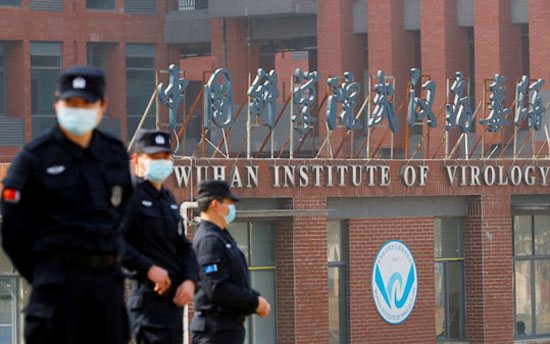
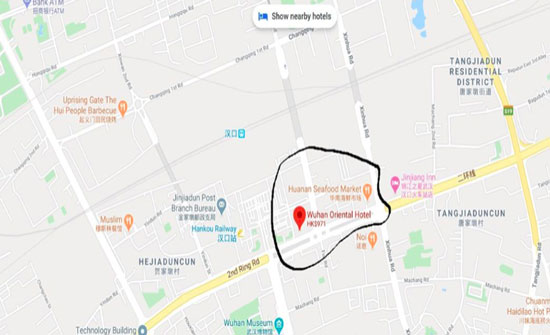
- The American mission of 300 people stayed at the Wuhan Oriental Hotel, 300 meters from the Huanan seafood market, where the epidemic started in China (encircled area) – the Wuhan Virology Institute, the source of the virus according to Montagnier and others, is located 20 miles south of the market, with a river in between.
- Five American soldiers developed a fever on October 25 and were transferred to an infectious diseases hospital for treatment (according to Veterans Today, the American team, which ranked 35th in the competition, embarrassed the “best army in the world”).
- 42 employees of the Oriental Hotel were diagnosed with Covid-19, as was later proven, and they became the first cluster in Wuhan. At that time, only seven people from the market had been diagnosed in this way (and had been treated before the hotel staff). And the seven had come into contact with the 42 from the hotel.
Regardless of whether these events are causally related (the closure of Fort Detrick and problems with wastewater – the training facility of the American team in Maryland – illness among team members and hotel staff in Wuhan – contact with vendors at the market), the alternative explanation offered by Professor Montagnier and others regarding the Wuhan Institute remains.
In any case, it should not be assumed that the virus infection was deliberately transmitted to China, and Beijing has not made this accusation. However, it did request explanations from Washington, and more importantly, according to Roberts, in mid-March, Secretary of State Mike Pompeo called Yang Jiechi, the Chinese state councilor for foreign affairs, asking the Chinese not to disclose what they had found. Normally, Pompeo would have dealt with Foreign Minister Wang Yi, who is Yang Jiechi’s superior, indicating that this was a priority issue for the United States government. Yang Jiechi’s response was: “we await your official explanations, especially regarding patient zero.” Also, the tweet from the foreign ministry spokesperson was not deleted.
The propaganda war
Every time the interpretation of a significant event or incident has reached the point where there is an official narrative, any deviation from it will be characterized as a “conspiracy theory.” This dates back to the CIA’s warning to American media to use this phrase to dismiss criticism of the “lone gunman” position regarding the assassination of President J.F. Kennedy. For the academic community, the circulation of historian Richard Hofstadter’s lecture “The Paranoid Style in American Politics” made academics particularly cautious in conspiracy research for fear of being characterized as paranoid. Hofstadter based his lecture on the strong far-right conspiratorial tradition in the US, which had peaked with McCarthyism in the 1950s, but his position owes its resonance to the Kennedy assassination. After the 2016 elections in the United States, the term fake news, allegedly disseminated by Russia, was added to the category of conspiracy theory and paranoia. So whom do we believe?
There was no direct official narrative regarding the outbreak of Covid-19, except that it started in China, but the Chinese claim about a possible involvement of the American team in the Wuhan games served to harden the stance of the dominant media and academics in the West. As reported by the New York Times, Julian Gewirtz, a researcher at the Weatherhead Center for International Affairs at Harvard, did not fail to characterize Zhao Lijian’s tweet as a conspiracy theory. “Conspiracy theories are a new, low-intensity front in what they clearly perceive as a global competition for the narrative of this crisis,” Gewirtz stated, adding that “there are some Chinese officials who seem to have attended Donald Trump’s School of Diplomacy.” In exactly the same way, criticism of Big Pharma for vaccines and treatments for Covid-19 is dismissed as a “conspiracy theory.”
An example of a more sophisticated approach to the Chinese claim is to emphasize the aspect of animal habitat encroachment while simultaneously acknowledging that laboratory accidents do occur frequently. Thus, Future Tense, a website where Slate.com, the New America Foundation, and Arizona State University collaborate, concludes that the source of Covid-19 could be both the bat story and leaks from some laboratory. It does not even exclude US laboratories in general, but stops there.
On the other hand, there were also American news outlets that simply reversed the Chinese claim, arguing that China’s own biological warfare facilities were the source of the pandemic (as we saw, an institute of virology that could be characterized as such is indeed located in Wuhan). Whitney Webb found that the original sources of these claims are quite suspicious: the first was Radio Free Asia, the U.S. government-funded news outlet aimed at the Asian audience, which was secretly run by the CIA and which the New York Times described as a key component of the agency’s “global propaganda network.” Today, it is administered by the government-funded Broadcasting Board of Governors (BBG), which reports directly to the Secretary of State. Radio Free Asia’s source was a former employee of the Chinese Red Cross, who claimed that genetic experiments at the Wuhan facilities may have resulted in the creation of this new “mutated coronavirus.” This was picked up by the ultra-conservative newspaper Washington Times, which concocted a military angle with the headline “Wuhan-hit virus has two labs linked to Chinese biowarfare program.” The sole source for this claim was Israeli biological warfare specialist Dany Shoham (known for the “Iraqi anthrax”), whom we mentioned above and who was, in fact, very careful not to make related statements on the matter.
Meanwhile, the award for the most primitive propaganda should be given to EU vs Disinfo, a special EU office tasked with identifying “fake news.” Obviously, this body is underfunded and needs to collaborate with less privileged ideologues. Here everything is simple: Russia! The Russian “state-funded Sputnik News” began its malicious work on January 22: “The narrative was in place from the beginning: the virus is artificial, a weapon created by NATO. With minor variations, we see the same claim repeated ad nauseam this week.”
[…]
In the current Covid-19 crisis, states with a strong interventionist legacy fared much better than liberal Western countries, because the state already holds the upper hand, even though they have now transformed into capitalism. Their success cannot also be simply dismissed as authoritarianism, because the element of social protection was also prominent in their history. The images of Chinese, Russian and Cuban teams arriving to help suffering Italy deal with the epidemic, while the neoliberal EU has nothing else to offer but to have ordered the systematic cuts in health spending (and a demonstration of how to wash your hands), demonstrate the point.