
Do not trust the new UN campaign, “Food Systems Coordination Hub”, regarding the “transformation of food systems for global health”. The current corporate agenda, which is supported by this new “Hub”, aims to “hijack” the existing UN food systems in order to impose yet another phase of Industrial Agriculture: promoting their technological fixes as solutions to the problems they themselves have caused, among others in relation to climate change and biodiversity loss.
The food we eat takes a long journey before it reaches our tables, from farms and fields to markets or supermarkets and then to our homes. Each stage in this journey can be very different, depending on who controls the process. Is it from a farm, where small-scale farmers plant and harvest the products? Where do they get their seeds from? Do they share seeds among themselves, as has been done for thousands of years? Or do they buy them from companies? Why, during the pandemic, did almost a billion people go hungry while food and agriculture giants made outrageous profits?
In this podcast series, we will examine who controls the food systems and how these trends are changing. We will investigate which companies are starting to control more commercial seeds, agricultural machinery, and retail trade. We will examine how and why large technology companies such as Amazon, Microsoft, Alphabet, Google, and Alibaba are moving into food. And we will examine new trends unknown to most people, such as carbon farming and digital platforms.
Across the globe, people are struggling to buy food. In these post-pandemic times we live in, the prices of cereals, meat, dairy products and vegetable oils have pushed millions of people to the brink. Most people blame Covid and the war in Ukraine for this. But there is much more happening behind the scenes. For example, do we know who controls the complex operations of the industrial food system? From seeds to crops, sales and distribution?
Let’s start with a company, Corteva. Corteva is an American agricultural chemical and seed company, whose CEO Chuck Magro made the following statement about the company’s profits in 2023, while ordinary people around the world were struggling to pay for food:
“We certainly believe that the outlook for 2023 is very healthy and quite constructive. The conclusion is that the world needs to produce more food. You mentioned the Russia-Ukraine situation, which placed a major obstacle in food supply and really put the very fragile food system in crisis. In our view, 2022 was a very good year. We saw strong demand for our products. And as we look at 2023, we believe it will be even better. We really believe that 2023 will be a very strong year for seeds, for crop protection products.”
Here we have Corteva Agro Science, which is a company that sells seeds and agrochemicals – which basically means pesticides, herbicides, insecticides and fungicides. They seem to be recording very high profits. Meanwhile, however, for consumers, food prices are reaching record highs around the world. We hear that food prices are high due to the pandemic, due to the war in Ukraine and due to climate change. Is all this true?
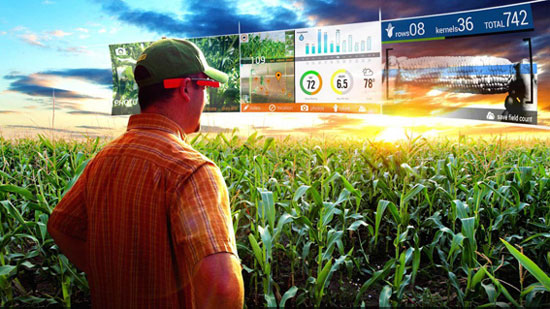
Kavya: Everyone talks about how food prices are higher due to the pandemic, the war, supply chain prices, and climate change, but no one talks about the real reason behind all this: which is corporate consolidation. Justifications such as the pandemic are used as distractions. Corporate consolidation means that fewer companies now hold a larger market share. For example, in the commercial sector of seeds for planting, there are only two companies – Bayer and Corteva – that control 40% of the market.
This has happened over the past decades as a result of many company mergers, where companies are bought by other companies. Even Corteva was created as a result of the merger of Dow and Dupont in 2017.
Neth: The pandemic and the war in Ukraine have indeed provided a very good excuse not to examine what lies behind the food price crisis. I also believe that we are so disconnected from the food system that we don’t even question how our food is produced, who is behind this large-scale production and can shape prices and supply, and the industrial food system that claims to feed the world, as the person from Corteva said. In reality, we take into account very little the players, trends, and functions of the food system.
Zahra: Before we get into more details, let’s try to understand what the food system really is. You say it’s a handful of companies that are getting bigger and bigger. For example, Kavya, you mentioned Bayer and Corteva. But what percentage of the food system do these companies control right now? And what about all the small-scale farmers who grow vegetables, corn, and all kinds of other crops that we eat? I mean, where do they fit into the picture of the food system?
Neth: This is really a critical point that we need to bring up in this discussion, starting with the very basics. What do we mean by the term “food systems”? When we present food systems as “The food system,” it gives the impression that there is only one food system that starts from seeds and goes all the way to consumption. At ETC we have been trying to demystify this for the past 20 years and we presented that at least 70% of the world actually depends on food that has been produced, not by companies, but by small farmers. All these people who are mostly marginalized and barely recognized when we talk about food systems. We call this the “peasant food web,” to refer to production by small farmers, often on land they do not own.
But the remaining 30% is actually the industrial food chain. This is the food system that this Corteva person—and other corporate players—are referring to. And this is the same industrial food system that is responsible for many of the problems we face in food and agriculture, such as pollution of water sources, soil degradation, biodiversity loss, monocultures, and all the problems related to climate change that are attributed to food and agriculture.
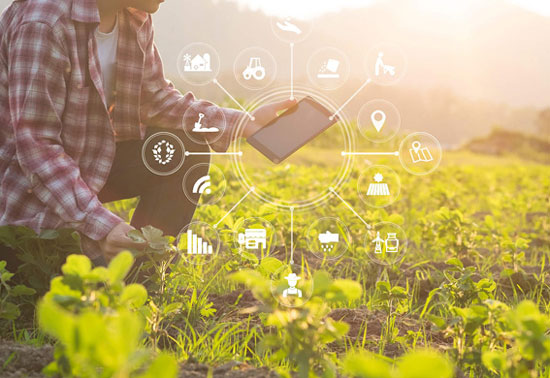
Zahra: It is quite astonishing that 70% of food production comes from this “agro-food system,” as you call it. And that while only 30% is the industrial food system, it is in fact responsible for a huge percentage of destruction.
Neth: Yes, we must recognize that the production system in the industrial food chain is very destructive: massive use of pesticides, fungicides, herbicides, as well as massive use of chemical and synthetic fertilizers. And of course, massive dependence on laboratory-produced seeds, which tend to be uniform, focused on specific crops and varieties that claim to be much more productive. “Productivity” is actually measured exclusively based on yield. Their obsession is with the quantity produced at the expense of the quality of the foods we eat, which are much more contaminated with chemical substances and microplastics.
Very little attention is given to the “agro-food sector,” which in reality produces foods with far fewer chemical inputs, while lacking support from governments regarding irrigation, seed subsidies, and fertilizers.
Zahra: Let’s return to the details you mentioned earlier. Are there specific companies that control specific sectors within the 30% of the industrial food system? Most people have heard of Monsanto, but they haven’t heard of Corteva or Cargill, which are extremely powerful in this sector, or Yara, or Syngenta. You mentioned that 40% of the commercial seed market is controlled by two companies, which you said are Bayer and Corteva.
Kavya: In the seeds and agrochemicals sector, there are companies such as BSF, Bayer and Syngenta. Syngenta controlled approximately 25% of the market share in 2020 and 7% of the commercial seed sector for sowing, while Bayer controlled 16% of the agrochemical sector and 23% of the commercial seed sector for sowing. Thus, together in both agrochemicals and seeds, the two leading companies control approximately 40%.
For agricultural machinery, it is John Deere that controls 17% of the sector, while the top four, which together with Deere are Kubota, CNH Industrial and AGCO, control about 44% of the sector. There are also the financial companies which are among the most powerful and least transparent companies in the industrial food chain. In 2020, the top 10 financial companies in agriculture had revenues of over 1.5 billion dollars.
Neth: This question is very interesting: why don’t we hear or know much about these companies that dominate the food chain? I believe this observation is very true from the consumer’s side, but less true from the producers’ side. Farmers are actually impacted by the industrial food chain, and if you go to small agricultural communities, people refer to seeds by the company name, e.g. DuPont, or in the era of Monsanto, they would say “this is Monsanto.” Agricultural advisors also, including state ones, refer to the company name rather than what kind or variety is being sold commercially.
This is even more dramatic with agricultural machinery. I have been in some agricultural communities where farmers actually call the machines – not a tractor – they would say “there’s a Kubota there.” They actually refer to the brand name because Kubota is one of the largest agricultural machinery companies in the world, based in Japan.
Whoever owns a Kubota on farms in the Philippines or across all of Southeast Asia, for example, belongs to the richest farmers. Therefore, there is also this perception that those who use branded seeds, those who use these machines, are actually connected to those farmers who can afford to buy “monster” machines. The term “monster” is significant, because when the Philippine government began developing large agricultural machines that combined tractors, harvesters, and threshers in rice farming communities through cooperatives, the small farmers—and women—who actually depend on this seasonal work, started referring to these machines not by name, but generally called them monsters, “halima,” in the local language. Monsters, because they devoured the jobs of seasonal workers, of small-scale farmers, especially women.
So I believe these are interesting differences in perceptions. Consumers who are much more disconnected, who are further along in this production chain, are actually not familiar with these names, but the people at the beginning of the chain, whose lives are directly affected by the industrial food chain, really know them.
Zahra: Apart from these large companies, there are other entities involved in the industrial food system, for example, asset management companies. Can you explain what exactly an asset management company is and how it is involved in the entire operation of the industrial food system?
Kavya: Asset managers are like giant investors that manage and invest their clients’ capital. They work behind the scenes in the food and agriculture industries. These companies hold shares in competing companies throughout the entire industrial food chain. This is called horizontal ownership, which is the practice of holding assets in multiple companies that are actually supposed to compete with each other. But they are unlikely to compete if they have common owners. In 2021, Blackrock, Vanguard, and State Street, which are known as the three big investment families, were among the top four institutional shareholders in the US that traded retail stores such as Walmart, Kroger, Costco and Amazon.
Zahra: This means that Amazon, Walmart, and Costco, instead of competing with each other, actually have the same owners?
Kavya: Yes, exactly. So, if you look at the data for corporate consolidation in these sectors, you might think that the data is not that bad. That there is healthy competition in these sectors. That’s what it looks like. But in reality, when you look at who owns these companies, it’s the same capital managers.
Zahra: Why should we be concerned about corporate consolidation? Why is it a problem?
Kavya: Many times people wonder what the problem is if two companies control 40% of the commercial seed market. It is a serious problem, because when so few companies play in these non-competitive markets, and essentially dominate these non-competitive markets, with little regulatory oversight, they can use their market power to increase prices. And this is what many claim happened during the 2008 food price crisis.
These companies, when they are so well-established, can direct the research and development agenda, as is evident in the case of GMOs, glyphosate, and now digital platforms. They can hold monopolies on “extractive technologies” and maximize their profits, while continuing to extract value from farmers and consumers by charging high prices, attacking workers’ rights, causing erosion of seed diversity, deforestation, and contributing to greenhouse gas emissions.

Zahra: These companies are somewhat shadowy to most people, but there are other companies that most people are very familiar with, such as Amazon, Microsoft, Alibaba, which are increasingly involved in food and agriculture, creating an entirely new trend: digital agriculture. What exactly is this?
Earlier we mentioned the agricultural company Syngenta. Here’s what Syngenta’s managing director, Greg Meyers, said about digital agriculture:
“We are now looking for the next stage of change in agriculture, and what we see is the opportunity to bring information technology, data science, and digital technology to the agricultural world. And so Syngenta – we are one of the largest agricultural companies in the world – helps in building products that will allow farmers to be successful. So, in the world of digital technology, we work on three possible opportunities. One is how we will make agriculture more sustainable and at the same time, how we will improve food production in a world whose population is increasing. And finally, how we will increase farmers’ profits.”
All of this sounds very promising: Greg Meyers says that bringing digital technology to the agricultural world will help make farming more sustainable and more profitable for farmers. Is there any truth to this? The term that the ETC group uses for the application of digital tools, strategies, and business models from these companies to the industrial food system is “agricultural digitization.” Neth and Kavya, can you explain in more detail what agricultural digitization means?
Kavya: As you said, digital tools are applied at every stage of the industrial food chain, from the beginning. So, there are digital technologies that are applied from seed processing all the way to animals like pigs. There are agrochemical companies and seed companies that collaborate with drone companies that collect data from farms, data about soil moisture, data about the harvest, about how planting is done, what kind of seeds are planted, how many agrochemicals are sprayed, etc. So, all this data is collected via drones and sensors and analyzed by a software company.
And then there is also robotics, not only for harvesting fruits and vegetables on farms, but also in warehouses where robots locate, package, collect, and send items including food. Greenhouses where digital technologies are used for continuous monitoring, robotic planting, spraying, and watering.
It is interesting that digital technologies are also used for industrial livestock farming, such as facial recognition software, sensors and cameras connected to AI, which according to these companies will help in detecting and preventing diseases in animals.
The most prominent examples in the consumer field are stores with online orders and subsequently food delivery. I would like to share an interesting excerpt from Syngenta’s manager regarding the digital agriculture platform. In 2021, he said that in the past they sold pesticides, seeds, and fertilizers, and that now they are an agricultural services company, selling services and technology. Thus, you can see how all these large agricultural and food companies are redefining themselves as service and technology companies.
Zahra: I want to ask for a clarification: when we talk about agricultural digitization, we are talking about the application of different digital tools throughout the entire food system. How do technology companies come into play? You have already discussed how large agricultural companies, food companies, or food producers—the companies we mentioned earlier when we talked about corporate consolidation—bring these new digital tools into their businesses. But what about companies like Amazon and Microsoft?
Kavya: All the technologies in this digital process that I mentioned require the collection of big data at every stage of the industrial food chain. And so there are many ways for technology companies to enter the industrial food chain. To begin with, there are the large technology companies that provide cloud services to large agricultural companies. Why do we need cloud services? Because all this big data that is collected from farms, warehouses, food delivery needs to be collected, stored and processed somewhere. And this is where cloud services come in. Amazon and Microsoft are some of the biggest players in the cloud services industry. And all the data such as planting area, weather data, soil moisture, yield, geochemical spray, all this goes to the cloud.
The second way technology companies enter the industrial food chain is through direct acquisition and investment in industrial foods and agriculture. An example is Facebook, which purchased 10% of Reliance C, which is the telecommunications arm of Reliance, a major player in retail in India. There are also other indirect ways, such as Corteva, for example, which collaborated with Planet Labs, which offers satellite imaging products that began investing in the New York Stock Exchange with the support of Google and BlackRock.
Neth: I think it would help with better understanding if you talk about the participation of technology companies in food and agriculture; to “delve” a bit more into technology companies. Kavya spoke about big tech companies. It would be good to also appreciate the participation of smaller companies that are also part of the technology companies.
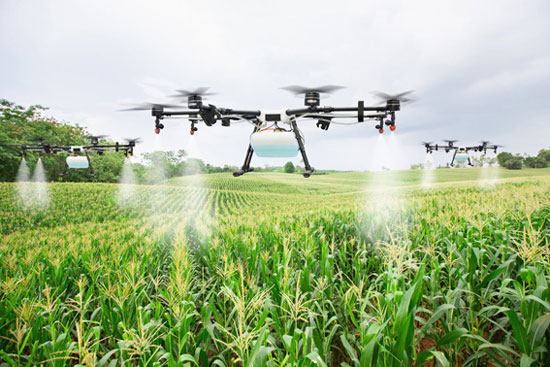
Who would have ever imagined that drone manufacturers would become major players in the food and agriculture sector? Drones that were developed in a military context to spy, even shoot targets in Afghanistan, to kill civilians, were later used more and more for entertainment, hobbies and the creation of artistic works. And increasingly now in the field of nutrition and agriculture where drones are used to spray chemicals, and this is not limited only to the industrial North, but also applies to developing countries. For example, there are contractors who produce bananas on behalf of the large banana plantations, such as here in Davao, and use drones to spray chemicals on their plantations, in order to supply the larger plantations that export bananas elsewhere.
Also, there are government agencies that are increasingly interested in producing more drones for smaller farmers, which will be used largely for spraying. And here the role of Indian companies that aspire to become key players in the production of agricultural drones must be mentioned. Because, as we discussed, drones for any use, whether it is for recreation, hobbies, or agriculture, is actually a sector dominated by Chinese companies, to a large extent by DJI, which is the largest drone manufacturer in the world, and by XAG, which focuses more on the production of agricultural drones. Both of these Chinese companies have close collaboration with large agricultural companies, such as Syngenta, which, in Southeast Asia and Pakistan, is testing DJI drones for spraying chemicals that it has itself produced.
And it’s not just that, drones can do much more. In collaboration with other companies that produce sensors, they are able to monitor the field regarding growth, plant condition, detection of harmful organisms and diseases. So in reality we are talking about large and small technology companies that have continuously increasing interests and expanding roles.
Zahra: You mentioned big data and how this data is extracted through digital technologies. Can you explain what exactly big data is? We keep hearing about it. What does it actually mean?
Kavya: Overall, the term “big data” is used to refer to large volumes of data. For example, there are massive databases of genomic or weather information. But there is something more to the definition. When we talk about big data, we also refer to the tools and techniques for processing such large datasets, which are often in unstructured form. We do this in order to find useful patterns, signals, and correlations. So, the Excel files used by a farmer to record his sales are not big data. But a “data lake” of information flowing in real time through sensors across hundreds of farms regarding soil moisture, weather—this is big data and requires “big data” technologies to process it.
Zahra: Neth, you mentioned drones as tools in agriculture and production. Are there other examples of tools that technology companies make available to farmers?
Neth: An interesting example that I find fascinating is how facial recognition is used in farms. And this is actually widely used in pig farming, in livestock operations in China, but increasingly also in Europe and Latin America, where Chinese companies have started pig farming and livestock businesses. The use of facial recognition in pigs was introduced by a gaming company in China called NetEase.
NetEase is one of the largest gaming companies in the world that has invested in producing biological, sustainable, and happy pigs in China. In fact, they market their pigs as “happy” because they are well-cared for and have good living conditions: they have these pig pens that are actually much better and much more dignified than the dormitories where the workers live in the pig farm. They are also fed organically and classical music is played in their pens. That’s why they are sold commercially as “happy pigs”.
And the facial recognition technology allows NetEase’s farm to be able to – not only recognize each pig – but also monitor their health status, feeding patterns, as well as when they are mature enough, to be sold at a good price.
I find it funny, but I believe that this “funny” perspective can make you forget the critical angle from which we should view it. And I think this is part of the game, to forget to ask why and which are these technologies. The facial recognition technology, for example, is the same technology used by the Chinese state to recognize the faces of Uighurs in that part of China which is strictly controlled, with reported human rights violations. And this same technology is increasingly being applied in certain livestock facilities in Europe.
Of course, the main claim for profitability is the reduction of human labor. With all these technologies, the number of workers is actually reduced, which actually means fewer general expenses regarding salaries and benefits for workers, compliance with new work standards and all that. And it is also the same technologies in combination with drones, in the case of Japan, that are used to address labor shortages in a country where population aging in rural areas has become a multi-year problem. It should also be taken into account, in the case of Japan, that it has a very strict regulation regarding migrant labor.
Therefore, we must examine how these technologies are actually used to justify certain interventions, even political interventions – let’s say, for example, the treatment of the elderly population in rural areas – and critically examine this intervention in a broader context, such as migration policies, labor patterns, or human rights issues.
Zahra: You mentioned some of these technologies that are used in Japan, Europe and China. What about the rest of the Global South? Is this trend of digital agriculture and digital tools in agriculture happening in other parts of the Global South as well?
Kavya: Yes, for example in India, the government is building the Agri Stack, which is a collection of databases and other digital technologies. One of the things being done with the Agri Stack is that every farmer should be given a unique digital identity under which their personal data will be collected, such as their name, age, household size, farm size, really many details about their sector, where their crops are, etc… And the government has already signed memoranda of agreement with about 10 companies or more, including large technology companies such as Amazon and Microsoft.
In Indonesia, the government has also signed memorandums of agreement with Microsoft to promote digital technologies, especially among small farmers. As Neth has already reported, there are Bayer and XAG, a Chinese drone manufacturing company, which have collaborated in Southeast Asia and Pakistan for crop spraying, specifically targeting small farmers in these regions.
Neth: This increasing application of digital technologies in agriculture is also expanding to the South, largely through deliberate efforts by major players. There are even state organizations, as in the case of the Philippines, where the research institute PhilRice promotes the use of drones in rice cultivation, for spraying pesticides and for spreading/planting seeds “to address the problem of labor shortage”, which is quite peculiar in a country where there is high unemployment in rural areas.
Zahra: Why is the food chain so “attractive”? If we look at the big players, the large technology companies, Amazon or Microsoft for example, they seem to already have huge profits selling cloud services. You mentioned that some digital technologies are being pushed to small-scale farmers. But why? Why is the food system attractive to technology companies, given that they already have so much profit?
Kavya: I think it’s because food is essential for life and prosperity. And when you look at it from a profit-making perspective, this is a huge source of profit. Being able to determine what people eat, collecting data from every stage of the industrial food chain, gives you enormous power. And I think it’s a lot of control and a lot of money.
Neth: I also believe that the food and agriculture sector is a natural extension for big tech to push for its technologies and also to push for its business model, which is largely based on data collection. If they apply this to food and agriculture, it could be inexhaustible: data from the soil, water, from all this biodiversity around us and from how farmers and all those involved in production relate to biodiversity, from agricultural practices and how they evolve. These are huge sources of profit, and they create resources for big tech.
Zahra: One of the narratives we often hear, especially when it comes to digitalization as a whole, is that it is inevitable. We hear that the internet was this thing that changed the world, just like the steam engine, and we see that digital technologies are developing in many sectors, not only in food and agriculture, at a very fast pace. So, one of the things we often hear is that digital technologies make agriculture more efficient, especially when we talk about climate change. What is the answer? That digital technologies are inevitable and actually quite good when it comes to the crisis we are facing?
Kavya: It’s ironic, isn’t it? These very companies that promote this narrative are those responsible for the majority of agricultural greenhouse gas emissions. They are responsible for the illegal deforestation of the Amazon rainforest and the contamination of groundwater. And what about energy, water, and the intensive nature of digitization? Data centers require vast amounts of water. Google itself reported that all its data centers globally consume approximately 4.3 billion gallons of water, which is enormous. The semiconductors that go into our electronic devices also require massive amounts of water. In 2021, Taiwan, home to TSMC, the world’s largest semiconductor manufacturing company, faced a drought and had to divert water from approximately 183,000 acres of land to the chip production industry. Thus, it prioritized the chip industry over farmers.
Regarding electrical energy, in 2017, even before the pandemic when data usage/ collection skyrocketed, a study found that the ICT (Information and Communication Technologies) industry would use 20% of the world’s total electricity by 2025. And I haven’t even mentioned mining, the cobalt, lithium, and nickel that go into all these devices, or the labor exploitation throughout the supply chains that dominate digital technology.
Zahra: Is there, however, some way for digitization to be useful for small-scale farmers?
Neth: For me, it is useful to always return to the basics of this question. Is it beneficial for farmers? Who determines this? We enter into a discussion about something that has already been agreed upon under specific conditions and by specific interests – in this case, it was agreed upon, decided, and shaped by corporate interests – to find out how this can be beneficial for farmers? They come first with a solution and then ask farmers for a second opinion, “okay, do you think there is some good use for this?”
What are the questions? What situations are farmers in? If you go to an agricultural community, whether they are indigenous or local farmers, as in the Philippines, one of the main problems that arise is that these people do not have access to the market. Their farms are in communities without electricity, without support, not even a school. They produce their products there and want to bring them to the market, in an area where there are no roads. So how can digitization be beneficial for this community?
Also, we are talking about a solution that is not autonomous: it has prerequisites, such as the need for electricity. For the 10% of the global population that does not have access to electrical energy, how can digitization work for them? And these are the most marginalized of all communities, the poorest who we should be supporting. And we’re not even talking about digital infrastructures like 5G, 3G, etc… But about the basics, much more fundamental than those. We must let those who face these problems define the problem and determine solutions based on options that are relevant to them, and defined by them.
Zahra: How can people regain control of agriculture from large agricultural and technology companies?
Neth: The question essentially brings us back to the point where we started, that at least 70% of the global population depends on food production from the “agricultural food system.” Meanwhile, we must recognize that farmers and other food producers have been left alone in addressing the challenges of the climate crisis. Furthermore, we must add to this the challenges of the impacts of the industrial food chain, which fully affect the “agricultural food system.” If the industrial food chain heavily promotes pesticides, its hybrid seeds, and its genetically modified model of agriculture, it will actually limit the work, capacity, and resilience of the “agricultural food system” to produce and supply food.
This requires changes in policies at national and global levels, for the benefit of small-scale farmers and to promote agroecological practices in food production. Finally, it requires the allocation of resources, financial and political, to advance sustainable practices based on the wisdom of many generations that form the foundation of traditional local indigenous systems. This requires a reorientation of the way the world supports agriculture, the food production that feeds us now and will continue to feed us in the future.
Translation: Wintermute