
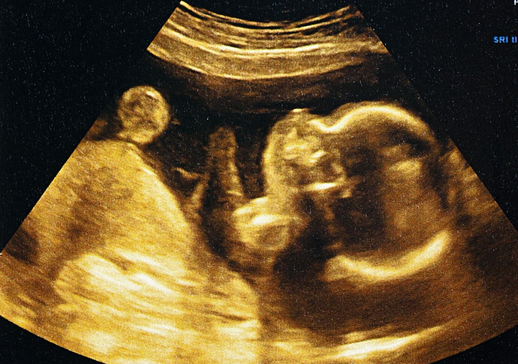
A team of experts from China has created the world’s first mini-uterus on a chip that can fully reproduce the “implantation” of human embryos in the uterus during early pregnancy. Their three-dimensional model on a microfluidic chip can be used to uncover the mysteries behind this implantation and (as promises always say) lead to treatments for women who have difficulty getting pregnant…
In order to bypass the ethical concerns that such research could raise, chinese scientists from the “Institute of Zoology of the Chinese Academy of Sciences” announced that they created a three-dimensional model of this implantation using human blastoids or blastocysts cultivated with a biotechnologically modified human endometrial tissue called endometrioid.
Blastocysts are embryos of 5 or 6 days that consist of 100 to 200 rapidly dividing cells, along with an outer cellular mass from these that will “attach” to the uterine walls to develop into a placenta. Experiments with embryos of such an “age” are permitted, and indeed the chinese researchers did not violate any legal or ethical rule.
Only the same question remains, repeated over and over again, without having time to be answered – a question dismissed as “philosophical,” although it is extremely political: if all social issues (a woman’s inability to become pregnant could be considered one…) are transformed into mechanical/technical matters, then what will remain to be called immediate social relation and life?