
A few days ago, a relatively small Chinese company announced a new “large language model” (the official technical term for what is commonly referred to as “artificial intelligence”), which overturned the so far dominant position of the U.S. in this specific field. Called DeepSeek, it outperforms ChatGPT (and other Western models) in terms of speed and accuracy of the responses it provides, as well as in cost, since its “training” and usage costs only one-tenth of the money/resources used for the corresponding Western models. And most importantly: its developers publicly released the source code for free use, meaning that anyone who wants—and can—has the ability to take it, make the changes they want, and put it to work on their behalf.
As expected, this caused disruption in Western companies and markets, and the reason was not only any challenge to Western supremacy in the field of “artificial intelligence” at a global level—it was not simply a “Sputnik moment,” as they characterize it. And this is because, beyond individual users and researchers who now have access to an almost-free and currently superior “automated knowledge technology,” there are also companies that want to integrate such technologies into the products and services they offer and can now do so at a significantly lower cost. And that is what constitutes a catastrophe! Not only will the data of Western citizens go to—and feed—the Chinese competitor, but a significant portion of Western capital will also be built upon Chinese technology; and moreover, in one of the last sectors where, until yesterday, the West could proudly claim to hold the scepter.
The immediate impact of this development was the drop in stock indices of several western companies’ bubbles, with that of Nvidia (the company that makes the specialized chips used for these models) being the most significant, and the start of a communication counter-offensive to contain this decline. The main arguments in statements and online discussions by named and anonymous individuals included, among others, questioning the production cost claimed by the Chinese company, accusations of copying western models, the stance that the real winner is the “open source” culture (and not Chinese capitalism), and criticism regarding the censorship the model in question has undergone on sensitive issues related to the authoritarian nature of the Chinese state.
This latter point is of particular significance and interest, not so much in the narrow sense of censorship—what, for example, would a Chinese model answer if we asked it about Tiananmen, or a Western one if we asked it about Afghanistan? One might say that these are self-evident… But more so in the broader sense of the “values” that manufacturers imbue into their models. It may sound somewhat far-fetched, but since their goal is to create “intelligent algorithms” that will have a general understanding of everything, learn autonomously, and respond to a wide range of problems, it is precisely here that the question of “values” comes into play. Beyond the data they will have as information and the mathematical models upon which their “intelligence” will be based, on what value systems will the “character” of these “intelligent algorithms” be built? Will it be the “democratic values of the West” or the “authoritarian values of China,” for example? There are abundant statements available online from prominent “mentors” and entrepreneurs regarding how important it is to establish an “artificial intelligence” aligned with “our own” values.
We could easily disentangle this concern by simply recognizing it as part of the communication warfare inherent in inter-capitalist competition—which it indeed is—if it did not also highlight something else we consider worth mentioning: the interaction between the “creator” and the “created.” We can argue that every techno-scientific development results from a specific process that embodies the values of the “knowledge system” that produced it, and in turn feeds into subsequent developments, creating a dialectical relationship between producers and products. Thus, in a way, the ideology of the constructor becomes embedded in their creation, but the creation itself (both previous and subsequent in turn) constitutes constants that shape the ideology of the constructor—and their consumers. For example, the desire (ideology) of those in power for control and surveillance is the main driving force behind the creation of related technologies (cameras, mobile phones, social networks, etc.), which in turn have shaped the consciousness of supervisors (“we are watching you, we are counting you, and we know more about you than you know about yourself”) and the supervised (“they are watching and counting us, but that’s okay, we don’t have anything to hide”).

In this particular example, we are not so much concerned with what kind of consciousness “smart algorithms”1 will have, but rather with what kind of consciousness those who wish to create such algorithms possess. More precisely, those who wish to create so-called “artificial general intelligence”2, which is the ultimate goal of models like chatgpt, deepseek, etc. A note is needed here. “Artificial intelligence” is divided into two basic categories: the so-called “narrow” which aims to construct “smart” algorithms designed to respond to specific problems within a limited framework (e.g., autonomous driving, machine vision, sound recognition, industrial applications, etc.) and the “general” which aims… everywhere! In essence, there is no clear definition of where artificial general intelligence aims because it is impossible for it to exist. The only thing that exists is the general perception that we will create something smarter, faster, wiser, more…, more…, more “of everything” than humans. And that this something is inevitable that it will emerge with technological progress, so we should anticipate it and “tame” it first. The stargate project, for example, which was announced by the US in mid-January, aims to fund research for “artificial general intelligence” with 500 billion dollars. The same days, deepseek was also announced.
Based on this distinction between narrow and general AI, a corresponding division has also emerged within the techno-scientific community, where on one side we might say are the “traditional” scientists, faithful to a liberal enlightenment with its “sacred-and-holy” principles, while on the other side are the post-postmodern transhumanists, sworn to the upcoming utopia or/and the catastrophic outcomes of technological progress. Our definitions may not be very precise, but it would take much more space to describe the situation as it actually is. However, an example that could help is the division within the scientific community during the period of covid (which continues until today). There we have a significant portion of scientists who are against the dominant narrative about the pandemic, against its management and against the imposition of platforms on healthy populations. This division was not made only on the basis of ideology, but it was also made there. We could say that those who were against it were the “faithful” to the Hippocratic oath, the scientists of the so-called “evidence-based science” while those who were “long live genetic engineering” had a “predisposition” for utopian visions through biotechnology – beyond material interests and immediate gains… While the so-called “heretical” scientists are no less “scientists” – in the sense that they are “derivatives” of this particular knowledge system – and we certainly cannot recognize anti-capitalist tendencies in them, through this intra-scientific dispute positions and knowledge emerged that helped whatever anti-establishment criticism. As indeed happens with all “intra-” competitions.
In the case of “artificial intelligence,” the “heretics” are in favor of constructing “smart algorithms” for specific applications and criticize the attempt to build an “artificial general super-intelligence” as an irrational and anti-scientific goal that has already had harmful effects on society. The authors of the article below (parts of which we have translated) belong to this category of “heretics” and are opposed to the construction of an “artificial super-intelligence” and against any attempt to simulate the “human being” as a whole through technology. As academics and scientists, they do not entirely reject the idea of constructing “smart algorithms,” provided there are “clear specifications and limits.” Phil Torres is an American philosopher—who was once a supporter of some of the ideologies he now criticizes—and deals with “eschatology,” “existential risks,” and the “extinction of humanity,” and his academic career includes what one would expect. Timnit Gebru is a computer scientist in the field of “artificial intelligence,” who was born in Ethiopia and worked at Apple, Microsoft, and Google until she was dismissed in 2020 due to an article she co-authored regarding the risks of “large language models.” She is a co-founder of “Black in AI” and the “DAIR Institute,” organizations that promote an alternative approach to technology and “artificial intelligence,” against Big Tech and the biases, environmental impacts, and inequalities they create.
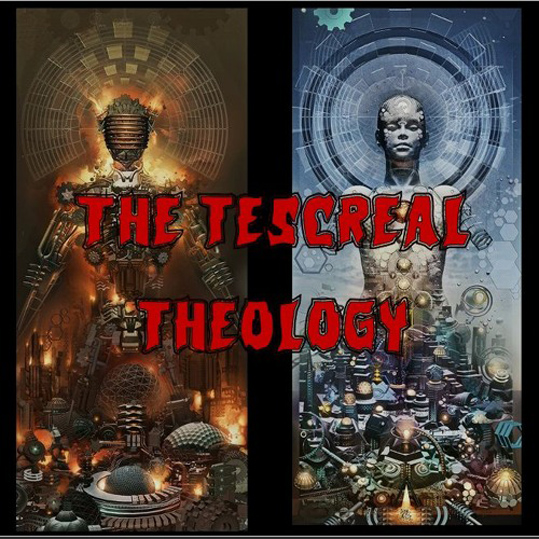
Both of them, in their attempt to study and highlight the dangerous foundations (and relationships) upon which research (funding and whatever else it entails) for “artificial intelligence” has turned, created the term “TESCREAL,” which consists of the initials of the core ideologies they argue guide the “quest” toward “artificial general intelligence.” As they point out, these ideologies run parallel, share similar elements, and have a historical relationship with eugenics. While in biotechnology it is easier to discern parallels with eugenics, in the field of “artificial intelligence,” these connections are less obvious. However, we do not consider it excessive to suggest that the key “stakeholders” in this endeavor are driven by these ideologies and, representing a significant, even “extreme,” segment of capital, promote corresponding policies—or rather, the opposite.
Wintermute

the ideological spectrum “TESCREAL”: eugenics
and the promise of utopia through artificial general intelligence3
In recent years, there has been a resurgence of interest in the goal of building “artificial general intelligence” (AGI), a system that is differently defined by various individuals and organizations seeking to create it. For example, OpenAI defines AGI as “highly autonomous systems that outperform humans in most economically valuable work.” Pennachin and Goertzel, who popularized the term in 2007, define it as “a software program capable of solving a variety of complex problems in a variety of different domains, and that autonomously controls itself, with its own thoughts, concerns, feelings, strengths, weaknesses, and predispositions.” Peter Voss, who claims to have helped coin the term, defines it as “a computer system that equals or exceeds the cognitive (not physical) abilities of a smart, well-educated human.” Renowned AI researchers Stuart Russell and Peter Norvig define it as “a universal algorithm for learning and acting in any environment.” While several of the researchers who coined the term “artificial intelligence” (AI) in 1955 aimed to create “machines performing the most advanced activities of human thinking,” this goal was abandoned by many researchers in the field until the 1990s, partly because they did not want to be associated with grandiose claims that could not be realized. Such claims led to the “AI winters” of the ’70s and ’90s, when research into AGI lost funding. After that, the field focused primarily on building specialized systems that some call “narrow artificial intelligence.”
Recently, however, there has been a multiplication of organizations aiming to create AGI and claiming that their products are close to achieving it. While several researchers have discussed whether various methodologies can succeed in building AGI, there is little discussion about why AGI is considered a desirable goal by many in the field of artificial intelligence, and whether it is a goal that should actually be pursued or even if it is feasible. The process of building a system that would be an “omniscient” entity, capable of performing any task under any conditions, has already brought about many documented impacts on marginalized groups, worker exploitation, data theft, environmental racism, the spread of misinformation, and plagiarism.
In this article, we ask: What ideologies drive the efforts to build AGI? To answer this question, we analyze primary sources from leading figures who invest in, support, and attempt to build AGI. Alarming, we trace this goal back to the Anglo-American eugenic movement, through transhumanism. In doing so, we delineate a genealogy of interconnected and overlapping ideologies we call “TESCREAL,” an acronym composed of the following ideologies: transhumanism, extropianism, singularitarianism, modern cosmism, rationalism, effective altruism, and longtermism.
These ideologies, which are direct descendants of the eugenicist first wave, emerged roughly in this order, and many were shaped or founded by the same individuals. We show how the TESCREAL ideological spectrum came to promote efforts to build AGI by examining the supporters of these ideologies who funded them. For example, the first book on AGI (Pennachin and Goertzel, 2007b) was written by a transhumanist, cosmist, and participant in the extropian movement, whose explicit goal was to create “human-level AGI,” while much of the billions of dollars in funding for AGI research comes from wealthy individuals aligned with or explicitly connected to one or more of these ideologies. Consequently, those responsible for the current acceleration of related research are inspired by utopian ideals similar to the visions of the first-wave eugenicists and view AGI as an integral part of realizing these visions. Meanwhile, this AGI development process harms the same social groups as those harmed by the first-wave eugenicists.
The organizations involved in the development of AGI discuss the need for “safety” and point out that a “misaligned” AGI – that is, a “smart” system with “values” that do not align with “our” values – could pose an “existential risk” to humanity. We argue that this concept of safety has its roots in the utopian-apocalyptic visions of the TESCREAL ideological spectrum and has been inherited from the first-wave eugenicists.
Methodology
While the historical significance of racial science, colonialism, and eugenics in the field of artificial intelligence has been studied by several researchers, our work specifically addresses recent efforts to build AGI, which we argue have come to dominate the field of AI. The co-authors have observed these efforts developing from different perspectives. One of us is an electrical engineer who has worked in the technology industry for nearly two decades (with over a decade in the field of artificial intelligence). Another is a philosopher and historian who was a key collaborator and supporter of the TESCREAL movement for nearly a decade before departing.
During this period, we interacted with many people who participated in the “struggle” for AI, including students, professors, engineers, investors, and journalists, and we ourselves were in groups and institutions that now constitute part of this “struggle.” This experience gave us information about the main ideologies that guide these efforts, which we further investigated with: (1) analysis of primary sources from leading personalities who work, fund, and discuss AI, including conference speeches, scientific articles, government testimonies, blog posts and social media, email, forum posts, podcasts, and interviews; (2) collection of information from our own and other research reports regarding the beliefs, background, works, and financial relationships of these individuals among various organizations participating in the “struggle” for AI and wealthy donors; (3) analysis of secondary literature on the history of eugenics, humanism, and other related social phenomena.
We created the acronym TESCREAL while writing an initial draft of this work. Tracing the origins of the struggle for AI through analyses of primary sources, we found that eugenic ideals are central to this endeavor: such ideals are often explicitly stated and in some cases the first-wave eugenicists are specifically referenced. In describing this influence on leading figures and organizations in the struggle for AI, we found ourselves continually referring to seven ideologies, (see: the names of the ideologies mentioned above), and because referencing each ideology individually became cumbersome, and also because several key contributors to the discussion around AI are associated with multiple ideologies, we chose to optimize our discussion by grouping these ideologies into a single acronym. Once we did this, it became clear that conceptualizing these ideologies as components of a unified, coherent movement spanning the past three decades is justified by historical, sociological, and philosophical assessments. The acronym has already begun to be used by researchers and journalists investigating AI and other phenomena, and the communities that have merged around each ideology within the TESCREAL spectrum have significantly overlapped, while any differences in their respective visions for the future, values, and epistemic tendencies are now barely distinguishable.”
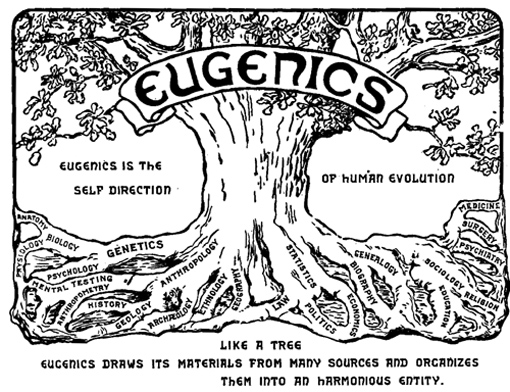
Historical retrospective: Modern nobility
The idea of eugenics can be traced back to the beginnings of the western intellectual tradition. In his Republic, Plato proposed a system of selective reproduction in which members of the ruling class, or guardians, who were considered superior, would have more opportunities to produce offspring. The offspring of inferior individuals “would be secretly taken away by the officials and almost certainly left to die, along with the obviously defective offspring of the superior guardians.” Aristotle approved of infanticide for “those children born with deformities.” Later, during the Enlightenment of the eighteenth century, some advocated against “deformity” or sexual reproduction between members of different ethnic groups, arguing that it would corrupt bloodlines and “produce deformed children.”
These are cases of what could be called “primitive eugenics.” The movement of modern eugenics, on the other hand, began in the post-Darwinian work of Francis Galton (1869), who defended the “hereditary” position that “a man’s natural abilities derive from inheritance.” Therefore, Galton argued that just as we can “by careful selection acquire a breed of dogs or horses gifted with particular powers of running… it would be quite practicable to produce a highly gifted race of men by judicious marriages during several consecutive generations.” This laid the “scientific” foundations for eugenics, a word that Galton coined in 1883.
The history of modern eugenics can be divided into two waves, the second of which emerged more prominently in the 1990s. Eugenics advocates of the first wave recognized two strategies for improving the “human stock,” known as “positive” and “negative” eugenics. Positive eugenics aims to increase the frequency of “desirable” traits in the human population, such as high “intelligence,” by encouraging those who possess such traits to reproduce more. “Best baby” and “fittest family” contests, popular in the early twentieth century, are examples of positive eugenics, as they encouraged individuals with “desirable” traits and “good heredity” to reproduce more. Negative eugenics attempts to prevent “unfit” individuals from passing their genetic material to the next generation. Negative eugenics is what justified restrictive immigration laws and anti-miscegenation laws throughout the twentieth century, as well as forced sterilization programs implemented in states such as California. California’s eugenics program, which began in 1909, was later adopted by the Nazis as a model for their “racial hygiene” policies that ultimately led to the Holocaust.
It is noteworthy that negative eugenics was embraced not only by German fascists but also by progressives and liberals in Europe and North America. As Bashford and Levine (2010) observe, “the optimism of eugenics and its ambition to actively apply scientific ideas were among the reasons it so often attracted progressives and liberals.” Nor did the eugenics movement disappear after the horrors of World War II, as many believe. On the contrary, California’s sterilization program continued until 1979, and the British Eugenics Society still exists today, albeit under a different name. The organization changed its name to the Galton Institute in 1989 and subsequently, in 2021, to Adelphi Genetics Forum. In the 1970s, there was growing criticism of eugenics, which temporarily sidelined it, although it was only about a decade later that a second wave of eugenics emerged.
The movement of the first wave of eugenics was shocking for many reasons. One of these was the underlying racist, xenophobic, imperialist, classist, and sexist behaviors that inspired both negative and positive eugenics. Those considered “unsuitable” were variously labeled as “defective,” “feeble-minded,” “disabled from birth,” “morons,” “weak,” and were often identified through the use of IQ tests. Individuals with “high performance” were encouraged to create larger families. Many eugenicists also embraced the superiority of the white race, which “justified” the aforementioned anti-miscegenation laws. According to Galton, poverty was largely the result of someone’s inferior nature. This idea was more recently supported by Herrnstein and Murray (1994), arguing that social welfare policies were unlikely to have significant positive effects, given the genetically predetermined differences in IQ.
This brings us to the second wave of modern eugenics, which differs from the first wave, mainly in its methodology. While the eugenicists of the first wave tried to improve the “human stock” by changing reproductive patterns throughout society—a process that would require many generations to work—the eugenics of the second wave emerged as a response to new technological capabilities related to genetic engineering and biotechnology. Such technologies have opened the door to human “improvements” that do not require population-level policies, nor do they require intergenerational timelines to function: in just one generation, parents could potentially “design” their children by selecting genes that, based on hereditary assumptions, determine supposed phenotypic traits such as exceptional “intelligence.”
Consequently, the new eugenics claims to be “liberal,” emphasizing the freedom of parents to decide whether and how to produce “enhanced” offspring. However, some philosophers have argued that in practice, this new, “liberal” eugenics—sometimes called “neo-eugenics”—would have the same undermining consequences for freedom as twentieth-century eugenics programs. And while many second-wave eugenicists claim that their version of eugenics has moved beyond the biased attitudes that motivated first-wave eugenicists, we will see in the next section that this is questionable.
The TESCREAL ideological spectrum
This section focuses on the ideologies that compose the “TESCREAL spectrum,” which constitutes an example of the second wave of modern eugenics. These ideologies emerged approximately in this order and have significantly overlapped both historically and in the present.
We begin our discussion with transhumanism, a variant of the noble second wave eugenics that affirms the expediency and desire for radical “human enhancement.” The word “transhumanism” may have been coined in 1940 by WD Lighthall, although the idea was developed even earlier by several twentieth-century eugenicists, including Julian Huxley, president of the British Eugenics Society from 1959 to 1962. “By controlling the mechanisms of inheritance,” he wrote, “the human species can, if it wishes, transcend itself—not sporadically… but as a whole, as humanity. If enough people could truly say… ‘I believe in transhumanism,’ then the human species would stand on the threshold of a new type of existence, as different from ours as ours is from that of Pekin [sic]. It would finally consciously fulfill its real destiny.”
What makes Huxley’s idea of transhumanism – which we can call “early transhumanism” – different from other conceptions of eugenics of that time was his vision: the goal was not simply to create the best possible version of our species, but to completely “transcend” humanity. Thus, early transhumanism combined this new vision with the old methodology of first-wave eugenics. In contrast, “contemporary transhumanism,” as we can characterize it, was shaped in the late 1980s and early 1990s and combined Huxley’s vision of transcendence with the new methodology of second-wave eugenics. Therefore, supporters imagined that by giving individuals the freedom to choose whether and how to undergo a radical “enhancement,” it could create a superior new kind of “posthuman.” According to Nick Bostrom, a “posthuman” is any being that possesses one or more posthuman capabilities, such as unlimited “lifespan,” enhanced cognitive abilities, increased rationality, etc.
The first organized group of modern transhumanists was the extropian movement. It can be traced back to the late 1980s, when Max More and Tom Morrow founded the Extropy Institute in 1988. The neologism “extropy” was defined by More as “the extent of a system’s intelligence, information, order, vitality, and capacity for improvement,” and was intended to contrast with “entropy.” More (1998) identified five fundamental commitments of this ideology: unlimited expansion, self-transformation, dynamic optimism, intelligent technology, and spontaneous order. Several years later, Bostrom and David Pearce founded the World Transhumanist Association (WTA), which aimed to be “a more mature and academically respectable form of transhumanism.”
Around the same time that the WTA was founded, another variation of transhumanism emerged: singularitarianism, whose leading proponents were Ray Kurzweil and Eliezer Yudkowsky. This emphasized the coming “technological Singularity,” which can be defined in several distinct ways: first, it could refer to the point at which the rate of technological “progress” becomes so rapid that it causes a fundamental rupture in human history. According to Kurzweil, humans will merge with machines, inaugurating a new era in cosmic history. Subsequently, our descendants will spread beyond Earth and flood the universe with consciousness, thus allowing the universe to “awaken.” He predicts that the “Singularity” will occur in 2045, while Yudkowsky, who has described himself as a “genius,” once predicted it would happen in 2025—less than a year from now as we write this article. The second definition of the “Singularity” concerns the idea of an “intelligence explosion,” according to which algorithms undergo “recursive self-improvement” until they become “superintelligent.” This, too, is supposed to constitute a transformative moment in human history, with the resulting superintelligence(s) allowing us to become posthumans and colonize space. The “Singularitarians,” from one perspective, are those who believe that “the technological creation of intelligence greater than human intelligence is desirable” and work toward that goal. The term “singularitarian” was coined by an extropian named Mark Plus in 1991.
The third techno-futurist ideology on the TESCREAL spectrum is cosmism, which was mainly supported by Ben Goertzel, a transhumanist who participated in the Extropian movement and later founded SingularityNET.io, which aims to create “a decentralized, democratic, inclusive, and beneficial Artificial General Intelligence.” Goertzel (2010) wrote that cosmism includes the transhumanist goal of radical human enhancement, but also goes beyond it in various respects. For example, he states that “humans will merge with technology,” which will inaugurate “a new phase in the evolution of our species,” and that “we will develop artificial intelligence and mind uploading technology” that will allow “indefinite lifespan for those who choose to leave biology behind and upload themselves.” But cosmism also envisions that “we will spread among the stars and wander the universe,” we will create “synthetic realities” (e.g. virtual worlds), and “we will develop spacetime engineering and scientific ‘future magic’ far beyond our current understanding and imagination.” Cosmists can therefore be understood as transhumanists whose focus is less on what humanity could become and more on how our posthuman descendants could radically transform the universe itself.
At the end of the 2000s, another community emerged: the rationalists. This centered around the LessWrong website-forum, founded in 2009 by Yudkowsky, who describes it as “an online forum and community dedicated to improving human reasoning and decision-making.” One of its primary goals is “training” in rationality, and its website notes that “many members … have strong motivation trying to improve the world as much as possible.” This, he explains, is a reason why many rationalists “were convinced many years ago that artificial intelligence was a very big deal for humanity’s future,” and consequently, “the LessWrong group … has as its core motivation the effort to improve the outcomes of AI.” While extropianism and singularitarianism are variants of transhumanism, there is no necessary connection between rationalism and transhumanism. However, many rationalists are transhumanists or view the transhumanist worldview favorably, and one of the most popular topics discussed on the LessWrong website was the Singularity in the second sense above: the probability of an “intelligence explosion.”
The last two components of the TESCREAL bundle are effective altruism (EA) and longtermism. The former emerged around the same time as rationalism and can be considered its sibling: while rationalists focus primarily on rationality, “effective altruists” focus primarily on ethics. There is significant overlap between these communities, and one can understand EA as what happens when the principles of rationalism are applied to the ethical domain. EA’s central goal is to do the “best” possible with finite resources, and its initial focus was on addressing global poverty. However, leading figures within the EA community have, in recent years, turned toward issues related to humanity’s very long-term future—”millions, billions, and trillions of years” from now, as one writer put it—which is partly due to the work of Bostrom and others. Specifically, Bostrom (2003) not only envisioned a utopian future that would allow radical human development, but noted that if humanity colonizes the universe and creates planet-sized computers in order to “run” virtual reality worlds inhabited by digital people, the future posthuman population could be enormous. In just the “Virgo Supercluster” (the cluster of galaxies that includes our own…), Bostrom estimates that there could be 10^38 digital humans, and at least 10^58 such humans across the entire accessible universe. Why does this matter? Because, from the moral perspective of “total utilitarianism,” which has great influence among EAs and longtermists, our only moral obligation is to maximize the total amount of “value” in the universe. Therefore, if those 10^58 people living in computer simulations had “net-positive”4 lives on average, the result would be literally “astronomical” amounts of “value”—something that would be very “good.” Since total utilitarianism grounds moral rightness in what is good, this implies that our failure to create these future digital humans would be a great wrong.
Longtermism was born when EA thinkers considered: “If our goal is to do the best possible thing and if the future could contain astronomical amounts of ‘value,’ then we should focus on the far future rather than the present. Similarly, if our goal is to positively influence as many people as possible and if most people who could exist would exist in the far future, then we should focus on them rather than current people and contemporary problems, except only if doing the latter would affect the far future.” Longtermists Hilary Greaves and William MacAskill (2019) wrote that we can simply ignore “the impacts contained in the first 100 (or even 1,000) years.” According to the most prominent longtermists, becoming posthuman is a central component of “fulfilling our long-term potential” (words that echo Huxley’s definition of transhumanism), as are also space colonization and maximizing “value.” The goal, therefore, is to undertake actions that increase the probability of fulfilling our “potential.” As Bostrom observed, even the smallest probability increases affecting this ultimate goal are equivalent, in expected value, to literally saving billions of human lives today. Longtermism thus aims to provide a systematic moral basis for mitigating “existential risk,” while ensuring the development of artificial superintelligence (ASI), a type of AGI that many supporters of the ideology consider an indispensable element for realizing what one of the longtermists describes as “our vast and glorious future in the universe.”
The properties of the TESCREAL ideological spectrum
The TESCREAL ideological spectrum shares a series of important properties, four of which we discuss here.
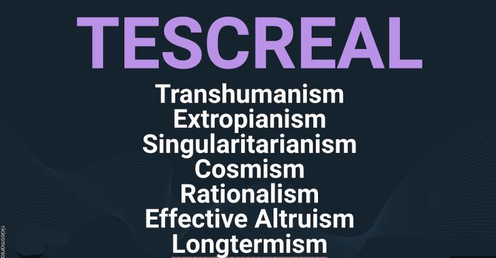
Historical roots and modern communities: The constituent ideologies of the spectrum share a common genealogy that traces back to the nobility of the first wave. All are closely connected to transhumanism and—as noted—transhumanism was initially developed by 20th-century nobles. Indeed, transhumanism, exopianism, singularitarianism, and cosmism are examples of second-wave nobility, since they all advocate the use of emerging technologies to radically “enhance” humanity and create a new “post-mortem” species.
There is also significant overlap among their communities, with many members falling into multiple categories of the TESCREAL spectrum. Bostrom, for example, is a leading transhumanist who was involved in the extropian movement, looks forward to the Singularity with both enthusiasm and trepidation, supports a vision for the future nearly identical to that of cosmism, has enormous influence in rationalist and EA communities, and co-founded the longtermist ideology. Similarly, Sam Altman (the CEO of OpenAI, which built ChatGPT) has been influenced by rationalist and EA communities, is a transhumanist who believes our brains will be digitized during his lifetime, and promotes ideas closely aligned with cosmist and longtermist goals, such as galactic colonization. He argues that “galaxies are actually at risk” if we fail to control AGI. Finally, Elon Musk is a transhumanist whose company Neuralink aims to merge our brains with artificial intelligence, has enormous influence in the rationalist community, founded and co-founded multiple companies aiming to build AGI, and describes longtermism as “very close to philosophy,” complementing it with claims such as “we have a duty to preserve the light of consciousness, to ensure it continues into the future” and “what matters… is maximizing cumulative cultural ‘net’5 happiness over time.” The sociological intersection between communities related to each letter in the acronym is significant.
Eschatology: The ideologies across the TESCREAL spectrum share certain “eschatological” (pertaining to “last things”6) beliefs. As in religions such as Christianity, these beliefs come in two forms: utopian and apocalyptic, which are intimately interconnected. For example, the aforementioned WTA co-founder, David Pearce, describes the transhumanist project as a “mechanical paradise,” resulting in “the complete abolition of suffering in Homo sapiens.” Ultimately, “the option of… redesigning the global ecosystem extends the prospect of a mechanical paradise to the rest of the living world,” including beyond Earth, which he describes as a “cosmic rescue mission to promote paradise engineering throughout the universe.” Bostrom (2005) also used the term “paradise engineering” to offer an idea of what our techno-utopian future might look like, from the perspective of an immortal, cognitively enhanced posthuman who notes that “Utopia” has so much pleasure that “we shall squirt our tea with it.” Kurzweil (2006), who was hired by Google founder Larry Page, wrote that the merger of “man and machine,” combined with a sudden explosion in machine intelligence and rapid innovation in the fields of genetic research and nanotechnology, “will allow us to transcend our fragile bodies with all their limitations. Disease, as we know it, will be eliminated.” Such utopian proclamations are not surprising, given that many early-wave eugenicists also understood their work in more or less utopian terms. Galton, the founder of the modern eugenics movement, admitted that he had “indulged in many” utopian ideas and shortly before his death wrote a “utopian” novel titled The Eugenic College of Kantsaywhere. He described a society where “candidate parents are required to undergo physical and psychometric tests before being judged fit for reproduction—and those found unfit are expelled by the state.”
The revelatory form of the eschatological belief of the TESCREAL spectrum arises from two considerations unique to its second-wave eugenic methodology: first, the transhumanists in the late 1990s realized that the very technologies required to create a posthuman utopia would also introduce unprecedented threats to humanity. Kurzweil (1999) referred to some of these hypothetical risks as “a clear and present danger.” The cause for concern is that emerging technologies are expected to be (a) extremely powerful, (b) increasingly accessible to both state and non-state actors, and (c) dual-use, as demonstrated by CRISPR-Cas9, which could allow us to cure diseases but also to design pathogens capable of spreading an “engineered pandemic.” Consequently, while the development of these technologies was deemed necessary, they could potentially destroy humanity. The second consideration parallels the first, though it specifically concerns AGI. On one hand, if we create an AGI “aligned with our values,” it could solve all the world’s problems and allow humans to live forever. On the other hand, several TESCREAL supporters believe that if AGI is not properly “aligned with our values,” the “outcome will be destruction” (i.e., an existential catastrophe), as Bostrom (2014) states. However, many of these same central figures argue that the potential benefits of advanced technology justify the extreme risks and that building these technologies to create utopia should be our primary goal.
Discrimination: The same behaviors that make discrimination based on the eugenic origins of the first wave are widespread in the TESCREAL literature and community. For example, discussions on transhumanist email lists contain many examples of concerning remarks from central TESCREAL figures. In 1996, Bostrom argued that “blacks are more stupid than whites,” while complaining that he couldn’t say this publicly without being accused of racism, and subsequently used the N-word. In a later “apology” for the email, he condemned the use of the N-word but did not retract his claim that whites are more “intelligent.” Also in 1996, Yudkowsky expressed concerns about superintelligence, writing: “Superintelligent robots = Aryans, humans = Jews. The only thing that can prevent this is sufficiently intelligent robots.” Others worried that “as we as humans seek to reach the next level of human evolution, we face serious risks when based on our ideas and programs we are characterized by popular media as neo-eugenicists, racists, neo-Nazis, etc.” In fact, leading figures in the TESCREAL community have endorsed or expressed support for the work of Charles Murray, known for his scientific racism and concern about “dysgenic” pressures (the opposite of “eugenic”). Bostrom himself identifies “dysgenic” pressures as a potential existential risk, similar to nuclear war and superintelligence dominance. He wrote: “It currently appears there is a negative correlation at certain points between intellectual success and fertility. If such selection were to operate for a long period, we could evolve into a less intelligent but more fertile species, homo philoprogenitus (‘lover of many offspring’).” More recently, Yudkowsky tweeted about IQ that “appears to be declining in Norway” and added that “the effect appears in families, so it’s not due to migration or dysgenic reproduction,” meaning less intelligent foreign immigrants moving to Norway or individuals with lower “intelligence” having more children.
The obsession with “intelligence” and “IQ” is widespread among TESCREAL supporters. “Intelligence,” usually understood as the trait measured by IQ tests, is highly valued due to its instrumental worth for achieving TESCREAL movement goals such as becoming transhuman, colonizing space, and building “safe” AGI. Consequently, several prominent TESCREALists view cognitive enhancement as an important intermediate goal and have therefore written extensively about the potential for cognitive improvements such as nootropics (“smart drugs”), brain-computer interfaces (BCIs), and even mind uploading (which could make cognitive “enhancement” much easier). More recently, Carla Cremer, a former EA, stated that the “Centre for Effective Altruism” trialed “a new metric” to apply to people: a metric called PELTIV, which stood for “Prospective Expected Long-Term Impact Value.” The aim was to identify community members “who were likely to develop high ‘commitment’ to EA,” and the score was partly based on members’ IQ. She wrote (2003): “A candidate with a normal IQ of 100 would lose PELTIV points, because points could only be gained with an IQ above 120. Low PELTIV scores were given to those working on reducing global poverty or mitigating climate change, while high scores went to those working directly for EA organizations or artificial intelligence.
The obsession with IQ can be found among the first-wave eugenicists, who used IQ tests to identify the “defective” and “feeble-minded.” As Daphne Martschenko (2017) observed, “at their darkest moments, IQ tests became a powerful means of excluding and controlling marginalized communities using a specialized and scientific language.”
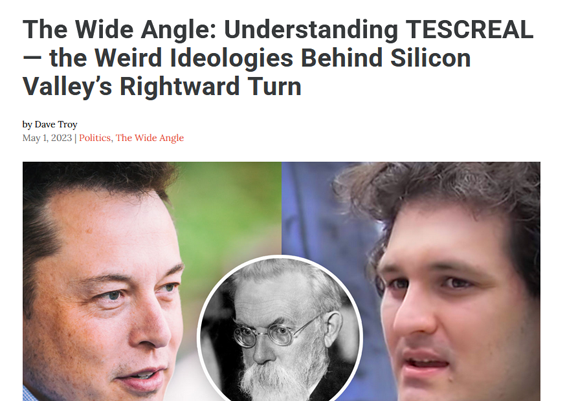
Influences and Variations: The TESCREAL ideological spectrum has gained enormous influence, especially in certain powerful corners of the technology industry. Today’s and former billionaires who endorse or are associated with one or more TESCREAL ideologies and its techno-utopian vision for the future include the following: Elon Musk, Peter Thiel, Jaan Tallinn, Sam Altman, Dustin Moskovitz, Vitalik Buterin, Sam Bankman-Fried, and Marc Andreessen, the last of whom included “TESCREAList” in his Twitter profile for several weeks in 2023. These billionaires have founded TESCREAList institutes, promoted TESCREAL researchers and philosophers such as Bostrom, MacAskill, and Kurzweil, and TESCREAL internet personalities such as Yudkowsky, who has argued that it may be necessary to bomb data centers militarily, if needed to stop a hypothetical AI Takeoff. Collectively, TESCREAL billionaires have supported the movement with billions of dollars in donations and funding. As we will demonstrate in the remainder of this work, the TESCREAL ideological spectrum was a crucial driving force behind much of the well-funded research and development focused on creating AGI. This is, indeed, one of the central claims of this paper: the spectrum of ideologies discussed above, which is an evolution of the early twentieth-century eugenics movement, now drives a significant volume of research in the field of artificial intelligence.
[stm: In the original, two chapters follow with several references to persons and events that further document the above].
The “race” toward AGI is not an inevitable, unstoppable march toward technological progress, based on careful scientific and engineering principles. It is a movement created by supporters of the TESCREAL spectrum, who seek to “protect humanity” by creating, according to Altman’s words, a “magic intelligence in the sky,” just like the eugenicists of the first wave who believed they could “perfect” the “human stock” through selective reproduction. Through coordinated campaigns to influence AI research and policy-making practices, funded with billions of dollars, TESCREALists have steered the field to prioritize efforts to build systems without application scope that are inherently unsafe and have resulted in documented harms to marginalized groups. As Nitasha Tiku (2023) reported, Open Philanthropy alone has spent more than half a billion dollars on AGI-related initiatives, such as “promoting talent to combat ‘fake’ artificial intelligence, building think tanks, YouTube channels, competitions, research funding, and scholarships.”
These investments achieved the legitimization of the “race” for AGI, so that many students and professionals who may not align with the utopian ideals of TESCREAL work to advance the AGI agenda because it is presented as a natural evolution in the field of AI. In the same way that eugenicists and race scientists of the first wave sought and achieved academic legitimacy for their research, TESCREALists have created a veneer of scientific authority that makes their ideas more palatable to uncritical audiences, and thus managed to influence research directions and policy in the field of artificial intelligence. The eugenics of the first wave proved ineffective and destructive. But as Jean Gayon and Daniel Jacobi suggest with the term “eternal return of eugenics,” eugenic ideals continue to be repackaged in different forms. The “race” toward AGI is yet another effort that diverts resources and attention away from potentially useful research directions and causes harm by promoting a process aimed at achieving a techno-utopian ideal created by self-appointed “pioneers” of humanity.
translation – adaptation
Wintermute
- We know this: the consciousness of their bosses! More at artificial intelligence (and artificial consciousness?), Cyborg #23 ↩︎
- For some comments on the political economy of “artificial general intelligence” see Mechanical, Very Mechanical: Comments on Artificial General Intelligence, Cyborg #28 ↩︎
- The TESCREAL bundle: Eugenics and the promise of utopia through artificial general intelligence – First Monday, April 2024 ↩︎
- Stm: term that describes new corporate policies with which companies offset the damage they cause to the planet, by doing “green actions”, thus bringing the result of the arithmetic operation that somehow managed to add and subtract all these factors to zero or even positive. ↩︎
- Stm: In the prototype “net”, such as the economic term that denotes “net salary” e.g. – net salary. ↩︎
- St. Bernard: “Four Last Things”: death, judgment, paradise, hell. ↩︎