
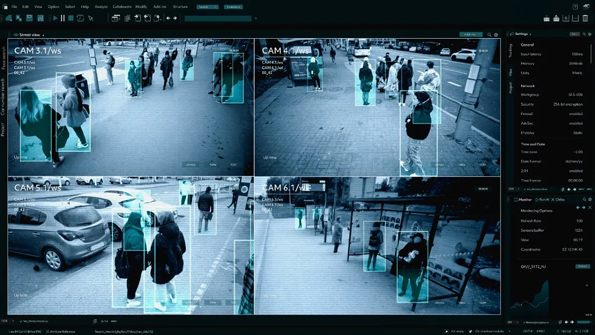
It is not something new that surveillance always has predictive / preventive characteristics – and disciplinary characteristics. The state must supervise and know as much as possible about the individuals (and their relationships) under its power, so that it can control and intervene wherever and however it deems appropriate, in order to maintain this power. It would be naive to think that a state can exist without surveillance and power without repression.
As technology evolves, surveillance techniques make corresponding leaps, not so much by replacing the old ones, but rather by supplementing them: from the neighborhood watchman, on the move or closer by, recording information in files and folders and tape-recording phone calls, to cameras on the streets, recording online behavior, (anti)social networks, mobile phones and generally digital profiling into digital databases, with sorting/searching now also being done digitally and algorithmically. Moreover, with the emergence of machine “learning” and artificial “intelligence” algorithms, this sorting/searching becomes even more automated and enriched – they say – with the ability for automatic “prediction”.
British authorities, with a program that started in January 2023, aim to build a homicide prediction system. The Homicide Prediction Project, as it is called, uses police and state data to create profiles of people in order to predict who is likely to commit a murder. The project is a collaboration between the Ministry of Justice, the Home Office, Manchester Police, and London Police.
The data used includes information on hundreds of thousands of suspects, victims, witnesses, missing persons, and individuals for whom there are “security concerns.” It also includes information on individuals in “vulnerable situations,” with the Ministry of Justice stating that “health data” is expected to have significant “predictive power.” This data concerns people’s mental health, addiction, tendency or incidents of self-harm/suicide, “vulnerability,” and “disability.”

Yet another, the OASys offender assessment system, has been “running” since 2001 and in recent years has used artificial “intelligence” to identify and classify violations and assess the risk of their recurrence. By early 2025, it had over seven million ratings determining the supposed risk of reoffending of individuals maintained in this database, while in just one week, from January 6 to January 12, 2025, a total of 9,420 assessments were completed. These assessments are considered to have the greatest influence on case management – judicial decisions, convictions, suspensions, etc. – and include data filled out by a prison service employee, which is divided into categories: offense analysis, accommodation, education, training and employment, financial management and income, relationships, lifestyle and associates, drugs, alcohol, emotional well-being, thinking and behavior, health.
Sobanan Narenthiran, a former prisoner and now director of Breakthrough Social Enterprise, an organization that helps former prisoners and other socially vulnerable groups become familiar with technology and find employment, comments: “Structural racism and other forms of systemic bias are embedded in the OASys risk assessments. The information entered there is heavily influenced by biased policing and over-surveillance of specific communities. This is a classic case of ‘garbage in, garbage out.’ My detainees used to warn me about the OASys assessment, explaining how honesty can lead to punishment. If you speak too freely about the ‘risk factors’ in your life, your progression, it is very likely that your privileges and chances of release will be significantly reduced. To challenge a mistaken assessment, I had to modify the information recorded in OASys, and this is a disappointing and often opaque process. In many cases, individuals either do not know what has been written about them or are not given opportunities to review and respond to their assessment.”

Another inmate serving life declared that “it’s like a snowball rolling down a mountain. Every turn gathers more and more snow (inaccurate entries) until you’re finally left with this massive snowball that has nothing to do with the original. In other words, I no longer exist. I have become a construct of their imagination. It is the ultimate act of dehumanization.”
Despite reactions regarding equality and discrimination, the right to a fair trial, and the possibility of review, the Ministry of Justice continues to use OASys assessments across all prison services and is simultaneously developing a new system (Assess Risks, Needs and Strengths – ARNS) to replace OASys, which is in a pilot phase as of December 2024, aiming to be fully operational by 2026. ARNS is being developed by the Ministry of Justice in collaboration with Capita, which currently provides technical support for OASys and is one of the largest contractor companies for the public sector in England, where among other things, it holds the contract for electronic ankle monitors for prisoners under house arrest since 2014. The company also supplies the police in England with COSAIN, a social media monitoring tool, to track activists.

– Keyword and phrase recognition is performed across multiple social network data sources,
– There is capability for multilingual search,
– It creates connections between social network accounts and other collected information,
– Location-based search and street-level analysis are conducted,
– Posts containing local dialects and colloquial expressions can be searched,
– Research on old social network posts is carried out, including the complete Twitter archive,
and much more…
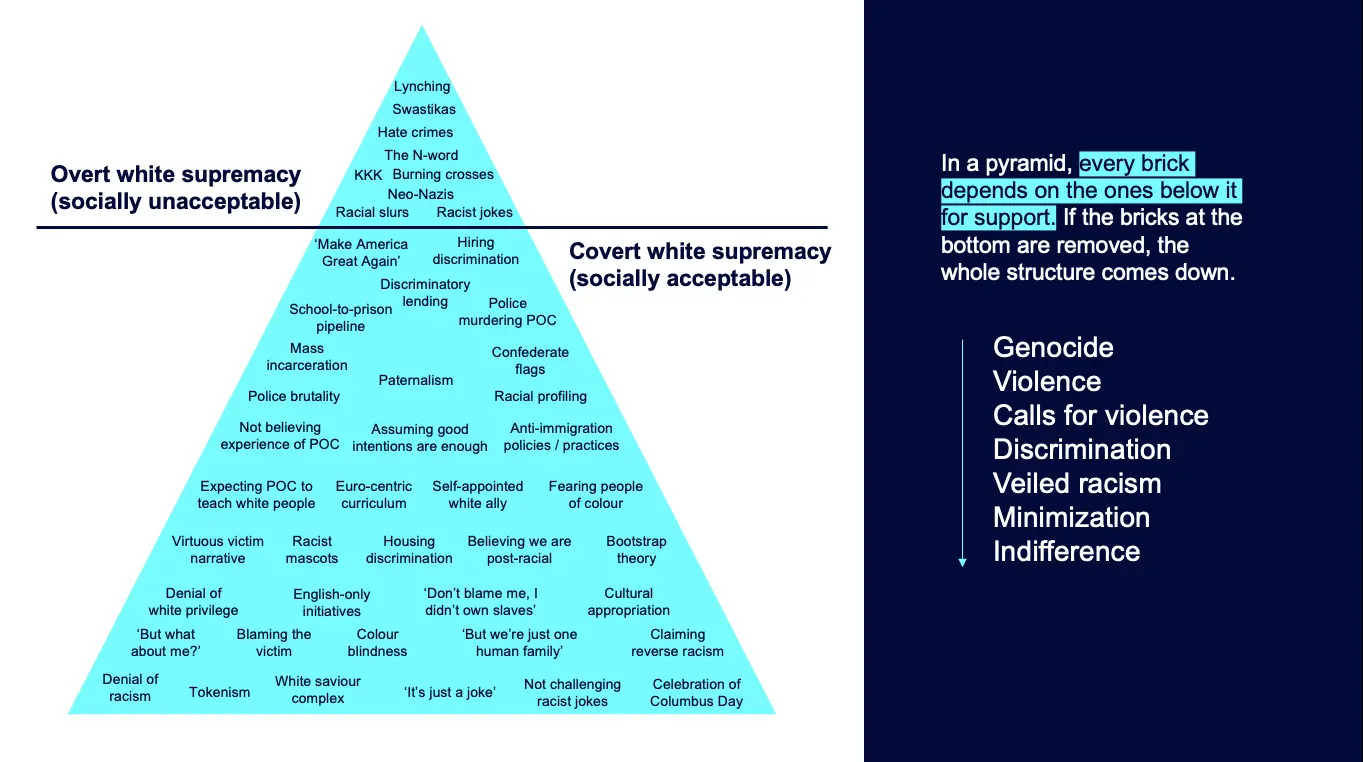
Capita is essentially the English Palantir1. And it seems to have an insatiable marketing department. While it essentially contributes to migrant management, surveillance and suppression of movements, as well as generally monitoring and policing entire societies, it published the diagram below, shortly after Floyd’s murder in America, to inform us about the roots of the problem. Which, according to it, are all the everyday micro-behaviors that escalate to “racist hatred” and crime. So, what should be done, we wonder. Well, obviously all these micro-behaviors should be monitored and recorded, the company would say! Or perhaps even better, shouldn’t we “predict” what is at the top of the pyramid, based on what lies beneath? Hmm…
France2
The French police can rightfully claim to be pioneers in the field of so-called “predictive” policing. As early as 1829, a young legal expert from the Ministry of Justice, André-Michel Guerry, began collecting data on criminality in Paris. His work, Compte général de l’administration de la justice criminelle en France (General Report on the Administration of Criminal Justice in France), was part of the world’s first national system for gathering crime data. This statistical database was based on data collected quarterly in each French department. It included details about every criminal act brought before French courts, such as age, gender, occupation of the accused, nature of the crime, etc. Guerry then turned his attention to criminal data and the “social behaviors” he believed determined crime. Later, he would create what is known as “moral statistics,” the field behind the development of criminology. Today, along with sociologist Adolphe Quetelet, Guerry is considered the founder of criminology. In 1829, in collaboration with the Venetian geographer Adriano Balbi, Guerry published a map showing the relationship between the education level of the French population and crimes against persons and property in France.
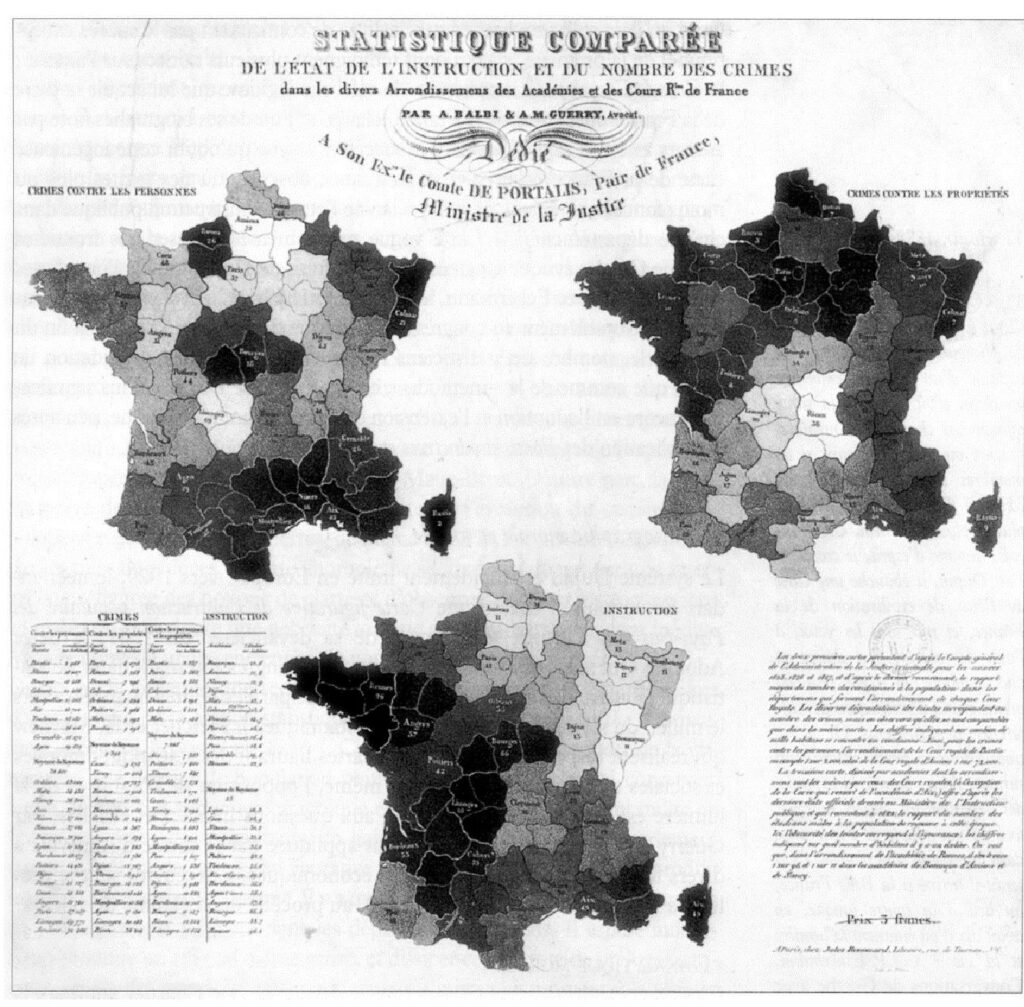
In 1830, revolutionary events overturned the Restoration and established the most liberal regime of the July Monarchy. The new regime appointed Guerry as Director of Criminal Statistics, of a new department of the Ministry of Justice. In 1832, at the age of 29, Guerry published his work “Essai sur la statistique morale de la France”, which is considered his main work. This essay contains many criminal maps showing the relationships between crime and social and moral parameters: crime and wealth rates, suicide rates, donations to the poor, illegitimate births, age distribution of criminals and so on. This work led to his increasing recognition throughout Europe.
Guerry was also the inventor of the ordonnateur statistique, a machine that allowed him to create relationships between statistical parameters. The ordonnateur was based on the classical statistical methods of correlation and regression analysis. These would later be widely used in criminology, but were still underdeveloped at that time. The statistical comparisons made by Guerry using this method led him to discover relationships between types of crimes and various possible causes or correlations. Since Guerry’s time, criminology in France and around the world has continued to make extensive use of geographic approaches to crime. This is particularly true in predictive criminology. The systems we managed to analyze for this exhibition also rely on geographic crime maps, with heat maps or “hot spots” representing crime rates. Most of these systems also include the equivalent of Guerry’s “social and moral” parameters. These are now more commonly referred to as socio-economic or socio-demographic statistical indicators, such as:
- unemployment levels
- school enrollment
- education level
- number of nearby stores
- middle age
- household income
- gender
- nationality and migration data
- household composition
However, while Guerry’s research revealed correlations at a regional scale, modern predictive policing systems focus on much smaller geographic units. In terms of the volume of statistical data processed and the speed at which these processes influence police practices, they are incomparable to the practices of Guerry in the 19th century. This extremely increased volume and speed can create and exacerbate feedback loops (self-reinforcing phenomena), with the potential to amplify structural discrimination.
Finally, Guerry’s results contradicted the prevailing cultural beliefs of his time: namely, that crime is committed to a large extent by uneducated and low-income individuals—a view that had been shaped to a great degree by the urban bourgeoisie. In contrast, modern “predictive” systems reinforce dominant criminological assumptions in their models, despite these having been largely invalidated by sociology. […] Here we have gathered information about predictive systems used by the French police:
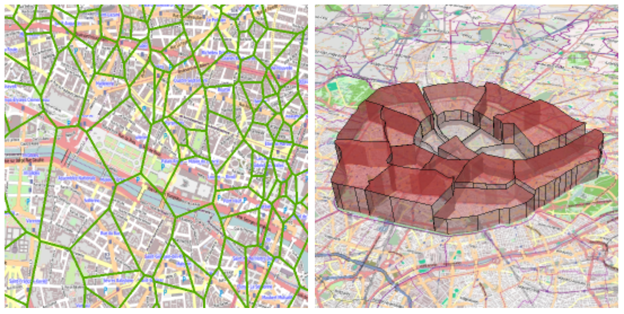
Risk Terrain Modelling (RTM) is a “crime prevention by area” system used by the Paris police, which checks areas based on “environmental” data, such as the presence of schools, shops, metro stations, public toilets, lighting, trees, benches, etc. It does not appear to include socio-demographic data for the selected geographical areas, however, the data it uses in an area can function as a complement to socio-demographic elements, such as the presence and density in restaurants or social housing.

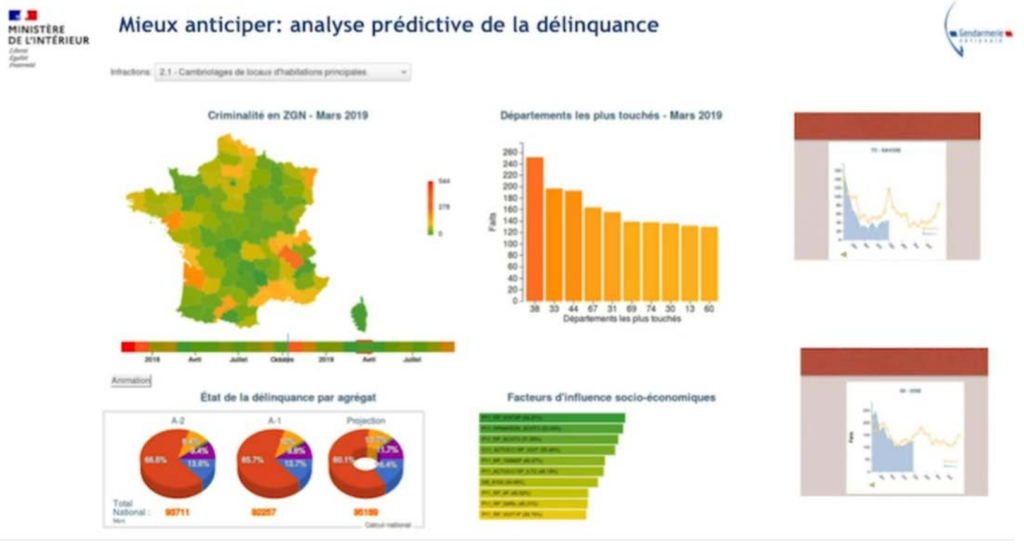
In 2020, we became aware of one of the first predictive policing systems developed in France: MapRevelation, which was marketed by the company Sûreté Globale. The company had provided the system to the municipal police forces of the following cities: Montpellier, Lyon, Lille, Villeurbanne, Montauban, Angers, Colombes and Melun Val de Seine. At that time, we managed to obtain the manual from the city of Montpellier. The company’s website also mentioned other uses. The border police had used the software in 2010 to “produce statistical control tables regarding the flow of illegal immigrants.” The Paris police had used it in 2011 to “identify areas of criminal concentration” on New Year’s Eve. In 2015, the military police developed the system within its judicial mechanism and it was intended for “criminal analysis of complex cases and decision support for senior staff.” Since 2023, interest in MapRevelation has been renewed. Sources have told us that the system was designed by Christophe Courtois, director of Sûreté Globale. It is also said that MapRevelation has been trained on a “terrorism” database to predict attacks, as well as on data maintained by the authorities that use it.
Like Risk Terrain Modelling, the MapRevelation algorithm also appears to be based on the principle of environmental determinism, according to which environmental factors in an area are considered to contribute significantly to crime. It is also based on crime prevention theory, which takes into account various factors, such as the presence of so-called “motivated” individuals, the “crime-prone” environment, the absence of police and other possible crime “deterrents.” The other criminological theory that supports the model is the frequency of the crime phenomenon. This is inferred by using geographic data from previous crimes and a statistical model fed by additional training data.
PredVol is a system developed in 2015 primarily by Florian Gauthier, a young data scientist temporarily hired by the French government’s Etalab open data program, to assess the risk of car theft and tested in the Val d’Oise region in 2016 but discontinued by 2018. PredVol “provided police with a daily prediction of car theft risk, a map of historical car thefts, and a typology of neighborhoods according to the nature of crimes committed there,” according to Gauthier. The main purpose of the software was to guide police patrols to predicted risk areas, as 2014 data from the Oise department showed discrepancies between patrol zones and car theft zones.

PAVED is an analytics platform that uses artificial intelligence to “predict” two types of crimes – vehicle thefts and burglaries – with street-level accuracy for the upcoming days, with a maximum timeframe of up to one week. It was developed by the police in 2017, tested from 2018 in various metropolitan areas, and in 2019, shortly before its national rollout, the project was put “on hold.”
Colonel Perrot published the first research article on PAVED in 2014. In the article, he justifies the need for crime prediction tools: “Crime, inherent in human history, constantly evolves and mutates. In the field of crime analysis, the scientific approach allows us to develop modeling techniques capable of understanding and anticipating future developments. The concept of prediction is now a determining factor in the field of crime.” The research article is Perrot’s attempt to mathematically model the social reality of crime. His approach aims to detect crime by describing the precursor signs of an event. These weak signals (for example, the introduction of a new type of drug or the increase in copper prices) are modeled using a mathematical approach. Secondly, he attempts to understand the supposed causes of crime by analyzing possible variables and measuring their influence on the development of the observed event. Finally, he seeks to predict crime by forecasting the temporal evolution of specific types of offenses through the mathematical study of time series. What is striking is that, despite the theoretical thoughts, Perrot offers no convincing proof or explanation, merely statistical correlations. Nor does he refer to any previous research in this direction. In doing so, he runs the risk of confusing correlation with causal relationship. He also relies on socio-demographic variables that exacerbate structural discriminations.

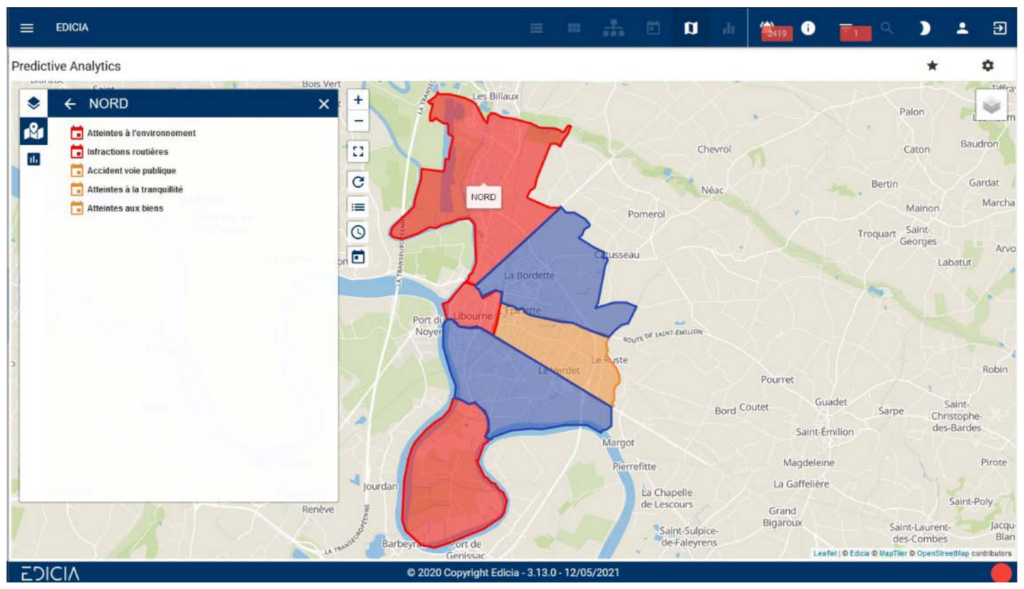
Smart Police is a system developed by the French startup Edicia which, according to its website, has sold it to 470 municipalities across France. Initially, it did not include predictive functionality, but was a platform for writing reports in the field using phones or tablets, importing photographs, reporting incidents or drafting official reports. The platform also allows managers to monitor field teams from their offices, map events, consult their reports and receive various statistical indicators in real time. They can also view photographs taken during an intervention (e.g. during a demonstration).

Since 2014, Edicia has upgraded the Smart Police software to include “prediction,” based on risk models developed in collaboration with the computer science laboratory at Nantes Atlantique University. Edicia’s marketing director stated: “Our tool allows us to collect data from rumors on social media platforms, assess this data, and then deploy forces, with the tool also managing force availability. We process this data with a risk estimator. For example, if there is a rumor about a large party, it could gather 10,000 people if the weather is good, but only 2,000 if it isn’t. If they have the information, security officials will be able to deploy the appropriate resources.”
In 2018, the company filed a patent for this predictive software feature, titled “Process and system for monitoring and preventing malfunctions in land security.” The platform’s predictive functionality was developed through a doctoral thesis funded by the Directorate General of Armaments of the French Ministry of Defense. The patent describes the system as follows: “A system for monitoring and preventing malfunctions in an area consisting of multiple interconnected zones, each of which includes elements to be monitored. Each zone is equipped with multiple sensors adapted to provide measurement signals representative of a violation of a property of the elements to be monitored according to predefined rules.”
The patent is vague regarding the exact operation of the system. The only thing mentioned is the visualization of existing “prevention barriers” (vehicles, patrols, alarms, etc.) and “action means,” which, in case of danger in a given area, make it possible to check whether pedestrian patrols, vehicles, and other “prevention barriers” are in accordance with the nature and degree of the identified risks. The patent also refers to urban planning data (echoing once again the RTM approach), environmental and meteorological data, future national and local events, socio-demographic and electoral data, and others.
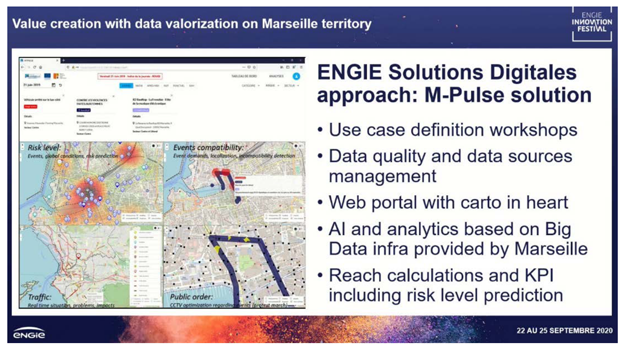
In November 2017, the municipal council of Marseille publicly announced the creation of the Observatoire du Big Data de la Tranquillité publique (Big Data Observatory for Public Safety). The vast geographical area of Marseille has a total of approximately one million inhabitants. According to the terms of the collaboration with the Bouches-du-Rhône department, the company Engie Inéo (now Engie Solutions) developed a shared data platform called M-Pulse. This features a web interface for municipal and national security services. After the lockdown due to coronavirus in March 2020 and changes in municipal leadership in June 2020, the project continued with a new political narrative.
M-Pulse was advertised as “a large integrated technological platform based on big data and machine learning methods, aiming to study the past, shed light on the present, and predict future events.” The overall ambition of the project was to “break down barriers” and share information among various stakeholders in public security in order to optimize their interventions.
The initial data sources were diverse, including both “raw” and somewhat “structured” data provided by the General Security Directorate (DGSEC) of the city of Marseille. These included intervention reports and the database of fines imposed by the Municipal Police. The data was supposedly also sourced from other public bodies, such as hospitals, the transport network of Marseille, the city’s fire service, the port authority, and meteorological services. Data from private entities was also included, such as traffic surveillance images (including those from private highways) and data extracted from social media.
Particularly concerning is the document’s reference to: “…risk assessment of dangerous concentrations through tweet analysis, based on entity recognition (Who is speaking? Who is acting? Who interacts with whom?) and feedback from conversation streams (Who organizes? Who is the first to post?). The project specifications include among external collaborators the databases of the Ministry of Interior and private companies. While it appears that no private partner ultimately contributed data, the designers of M-Pulse included collaborations with telecommunications providers in their initial “grand vision.” This, for example, would have generated statistical data and “heat maps” showing the geographical distribution of the population using mobile phone location data.
The change in the municipal council in June 2020 appeared to lead to the postponement of the project. The new left-wing majority had committed during its pre-election campaign to introduce a moratorium on police surveillance technologies. However, the new municipal authorities rejected most of our requests for interviews regarding M-Pulse. They also did not respond to our written requests despite the favorable opinion of the Committee on Access to Administrative Documents.
Just in June 2023, more information became available. Municipal councilor Christophe Hugon from the Pirate Party presented the new version of M-Pulse at the annual Open-StreetMap community conference in France, which took place in Marseille that year. Hugon’s presentation offered a narrative that had been shaping for months. When he entered the municipal council after the June 2020 municipal elections, Hugon requested to see the platform that “was causing unrest abroad.” He felt that the previous administration had presented information that “caused anxiety,” such as analyzing social media to learn who does what, where, etc. He stated that “to his great surprise, M-Pulse was nothing more than simply a public service management project.”
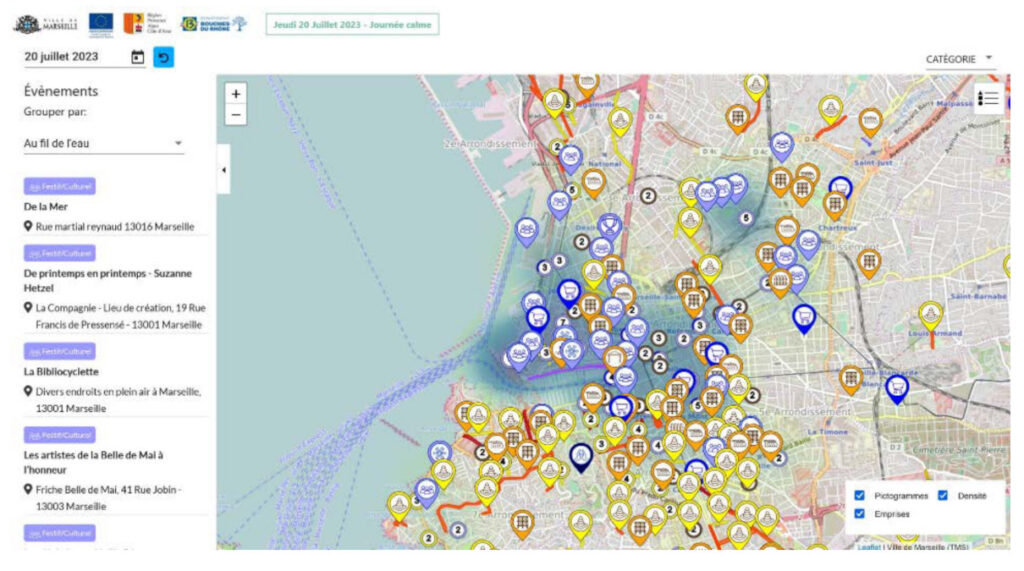
Subsequently, the M-Pulse platform became accessible to the public, stripped of any law enforcement or predictive functions. Why did local authorities allow public access to this application? According to Hugon, M-Pulse would have value for city residents: “We believe that having a map that allows Marseille residents to know where markets are, where events are taking place, to know where there will be many people… if you want to live in your city and go where there are people… all this is interesting information.” He also used the example of tourists who would want to “visit the markets” and could see the relevant icons to know where to go. However, it is difficult to understand how this application differs from the services offered by Google Maps. Hugon remained vague about other functions. He admitted that some useful features had been removed from the public version, such as the real-time display of police presence, for “obvious security reasons.”
But if the Marseille municipal police continues to use M-Pulse, what do they gain anymore? What happens to its predictive functions? The data sources it uses? The use of social media, and so forth? When asked at the end of his presentation, Hugon simply avoided the topic. He said that the functions the platform had under the previous administration were, for the most part, illegal and unrealistic and have been abandoned.
The mayor’s office refused to comment on how the police actually use the software. Nor does it intend to modify the initial contract, which had been made before opening access to the public, claiming incorrectly that it is impossible to change a contract that has already been signed. Nevertheless, from a political freedoms perspective, M-Pulse does not appear to include the same levels of surveillance and prediction as PAVED, Smart Police, and Risk Terrain Modelling.
Germany3
German police and criminal justice authorities are increasingly focusing on digital capabilities for the “prediction” and “prevention” of crimes that may occur in the future. The German police have significantly increased the operational use of “predictive” data analysis and algorithms in recent years, including predicting crimes by area as well as personalized data analysis, while criminal justice authorities, such as the German Federal Criminal Police Office (Bundeskriminalamt or BKA), also use systems to create individual profiles and predict recidivism. Additionally, German prisons seek to create prisoner profiles and use predictive algorithmic systems to influence decision-making.
The details of how the new predictive systems operating in Germany function are revealed gradually and sometimes only after years. The way this happens is only through parliamentary inquiries and investigative journalism or, in the case of Palantir, after a committee of inquiry in Hesse and legal complaints. This makes it difficult to fully understand and analyze the data sources, system design, scope of application, impact, and potential biased effects of these systems. In some cases, the testing and further development of new systems are accompanied by evaluations from collaborating scientific institutions. In other cases, evaluations are completely absent. Moreover, the operation of the algorithms is not disclosed, meaning that external, independent scientific evaluation cannot be conducted. Requests based on the Freedom of Information Act are rejected in most cases citing arguments such as security concerns. For the present report, state documents from the German Federal Parliament, publicly available police documents, media reports, and academic works, as well as data and information from police, security, and judicial authorities were analyzed. Interviews with academics, professionals in the field of “deradicalization,” and individuals with experience in the criminal and legal system helped identify the systems and understand their impact, as well as potential shortcomings and biased effects. The analysis of cases was conducted up to February 2024.
Crime prediction systems per area
Crime prediction systems by area aim to identify and direct police attention and resources to so-called “hot spots” of criminal activity, where there is suspicion of particularly high concentrations of crime. The Berlin police implement a data analysis and crime prediction strategy described as “crime-affected locations” (kbO), focusing on specific sites and areas. However, these “hot spots” tend to be places where racial minority groups live and work and, therefore, face an especially high risk of being targeted. Those affected are questioned by police because of their skin color and are often treated disrespectfully or even violently. With geographic predictive policing software such as PRECOBS, police forces attempt to calculate as accurately as possible the locations where crimes such as residential burglaries will occur in the near future. These locations may be dynamic, meaning they do not necessarily designate long-term “hot spots.” Nevertheless, checks in predicted locations have a similar impact, as stereotypes among police regarding the likely profiles of offenders can lead to the targeting of marginalized individuals.
In October 2014, Bavaria became the first German state to use software to try to predict residential burglaries as part of a pilot project in the metropolitan areas of Munich and Nuremberg. The Pre-Crime Observation System (PRECOBS) software was used in routine operations from 2016. It was developed by the “Pattern-Based Prediction Technology Institute” based in Oberhausen, and purchased by Logobject Deutschland GmbH in 2021. The company claimed that predictive policing can make forecasts for crimes such as break-ins, traffic violations, robberies, and arson. It is based on the theory of the “repeat phenomenon,” which is the observation that there is an increased frequency of subsequent crimes appearing in the immediate spatial and temporal vicinity of certain crimes. Using crime data from the recent past, statistical methods calculate the degree to which subsequent crimes could occur in the next seven days in areas of up to 500 square meters. Subsequently, police patrol the areas identified as future risk in order to prevent these “predicted” crimes.
On October 1, 2021, seven years after the pilot project began, Bavaria decided to discontinue the software’s operation. According to Simon Egbert, a postdoctoral researcher at the University of Bielefeld, there is still no scientific evidence of success for any of the systems: “The number of burglary cases in residences has indeed dropped sharply, but the same has happened in federal states where predictive policing is not used. The numbers fluctuate, and the question is what relationship police activity has to this.”
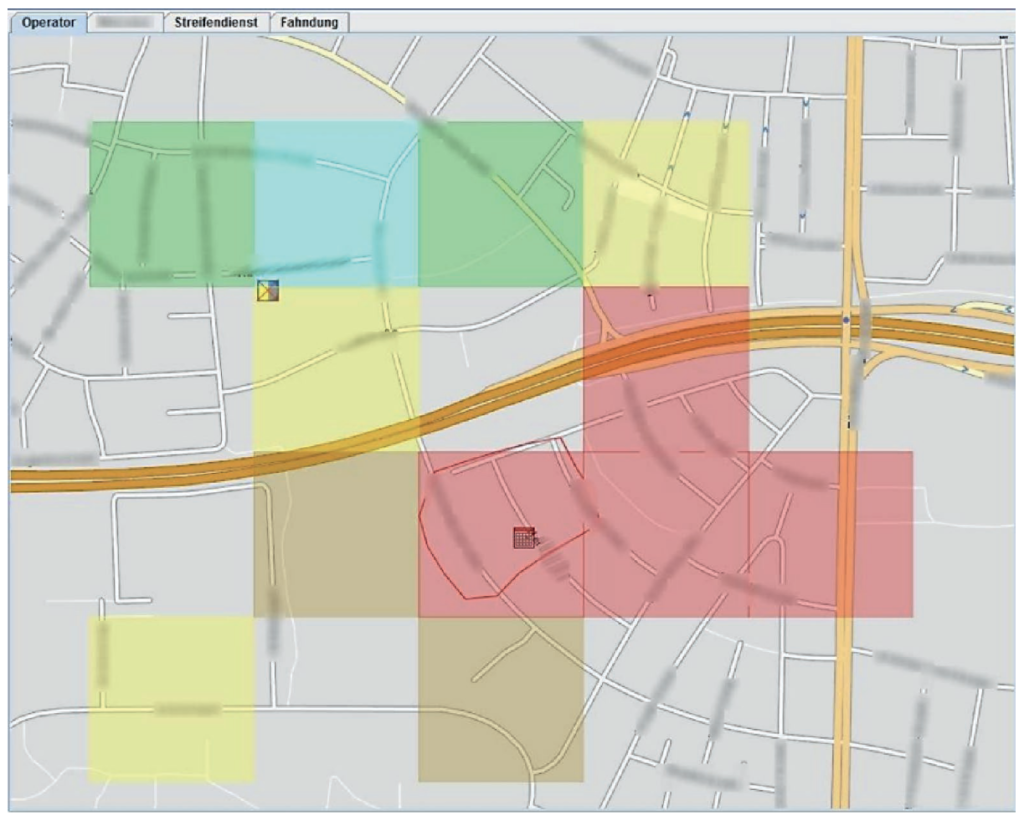
The rise and fall of crime prediction systems by region in Germany in recent years shows how fragmented digital innovation operates: When the number of break-ins was discussed in the media, but also politically as a security issue in the 2010s, many federal states introduced location-based predictive policing software from 2014 onwards. Among other things, these systems aim to support approaches of a strategy described as “targeted policing,” which aims to focus police resources—as quickly as possible—on the areas and individuals considered to pose the greatest threat. This approach is guided by the assumption that crime concentrates in specific places, individuals, hours, and days.
In 2017, the Berlin Senate decided that the names of “hot spots” must be published by the police. Seven areas had been designated as kbA and which were characterized by the following types of crimes:
- Alexanderplatz (violent crimes, thefts, drug-related offenses)·
- Görlitzer Park/Wrangelkiez (open drug trade, related crimes such as dangerous and serious bodily harm, property damage)·
- Hermannplatz/Donaukiez (illegal drug trade, brutality and property crimes, thefts)·
- Hermannstraße/Bahnhof Neukölln (drug-related offenses, assaults, robberies, thefts)·
- Kottbusser Tor (drug-related offenses and thefts or robberies as accompanying crimes);
- Rigaer Straße (politically motivated crimes such as property damage, arson and attacks);
- Warsaw Bridge (drug trafficking and related crimes such as bodily harm, robbery and sexual offenses).
Drug-related offenses and associated crimes dominate almost all areas designated as kbO, with only Rigaer Straße being attributed to politically motivated crime from the “left-wing extremist scene.” In recent years, there have been repeated clashes around the housing movement on Rigaer, culminating in the illegal eviction of the house by police without an eviction order in 2016. By 2018, six federal states were experimenting with five different systems. Since then, usage has declined, with only three federal states continuing to use such systems, and there are no reliable data regarding the impact of crime prediction systems per area on crime rates.
Crime prediction systems and individual profiling
In recent years, police in Germany have shifted their focus from area-based crime prediction algorithms to the introduction and development of individualized crime prediction and profiling systems. The Bundeskriminalamt or BKA (Federal Criminal Police Office) in Germany has developed two internal individual risk assessment tools called RADAR (Rule-based Analysis of Deviant Persons with Acute Risk Assessment) to evaluate the potential risk posed by certain individuals and identify those considered to be at particularly high risk. When first developed, the initial version named RADAR-iTe focused on so-called “Islamist individuals,” while the newer version RADAR-rechts focuses on “far-right extremists.”
Meanwhile, many German states use controversial big data collection and analysis software from Palantir. This system is intended, among other things, to analyze data from various police databases and other sources to identify individuals suspected of terrorism. The German versions of Palantir’s Gotham software have been described as the “preliminary stage of predictive policing.” By combining data and network analyses, not only can existing investigations be enhanced, but new suspicions can also be generated, even for individuals previously unknown to the police. Currently, the versions of Palantir used in Germany do not create risk scores for individual suspects, but in other countries, Palantir’s predictive technology is already being used to make predictions about individuals, such as the likelihood that they will commit certain acts, including terrorism. In Germany, Palantir’s analyses could be combined with further analyses from systems that perform predictions of individual crimes, such as the RADAR systems. Also, increasingly, the Federal Criminal Police Office uses commercial data for analysis by crime-predicting algorithms, for counter-terrorism purposes. An example of such data is passenger name records. Flight data collected from the passenger information system can be integrated into Palantir’s analyses or analyzed separately. Thus, the algorithms seek to identify patterns considered suspicious, risking that some passengers may be mistakenly considered suspects by the police.
Palantir is internationally known for its ties to government intelligence services, opacity, and controversial business practices. Initial funding came from In-Q-Tel, the venture capital arm of the Central Intelligence Agency (CIA). The CIA, the National Security Agency (NSA), the Federal Bureau of Investigation (FBI), and the U.S. military are among its client roster. Palantir initially focused exclusively on developing technology for law enforcement, national security, military tactics, or warfare. Founded in 2003, it expanded rapidly: “Palantir has become the company responsible for data-mining massive datasets to create applications for intelligence services and law enforcement, where a smart interface transforms messy information swamps into visualized maps and graphs,” Forbes reported in 2013.
Governments around the world use Palantir software to analyze highly sensitive data, with the company now also developing products for sectors such as finance and healthcare. During the coronavirus pandemic, Palantir benefited from the urgent need for health data analysis in several European countries. However, in Greece, the Greek data protection authority launched an investigation regarding the use of Palantir, while in the United Kingdom, Palantir’s agreement with the National Health Service (NHS) is also subject to legal challenge. Palantir’s agreements in the policing world are also accompanied by secrecy: In New Orleans, Palantir and the New Orleans Police Department used predictive policing technology for six years without the public’s knowledge. Even members of the city council were unaware of it. According to The Verge, “the company provided software to a secret program of the New Orleans Police Department where it identified individuals’ ties to other gang members, mapped their criminal records, analyzed social media, and predicted the likelihood that these individuals would commit crimes or become victims.”
Hesse was the first German state to purchase software from Palantir, calling it “an analysis platform for the effective fight against Islamist terrorism and organized crime.” According to the Hessian Police Technology Headquarters (Hessisches Polizeipräsidium für Technik), hessenDATA enables the discovery of relationships between crimes and offenders based on existing police databases.
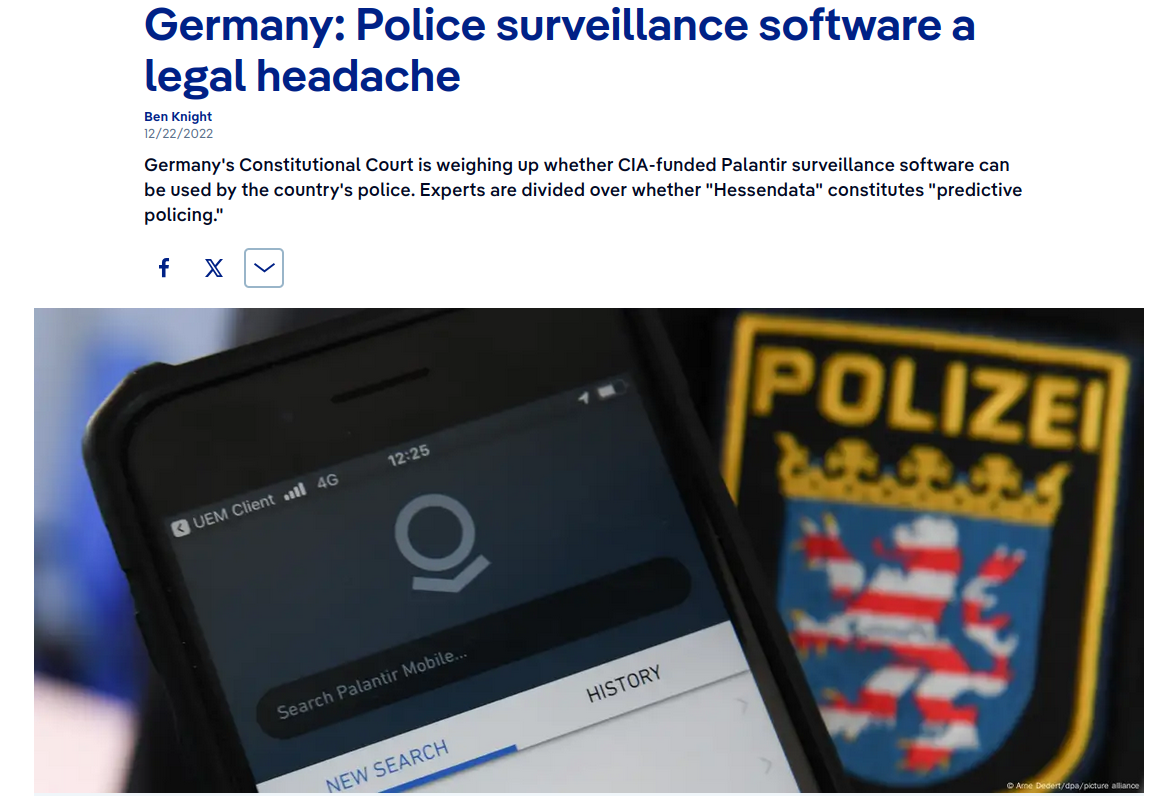
Peter Beuth, the interior minister of Hesse, advertises hessenDATA as “gang-busting software.” Police users describe the tool visually as “not very impressive,” but user-friendly and time-saving: “You can imagine HessenDATA as something similar to the diagrams in police thrillers, which depict people and networks of relationships. The data that hessenDATA analyzes is not new—but without the software, we would have to search through a large number of systems, store the data in files, and try to create any possible connections. hessenDATA makes this job much easier. We can filter thousands of data points instead of having to look through thousands of data points.”
Currently, hessenDATA can include the following information as part of its analyses and profile creation:
- police data from the Polizeiauskunftssystem POLAS database (an information system for searching for persons or objects),
- data processing of incidents and cases,
- traffic data,
- telecommunications data,
- exchange of police information,
- state registers,
- data that have been manually entered from seized devices related to an investigation,
- data that have been manually entered from internet sources, such as social media.
hessenDATA facilitates surveillance and has been used for non-violent crimes that do not fall under the categories of “serious,” “organized,” or “politically motivated” crime. In the past, hessenDATA was often used to investigate burglaries, according to a police officer. If an authorized official had a court order for analyzing telephone networks, telecommunications providers had to provide all telephone numbers that were connected near the crime scenes at specific times. This data was then analyzed using hessenDATA, and the numbers were displayed on a map, making correlations with the crime scenes and times visible. “You can see: We have X burglaries, and certain phone numbers stand out – from this we can conclude that person Y is behind it, and we are already one step ahead.” According to the federal commissioner for data protection and freedom of information, a typical data transfer to police for investigations via mobile phone networks contains about 100,000 data points. According to Hesse’s interior minister, Peter Beuth, hessenDATA was used on a daily basis in 2022 to combat “serious,” “organized,” and “politically motivated” crime. However, there are only a few publicly known examples of success in preventing serious political crimes. For example, in preparing the police raid against members of the far-right, anti-government Reichsbürger (Reich Citizens) group in December 2022, hessenDATA enabled the “identification of the network of relationships between the involved individuals around one of the main suspects, with the necessary speed and display of relevant connections.”
In Germany, data-based prediction and profiling systems are emerging in a fragmented landscape. German police and security institutions are strongly characterized by federalism: legislative and administrative responsibilities in the field of security authorities belong to the 16 separate federal states, with the exception of certain individual federal competencies. This fragmented political structure has, to some extent, limited the digitization of the 20 federal and state police forces. It has led to the coexistence of different systems and varied information management practices throughout the country, as well as challenges for cooperation at national and international levels.
According to the Federal Ministry of the Interior, the data often “must be processed manually and many times over, creating more work for police personnel and increasing the likelihood of errors.” In 2017, problems with journalist accreditation for the G20 summit in Hamburg revealed flaws in police and intelligence service databases, such as incorrect assignments, illegal deletion practices, inclusion of individuals due to minor issues, and false or charges that were never pursued. The Netzpolitik platform described these problems as the tip of the iceberg: “We can be sure that tens of thousands of other individuals in Germany are registered in police databases with outdated entries due to errors, invalid reasons, without any court conviction, or due to lack of practical deletion. Most of them probably don’t even know it, as there is no obligation to inform individuals if someone is entered into such a database.”
In 2016, the federal and state governments agreed to modernize the police systems’ architecture with the “Police 2020” program. By 2020, a “uniform network system with central data storage” was to be created “to significantly improve data quality, as in the future data will only be recorded once in a single system according to the same rules and will be processed uniformly through the use of central services.” On this platform, the new systems currently used by some police forces will also be made available to others, if needed. However, the modernization proceeded slowly and has long since exceeded the initial timeline. Therefore, the project was renamed to “Police 20/20” or “P 20” (from the 20 police forces involved at state and federal levels). The different police systems, applications, and procedures are now to be gradually merged by 2030.
Software from the controversial American company Palantir is also set to be made available at the national level through the “Police 20/20” program, aiming to assist police forces in quickly searching and analyzing large volumes of data, such as those stored in police databases. The systems allow access to and merging of data from multiple police databases, including traffic stop histories, police interrogations and investigations of individuals, along with additional data on foreigners, as well as data from external sources, such as social media platforms or mobile devices, cell towers, call records, etc. The systems also enable the creation of profiles and targeting of individuals with no evidence of involvement in alleged crimes, individuals not suspected of crimes, and even those known to the police as victims and witnesses.
While the Federal Ministry of the Interior suspended the plan for the nationwide deployment of Palantir’s software in 2023, two federal states, Hesse and North Rhine-Westphalia, are currently using it (hessenDATA). Bavaria continues to test VeRA and has also concluded a framework agreement that allows other federal states to purchase Palantir software without a separate tendering process.
Palantir’s profile creation systems have been tested or even used without a clear—or any—legal basis. Legal experts have warned that Palantir software merges different data sets collected for entirely different purposes, creating complex and detailed personal profiles, and that data analysis acts as a “black hole” for the individuals concerned. Before the Federal Constitutional Court’s ruling in 2023, data of individuals who were not even considered involved in an alleged crime, such as witnesses, were also included by other states such as Hesse. People can be arbitrarily targeted by police, often affecting groups that face discrimination, and because they are not informed about the data being analyzed, they cannot even defend themselves.

Europe
For anyone interested in reading more, apart from the reports on England, France and Germany that we mentioned above, there is also a corresponding report for Belgium4, as well as relevant articles on Spain in AlgoRace5, while all of them together can be found at State Watch6. However, beyond national efforts to upgrade surveillance with technological means, a process is also underway at European level to equip states with the new tools. This process includes, among other things, the legislative act on artificial intelligence (AI Act) which came as a proposed regulation in April 2021 and “aims to introduce a common regulatory and legal framework for artificial intelligence, which will apply to all sectors (except military) and all types of artificial intelligence.”
This specific regulation was voted on and implemented on August 1, 2024, but several changes were made in the following months, including the one that passed on February 2, 2025, regarding the use of “artificial intelligence” for predictive policing, facial recognition, and generally its use in public spaces with cameras, sensors, etc. We translate from the relevant research7:
In a few days, governments across the EU will have the power to deploy artificial intelligence technologies that will monitor citizens in public spaces, surveil refugees in real-time in border zones, and use facial recognition tools based on their political or religious beliefs. These are some of the exceptions imposed on the European AI Law, the first set of laws in the world for the relevant sector.
However, many controversial parts of the regulation will come into effect from February 2, 2025, partly thanks to secret lobbying by France and a series of European states. Internal documents that reached the hands of Investigate Europe reveal that member states conducted a successful campaign to weaken the measures, giving police and border authorities greater freedoms for covert surveillance of citizens.
The use of artificial intelligence in public spaces is widely prohibited by law, but changes promoted by the Macron government and others mean that law enforcement authorities and border guards will have the ability to bypass the ban. Climate protests or other political demonstrations, for example, could now be freely targeted with surveillance by artificial intelligence, if the police invoke national security reasons. In the final text, there are no longer any restrictions on the use of surveillance in public spaces – the need for any approval from a national authority or any declaration of the product in a public registry – if a state deems it necessary for reasons of national security. These exceptions would also cover private companies – or possibly third countries – that provide the technology to the police and law enforcement services. The text stipulates that surveillance is permitted “regardless of the entity that carries out these activities.”
The use of emotional recognition systems – technologies that interpret people’s mood or emotions – is prohibited from February 2 in workplaces, schools and universities. Companies will be prohibited from monitoring customers in stores to analyze purchasing intentions, for example, and employers cannot use the systems to check whether staff are satisfied or likely to leave. However, thanks in part to pressure from France and other member states, the systems are allowed by all police forces and migration and border authorities. It is not yet clear whether the systems will also be allowed for recruitment personnel, for example in companies to evaluate job candidates.
Moreover, there are biometric identification systems used to determine race, political views, religion, or sexual orientation, even whether someone is a union member. These are prohibited by law, but again, there is an exception. Police will be free to use these systems and collect image data on anyone or even purchase data from private companies. France was again the driving force. A document sent on November 24, 2023, by the French government to the Council of the European Union stated that it would be “very important to maintain the ability to search for a person based also on their religious or political beliefs—as, for example, by recognizing a sign, clothing, or other accessory the person is wearing—when that person is involved in violent extremism or presents a terrorist threat.” Biometric systems could now be developed to monitor millions of people and cross-reference them with national databases for identification. The use of this technology in public spaces “means the end of anonymity in these spaces,” warned the European Digital Rights Network in 2020.
Another gap identified concerns predictive policing – the ability of an algorithm to predict who will commit a crime. Spain, which held the presidency of the Council of the EU as negotiations were nearing their end in late 2023, already uses predictive policing algorithms. It is the only EU country that admits to doing so, along with the Netherlands. “Predictive policing is… an important tool for the effective work of law enforcement authorities,” stated the Spanish ambassador at a Coreper meeting in October 2023. A month later, Ireland, the Czech Republic, and Finland reiterated similar views, calling for the use of predictive policing products not to be fully prohibited. Thus, the final text allows for the use of such systems, provided there is human oversight of the technology.

“Predictive” epilogue
If we claimed that “predictive” surveillance is just another nonsense that serves only as a smoke screen for more discipline and suppression, we wouldn’t be far off. Essentially, the “predictive” capability of “smart” algorithms is nothing more than a self-fulfilling prophecy of the “law enforcement authorities” for “fighting crime,” which could simply provide an additional techno-scientific legitimacy to their decisions and actions; whether these are “successful” or simply tragic gaffes that end up being fatal for those who happen to be within the plan.
Last winter, for example, the police in Milan designated three areas of the city as “red” due to high risk of criminal activity. Thus, they mobilized hundreds of carbineers for patrols, who conducted many checks and investigations. No prediction system was used—or reported to have been used—to make this decision. It was simply the well-known classic police “experience”: where immigrants and individuals of “low social profile” live or frequently gather, petty thefts, arguments, and brawls are more likely to occur. It doesn’t seem necessary for some artificial “intelligence” to tell them this—they already have their natural ones.
On the other hand, the collection, storage and classification of daily life data8 is one of the biggest businesses of the 4th industrial revolution, and all these regulations that pave the way for surveillance technologies for national security reasons facilitate states that need this data on the one hand, but at the same time work on behalf of the companies that own these specific systems. At an EU meeting in November 2023, France warned that if the wider use of these technologies was not allowed, “there was a risk that companies would transfer their activities to areas where fundamental rights did not matter.” So, in order not to let this happen, in order not to “lose” the companies – nor the data obviously – let’s turn this place into an area where fundamental rights won’t matter.
Seen from the perspective of a power that, as it crumbles, is desperate to hold on to what it has taken for granted until now (its populations, its markets, its influences, etc.), it does not hesitate—or rather, it is forced—to “tighten the reins.” We saw this with the covid terrorism and we see it now with Ukraine and Palestine. Dissenters must be silenced and if they do not comply, they must be canceled. Objectors and opponents must be ignored and if this is not achieved, they must be arrested. Forget about anything more massive. Generally speaking, opposition is over. Now “science” is doing the talking. The tendency of Western societies to restrict freedoms in the name of public/national interest is not just a trend. It is their one-way street. And it is the process of constructing our prison. It is the future converging with the present.
Wintermute
- More about Palantir below in the article and also in issues #20 and #30 of Cyborg. ↩︎
- Excerpts from ‘Predictive’ Policing in France: Against Opacity and Discrimination. Why a Ban is Needed – La Quadrature du Net, January 2025 ↩︎
- Excerpts from Automating Injustice: ‘Predictive’ policing and criminal ‘prediction’ and profiling systems used by law enforcement and criminal justice authorities in Germany – Algorithm Watch, March 2025 ↩︎
- Automated Discrimination: ‘Predictive’ Policing and data-Profiling in Belgium – Human Rights League, April 2025 ↩︎
- https://www.algorace.org ↩︎
- https://www.statewatch.org/projects/digitalising-discrimination-and-criminalisation ↩︎
- https://www.investigate-europe.eu/posts/france-spearheads-member-state-campaign-dilute-european-artificial-intelligence-regulation ↩︎
- Related reference to The surveillance of everyday life, cyborg no 26 ↩︎