
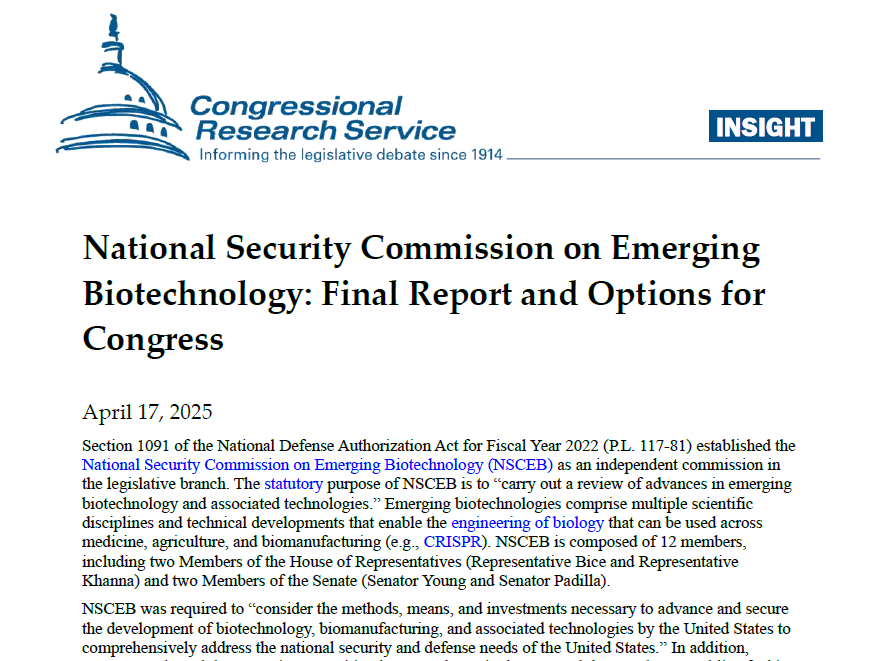
On April 8 of last year, the bipartisan “national security commission on emerging biotechnology” of the USA (NSCEB) issued a three-page report/guideline calling on the government to invest in a leap towards the militarization of biotechnologies. The alleged “motivation” of the people’s representatives was the assessment that Beijing is preparing genetically modified “super soldiers”: the construction of a phantom, an impending “threat”, and – consequently – its confrontation is always the beacon of modern state/capitalist barbarism.
The vigilant-in-their-outlooks American lawmakers from both parties support that biology can bring revolution to the military and to how war is conducted, just as (they say) air power did in the 20th century, promising new advantages in secrecy, supply chains, and monitoring the physical condition of soldiers in real time. They call for a “fundamental reassessment” of how the U.S. utilizes biology for military purposes:
… Biotechnology promises new advantages in stealth and mobility. Dynamic biological camouflage, for example, could protect our soldiers from thermal detection, while wearable bio-sensors could adjust mission parameters in real time based on the physiological data of those involved. Broadly speaking, these developments require a fundamental reexamination of how biology supports sustainable and flexible military operations, revolutionizing what it means to defend the United States, including the design, nutrition, and treatment of our forces in the field…
The authors of the report are verbose and emphatic. Within 3 pages they demand that “regulatory barriers for domestic biotechnology products” that can be utilized by the US Army “be reduced or removed”; in other words, they are calling for what is succinctly termed “deregulation”… Rodeo… They also demand that “large biological data repositories” be considered a “strategic resource”; a move that can easily become (if it hasn’t been already) a NATO specification; so let’s keep this in mind when we encounter “official” or “unofficial” campaigns for collecting genetic data… On infants, minors, or adults. They further advise that an order be given to the Pentagon to construct facilities throughout the American territory for the “bio-production of products deemed critical for the needs of the Department of Defense”…
This is an open call for a general biotechnological “mobilization.” Armament. Of course, DARPA and its branches have done (and/or funded) quite a bit of “work” over the past decades. Molecular biologist Michel Rozo, specializing in infectious diseases, from her position as vice president of NSCEB, clarified (to whoever might be alarmed by these plans) that “…technology is not inherently good or bad; what matters is who uses it…” Coincidentally, Ms. Rozo is also the vice president of technology at In-Q-Tel, the CIA’s venture capital firm, which has invested heavily in biotech research almost since its founding in 1999 (then under the name Peleus). Another NSCEB member, Dawn Meyerriecks, with a long tenure on the board of the NSA (National Security Agency), proudly states in her biography that among other things, she “led the CIA’s legendary ‘Science and Technology Directorate,’ contributing to its radical restructuring.” Another notable figure in NSCEB is hardcore neoconservative Dov Zakheim. A caravan figure who, while serving in the Pentagon during the Reagan administration, worked to ensure that Israel would be equipped with American-made weapons and aircraft at low prices. As a key member of the neoconservative “Project for the New American Century” (alongside Dick Cheney, Richard Perle, Donald Rumsfeld, and Paul Wolfowitz), he signed a proposal stating that “…ethnic biological weapons will transform biological warfare from a tool of terrorism into a politically useful instrument.”
We therefore know without a doubt the type of people who are interested in yet another leap in militarism. In the US – and not only.
a long history
The usual way of dismissing such developments is the idea that the military, capitalist militarism, are external factors in the “development” of biology, biotechnology, genetic engineering (and cutting-edge technologies in general…); that they make an “incursion” into fields otherwise unknown to scientists and companies whose only sin (justifiable however) is that they want profits; and that it would be possible and appropriate to put a bridle on this state arbitrariness so that capital (biotech companies, startups, institutes, etc.) can be left undisturbed in their charitable endeavors. As the clever soothing stupidity put it during the recent hygienic terror campaign… companies don’t want our harm, they care about their profits…
Dangerously distorted perception of capitalist reality.
When the Nixon administration ended the U.S. biological weapons program in 1969, it did so because it appeared at the time that arming microorganisms offered none of the advantages of nuclear bombs or chemical weapons. In their testimony before a congressional committee on biological weapons, Nixon’s national security advisors argued that biological weapons were “inherently” incompatible with the strategic goal of mutual deterrence and should be abandoned: biological agents were unpredictable in their effects, vulnerable to uncertain climatic and environmental conditions, indifferent to border restrictions, and prone to “backfire” against those who used them, making it extremely difficult to maintain clear boundaries between political and military spheres, between enemy and friend, between here and there. Not only was biological warfare inconsistent with the strategic framework of mutual deterrence, they argued; it also threatened to undermine the “balance of power” that supported the doctrine of mutual deterrence.
Some of Nixon’s advisors warned that the development of biological weapons could lead to their proliferation to non-state liberation movements, “democratizing” the use of weapons of mass destruction in ways that would ultimately undermine the strategic advantages of both superpowers. What biological weapons risked generalizing (argued state advisors at the time) was not simply the creation of a specific pathogenic agent but a different kind of warfare altogether. Beyond their direct (and deadly) rivalry, the two superpowers shared a common interest in preventing the emergence of non-state hostile entities. For all these reasons, the U.S. had no problem dissolving its military biological program, provided the USSR did the same. Thus, in 1972, the “Biological and Chemical Weapons Convention” was signed in London, Moscow, and Washington, which prohibited both the use and possession of biological weapons.
A little more than 3 decades later, in 2004, three years after the mysterious anthrax attack in the US1, the younger Bush administration would definitively terminate these (and) American beliefs regarding the futility and danger of biological weapons, becoming the first administration in American history to formulate a “national defense strategy” against biological threats. This followed the landmark “Project for the New American Century,” a reference to which in favor of biological weapons we mentioned earlier2. In the same year, 2004, the American Congress approved the largest financial program up to that point for biosecurity research, with a time horizon of the next decade. The law, titled “Project Bioshield,” provided a budget of 5.6 billion dollars for the purchase and storage of vaccines and drugs against bio-terrorism threats, granting the government new powers to initiate research programs; with an emphasis on deregulating legal restrictions regarding drugs in case of emergency3. Meanwhile, a more secretive initiative identified the locations of four research centers for the study of defense against biological weapons.
But defense against which specific “enemy”?
If you don’t have precise knowledge of the characteristics of the X or Y threatening biological agent, how can you search for the “antidote”? This inherent uncertainty seemed to create a serious problem for the “defense strategy” at that particular historical moment. Quickly, however, it would become (or be proven to be) a strategic advantage! In his public announcement of the program, Bush was uncertain whether the deadly bio-threat would originate from a deliberate attack of such kind or from one of the enhanced viruses, resistant to drugs, already circulating in hospitals. Official documents began to promote the view that the outbreak of some infectious disease and bioterrorism should be treated as a single threat, in the absence of a way to distinguish what is (and what is not…) what.
This “creative ambiguity” began to unfold its capabilities very quickly. The majority of military biosecurity funds went to organizations that until then were dealing with public health and research on infectious diseases. At the same time, biotechnology startups were encouraged to orient their research towards the new field of military applications. The boundaries between war conditions and public health, the life of microbes and bioterrorism, began to blur. For bio-defense to be effective, its practitioners would have to perceive microbial “threats” in the same way, regardless of their origin! The official militarization of biology confirmed its solid foundations there, in the midst of the first decade of the 21st century!
No more dramatic reversal of “Nixon’s logic” could possibly exist. Some would say that this logic was directly related to the desired balance of power between the USA and the USSR, and (additionally) to the balance of terror of mutual deterrence. Without the USSR, “Nixon’s logic” became a thing of the past… So perhaps indeed, biology-as-science and its experts were suddenly alienated from the military complex, without being able to defend themselves;
This would have been impossible to happen if this militaristic complex did not have biological arguments!! One of the popular scientific “truths” of most of the 20th century was the idea that thanks to the evolution of chemistry and pharmacology, a final “truce” was finally achieved between the human species and infectious diseases. Before this “truth,” in the 19th century, the opposite applied: that people and microbes live in the grip of a ruthless struggle of the kind “your death my life.” But after World War II the news became pleasant. This ruthless war had ended; infectious diseases had been “conquered,” encircled, studied; they were steadily declining first in the “developed” world and then in the “developing,” thanks to classical public health strategies, prevention, the significant improvement of daily hygiene, and immunization through the mass use of technologically new vaccines and antibiotics. In 1978, the WHO made the optimistic prediction that even the poorest countries would undergo an “epidemiological transition” before 2000, entering a new era where chronic diseases would be a more significant issue than infections.
Paradoxical or not, these celebrations were taking place at a time when the extensive, mass use of antibiotics was already harboring the reemergence of infectious pathogens—and notably in the very places where the “victory” over them had initially been achieved: the societies of the “developed” capitalist world. In 2000, four years prior to the official American militarization of biology, the “World Health Organization” announced the bad news in one of its reports: the “ceasefire” was over, infectious diseases had “returned,” and moreover, even more threatening than before; the world had been caught off guard; microbes were already preparing their resistance underground, in places where we thought they had been definitively defeated…
The militaristic health terminology, originating not from pentagons but from “health specialists,” made a dramatic return to the “truth” of the 19th century; now upgraded in a way that shattered any certainties. Pathogenic organisms no longer came only “from outside”; they also came “from within.” Friendly microbes turned against the human species: the immune system turned against itself (autoimmune diseases)… Antibiotics, the pinnacle of scientific wonders, bred large-scale resistant enemies… Chronic diseases previously thought to have organic causes were proven to originate from bacterial infections… New microbes were discovered that could move between different species (the cause of “mad cow disease,” for example). The liberalization of trade was portrayed as an opportunity for the “smuggling” of pathogens…
The “peaceful period” in the relationships between human species (but also cultivated species, especially animals) and microbes perhaps had parallels with what was called the “cold war” and “mutual deterrence.” In any case, it was declared over. The new “doctrine” of infection was established along the basic lines of the idea of “permanent risk”; which, in turn, was a genuine child of neoliberalism and the (supposedly creative) market-place: a stable balance between human species and pathogens could never be created since they co-evolve.
And it’s not only that these threatening microorganisms are evolving; they “emerge” in an unpredictable manner!!! They do not constitute, that is, a danger whose general characteristics can be timely identified. On the contrary, “defensive preparation” to be effective must be preparation against the unexpected, the unknown, the unseen, the sudden. “Life is a gamble,” and the war against these microscopic enemies must be constant, preventive, never completed, never certain of its effectiveness. As biologists Joshua Lederberg, Robert Shope, and Stanley Oaks put it in 1992 (twelve whole years before the new American bio-military doctrine):
… It is not realistic to expect that the human species will ever be able to achieve a complete victory against the multitude of existing microbial diseases, or those that will emerge in the future… While we cannot predict their appearance in space and time, we can be certain that new microbial illnesses will emerge…
So, the “only certainty…” (and this has been shaped as a new “scientific truth” over the last 3 to 4 decades) “…is uncertainty.” This “truth” has proven useful from many perspectives, especially since its matrix (neoliberalism, “risk-taking” as the ticket to any “success”…).
Melinda Cooper, in Life as Surplus, Biotechnology and Capitalism in the Neoliberal Era4 notes:
… The new theory regarding emerging infectious diseases seems to have struck a chord with theorists of American foreign policy and international relations, who at the same time were occupied with identifying the new and “emerging” threats that would shape the post-Cold War conflict period. Under the banner of a new information agenda, certain defense theorists (often with the uncritical support of NGOs and humanitarian organizations) argued that the goal of security must extend beyond the conventional military sphere to include life itself. What they sought was the “protection of human life,” but increasingly, the discussion of security in the West aims to expand even further, seeking to bring under the purview of the relevant mechanisms and strategic vision the entirety of life, from the micro-level to the ecosystem level.
One of the most well-known advocates of microbiological security has long insisted that “emerging infectious diseases … constitute a clear threat to national security,” and that the U.S. Department of Defense should develop a unified strategy to address both emerging and drug-resistant diseases as well as bioterrorism. If this sounds like an extreme position, let us remember that in 2000 a CIA report categorized “emerging global infectious diseases” as a non-conventional security threat, comparable to terrorism. In 2002, the U.S. Congress passed the “Public Health Security and Bioterrorism Preparedness and Response Act,” establishing the same guiding principles and procedures for both bioterrorist attacks and epidemics…
With such an ideological, institutional, economic and business arsenal, it would be naive to assume that “preparing for defense” against such unpredictable enemies as pathogenic microbes, whatever their origin may have been/is, would sink into the uncertainty of… the unforeseen and the unknown, waiting to see what will happen, if it happens, whenever it happens.
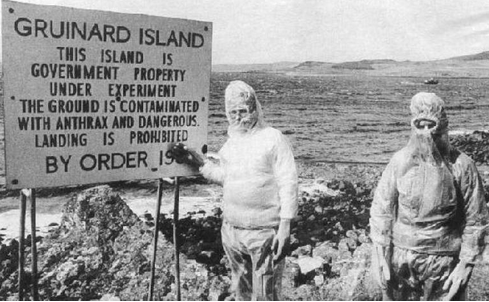
This issue should have been resolved. And it was resolved, initially by darpa and subsequently by its ambitious collaborators (such as, for example, the health alliance, Fauci, other allied services, etc…) “Instead of waiting for what, although and whenever, better to construct such phoenician microorganisms ourselves… so as to study their characteristics and create, if feasible, the antidotes.” The so-called gain-of-function studies, which is the definition of constructing biological weapons, sprang up exactly as the logical consequence of a combination between the interests of biotechnologists and geneticists (specialists and enterprises) and the interests of the American pentagon.
And what significance could it possibly have, what conclusions could be drawn if a laboratory virus remains locked in the laboratory, if it is not tested to reveal its basic characteristics: its transmissibility, its lethality, its tendency to mutate, etc.? Anyone rational and quite cynical supporter of science-in-the-service-of-people’s-protection would remind that in order for the atom’s fission to become a recognized weapon it was not (and would not be) possible to limit its use to experiments and tests in deserts. It had to be dropped as a bomb on densely populated enemy cities – and so it was done (without being recorded as a major war crime, genocide, Holocaust, etc…)
The same applies (logically…) to pathogenic factors, with the additional element that it is not enough for someone to create and test one; their variety is enormous and it is not unlikely that either the enemy or nature itself may endow another, a third or a fourth. Which means: a good collection of candidate “little” killers, a lot of work on them, and then “field trials”. The American biological warfare laboratories in Ukraine and Georgia did exactly what was “consistent” not only with their mission but mainly “with the enhancement of the forces of good”, with dozens, possibly hundreds of victims among the locals5.
super soldiers (like super foods…)
The above account is indicative. There are many more documents that someone can find if they are interested in the subject; we assume, however, that such people are very few. The historical fact is one: already from the time of monk Mendel, the quest for the secrets of heredity (which evolved into biology, later into biotechnologies, then into genetic engineering, synthetic biology…) was never outside the search for competitive advantages against others (other merchants, other social classes, or other rival populations, etc.). As is the case with several other aspects of technology/science (such as, for example, ballistics physics or the physics of new materials…), in this process the scientific and the competitive/military aspects advanced hand in hand. Nowadays, their fusion is considered self-evident. By defining research fields; securing funding; awarding prizes, praise, and status; achieving applications, and through these, “progress.”
In any case, the construction of biological weapons is only one aspect of bio-militarism, the militarization of biotechnologies and genetic engineering. It is perhaps that aspect which, by merely suggesting terror, also provokes a corresponding repulsion—especially after the sanitarian terror campaign with Sars-CoV-2. For example, one might borrow some elements from the “Nixon logic” and argue that they still hold: since infectious viruses spread easily across national borders, who would dare to use them?
The experience of closing borders during the sanitization campaign does not leave much room for optimism (against the use of modified/mutated viruses and bacteria) based on such “caretaking” issues, such as the porosity of borders. In practice, national borders are not so “porous” if an authority wants to seal them. During the campaign, there were countries whose territories no one entered without being triple-checked, in no way, for months. Moreover, an island nation, without land borders (and crossings), might hope that it has “sown” something that will keep it away…
Another objection is the fact that the more virulent a pathogen is, the harder it spreads from person to person: by killing its host, it hinders its own expansion. And this is only partly true, but we won’t say more about it. This much is enough: the use of a biological weapon does not have to be universal or generalized. It can be “local,” limited, exemplary/destructive—and therefore repeatable here or there.
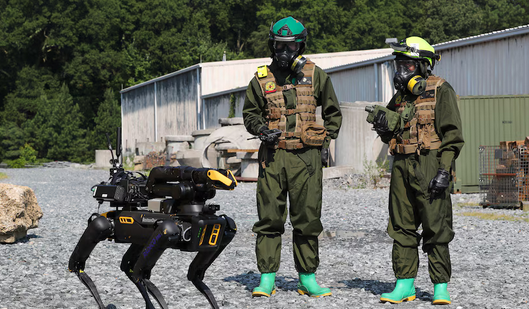
However, the recent NSCEB report seems to have particular concern for the construction of super-soldiers – for what is otherwise called “human enhancement”, “transhumanism”, “human/machine synthesis”, etc. Since the report was published, its authors took care to declare that everything must be done “following ethical principles” (without saying which ones these could be…) and with the consent (of the soldiers who will become “super”…)
This business with “consent” is tragically comic… It was included in the Nuremberg Code (after the trials of Nazi doctors) as a strict and inflexible condition for people’s participation in experimental treatments or the use of “new technologies” in medicine, pharmacology… to make a tissue paper during the rollout of mRNA platforms of genetic engineering…
The British AM minister had already responded in May 2021 to the American so-called “sensitivities” of 2025, regarding exactly the same issue, the “human enhancement” of soldiers:
… Consent in the military necessarily differs from consent in the broader society due to the unique relationship between subordinates and superiors. It could be difficult for military personnel to provide sufficiently voluntary and informed consent due to the tendency to follow orders rather than individual interest. Would someone who refused to be reinforced be guilty of disobeying a lawful order?
The answer is a dry “yes”! And of course it is commonplace – what use is the army and its discipline if everyone has a legitimate opinion about participating in it? When the leadership of the drowsy Jo, for example, gave orders to forcibly “vaccinate” (with the mRNA platforms) the entire American army, those who refused were simply dismissed. And dismissal is a mild punishment compared to other military disciplinary actions.
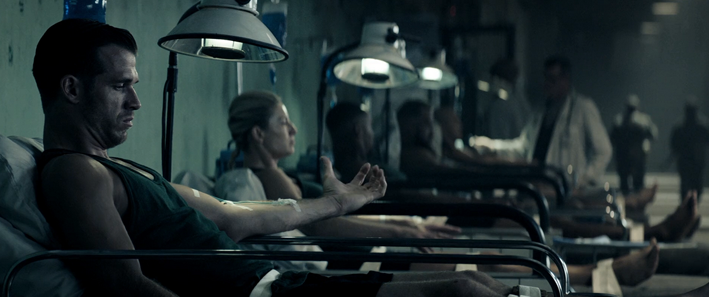
The American historian and political scientist Aaron Good, a critic of Washington’s foreign policy and author of the book American Exception: Empire and the Deep State, summarized the recent NSCEB report and its objectives in two sentences:
This enterprise is so ominous and horrific that it should not be something that occurs within an advanced civilization. But because we live under a lawless and exploitative oligarchic regime, whose only real mandates are to perpetuate itself and to increase the wealth and power of its oligarchic owners, this is precisely what is happening.
In the time of Bush the younger’s reign, convinced that military discipline is needed for proper disaster response (even natural ones), he attempted to abolish the Posse Comitatus Act of 1878, which prohibits (or severely restricts) the use of the U.S. federal army and its weaponry in domestic public order issues. Melinda Cooper wrote on this in 2008 that:
… The repeal of Posse Comitatus would mean that declaring a national state of emergency for health reasons would automatically become martial law, which in turn means that at an operational level all responsibilities for managing an epidemic would be transferred to the hands of the Ministry of Defense…
These, we repeat, were written by Cooper in 2008. The Posse Comitatus was not repealed in the US, but by 2020 it had acquired several wide loopholes so as to declare martial law without saying so by name. And in the western / European oligarchies? In our parts? The mammoths of constitutionalism competed in arguments that a military-law-that-is-not-called-by-its-name is the offshoot of “constitutionality”…
This reminds (to whoever is interested…) that bio-militarism, a political/institutional evolution combined with technological (the second leg being a prerequisite for the first), is already taking shape step by step and solidifying its foothold right before our eyes, around us, even within our minds – if not through consent, certainly through numbing, resignations, and compromises.
Ziggy Stardust
- Starting on September 18, 2001 (one week after the infamous “9/11”), and over the following days and weeks, mail envelopes each containing a gram of anthrax spores (a known deadly biological warfare weapon that disperses easily through the air) arrived at various American media outlets and to Senators Tom Daschle and Patrick Leahy, accompanied by handwritten “threats.” Five people were killed and another 11 were infected (but survived) as a result of this attack.
Anthrax is an old biological weapon, well-documented and identifiable in laboratory processing (due to the 1972 convention). Despite initial convenient assumptions that it was an “Al Qaeda attack,” it wasn’t hard to uncover that this particular material originated from the (famous) American biological warfare laboratory at Fort Detrick. In every respect, this was an inside job, which is precisely why it had to be covered up. In searching for the sender, the American FBI chose to focus on 60-year-old military biodefense researcher Bruce Edwards Ivins, who worked at Fort Detrick. What was his weakness? He was emotionally vulnerable to pressure. Following a systematic tactic of incrimination through “leaks” to the media, without ever arresting or officially charging him, the FBI drove Ivins to suicide nearly 7 years later, on July 29, 2008. With the “number one suspect” dead, the case was closed and filed away…
A detail: the two senators who were targeted had opposed the Patriot Act, the “anti-terrorism law” promoted by the Bush administration. After being attacked, they changed their stance… ↩︎ - Even earlier, since 1989, there was the proposal for state “utilization of terrorism” as a fourth generation war, including the use of biological weapons. More in the workers’ notebook no 1. ↩︎
- Does it remind you of something? ↩︎
- University of Washington Press, 2008. ↩︎
- With the risk of being characterized as “obsessive” we refer to some of the relevant references both specifically to American bio-military laboratories in Ukraine and Georgia, as well as to the general situation regarding biological weapons.
cyborg 21: Peaceful use of biological weapons…
cyborg 22: Viruses, properties, wars
cyborg 23: Biological war: the unseen face of the pandemic
cyborg 24: Pandemics and biological war: the Scylla and Charybdis of the 4th industrial revolution
cyborg 28: What Marx says about gain-of-function research ↩︎