
When the medical uniform becomes an epitrachelion and the caduceus a state thyreos
It is indeed impressive that the coronavirus managed to achieve such a degree of disciplinary unity that would be unthinkable even under the pretext of the most pressing “national issues.” It is, of course, understood that the parliamentary left, despite its supposed anti-imperialist slogans, remains deeply nationalist and carefully avoids straying from the national line. Even so, there are always the disobedient ones who are not easily convinced by the intellectual acrobatics of the parties and organizations of the parliamentary left to justify staying within the national line. Such voices of dissent against the inflation of national pride multiply as one moves further left across the political spectrum, although “surprises” never cease; patriotism is hard currency, and many are those who are building up reserves.
And suddenly the coronavirus appeared. The mobilization in the “war” against this “threat to public health” was almost universal. Neither the lack of reliable data, nor the disagreements on the part of a significant number of scientists regarding the management of the “crisis” and its severity,1 nor even the enlistment of military terminology by states and governments was enough to curb the momentum of left-wing and far-left health crusaders. Not only did they avoid uttering the slightest criticism about the totalitarian character of the social distancing measures—which are unprecedented even in times of wars and dictatorships—but they also appeared more royalist than the king, indulging in hygienic hysteria and accusing the state of not intervening drastically enough! Let alone mentioning the crude practice of certain “rebels” throwing any attempts at a critical stance against this unprecedented global lockdown (or perhaps lockout?) into the conspiracy theory bin; one can only marvel at whether such “rebels” are truly so slow-witted and panic-stricken that they fail to realize that the conspiracy theory accusation will eventually boomerang back at them. Even the generally liberal camp, with the exception of some (certainly minority) voices, seems to have hit a wall, falling silent deafeningly or simply regurgitating platitudes.
Such phenomena of intellectual bewilderment and ineptitude (at best) or panic (at worst) certainly require an explanation. Part of this explanation surely has to do with the extremely poor and simplistic theoretical frameworks that were mobilized to interpret the state’s retreat in the face of the virus. The main argument of the suddenly ubiquitous champions of state mandates boils down more or less (despite the elaborate flourishes with which it is sometimes adorned) to the dilemma of “freedom or health.” According to this framework, the precondition for any freedom is the existence of health, which is defined “objectively,” beyond any political aims of the states. These states, in turn, due either to a rare convergence of their interests with those of their subjects (the hierarchical order in all its grandeur), or perhaps due to the social pressure they faced (!), adopted the necessary public health protection measures, which were the only possible response to a novel emerging virus.
We will not dwell much on the second part of this argument regarding the sudden resurgence of humanism on the part of states. No social pressure was exerted on states, beyond the systematic production of racism by the media against China in the first phase of the virus’s spread and panic when the epicenter shifted to Europe2. If no state had taken social isolation measures, no society would have conceived the idea of demanding the implementation of such measures, given also the uncertainty regarding their effectiveness, as expressed even by the WHO3. The initiative of the movements therefore belonged from the outset to the states – where it remains. How is it possible for the same states, which are responsible for phenomena of mass, systematic destruction, degradation and dehumanization and have shown ruthless in the face of the possibility (which often becomes reality) of millions of deaths in other circumstances, to suddenly acquire a human face because of the virus? Why especially now is it not sufficient for the interpretation of their behavior to rely on an analysis based on their needs for population management (among others and communicative, as was basically the case in the Greek example) and balancing or promoting economic interests, and must we resort to indefinite and nebulous perceptions of an unprecedented display of humanism?
The only elementary logical answer to these questions would be that we are not essentially talking about some kind of humanism, but about movements imposed by the objective reality of the virus. States are forced to take such measures because these actually constitute self-preservation measures, preserving their very substance which is under threat. However, this could only apply in the case of a truly phoenician virus (such as Ebola) whose circulation in the population would threaten society itself with collapse; something that obviously does not apply to the coronavirus. There is, however, something else that is worrying in this line of thought: an implicit biological reductionism that assumes health as a univocally determined reality, a hard substratum impervious to social mediations. Health is the “foundation” and freedom the “superstructure”. The dialectic, so beloved otherwise, is here set aside; Hegel (with all his famous analyses of master-slave dialectic) now seems very small before the One Virus.
Health, illness and their management, however, are not simple “objective” realities, if by “objective” we mean a biological substratum that predetermines anything that can be said about them. Although they undoubtedly have an irreducible biological dimension, an analysis that places the biology of the virus at its center, treating its social and political aspects as mere side effects, achieves the opposite of what it supposedly accomplishes: not only does it fail to provide any “objective” knowledge, but it constitutes ideology in one of its purest forms, that of scientism. The following notes have the rather unpleasant role (and we say unpleasant because we naively thought they should be self-evident, at least in certain circles) of illuminating the dialectical interaction between health and illness on one side, and social and political practices on the other. We have arranged them in three parallel levels, with this distinction serving primarily analytical purposes, without implying either the existence of watertight compartments between them or any ontological or genetic hierarchy.

Level 1 – the production of diseases
We will start with some simple observations that would probably be easily accepted, at least by the vast majority of those who consider themselves to have some leftist reflexes. However, as a starting point we will use some “provocative” questions. Are there indeed infectious diseases? And if so, since when have they appeared? And if it is still possible to locate with some relative accuracy the emergence of pathogenic microorganisms within biological time, does this have any significance, at least as far as their management by human societies is concerned? Have they always been “pathogenic”?
Measles, mumps, flu, smallpox, chickenpox, tuberculosis. One of the most resilient myths constructed by modern medicine in order to place itself at the heart of the epic of human “progress” revolves around these infectious diseases. The prestige with which medicine was invested throughout the twentieth century is largely due to its ability to finally relieve humanity from a series of infectious diseases responsible for millions of deaths. While such a perception is not entirely incorrect, like every mythological construction, it is based on a selective interpretation of historical events. First, many of the treatments that emerged as a result of medical discoveries were applied on a mass scale only after these diseases had largely run their course and a certain level of natural immunity had already developed, helped along by non-medical factors such as improved nutrition. In other words, these treatments simply appeared too late to be credited with saving humanity. Second, for a large number of infectious diseases (notably the flu virus), there still exists no method for radical treatment. When someone contracts the flu, the best thing they can do is simply… wait it out—we remind readers that antibiotics are only effective against bacterial infections, not viruses. Even so, despite the auxiliary role these treatments may play, they could justifiably be considered among the significant contributions of modern medicine. Penicillin is one of the truly important medical discoveries of the twentieth century—and one of the few, given that a large portion of medical interventions are now at least of questionable effectiveness, if not outright harmful4.
The myth of medicine’s omnipotence commits yet another historical injustice, suggesting that infectious diseases have always afflicted human societies and that therefore only a medical-biological intervention can address them. It is a typical example of biological reductionism, placing biology—of viruses and humans—at the “base” and social practices in the “superstructure.” For the overwhelming majority of human history, however, infectious diseases were socially nonexistent, despite the potential biological existence of pathogenic microorganisms. The reason for the “nonexistence” of infectious diseases was, of course, the low density of human populations and their nomadic way of life. Infectious diseases began to acquire socially significant weight only after the development of agriculture, animal husbandry, and permanent settlement, which resulted in close contact between humans and animals (the source of many such microorganisms) on one hand, and among humans themselves on the other (thus facilitating transmission)5. The purpose of this observation is, of course, not to suggest a return to a pre-agricultural, nomadic way of life as a means of dealing with disease. However, it serves as an initial reminder that what is defined as a biological event may weigh very little in the balance of social events. Viruses and microbes do not simply attack isolated individuals, but societies organized in one way rather than another.
Events from prehistoric times may seem remote, retaining only an encyclopedic interest. However, similar social mechanisms that initially allowed the emergence of infectious diseases are now also responsible for the rise of modern pathogenic microorganisms. It is considered almost certain that in recent decades there has been a systematic overproduction of new viruses, which constantly mutate, resulting in the circulation of a cocktail of a large variety of viruses6. Just as several thousand years ago, so now, the close affinity between humans and animals is a factor that supports this development. The difference is that it is no longer about domesticated animals, but mainly about wild animals whose ecosystem is systematically attacked due to the continuous expansion of human activities. The result: viruses that previously circulated among (often sparse) populations of wild animals find new opportunities to jump to human hosts7. The capitalist machine may expand by continuously conquering new territories, but the human cogs of it (who are often simply the last wheels of the machine) are conquered by invisible microorganisms.
Moreover, this apparent overproduction of viruses appears to be related to and have its equivalent in livestock overproduction, as it has been organized in recent decades in the capitalist “South”. Not coincidentally, the epicenters of new viruses are often located precisely in areas with intensive, industrial-scale livestock production units, which, through extensive distribution networks, supply the capitalist “North” with enormous quantities of meat. These monstrous units do not simply make hyper-intensive use of already known livestock techniques, but essentially create artificial ecosystems which have never appeared and would never appear spontaneously in nature. Meat overproduction in this way creates the ideal conditions for virus overproduction8. Under normal conditions, it is not in a virus’s biological interest to have high mortality, since this would interrupt its reproductive and transmission capabilities. However, in conditions of industrial livestock farming, the evolutionary pressure on a virus to maintain low levels of aggressiveness is lifted, since there is a continuous supply of potential hosts. In fact, a reverse evolutionary pressure is created for viruses to increase their transmissibility. When a chicken is slaughtered at just 40 days (from the moment it hatches, it reaches slaughter weight in only 40 days!), a virus cannot afford to follow slower incubation and transmission cycles. The acceleration of meat production accelerates the cycle of a virus too. And when these units select varieties specifically developed for increased meat production, they lay at a virus’s feet a genetic monoculture which will be either absolutely immune to it or absolutely vulnerable, leading to massacres with unimaginable transmission rates. The same applies even to other microbes, such as bacteria, despite the tons of antibiotics that are channeled into the bodies of these unfortunate “meat carriers”. All that systematic antibiotic use achieves is the development of even more resistant varieties which in turn require new antibiotics, and so on. Just as a microbe attacks humans, so too does capitalist frenzy attack the very same.
However, it is not only the coronavirus that, to some extent at least, constitutes a derivative of a specific mode of social organization and production. The same applies to the bodies of its victims. From the data available so far, it is considered certain that its danger is essentially zero for healthy individuals of non-advanced age. What can make it genuinely dangerous are the so-called underlying conditions: diabetes, cancer, respiratory and cardiovascular diseases, obesity. What do these conditions have in common, apart from rendering someone vulnerable to the coronavirus? All of them fall within the spectrum of the so-called “Western” diseases, that is, diseases that thrive in urban, industrialized environments and were rare or non-existent in the (not-so-distant) past9. It is not only infectious diseases that required a specific type of social organization to attain the status of social phenomena. Every type of social organization has the diseases it “deserves.” Infectious diseases had already been largely curtailed by the end of the 19th century, mainly due to better nutrition and the implementation of basic hygiene measures, and secondarily due to antibiotics and vaccines. When these disappeared, the “Western” diseases came to the forefront.
Their etiology remains uncertain, as is the treatment that modern medicine has to offer for them, which is deemed only marginally useful. One suspects that a reason for this spectacular failure of modern medicine is its insistence on treating the body as a mechanism whose inputs and outputs must be mechanically regulated so that the organism can once again become fundamentally functional and “productive,” ignoring the most obvious fact: that it is the broader ecological environment (that is, both economic and social, when speaking of human societies) that plays the primary role in the creation and eradication of diseases. There are even indications that a class factor is involved in the targeting of certain diseases10. Bronchitis, brain diseases, stomach cancer, and rheumatic heart diseases show a particular preference for lower-income groups. Ischemic heart diseases, on the other hand, began their “career” among the upper classes—presumably due to sedentary lifestyles and diets rich in fats—but gradually became more common among the lower classes. This is another working hypothesis of ours: the upper classes discovered hygiene and left the nutritional garbage to the lower classes.
Οι (μεταδοτικές ή μη) ασθένειες λοιπόν δεν συνιστούν απλά βιολογικά γεγονότα. Αν αντιμετωπιστούν ως τέτοια, γίνεται αδύνατη και η όποια απόπειρα κατανόησης της καταγωγής τους, των ιστορικών μοτίβων εμφάνισής τους και της αλληλεξάρτησής τους με τις εκάστοτε κυρίαρχες κοινωνικές πρακτικές. Για να το πούμε πιο αφοριστικά, όσο η υγεία επιτρέπει την ελευθερία, άλλο τόσο η ελευθερία επιτρέπει την υγεία. Δεν πρόκειται για ιστορική μυωπία και αθώο διανοητικό σφάλμα όμως. Ο μύθος της σύγχρονης ιατρικής, με τις πολυδαίδαλες οικονομικές και πολιτικές διακλαδώσεις της, προϋποθέτει την απο-ιστορικοποίηση της υγείας και της ασθένειας για να μπορέσει να νομιμοποιηθεί.

Level 2 – medical model and therapeutic techniques
It is supposed that medicine, if it wanted to honor its name and lend some credibility to its myth, should at least have therapeutic effectiveness. Diseases may appear for such and such reasons, and from a macroscopic point of view, it certainly matters to be able to trace their roots. Once they appear, however, medicine’s most immediate duty would be to indicate at least some therapeutic directions. In some cases, it indeed succeeds. In many others, it operates blindly, even if it doesn’t admit it. But is there a case that modern medicine functions as a mechanism for the systematic production of disease?
The answer to this question depends on how one understands the concept of “therapeutic effectiveness.” What exactly is the goal of a therapeutic intervention, what kind of results does it expect? For centuries, the dominant models of medicine (including Western medicine) focused on achieving a balance as the desired outcome of every therapeutic intervention. Balance both within the body (e.g., between the famous Galenic humors) and between the body and the environment. The purpose of medical interventions was to assist natural processes so that they could follow their course unimpeded and thus bring about healing11. A broken bone was set in its proper position and the body’s natural processes were responsible for creating the bone mass that would reunite the bone again (as indeed still happens in most cases when surgical intervention is not required). The much-maligned natural immunity was the one that bore the burden of halting the course of an infectious disease – who could have imagined that the term “natural” would come to sound like a curse among supporters of sanitarianism?
However, scientism would leave its mark on medicine as well, already from the 19th century, if not earlier. The ambition to transform medicine into a strict science led it to rid itself of homeostatic notions of balance and increasingly adopt quantitative methods that would judge patients’ health, regardless of their own subjective perception. The very notion of disease replaced the patient as the object of the doctor’s attention. It no longer mattered how a patient felt; what mattered were the doctor’s laboratory measurements, averages, and deviations. The elimination of the patient’s subjectivity became the royal road that led to the doctor’s role being invested with unprecedented authority and to the patient’s disempowerment in relation to their own body. The medical body became a special caste with the role of distributing the indulgences of health and the condemnations of disease; and with special interests in constructing all kinds of illnesses as well as treatments of minimal utility that merely allow a patient to sustain a miserable existence.
A prerequisite for eliminating the subjectivity of the patient was also a broader shift in medical conceptions of the body. The ideological groundwork had already been laid since the 17th century, when Descartes and Hobbes, despite their otherwise chaotic differences, both endorsed the new doctrine: the body is a machine, a complex of gears and pumps that strictly follows mechanical laws. The introduction of quantitative methods into medicine seemed to confirm this previously philosophical assumption. Medicine transformed from an art into a technique; from being a therapy of the organism, it became the mechanics of the body. The boundary between normal and pathological began to blur12. In any case, whether functioning properly or failing, a mechanism always follows strict laws. Primary importance lies in discovering these laws and, based upon them, secondarily, the healthy averages and pathological deviations. The difference between health and disease is primarily quantitative in nature, and treatment consists in the appropriate handling of bodily mechanisms through mechanical-type interventions, so that measurements return to their physiological levels (e.g., regulating serotonin levels in the brain, as is supposedly done by SSRI antidepressants—a sadly familiar example for many).
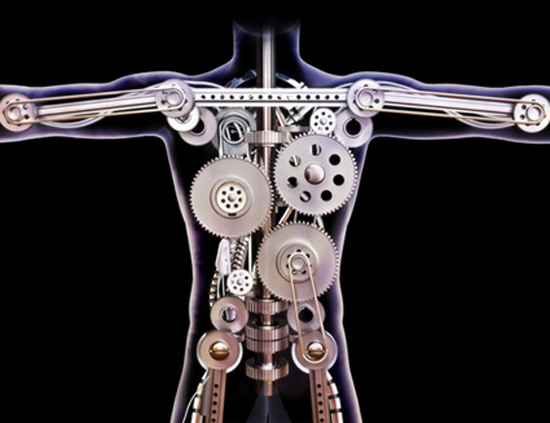
The body thus became an endless field of mechanical interventions; with the important caveat that the goal of these interventions was not only the treatment of diseases, but also the “construction” of diseases. The medicalization of conditions that were previously considered absolutely physiological has turned them into quasi-pathological ones, thus feeding a monstrous medical circuit that has every interest in discovering new pathologies and maintaining old ones. Contraceptive pills were once considered tools of liberation, despite the fact that they essentially unleash a violent attack against the physiological cycles of the female body, simultaneously removing the woman’s autonomy and providing the doctor with sovereignty over her body. The process of giving birth is another such case. A completely physiological process, which only in a few cases requires special medical supervision and intervention, has been fully medicalized, automatically turning every pregnant woman (and her baby) into a patient13. One can no longer escape doctors even in death. Even this has been turned into a medical matter. With the simple administration of some strong painkillers, a terminally ill cancer patient could die with dignity at home, surrounded by loved ones, in an environment that he himself has given meaning to throughout his life. Instead, cancer patients are stacked in hospitals to die in white beds, among strangers, in an alien environment that welcomes them as numbers and would very much like to get rid of them a little earlier. Even the dying are no longer safe…
Beyond the isolated examples one might find here and there (and the list could certainly stretch far), the most insidious aspect of the dominant medical model is that it tends toward a universal medicalization of life. Just as the factory once stripped knowledge from living labor to incorporate it into its machines, constructed by a specialized caste of engineers, so too has the social factory stripped the social body of its therapeutic knowledge about itself, transferring it to medical specialists and their machines14. The claim that such a development was necessitated by the high level of specialization now required by medical interventions is utterly flimsy—a mere pretext. Clearly, specialized knowledge is required in some cases. However, the vast majority of therapeutic techniques that are truly effective are simple enough in their application that they could be the possession of not just the entire population, but certainly a large portion of it, following basic education that would not require years of study—education that is later lucratively cashed in by those who hold the relevant degrees. Maintaining a system that sustains a permanent relationship of dependence of the social body on a caste of specialists is not a “scientific” issue; it is fundamentally a political one15. If one realizes that we are dealing here with a medical-political system whose main purpose is to provide a kind of “health” that systematically denies “freedom,” then perhaps one will also realize how ultimately misleading the dilemma of “freedom or health” truly is.
Level 3 – Medicine as Ideology
The social factory has now also become a social hospital. The customers of this hospital are a mass of hypochondriacs, hypertrophic Egos who have learned that whatever they need must either be purchased or provided to them as a state benefit. Health is not something one achieves as part of a collectivity, it does not reflect a social normativity, to use terminology from Canguilhem. It is something one buys in order to take care of one’s individual capital, to remain a productive, obedient cog in the capitalist machine. Health thus acquires something “magical,” it begins to have the character of a fetish – like every good commodity. And with a simultaneous, reverse movement, illness, pain and death become taboo. When medicine has removed every trace of autonomy from social subjects, rendering them incapable of judging their own body’s health, illness is perceived as something irrational that must be immediately exorcised. For the destitute Egos – customers of the social hospital, the acceptance of pain and its management through one’s own means is something inconceivable. It is not only truly urgent situations that require specialized medical intervention; every minor ailment triggers panic procedures, initially at an individual level, which however easily expands to a collective one. Doctors and state officials emerge as the only possible saviors of society, socially legitimized long before any lockdown.
If the doctor’s white coat has become the modern-day straitjacket, this is also due to the image of omnipotence that medicine has systematically cultivated for itself. There are a few very simple questions regarding the management of coronavirus that were never posed—or at any rate, not posed with the persistence that was warranted—whose answers are revealing about the way medicine builds its social prestige. If indeed it is assumed (and that is a big if) that isolation measures have resulted in a flatter curve of cases and victims, what exactly does this mean? At the end of the pandemic, what will the final outcome be in terms of the total number of deaths? Will it have actually decreased? That is, if we don’t focus on the peak of this curve, but on its total area, is there data supporting that this area will be smaller with the implementation of measures? The answer is negative. Whatever data exist from the 1918 flu pandemic show that the effectiveness of measures on the total number of deaths is utterly marginal16.
Second question: if we again assume that quarantine truly helps reduce the transmission rate below 1, what data even suggest (let alone prove) that lifting the measures won’t cause this number to skyrocket again? Simply put, no such data exist—there are indications of exactly the opposite. Before quarantine was imposed, almost nothing had been said about the possibility of a second or third wave. Only after societies had donned the hairshirt of isolation did some whispers begin. In Greece, nearly a month of quarantine had to pass before the official lips of the national epidemiologist began to stammer something, and full-page articles appeared in the media of mass fear-mongering. If they wanted to be consistent, supporters of quarantine should at this moment be organizing protests against the lifting of measures and insisting on maintaining them until a vaccine and artificial immunity are developed (since natural immunity seems to them like a return to barbarism). But because moderation has its limits, they don’t even consider doing something like that, just to be at least consistent with themselves.
No matter how “cynical” it may sound to the sensitive ears of quarantine-lovers, the conclusion is obvious: judged strictly on the basis of its effectiveness, medicine (medical-political, to be precise) simply has little to offer in limiting the spread of the virus – something that certainly does not mean it cannot contribute to the care of cases17.
It is a failure of medicine that it itself fails to acknowledge. Instead, it insists on building a (convenient for itself) myth of omnipotence. Viewed from this perspective, quarantine was, among other things, also a massive, unprecedented in scale ritual legitimization of medical-political power. It was not a ritual of social role reversal (such as those analyzed by anthropologist Victor Turner), but a ritual of reinforcing the role that medicine and political power have played and will be called upon to play as we move toward the 4th industrial revolution.
Epitaph
“Freedom or death” was once almost a cliché on the lips and pens of revolutionaries. Today’s “revolutionaries” of social media (fortunately, these continued to operate during quarantine; if they had closed, reactions would have been sharper compared to those against quarantine) persistently type “freedom or health,” unable to discern the most elementary of dialectical nuances. Unable to understand that what the medical-political authority arrogantly tells them boils down to “if you want health from now on (and who doesn’t want it?), you must be ready to bid farewell to freedom whenever I say so.” Whoever yields to such blackmail, however, probably deserves neither health nor freedom. One thing is certain: in the long run, they will have nothing of either.
Separatrix
- In Greece, among these “heretical” scientists, Ioannidis is probably the most well-known, a professor at Stanford. He was initially hosted by some Greek media, but subsequently “disappeared.” It is not unlikely that his disappearance (with the exception of some provincial media) occurred following instructions from above; some initial comments by our national epidemiologist regarding the “inhumane” recommendations he received from a Greek academic of international renown likely shed light on Ioannidis. Of course, Ioannidis is not the only one. In this article (in German), one can find an extensive list of dissenting voices (120 Expert Opinions on Corona. Worldwide, high-ranking scientists, doctors, lawyers, and other experts criticize the handling of the coronavirus. Views of 120 specialists on the coronavirus. Scientists, doctors, legal experts, and other high-profile specialists around the world are criticizing the management of the coronavirus.). A smaller list has also been compiled by off-guardian. ↩︎
- There is serious indication that this panic production may have itself led to wider spread of the virus, turning hospitals into poles of attraction for carriers and ultimately into centers of spread, while simultaneously decimating their staff. However, it may also be indirectly responsible for the increase in deaths, not only due to the virus itself (with all the statistical alchemies that may be taking place), but also due to avoidance by patients suffering from other conditions to seek medical care. See the article in The Times, Coronavirus: Record weekly death toll as fearful patients avoid hospitals. ↩︎
- See the WHO report Non-pharmaceutical public health measures for mitigating the risk and impact of epidemic and pandemic influenza, published in October 2019. We reproduce untranslated a passage from the report’s abstract: «The evidence base on the effectiveness of non-pharmaceutical interventions (NPIs) in community settings is limited, and the overall quality of evidence was very low for most interventions. There have been a number of high-quality randomized controlled trials (RCTs) demonstrating that personal protective measures such as hand hygiene and face masks have, at best, a small effect on influenza transmission, although higher compliance in a severe pandemic might improve effectiveness. However, there are few RCTs for other NPIs, and much of the evidence base is from observational studies and computer simulations. School closures can reduce influenza transmission but would need to be carefully timed in order to achieve mitigation objectives. Travel-related measures are unlikely to be successful in most locations because current screening tools such as thermal scanners cannot identify pre-symptomatic infections and afebrile infections, and travel restrictions and travel bans are likely to have prohibitive economic consequences.» ↩︎
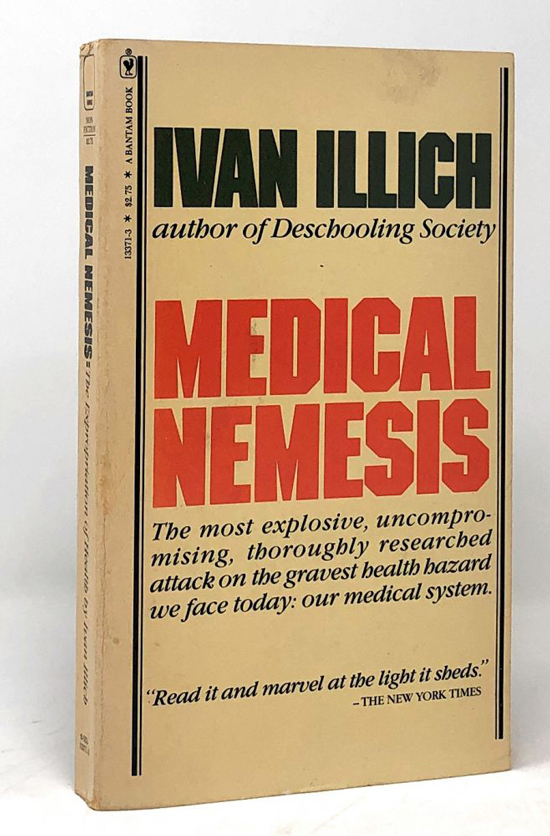
- Βλ. το βιβλίο του Ιβάν Ίλλιτς «Ιατρική Νέμεση. Η απαλλοτρίωση της υγείας.», εκδ. Νησίδες, μτφρ. Β. Τομανάς. ↩︎
- See The Cambridge World History of Human Disease, ed. K. Kiple, Cambridge University Press, 2008. ↩︎
- Mental experiment: one can take the letters HXNY, replace X and Y with any two numerical digits and be almost certain that the resulting code will correspond to some actually existing virus. The well-known H1N1, for example, is only one of a very large family of related viruses. ↩︎
- See the Scientific American article, Destroyed Habitat Creates the Perfect Conditions for Coronavirus to Emerge. See also in PNAS (Proceedings of the National Academy of Sciences of the USA), the 2003 article Zoonosis emergence linked to agricultural intensification and environmental change. ↩︎
- See the article Breeding Influenza: The Political Virology of Offshore Farming by Robert Wallace in the journal Antipode from 2009. For a good overview, see also the recent article in Monthly Review COVID-19 and Circuits of Capital. ↩︎
- See Western diseases: their emergence and prevention, ed. H. C. Trowell, D. P. Burkitt, Harvard University Press, 1981 and Some diseases characteristic of modern Western civilization, D. P. Burkitt, British Medical Journal, 1973. Not only these belong to western diseases. For example, autoimmune diseases and various kinds of mental illnesses that have flourished in recent decades should also be considered typical examples of western diseases. ↩︎
- See Rise and fall of Western diseases, David J. P. Barker, Nature, 1989. ↩︎
- For more extensive analyses, see again the important book by Illich, “Medical Nemesis. The Dispossession of Health.” See also Cyborg, vol.15, Citius, Altius, Fortius… every day, all day long. Health as continuous upgrading. ↩︎
- See the book by Georges Canguilhem, «The Normal and the Pathological», ed. Nisos, trans. G. Fourtounis. ↩︎
- Especially in Greece, the situation has gotten completely out of control. The greed of doctors has reached such a point that nearly 60% of births are now done by cesarean section, a percentage unthinkable even for Western medicine. Who will finally cure us from the doctors? ↩︎
- Innocent question: why on earth does the school curriculum include all kinds of useless subjects, but no one has thought to suggest the introduction of first aid and basic medical knowledge classes? ↩︎
- And here we haven’t even referred to other, less “philosophical” issues with direct political significance, such as the state of collapsed healthcare systems (though it should be noted that the fact they have reached such a state is not unrelated to the dominant medical model). The avoidance of hospital overcrowding can be achieved not only through the infamous “flattening of the case curve” (even if one considers this to be meaningful), but also through robust healthcare systems. However, no state dared to say that “we are locking you inside because the healthcare systems we have built are failing.” They took refuge behind “individual responsibility” and the (cooked, as in the notorious Imperial model) “scientific data.” ↩︎
- See Public health interventions and epidemic intensity during the 1918 influenza pandemic, Hatchett, Mecher, Lipsitch, Proceedings of the National Academy of Sciences, 2007. ↩︎
- Some scenarios that were heard about 13,000 deaths in Greece if no measures had been taken are completely unfounded. With a little tweaking of the computational models that were used, it is certain that this number could come out as 23,000 or 33,000 or whatever else suits one’s purposes in the end. Let us simply note that making decisions based on the results of computational models is something unprecedented. No aircraft manufacturer would ever consider building airplanes based solely on computational models, without physical models and prototypes undergoing extensive testing. No pharmaceutical company (so far) releases drugs based on the effectiveness predicted by computational models alone, without extensive clinical trials. And yet, it is considered normal for billions of people to be locked up in their homes based solely on the results of epidemiological models, at the same time that data from real-world conditions and randomized studies (see the P.O.U. study and the 1918 flu study mentioned above) suggest that the effectiveness of such measures is limited. A different issue is the type of medical care provided to cases, but we will not elaborate on that here. ↩︎