
Since 2016, ID2020 has been promoting an ethical, privacy-protecting approach to digital identity.
For the one in seven people globally who lack the means to prove their identity, digital identity offers access to vital social services and enables the exercise of their rights as citizens and participants in the digital economy. But building digital identity means protecting individual rights and returning control of personal data back where it belongs… into the hands of the individual.
Every day we rely on a variety of forms of identification to navigate our lives: driver’s licenses, passports, work access cards, credit and debit cards, boarding passes, and more.
But technology is rapidly evolving, and many of the transactions that require identification are now conducted digitally. From electronic passports to digital wallets, online banking, and social media accounts, these new forms of digital identity allow us to travel, conduct business, access financial and health records, stay connected, and much more.
While the shift toward digital identity has brought many positive impacts, it has simultaneously been accompanied by endless challenges and setbacks, such as large-scale personal data breaches. Most current tools are outdated, lack adequate protections for personal data, and commodify our data. But this is about to change, and ID2020 is leading the effort.
We are businesses, non-profits, governments, and individuals… working together to ensure that the future of digital identity is truly that of a good identity.
This is the beautified description that ID2020 gives for itself on its official website. The organization was established in 2016, with its first summit held at the UN headquarters in New York, and among its key members are some of the heavyweights of big tech and big pharma: Microsoft, the Rockefeller Foundation, Hyperledger (an organization focused on cryptography and blockchain technologies), Accenture (a multinational providing specialized services to large companies), iRespond (an international organization using biometrics to “improve lives”), Simprints (a Cambridge University startup focused on biometric technologies), as well as Gavi (an umbrella organization of major pharmaceutical companies promoting vaccinations).
A universal digital identity, which will serve as an immutable proof of identification, means two things. First, databases that will collect and process individuals’ personal data. According to the ID2020 specifications, the digital ID will not be a simple electronic transfer of the classic identity with basic details, but aims to replace all identification certificates, from the passport, to bank cards, to the driver’s license, to… This means that the digital record in the database will not be static, but dynamic, meaning it will be continuously fed with new data and will be… inexhaustible, including data that will cover the individual’s history from every aspect. The digital ID will not be a static “photograph”, but a systematic and analytical record of the person’s activity.
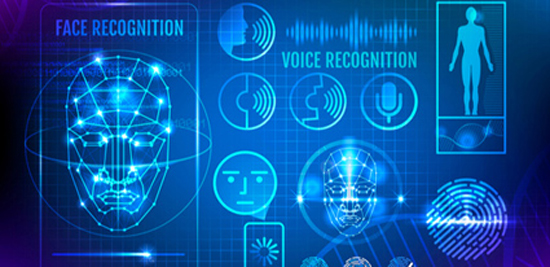
Secondly, biometric data that will guarantee the objective identification of the individual with the registration in the digital registry. Because, it is one thing the detailed recording of personal data in an identity registry and it is something entirely different the confirmation without doubt that the individual is indeed the one described in the registry. It is on this difference that both identity forgery and the appropriation of a foreign identity are based. However, if the digital ID includes biometric data – such as DNA, fingerprints, the iris, whatever else or all of these simultaneously – then identification becomes technically objective and infallible. It also means that practically, the individual does not need to carry any proof with them; their identity is engraved in their genes…
ID2020 is right to claim that current digital identification processes are “archaic” and “commodify personal data” – and Microsoft says so too! Indeed, they resemble small-time vendor operations, compared to the prospects of the generalized digital panopticon promised by “good digital ID”.
There are two directions in which ID2020 works more systematically and organizes pilot programs; one concerns refugees and the other vaccinations.
For refugees, the organization claims that digital identity will provide a solution to the problem of people without papers and will ensure better access to vital health, asylum, education, humanitarian services, etc. Of course! The reason why refugees and migrants are persecuted, imprisoned in concentration camps, tortured and murdered at the borders of the first world is because they lack identity; they are “unknown” for bureaucratic reasons. Moreover, consider how much more power it will give to the prosecuting authorities to have a refugee with a digital ID in front of them, that is, to have access to a detailed record of their origin and journey: where they started from, which countries they passed through, where they applied for asylum, where they were arrested, where they were charged, who they were cross-referenced with…
As regards vaccinations, the organization’s argument is that the digital identity containing the relevant data will allow health authorities to have more effective control and will improve the health coverage of the population. Again, refugees constitute the ideal population for implementing pilot programs. Here, vaccination is used as a means of promoting the concept of digital identity: the digital ID not only brings digital liberation from the bureaucratic cycle of multiple and vulnerable identities, but also serves simultaneously as a weapon against health threats. When, moreover, the long-anticipated pandemic has finally emerged and the vaccine will be, according to the priesthood of specialists, the only answer, then the digital ID becomes urgently topical. The following report, from September 2019, is indicative of the common design of vaccinations and digital identities.
ID2020 launches new program for digital identity issuance with vaccinations
The ID2020 Alliance announced a new digital identity program at its annual meeting in New York, in collaboration with the government of Bangladesh, the Gavi vaccine alliance, and new partners in government, academia, and humanitarian organizations.
The vaccination enhancement program as a means to establish digital identity was presented by ID2020 in collaboration with the Information Access Program (a21) of the Bangladesh government, the General Directorate of Health Services, and Gavi, according to the announcement.
Digital identity is a digital record of who a person is, stored in an electronic registry. It is used, in this case, to keep track of who has been vaccinated.
“We are applying an approach to digital identity that focuses on tomorrow and gives people control over their personal information, while we build this perspective outside of existing systems and programs,” says Anir Chowdhury, policy advisor at the a21 program. “The government of Bangladesh recognizes that the design of the digital identity system will have long-term impacts on people’s ability to access services and means of livelihood, and we are eager to be at the forefront of this issue.”
Gavi’s CEO Seth Berkley says that 89% of children and adolescents who lack identity documentation live in countries where the organization operates. “We are excited about the opportunities this program opens up, not only in Bangladesh, but as something we can replicate in other countries where Gavi works, providing a sustainable path to closing the identity gap.”
Another collaboration was launched earlier this year between Gavi, the NEC and Simprints to use biometric data in order to improve vaccination coverage in developing countries.
“Digital identity is being designed and implemented today, and we recognize the importance of swift action in order to address the identity gap,” comments ID2020 executive secretary Dakota Gruener. “Now is the time for bold commitments to ensure that we respond quickly and responsibly. We at ID2020 and our allies, current and future, are committed to rising to the challenge.”
ID2020 also announced new collaborations and evaluated the progress of initiatives launched in the previous year. Since the previous session, the ID2020 Alliance has been strengthened with the participation of the city of Austin, the University of Berkeley, and the American CARE [international humanitarian organization].
ID2020 and the city of Austin, along with other partners, are now working together with homeless services to develop a blockchain-based digital identity called MyPass, so that homeless individuals can obtain their own identification data.
Two more pilot programs launched last year in collaboration with iRespond and Everest (an electronic platform that combines biometric identity services, digital payments, and digital wallet) have made progress, ID2020 announced. The iRespond program has improved the continuity of care for more than 3,000 refugees receiving treatment for chronic conditions from the International Rescue Committee in Thailand. Everest, on the other hand, supports access to alternative energy sources and a range of related services through secure and person-centered digital identities, without requiring smartphone use.
Harry Tuttle