
In just six months, fever cameras have become a hyper-developed industry
In October 2016, a company named Sunell, based in Shenzhen, conducted an experiment: it installed thermal cameras and facial recognition systems at the entrances of six schools in northern Beijing. Cameras recorded students’ faces for identification as they entered, while thermal imaging devices measured their body temperature. Although the accuracy in the initial trials was not very high, the company improved its technology throughout the year. It then began to expand its services. Sunell added more schools (and prisons) to its client list, eventually securing a contract for all schools in the Anning district of Lanzhou city in 2018. To date, the company claims it has measured the temperature of nearly 7 million students.
In 2020, the pandemic proved to be a golden opportunity for Sunell. The company announced that it proceeded with 20 new installations of fever detection technology in Chinese schools from March. And now Sunell has started to resell its technology to at least 19 other companies. As the whole world moves within suffocating checks and restrictions, the thermal imaging industry is evolving into a key factor of pandemic policies. Today there are at least 170 companies selling the relevant technology intended for detecting suspected cases, while before the emergence of coronavirus there were fewer than 30.
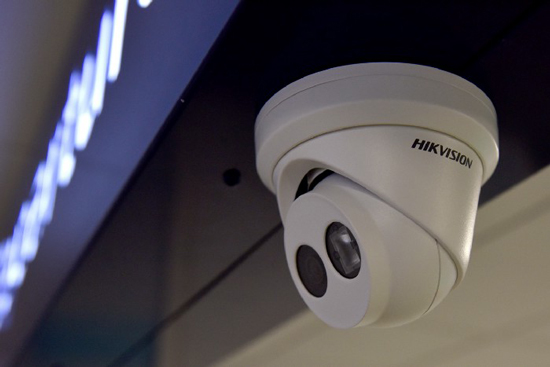
Many of these companies resell thermal cameras from larger companies and add their own fever detection software, or simply package together cameras and the appropriate computers and sell packages for ready-made control stations. The major manufacturers are Sunell, FLIR, Dahua, Hikvision, TVT and YCX – all Chinese, except for FLIR which is the only American one. In addition to their own direct sales, these companies also make resales through 47 other companies that have started operating in their sector in recent months.
All signs indicate that the adoption of this technology is going to be permanent and not temporary due to emergency measures, as more and more companies are investing in fever detection infrastructures: the CEO of FLIR announced to shareholders at the end of May that the company has closed coronavirus-related contracts worth $100 million in the first quarter of the year alone and that the company is going to install thermal cameras in all of GM’s factories.
Cameras are not only installed at fixed control stations. The robotics company Cobalt has equipped its own office robots with FLIR thermal sensors and advertises its technology as a “complete return to work solution.” Instead of having an employee with a thermal scanner doing the checks, Cobalt’s robot moves autonomously performing the tests and can also detect whether employees are wearing masks and remind workers to wear all protective equipment if it finds any non-compliant individuals. Another company, Invixium, builds facial recognition booths, which it has upgraded to measure the temperature of the person being checked. The package is completed by an online platform that allows employers to monitor the temperature of all staff and also generates statistics based on the day and age of employees.
Fever cameras operate in a similar way. A thermal camera records the image of a person’s face and then software analyzes the temperature at each point of the skin. Based on how hot the skin is, the software concludes the body’s internal temperature, and the areas that usually best reflect the actual temperature are around the eyes and tear ducts. In tests that have been conducted, thermal cameras achieve results with a deviation of 0.1 degrees from the actual temperature.
Of course, conditions in the real world are not always ideal. In tests conducted under real conditions, ZKTeco’s temperature sensors were accurate when the sensors were at most 45 centimeters away from the face, but at greater distances the deviation reached up to two degrees. Other manufacturers, such as Hikvision and Sunell, scan the forehead area, but even a tuft of hair in front of the forehead confused the measurements, and it was also found that it was very easy for the person being checked to “fool” the cameras by applying a cold or warm compress to their forehead shortly before the check.
Despite the malfunctions and failures having been recorded and highlighted, companies continue to promote their technology, thus constructing a massive temperature-based control system with no solid foundation. Moreover, the biggest gap in the relevant technology is that on one hand, carriers of the coronavirus often do not exhibit fever, and on the other, fever is the most common symptom of a host of harmless viral infections. Ultimately, thermal imaging technologies found in the pandemic the fertile ground needed to develop and impose themselves, but their purposefulness vastly exceeds the current health crisis. What is currently being promoted is “case detection,” but what will remain permanently is generalized surveillance.
translation: Hurry Tuttle
original title: In Just 6 Months, ‘Fever Cameras’ Have Become a Full-Fledged Industry