
When the mandatory use of “plastic money” for 30% of the taxable amount of everyone was imposed (in Greece), the justification was “to combat tax evasion”: the idea that monetary transactions would go through the computers and algorithms of banks seemed like an easy and efficient way to limit the “black economy”; that is, bribes where the state doesn’t get its share (and we won’t comment here on what the Greek state does with its tax revenues…)
Before the mandatory use of “plastic money” became law, banks had tried with other arguments to make it popular. The most common was “security”, in relation to wallets and cash: even if someone steals your “card” you can easily block it. Little attention was paid to whether this “security” is actually free, and what it means for banks (along with state services) to have oversight over what each person buys and pays. Over time, “cards” became a must, and correspondingly invisible and, ultimately indifferent was the fact that if one’s transactions are a personal matter, then extracting the relevant data and metadata is an abuse of power. This became clear with the “bank closures” in the summer of 2015 – but it seems that teaching experience has been forgotten…
The hygiene campaign and prohibitions pushed digitization even in terms of money. On one hand with the terrorism that coins and banknotes are parking spots for petty cash, and better to avoid them… On the other hand with training a segment of subordinates to pay by transferring amounts electronically from account to account.
These show that the road to digital money has opened, and that it’s almost a highway.
What is this about?
“Plastic money” is also digital; and at first glance anyone (especially card enthusiasts) might think that nothing changes with the upcoming digital currencies. If instead of banknotes and coins someone has an “idea” of money parked in their bank account, they could just as well have a basket of pebbles or beans: if they can pay by “transferring” accounting units (representing amounts) from their own account to another, it’s simply a matter of convention that this “money” takes this or that form. Essentially, the form is irrelevant; what matters are the plus signs (inflows) and minus signs (outflows) in the “digital basket,” which are always represented by numbers.
However, even greater significance is that through this digitization, transactions are processed, recorded, categorized, and controlled by a “center,” which technically is a computer, and politically some manifestation of power. It could be banking, tax, police, commercial… This is a huge difference between what (for reasons of understanding) we would call “physical money,” money in “physical form” (banknotes, coins) and “digital money,” their numbers and accounting. With “physical money” no one can know the transactions of others, and therefore their habits, their daily life, their particular tastes. With “digital money” the political center knows (and moreover very well, since it has a complete “usage” history): banking, tax, police, commercial…
It is already happening. But the exception has not yet reached its extreme, marginal, ideal version. This is about to happen with the Central Bank Digital Currencies (CBDCs) that are being prepared feverishly.
The strategic difference of CBDCs compared to “plastic money” is interesting. The latter corresponds to different (commercial) banks, in which each person holds a deposit account. To the extent that the use of “plastic” or electronic money is only partially mandatory, one is free to keep in it only the percentage that he needs to use with a card; or he can selectively “withdraw” amounts (“physical money”) at will. On the contrary, the ultimate (declared) purpose of creating CBDCs is the elimination of “physical money”, of banknote or/and coin forms, and the mandatory routing of every transaction, regardless of how “large” or “small” it is, through the control center. The ultimate (declared) purpose of digital money is to be the only way, the only form of “holding money” – and moreover with an informal but substantial co-ownership, between each citizen and the operators of the “control center”.

Let us give three tangible examples of what this strange (but strategic for the bosses) co-ownership already means.
First example, the so-called “unseizable” amount of a bank account. What does it mean that the “center” (the cooperation between the bank and the tax office…) recognizes only an amount up to 1000 euros (if we are not mistaken) as full and untouched ownership of money by whoever has a bank account; It means that, in contrast to “physical money”, “digital” money (this is the recognizable form of numbers in such an account) can be seized – let’s say due to tax debts… This can be stated differently: from 1001 euros and above, the accounting units recorded in a bank account do NOT belong to their actual owner except conditionally. (And of course, the 1000 accounting units can, by central decision, become 900 or 800…)
What conditions? Who imposes these conditions? The one who holds the power…
Second example: in the recent mobilization of several thousand truckers in Canada against mandatory platforms, the Canadian state “froze” their bank accounts as punishment for their multi-day gathering in the capital… It also attempted to “freeze” the accounts (the “digital money”…) of those caught practically assisting the truckers… Although this underhanded repressive tactic lasted, ultimately, only two or three days, it became clear that the accounting form of money remaining in banks under central control constitutes a limited and contested form of money ownership. Those in power can unilaterally and arbitrarily raise claims against this accounting form, and it is technically very easy for them to misuse—their citizens’ money, invoking reasons of public order…
Third example: on the other side of the planet, in Australia (a member, like Canada, of the 5eyes…) some federal government “froze” the retirement bank accounts of elderly people who refused to platform. Obviously, it could not barge in with the police into people’s homes searching their wallets; however, it was technically easy to get its hands on the accounting forms of money. Here, the justification was public health reasons…
Since authoritarian inventiveness has no limits, it is easy for anyone to understand that the universal imposition of digital money (CBDCs) and the disappearance of “physical money” is a clear shift in power relations in favor of those who hold the “control center” of the flows (and parking) of accounting forms of money. They can impose any term of “correct behavior” by abusing these forms; leaving their victims in graduated or even complete poverty, as punishment, as retribution.
Another innovation of CBDCs has both technical and political significance. Utilizing parts of the blockchain technology that was developed for “cryptocurrencies”1, general-purpose digital currencies (which would be “issued” by central banks of states) would be transferred very quickly from one “wallet” to another, facilitating and greatly accelerating transactions regardless of amounts or distances between the parties involved. Essentially, instead of each person having one (or more) account at a commercial bank (which required interbank transactions), they would have something like a “digital wallet” with accounting units that they could easily transfer, and most importantly, quickly, to other “digital wallets”. For individual users this may not seem impressive; however, we should consider millions of transactions happening simultaneously, whose “settlement” (and clearing, where such a thing is needed) would be done automatically (through algorithms).
Equally automatically, seizures and “freezing” of the accounting units of each person can be carried out. For example, if a voucher has been imposed for alcohol consumption, someone will not be able to buy more beers from the supermarket because their digital wallet will be automatically blocked (and perhaps, if they attempt to do so again, the contents may be seized…). The same could happen if someone has a “strict medical directive” not to purchase certain types of food, X or Y, due to obesity. A “violation of good behavior” (based on the “codes of social responsibility” that employers or the state will impose) will be instantly punished with the deduction of accounting units (fine) and a warning.
Speaking generally: we cannot imagine the extent and variety of control that the widespread imposition of CBDCs will make easy and simple—but have no doubt: the worst things will be able to become “new” and “even newer normality.” The talk about combating tax evasion is the cheapest dust in the eyes…
Let us now see where state research / applications for the imposition of CBDCs stand at various points of the capitalist planet, which is understandable, as they require long-term technical preparation. (The information we owe to James Corbett).
china
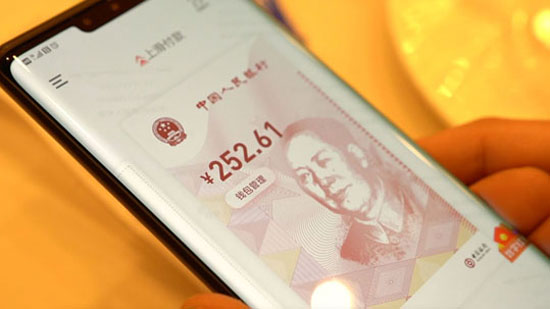
The Chinese state / capital is by far the most advanced in this field. The e-yuan is currently considered almost ready to enter mass use, even internationally. Technical preparation began at least 5 years ago. The central bank of China, in collaboration with large Chinese retail chains (with both physical and online stores), has already conducted several tests in major Chinese cities. The first exercise in internationalizing the use of the e-yuan took place during the recent Winter Olympic Games last February. According to the central bank, athletes and companions of dozens of national teams, as well as journalists, used the digital yuan for purchases and payments in amounts of at least 2 million each day (315,000 dollars). Now, in the final testing phase, 3 major Chinese cities have announced that they will accept the e-yuan for tax payments…
european union
In the EU, “laboratory tests” are already being conducted for the e-euro, with the prospect that a prototype will exist by 2023 to begin trials in the “open field” of markets. As part of this research phase, the European Central Bank issued in May 2022 a working paper titled “the digital economy, privacy and CBDCs”. Because something must be said during this process about “privacy protection” in order to hypnotize citizens, the working paper deals with the balance between “inefficient” uses of cash that protect privacy and “efficient” uses of the digital euro that do not protect it. As is already happening almost everywhere, definitions are changing! The European CBDC (says the central bank) will be nothing more than a “data sharing” process… Isn’t that nice, “everyone sharing their data”? Privacy (says the wise central bank) is not the opposite of sharing – it is rather its control…
This does not seem to sit well with a large portion of European citizens. Perhaps a “crisis” will also be needed here, to force them into compliance…
india
The Indian Finance Minister Nirmala Sitharaman announced at the beginning of the year that India’s central bank would impose the e-rupee this year. The Minister of Electronics and Information Technology of N. Delhi added last March that the CBDC is a “national progress”. The millions of Indian plebeians (from poor farmers to urban proletarians) have been burned by previous steps of “digitization” of various benefits, and are not convinced of the good intentions of the Indian state and its central bank. The statement of the deputy head of the latter that “careful and balanced steps” will be taken in imposing the e-rupee was made for reassurance, but reasonably causes the opposite effect…
iran
Capitalism is capitalism, regardless of and beyond inter-capitalist contradictions! Last January, Abutaleb Najafi, the head of information technology services at Iran’s central bank, stated that after two years of preparatory work on the necessary platform, “the infrastructure needed for the national CBDC and its pilot version are ready.” Details are not known, but Najafi confirmed that state and private banks in Iran will encourage their customers to obtain digital wallets in order to participate in the necessary usability tests of the e-rial….
israel
In the apartheid regime, it appears that even law-abiding citizens are concerned about the power that the “center” will gain with the e-shekel. Only this way can the fact be explained that the central bank of Israel recently announced that “it receives many supportive messages regarding its plans to potentially establish the digital shekel, based on the premise that it will help the economy by supporting innovation in the payment system, reducing the amount of cash, and supporting the fintech sector.” The Israeli central bank officially states that “it has not yet made a final decision” (to impose the national CBDC), but let no one doubt that, thanks to the particularly advanced technological sector of the apartheid regime, it has made all the preparations.
And let no one doubt that when this is imposed, it will be the eternal imprisonment of the occupied Palestinians to the extent that they have economic dealings with anything Israeli…
japan
Last March, Haruhiko Kuroda, the governor of the Bank of Japan, stated that the bank does not intend to establish a digital currency at this time, but added that it “will prepare appropriately for developments that may require it to do so in the future.” For his part, Kazushige Kamiyama, head of the bank’s payment system, declared last April that the bank would follow Sweden’s method of careful, step-by-step trials before the time comes for the widespread adoption of the e-yen. On this occasion, Kuroda slightly shifted from his previous statement, noting that a CBDC “could be an opportunity to ensure a continuous and secure payment infrastructure in Japan”….
russia
In 2021, the Russian central bank announced that it had been working on creating the e-ruble for years, and that it had created a pilot group of 12 banks that would put it into use within 2022, as a broad test. According to central bank representatives, citizens will be able to use the Russian CBDC “for purchases, transfers to individuals, companies and the state, tax payments, conversions to foreign currencies of digital wallets and savings”…
saudi arabia – united arab emirates
In 2019, the central bank of Saudi Arabia’s Riyadh announced Project Aber, a collaboration with the central bank of the other emirate, Dubai, to explore the viability of a shared CBDC between them. The final conclusions were announced in 2020, and were “yes, a cross-border digital currency is feasible and useful.” In October 2021, a Riyadh banking official announced that the central bank is already designing the e-riyal, with the ambitious goal of covering 70% of all payments within the state by 2030…
usa
Clearly behind its rivals (Beijing and Moscow) but not at all out of the race, the sluggish Jo issued last March an Executive Order for the Investigation of Responsible Development of Digital Assets. But this order is not the starting point: the Boston annex of the American fed, in collaboration with the Massachusetts Institute of Technology, has been working since the summer of 2020 on project Hamilton, a “multi-year research project to identify the design needs, features and capabilities of the CBDC”. The first phase of this specific endeavor ended earlier this year, to start the second phase where “new functionalities and alternative technical designs” will be explored…
england
The Bank of England has been working on creating an e-pound since 2015. Officially, it remains in the research stage. In November 2021, the BoE made an announcement that it “is moving into consultation in order to reach a final decision on a CBDC for the United Kingdom.” Our suspicion tells us that technically the matter has progressed, but it also needs a “popular advocacy” cover…
switzerland
In December 2020, the Bank for International Settlements announced that in collaboration with the Swiss central bank, it was launching Project Helvetia, “an experiment to gather evidence in favor of using digital assets and money.” This January, the Swiss central bank announced the results: “successful use of central bank digital currency by five different commercial banks.” This (said officials) “paves the way for the establishment of a digital currency in Switzerland”…

south korea
The South Korean central bank launched a pilot program in August 2021 to test the viability of a national CBDC. In collaboration with Ground X (Kakao’s blockchain subsidiary, the largest South Korean digital ‘social network’) and Samsung, the program will also focus on cross-border payments to other mobile phones. The central bank has initially invested 5 million won. The second phase of the program, which will test “payments using e-won, transfers between states and privacy protection technology applications” is scheduled to begin next June…
south africa
The central bank of South Africa announced in May 2021 that it had completed a feasibility study for a general-purpose digital currency. In early 2022, it proceeded with Project Khoka 2, which concerns the construction of this e-rand. Meanwhile, since September 2021, there has been an agreement between South Africa, Malaysia, Singapore, and Australia to create a common platform that will allow cross-border transfers (payments) with the corresponding digital currencies…
australia
The central bank of Australia has announced that it has been studying the prospect of an e-dollar (Australia) since 2019. In November 2020, it announced its collaboration with 3 other (commercial) banks and ConsenSys Software to promote the matter…
canada
In March 2022, the central bank of Canada announced its collaboration with the Massachusetts Institute of Technology on a 12-month program for the creation of a national CBDC…
We will not tire you with further individual references. However, if there is the idea that only strong capitalist states (or blocs) are moving towards “digital currencies”, it is wrong. Note: the Bahamas (a CBDC has already been established), Brazil, Chile, Ghana, Hong Kong, Namibia, Nigeria, Rwanda, and even Ukraine have announced intentions and research projects…
A special mention is necessary only for Venezuela. As strange as it may seem, the central bank of Caracas has established its own CBDC since 2018, without great (or with gloomy) acceptance from its citizens. But last March, Maduro announced that the basic salary would henceforth be paid in e-bolivars – turning Venezuela’s payers into hostages of the “digital transition” (and control)…
Self-deceptions are fashionable. “Technology is neutral, science is good and philanthropic, companies just want a reasonable profit”: these have been said again and again and have been swallowed by millions of subordinates, who have abolished thinking and have turned it into repetition and compliance with orders.
Accounting units, even before reaching the completed phase of CBDCs, were established as a facilitation and security of transactions/payments. There are of course no free conveniences or free securities in the mature capitalist world; but how can minds that have surrendered understand this?
CBDCs are the most technologically advanced but also politically sophisticated method for controlling, even indirectly through consumption, the daily behaviors of citizens. And not just to control them but also to channel them. It is enough, of course, that no damages occur, such as that in Germany on May 29, 2022—for example.
Instinctively, perhaps many will understand it. However, they will find themselves facing the toxic elements of digital intermediaries (not a few) who will accuse them of being “primitive,” “fearful,” and various other things. Simple, everyday relationships have become a conveyor belt for the system’s blackmail and threats over the past two years, during the health terror campaign; a method of enforcing obedience “from below” and “from all around.”
Understanding what constitutes the necessary starting point, the prerequisite for our resistance (and) against the forced imposition of digital currencies is essential. However, we must also prepare ourselves emotionally: at some point in the not-too-distant future, agents of algorithmic obedience will no longer be (only) unknown figures from the centers of power; they will also be our neighbors triumphantly boasting about the “ease of payments”…
Ziggy Stardust
- In detail at cyborg 15, blockchain: towards a legislative technology ↩︎