
Bayer. Perhaps the largest chemical, pharmaceutical, biotechnology company in the world, leading in every sector it operates. Monsanto. Perhaps the largest agrochemical and agricultural biotechnology company in the world, responsible for the global spread of genetically modified crops. The second no longer exists; in 2016 Bayer made a public takeover bid for Monsanto, worth 62 billion dollars, a price that eventually rose and closed at 66 billion. It was the largest acquisition in German history and one of the largest in the EU and USA. In 2018 the acquisition was approved by American and European services, in the summer of the same year the absorption was completed, the Monsanto firm withdrew and all its products are now marketed under the Bayer label. Except that Monsanto did not completely disappear, nor did the obligations that Bayer undertook towards it, not until 2020, after hundreds of lawsuits amounting to hundreds of millions were pending against the biotechnology giant. That year, Monsanto was forced to pay more than 3 billion dollars in compensation, after being found guilty of carcinogenesis. Finally, Bayer, having undertaken all the legal responsibilities of Monstanto, agreed to pay the amount of 10 billion dollars into a fund that would undertake to cover any current and future compensation obligation.
For many, the acquisition of Monsanto was seen as the most failed “corporate marriage” in history, due to the dark reputation that Monsanto carried behind it and the countless lawsuits against it for environmental destruction and causing cancer. Indeed, Bayer paid dearly to add a somewhat lame horse to its stable, but this criticism only holds when looking at things myopically and narrowly from an economic perspective. Bayer doesn’t do everything for money, or for its next and the following balance sheet; there are more serious issues looming on the horizon of future history. Moreover, it’s not the first time it has done so; for example, in the UK it had put its own interests second in order to serve a greater purpose. Bayer may therefore have suffered short-term damage and “tarnished its reputation” [sic] by acquiring a serial killer, but at the same time it acquired the most advanced, cutting-edge agricultural biotechnology technology, know-how and infrastructure, along with hundreds of patented patents. Such a legacy makes Bayer a nuclear force in the field of genetic engineering, and the fusion of the two sectors – medical and agricultural biotechnology – allows Bayer to “push” biotechnology across a spectrum that starts from cultivation in the field and the production of genetically modified “foods” and extends to the hospital clinic and genetic therapies that will be administered to patients with damaged health due to the “modern way of life” aka all kinds of modified ones. Monsanto, like the other major players in agro-economics, also had the ability to patent ownership of modified genes, a capability that pharmaceutical companies have not yet achieved over the human genome, but are eager to acquire. And they won’t delay in achieving it, after what they achieved with genetic platforms under the pretext of the pandemic. That’s why the absorption of Monsanto by Bayer is a marriage straight out of hell. Not only for what will happen to the agricultural economy when the time comes for the much-heralded “food crisis”, but also for what will be transferred from that sector to the sectors of health and human/social reproduction.
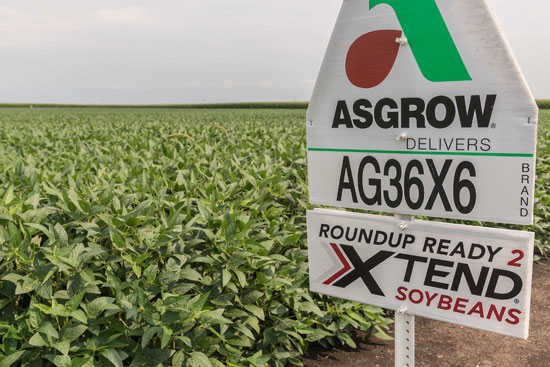
Monsanto, like Bayer, is also a company with a heavy history behind it. Before it ended up becoming the arch-villain in the world of agriculture, Monsanto had managed to cause disputes in other ways – specifically, as a chemical company. All of its products have followed the same path: commercial success, global expansion, emergence of serious health problems after a few years, and finally, their prohibition due to causing cancer or environmental destruction. Monsanto was founded in 1901 and was one of the few companies that produced Agent Orange and its main poison, dioxin. It manufactured DDT, the extremely widespread insecticide for household and agricultural use until the 1970s, when it was fully banned. It produced PCBs, chlorinated aromatic hydrocarbons, used in countless chemical and plastic applications, until the 1970s when they proved to be extremely carcinogenic and were banned. It manufactured rBGH, the controversial hormone for dairy cows, which was banned in the 1980s when it was found to destroy the animals’ health. And note that even today, so many decades later, Monsanto’s poisons still have not been neutralized and remain a danger; DDT and PCBs are still detected today in the milk of polar bears in the Arctic circle and in the eggs of penguins in Antarctica. However, starting from the 1980s, Monsanto shed its chemical and plastics divisions, acquired seed companies, invested in biogenetic research, and eventually re-established itself as an agricultural company. Its first GMO product, the patented glyphosate-resistant soybean, “Round-Up Ready,” was approved by the USDA in 1994.
Agrobiotechnology
Technically, genetic engineering modifies the genetic structure of cells and moves genes beyond species boundaries to produce new organisms, aiming to transfer characteristics from one species to another. The goal of genetic engineering is to construct new gene combinations, in other words, new combinations of traits. Proponents of GMOs deceptively claim that what genetic engineering does is to direct a process that “anyway occurs in nature” and that it exercises in a scientific and rational way what farmers themselves have systematically done for centuries. Indeed, mutations in nature are a common phenomenon and indeed farmers systematically create new hybrids, combining different varieties in order to achieve strains that are more productive or more resistant. It is true finally that the overwhelming majority of plants in modern organized agriculture, at every scale, are hybrids that have little relation to their related wild varieties, if they still exist. But biotechnology intervenes in a radically different way and any comparison with “natural processes” is formulated only to deceive. In nature, combinations are created within the same species and in a corresponding way farmers have historically acted; on the contrary, biotechnology ruptures the boundaries and constructs combinations of different species. Biotechnology constructs organisms that are impossible to exist in nature and therefore this technology fundamentally differs from traditional reproduction of plants and animals. While natural reproductive mechanisms limit the number of new combinations, genetic engineering has practically no limitation. Natural evolution and agricultural activity create hybrids, recombinations of traits within the same species; biotechnology constructs chimeras.
Genetically modified crops first entered the US market in 1996, modified to tolerate the herbicide glyphosate / Round Up (HT crops) or to produce their own insecticide (Bt crops). Today they have expanded to more than 25 countries, covering more than 10% of arable land worldwide. In the second half of the 1990s, modified crops covered 1.5 million hectares. Twenty years later, this area had reached 180 million, with an expansion rate that grows exponentially every year. The largest genetically modified crops today are soybeans (100 million hectares), corn (60 million), cotton (30 million) and rapeseed (10 million). In percentages, they represent 85% of global production for soybeans, 75% for cotton, 30% for corn and 25% for rapeseed, while the percentage of rice is steadily increasing. The list of GMOs is now long: potatoes, tomatoes, eggplants, peppers, apples, peaches, as well as clover for animal feed, tobacco, eucalyptus, even roses and carnations. Among the countries that cultivate genetically modified crops, at the top are the USA, Brazil, Argentina, India, Canada and China, while the penetration of these crops is overwhelming in South America, where they now occupy more than 65% of arable land, in the USA with 50%, in Canada with 30% and in India with 20%. In Europe, penetration is still significantly lower, with five countries (Spain, Portugal, Czech Republic, Romania, Slovakia) having GMO corn crops. But this is about to change soon, since for the purposes of imposing genetic platforms, the EU has begun to dissolve on its own the regulatory framework that prohibited genetically modified organisms.

The Indian campaign
Although the western hemisphere and the American continent are where GMOs have the greatest spread, the country that has found itself at the center of the controversy against Monsanto and its genetically modified seeds is India. Expectedly, due to the impoverishment and environmental destruction it has caused, with more than 300,000 farmer suicides over the past two decades directly attributed to Monsanto’s actions. The company appeared in India in 1990 when it requested from the authorities to conduct field trials on selected farms under normal conditions. The request was rejected in 1993 by India’s Department of Biotechnology (DBT), the authority overseeing elementary and small-scale trials, due to excessive fees for traits (“trait fees”, more on this patent protection where intellectual property rights on genes do not apply) that Monsanto intended to charge participants in the trials and the potential problems arising from crossing an American variety with a local one. The DBT’s recommendation was to directly incorporate the Bt modified genes into the native variety. However, in 1995 Monsanto managed to overcome local regulatory authorities by partnering with an Indian seed company, Mahyco, to which it granted a license for a version of its modified gene. Mahyco proceeded to cross the gene with local varieties and was eventually allowed to conduct field trials. Soon, Monsanto participated directly in the experiment by acquiring a stake in Mahyco in 1998, resulting in the establishment of Mahyco-Monsanto Biotech (MMB). In June-July 1998, even before securing DBT’s approval, Mahyco-Monsanto began field trials on 40 one-acre plots in the regions of Andhra Pradesh, Punjab, Haryana, Maharashtra and Karnataka. The Genetic Engineering Approval Committee (GEAC) – India’s highest authority for large-scale experiments and commercial exploitation – was not satisfied with DBT’s observations regarding biosafety because the trial reportedly took place during periods of low presence of harmful organisms – therefore, on June 19, 2001, it ordered the repetition of the trials. Finally, in March 2002, the GEAC conditionally approved the commercial release of four Monsanto hybrids: MON 531, MECH 12, MECH 162 and MECH 184 – for a 3-year period from April 2002 to March 2005, while prohibiting the company from trading its seeds in northern India due to particular varieties cultivated there. Subsequently, the GEAC approved one more modified hybrid in 2004 and 16 more in 2006.
Let us now return to the issue of trait fees, because they play a pivotal role in Monsanto’s strategy, but also because it is a method that can be used by pharmaceutical companies in their attempt to patent the human genome. In the United States, thanks to intellectual property laws and patents, Monsanto is able to “bind” farmers who use its products with strong terms. In order to obtain seeds or pesticides, American farmers are required to sign a contract that defines in exhaustive detail the permitted or prohibited uses. Based on these contractual obligations, farmers cannot, for example, keep seed for the next year, mix it with other varieties, create their own hybrids, or use other pesticides and fertilizers beyond those specified by the company, while if they violate the terms they are threatened with severe penalties. Because in the U.S. patent infringement is not a matter to be taken lightly, the range of punishment is what practically binds farmers hand and foot to Monsanto’s vehicle. The company, for its part, exhausts to the utmost every opportunity afforded by law, with methods ranging from lawsuits against farmers to outright terrorism and extortion by Monsanto employees.
In India, however – as in many other countries, although this is now tending to change – the law prohibits patents on any form of life, which means that rights cannot be secured over animals, plants, seeds (and of course over the human genome). Monsanto could therefore operate in the Indian subcontinent, but its GMOs would have no protection whatsoever. Nor could it use its patents to determine prices. But this is where “trait fees” come into the equation and open a wide window for biotechnology companies.
Trait fees are a patent scheme devised by large biotech/agricultural companies to protect their ownership over seeds. Instead of patenting the genetically modified seed itself, the company supposedly patents certain characteristics (traits) of it. In this case, what is protected is the technology used to insert the modified gene into the seed. “Trait fees” are essentially the amount that seed distribution companies are required to pay to the biotech provider in order to have the license to commercially exploit the patented technology; formally, the seed remains free, but the technology that created/mutated it remains restricted and proprietary. It is obvious that this is essentially a patent on the seed itself, but cleverly disguised to evade the law. Thus, Monsanto managed to negotiate and bind 28 Indian seed companies through unilateral licensing agreements to collect royalties on its behalf. Instead of being paid directly, it charges intermediaries and tasks them with collecting royalties from farmers. This is certainly a pitiful method of exploitation, made even more despicable by the fact that Monsanto practically imposed the exact same model used by British colonialists, who leased tax collection to local landlords and left them responsible for collecting these taxes.
Moreover, Monsanto, through continuous appeals to the Indian courts up to the highest level, eventually managed to overturn the initial judicial decisions that did not recognize its rights over the seed. In 2019, the country’s supreme court finally overturned the previous rulings and recognized Monsanto’s patent as legal, reasoning that the law protects the elements of life in their “natural forms,” but Monsanto’s genetically modified seed is a “construction” and therefore does not fall within the limitations of the law.
If patents were one of Monsanto’s weapons in its Indian campaign, its alliances with the appropriate mechanisms and the right people were the other. Thus, Monsanto’s partnership with Mahyco was a calculated business maneuver, as the latter’s director, Badrinarayan Barwale—recipient of the World Food Prize in 1998—was considered an “authority” in agricultural biotechnology, was well-connected within upper governmental circles, and had direct relationships with many officials in the key biosafety regulatory bodies. This “privileged relationship” between Mahyco and the regulators should have been sufficient to reveal the nature of the “oversight” during testing, since the inspectors were essentially people affiliated with the president of the company being inspected. But these were minor details, and they remained so even when it was revealed that the scientific advisor of GEAK, who was responsible for organizing the tests, had violated every procedure and protocol in order to produce a positive result for Monsanto’s GMOs.
With such methods, the infiltration of genetically modified seeds into Indian agriculture could hardly have been anything but swift and unhindered, as indeed it was. Just fifteen years after their introduction, genetically modified cotton came to cover 88% of the total cultivated area (from 0.05 million hectares in the late 1990s to 9.3 million in 2012).
Nevertheless, Monsanto encountered strong reactions from the very beginning, despite the fact that the majority of farmers proved willing to uncritically adopt the biotech propaganda about “bulletproof cotton” and “guaranteed large yields” (how else, after all, since complacency and degradation are never good advisors). The beginning was already made in 1998 when a Canadian NGO, the Rural Advancement Foundation International, revealed that Monsanto had illegally introduced into its genetically modified seeds, without informing the regulatory authorities, a previously unknown gene with the ominous name “terminator”. The terminator gene allowed only a single reproductive cycle of the seed and rendered the subsequent ones sterile; in this way, farmers would be forced to turn to Monsanto in every cultivation cycle. When this information reached India, large demonstrations erupted that culminated in the torching of Bt cotton fields in Pradesh and Karnataka in November 1998.
A perfect recipe: debt or suicide?
The organized Indian movement against Monsanto has exhaustively documented that the increased cost, bordering on unbearable, of cultivation—for seeds, chemical fertilizers, pesticides, and irrigation—plays a decisive role in the economic devastation of farmers. The rising cost of cotton production, once advertised by biotech companies as guaranteed profitable, has forced farmers to sell their meager household assets, even parts of their land, to pay off their accumulated debts. In the 2000s, cultivating Bt cotton required nearly 50,000 rupees per hectare due to enormous expenses for irrigation and pesticides, compared to 10,000 rupees for non-Bt crops. In the early years, when Monsanto’s goal was to establish itself in India, genetically modified seeds were available for free or at minimal cost. However, once the patented seed became nearly monopolized, the company triggered a massive price increase. Thus, from 8 rupees per kilogram for seed in 1991, before the introduction of Bt cotton, the price skyrocketed to 350 rupees by 2003 (45 times higher), and reached 1,650 to 1,850 rupees for 450g by 2004 (450 times higher). By comparison, the corresponding increase in the U.S. was 300% over a decade, from 2000 to 2010. Such a dramatic surge in seed costs, and the cumulative destitution it causes, especially in a society like India’s—which has experienced famines due to colonialism, such as the 1943 Bengal famine caused by extreme profiteering and heavy taxation—should be recognized for what it is: a new colonialism based on genetic modification and ironclad regulations protecting patents.
If GMOs are one cause of the plight of Indian farmers, chemicals are the second. More than 50% of the agrochemicals used in agriculture relate to cotton cultivation for bollworm control, and this is only for 5% of the total cultivated area. While it is assumed that Bt requires fewer pesticides—this being its much-publicized advantage—because it produces on its own the toxin that eliminates the cotton bollworm, the end result was radically different. Indeed, the first few years, the genetically modified cotton required fewer pesticides than the corresponding local varieties—and this was one reason that pushed many farmers to turn to genetically modified crops. But the trend went in the completely opposite direction. After the first planting cycles, the cotton bollworm began to develop increased resistance to the Bt toxin, while at the same time new super-resistant pests emerged, the control of which required ever-increasing quantities of pesticides (including glyphosate, i.e. Roundup). Research conducted by the University of Washington concluded that the adoption of genetically modified crops in the USA increased pesticide use by 250,000 tons between 1996 and 2011. For 2011 alone, genetically modified crops required at least 20% more pesticides than conventional ones. In India, the situation is even worse. Extensive monoculture, intensive chemical fertilization, soil depletion, increasing pest resistance, new super-pests, and the destruction of many species of predators that control pests have resulted in Bt cotton becoming a zombie crop that survives only thanks to new genetically modified strains launched each year by Monsanto, supposedly resistant to ever-higher doses of Roundup. In this way, pesticide use in India has increased thirteenfold compared to the pre-Bt cotton era.
The following excerpt, from the Indian online newspaper daijiworld.com, published on September 8, is indicative of the situation experienced by farmers in India and how they were trapped by Monsanto’s mechanisms.
“We believed that Bt cotton would be profitable. But within about two years, we realized we were sowing seeds of poison. We used far too many chemical fertilizers. As a result, our soil lost its fertility,” laments Sirimajhi Pasanga, a farmer from the village of Paji Gerega in the Chandrapur district.
Take Pangam Jani, a farmer from Muniguda, who had excellent yields in the first two to three years. “From one acre, we could harvest five hundred to seven hundred kilograms of cotton. Gradually, the yield began to decline. Last year, I harvested only three hundred kilograms from one and a half acres. And this is because the fertility of the soil is decreasing.”
Pasanga has taken loans to plant the seeds, and whatever profit he makes goes to the moneylender. “We are trapped in a debt trap,” he says, while his words echo the collective misery of several others who have met the same fate.
“We used to earn about 25,000 to 30,000 rupees per acre from cotton cultivation. The cultivation cycle lasts nine months. Two years ago, I harvested five hundred kilograms of cotton, of which the moneylender took four hundred,” recalls Nabina Bredeka, another female farmer in Pajigarega.
At least 88 percent of the people living in Rayagada, southern Odisha, belong to recognized tribes. For years, tribes in the region cultivated using traditional methods—multiple crops such as millets, legumes, cereals, tubers, and vegetables.
But in the past decade, the infiltration of Bt cotton seeds has eroded the local diversity of crops, soil health, and agricultural productivity. In Odisha, seeds of cotton resistant to herbicides, such as Bt cotton, are not permitted. “But in the Rayagada region, Bt cotton seeds are available everywhere. Unfortunately, the genetically modified crop has caused new pests that have the ability to greatly disrupt the ecological stability in the area where the tribes live,” informs an agricultural department official, on condition of anonymity.
Cotton was never on the list of local crops in Rayagada. Farmers also did not know the side effects of genetically modified Bt cotton.
“But agents gradually entered the villages, knocking on doors offering unregistered Bt cotton seeds and money to cover the cost of necessary supplies. They also claimed they provide guaranteed markets for the products, which pushed even more people to engage in cotton cultivation in the region,” explains Haraprasad Hepruka.
The unsuspecting farmers believed the attractive slogans promoted by the agents—cotton is kancha paisa (raw money), easy money, etc. “So they fell into the trap,” adds Hepruka.
In recent years, the Odisha government increased the minimum support price for cotton—an additional reason why more farmers were tempted.
According to the Water Footprint Network, producing one kilogram of cotton consumes 22,500 liters of water. Even for post-harvest processes—cleaning, bleaching, and dyeing—huge amounts of water are required. Moreover, the extensive use of chemical pesticides and fertilizers harms the agrobiodiversity of the region. It not only affects human health but also threatens wildlife. Water bodies are polluted, and the overconsumption of soil nutrients from cotton cultivation further reduces soil fertility.
“Cotton is very sensitive. Cultivation cannot withstand low or irregular rainfall. Sudden changes in local weather conditions mean crop loss for farmers,” says Pagadalu Banujani from the village of Dekhapanga. Irregular rains have driven farmers into a deadlock. Unusual rainfall in January destroyed cotton crops, with many farmers in the villages of Muniguda, Ramnaguda, Gudari, and Padampur losing their entire harvest. “There is no way we can repay our loans,” expresses the anguish of Damburu Jani, a farmer from Muniguda.
Roundup: burn, motherfucker burn!
The strategy of Monsanto, as well as of the remaining agro-biotech companies, is based on the scheme “GMOs + exclusive use of a specific herbicide”. (Keep this scheme in mind, because it won’t be long before it’s also applied by pharmaceutical cartels. For example, biotech platforms that would subsequently require the exclusive use of specific drugs). Genetically modified crops could not have expanded so rapidly if they were not resistant to the strongest herbicide, glyphosate; Roundup could not have become the dominant herbicide if it were not the only one tolerated by GMOs.
When Roundup was first introduced in the 1970s, its use was limited to weeds, because the active ingredient glyphosate kills all plants. This changed with the introduction of crops genetically modified to tolerate glyphosate (the famous Roundup-ready model used by Monsanto to promote its genetically modified seeds). After that, glyphosate use increased exponentially. From 2001 to 2007, glyphosate use doubled, reaching 180 to 185 million pounds in the US. One of the reasons for the increase in Roundup use in the US is the increase in corn acreage for ethanol production that is added to gasoline.
The use of roundup has also increased in crops intended for food. Firstly, glyphosate can now be sprayed directly over the genetically modified crop itself, whereas previously it was only sprayed focally on weeds. Secondly, herbicides are now sprayed on crops to kill the foliage shortly before harvest, especially in potatoes, beans and cereals. These practices increase not only the amount of herbicide sprayed into the environment, but also the amount absorbed directly by the plants and consumed by humans and animals.
Roundup kills plants by interfering with a biochemical pathway involved in amino acid synthesis, called the shikimic acid pathway. This pathway is not found in humans, so glyphosate was considered not to harm it. However, this pathway exists in bacteria, and humans depend on gut bacteria for the synthesis of essential amino acids. By interfering with the biochemistry of bacteria in the human gastrointestinal system, consuming glyphosate depletes essential amino acids and predisposes individuals to a host of chronic health problems. Specifically, glyphosate depletes the amino acids tyrosine, tryptophan, and phenylalanine, which can subsequently contribute to obesity, depression, autism, inflammatory bowel diseases, Alzheimer’s, and Parkinson’s.
There is also evidence that roundup inhibits cytochrome P450 (CYP) enzymes in plants and mammals. CYP enzymes help detoxify foreign chemicals (such as pesticides), regulate vitamin D levels, and control cholesterol in humans.
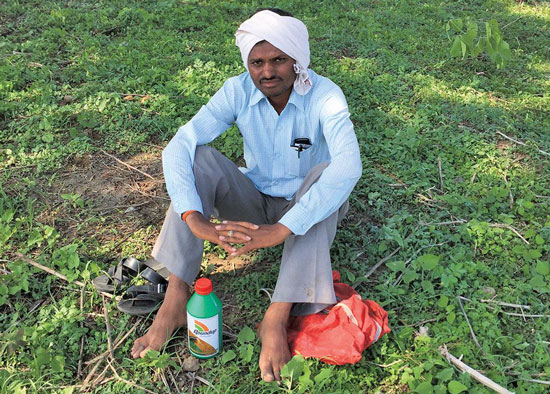
Roundup kills! It could be a figure of speech that symbolically reflects the tragic lives of Indian farmers. However, it is a literal statement. Of the 300,000 farmers who have committed suicide in India, most took their lives using the poison that is now abundant in their homes, Roundup. Monsanto’s double miracle – patented GMOs combined with the exclusive use of specific poisons/chemicals – kills. Directly, the farmers trapped in agricultural biotechnology, and indirectly the environment and the global population, with consequences that we will measure not in years but in generations. Yet the onslaught of agri-food genetic engineering continues with even greater intensity; the announced and ever-looming “food crisis” will be the pavement that opens highways for GMOs, in the same way that the “health crisis” wide open the door of genetic engineering to humanity. Certainly, Monsanto’s methodology and know-how will not remain unused, nor will it be limited to the agricultural economy. The big heads of the chemical, biotechnology and pharmaceutical industry will surely have much to learn from Monsanto, about how to sell something blatantly dangerous and murderous and yet become a global ruler in your field.
Harry Tuttle