
Twenty-five years have passed since the release of the film GATTACA, a film that tells the story of a possible near future in which social inequalities, which were previously associated with race and class, have been replaced by new prejudices based on genetic determinism. Here we compare the fictional technologies of GATTACA with the state of reality, evaluating the legal protections provided to today’s society against the dystopian future of GATTACA, in which personal freedom and privacy rights are significantly restricted by genetic innovations. We further discuss how the prophetic warnings of GATTACA remain relevant even today, in light of the current trajectory of genetic science and technology.
The movie GATTACA, directed by Andrew Niccol, was released 25 years ago, just two years before the announcement in June 2000 of the first mapping of the human genome sequence by the White House. Similarly auspicious, 2001: A Space Odyssey by Stanley Kubrick was released one year before the Apollo 11 landing in the Sea of Tranquility on the Moon.
It is worth noting that the world presented in Kubrick’s films and books, with routine human space travel to and beyond Jupiter, remains completely beyond today’s technological capabilities. The idea of a crewed mission to Jupiter now seems even more distant than it did then, especially with the U.S. space program languishing with outdated technologies. Even the new Artemis space launch system, according to directives from the American Congress, is required to use components derived from space shuttles dating back nearly 40 years. In December 2022, half a century will have passed since humanity last set foot on the moon, and perhaps decades more will pass until astronauts systematically travel to Mars or enter orbit around Jupiter.
Compare this to the gene-centric world envisioned in GATTACA. The film’s technologies, the pervasive concept of surveillance, and the resulting privacy issues appear prophetic. Since the movie’s release, science has created rapid, accurate, and inexpensive genome sequencing, genome-wide association studies, and precise genetic manipulation tools such as synthetic biology and CRISPR. Undoubtedly, in the United States, a large portion of this cutting-edge technology can be attributed to massive investments in the biotechnology industry, the profit margins that attract them, and extensive government support for both public and private genomic entrepreneurship efforts. In contrast, although it pursues innovation, the order of billionaires funding space research is still in its infancy, perhaps guided more by vanity than by profit.
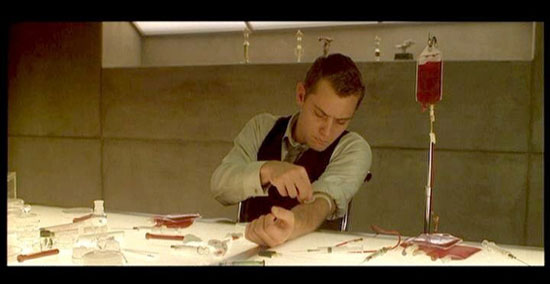
Given that progress in genetics continues to approach and perhaps even surpass the innovations depicted in the film, GATTACA remains a significant reference point—25 years later—in discussions related to the ethical, legal, and social implications of genomics and biotechnology for scientists, policymakers, and the general public. At the same time, the film continues to serve as a valuable component of genetics and bioethics curricula in academic settings.
In short, GATTACA portrays a dystopian future in which class divisions seem to be based simply on the degree of pre-natal genetic engineering, reminiscent of the caste system in Aldous Huxley’s Brave New World. The Valids have almost guaranteed the best opportunities, given their perceived genetic superiority, while the genetically unmodified In-Valids are second-class citizens or worse. The character Vincent, played by Ethan Hawke, was conceived without any medical intervention. Although in another era he would have been considered a “perfectly healthy, normal baby,” in Niccol’s not-so-distant future, to his detriment, “his fate was mapped out… all his defects, predispositions and sensitivities, even the date and cause of his death.”
Refusing to be constrained by these social rules and determined to become an astronaut at the eponymous aerospace company GATTACA, Vincent becomes a “ladder,” purchasing access to Jerome’s DNA, a disabled Valid who can no longer use his genetic enhancements to become a world-class athlete.
We follow Vincent as he seemingly successfully conceals his true genetic identity, daily erasing traces of his own DNA and planting Jerome’s DNA in their place—until a genetically identifiable eyelash, which indicates that its owner must be the killer of a GATTACA director, threatens to unravel his deception. The suspense peaks as Vincent must avoid discovery and arrest by an inexplicably persistent and relentless police investigator. Eventually, a valid, a company director, is identified as the killer, and the film closes with Vincent fulfilling his dream, his spacecraft launching toward Saturn’s moon, Titan…
GATTACA and similar stories from pop culture are, for better or worse, among the main sources of society’s conventional wisdom about science. Consider the exemplary mythological foundation of public perception of innovative science: Frankenstein. The story depicted in related books and movies is so deeply woven into social consciousness that for many it symbolizes their instinctive distrust toward many advanced technologies, including genetics. That is why the continued misuse of the prefix “Franken-“.
Like Frankenstein, GATTACA universalizes the fears and potential dangers of science run amok, although not necessarily of genetics itself, but rather of its unchecked exploitation. More so than Frankenstein and his fictional “reanimating technology,” GATTACA makes accessible, contextual, and ultimately understandable the feasible science and the concerns it raises. GATTACA not only allows the audience to comprehend the framework of genetic technologies within society, but also provides the tools with which to assess the real legal, ethical, and social significance of the issues raised. And like Frankenstein, the film depicts how the audience views scientists in the field of genetics, an invaluable insight for researchers aiming to be ethically and socially conscious.
GATTACA can also be seen as a re-telling of the Frankenstein story, where humanity’s attempts to use science to overcome nature’s limitations are always disappointing. Indicatively, throughout the film, the genetically optimized Valids are those who prove to be physically and mentally defective, despite the best medical efforts. On the contrary, Vincent, the unaltered In-Valid, succeeds despite his supposed genetic limitations. Perhaps this better represents the filmmakers’ rejection of genetic determinism, which remains a critical concern a quarter of a century later, as research continues to reveal how the complex interplay of nature and nurture makes us what we are.
Through the lens of genetic exceptionalism, society often envisions the prospects of genetics as flawlessly deterministic. Consider the demand for direct-to-consumer genomic technologies and the belief that everything predicted will become reality. In fact, a large part of genetics is inherently uncertain due to, among other things, the complexity of polygenic risk profiles, especially in light of unknown environmental factors.
The film’s warnings against allowing these statistical probabilities to become self-fulfilling prophecies remain apt. This is particularly true for the increasingly prevalent “walking sick” – those who underestimate their chances of illness – and the “worried well” (or, as the film refers to them, the “healthy sick”) – those who overestimate their statistical predispositions to future genetic disorders. Undoubtedly, geneticists with their professional disposition may also sometimes seem to regard genetic information as overly deterministic. Even scientists may not fully appreciate the inaccuracy of many genetic predispositions, given the penetrance, expressivity, and external environmental factors that shape genetic information.
The film also depicts a more sinister aspect of genetic determinism. Off-screen, we learn about Jerome’s suicide attempt, after he fails to live up to his parents’ predetermined genetic ambitions for gold medals. In the final scenes, he ultimately commits suicide – as a paraplegic, he can no longer achieve his programmed genetic goals, and his life is now devoid of its supposed purpose.
Mapping services of genetic sequences that promise to determine the future capabilities of a young child could potentially cause similar psychological havoc to children and their parents. Vulnerable individuals may even feel compelled to respond to the predictions of often scientifically dubious genetic predispositions imposed on them by recreational genetic services that are readily and easily offered to consumers [various sites and apps that sell DNA “analyses”].
Even more malicious than imposing a predetermined future on a small child through inaccurate genetic predictions is the possibility that parents might choose an embryo through preimplantation genetic diagnosis not because that embryo does not have a harmful genetic condition, but rather to select for a specific condition, whether that condition is an enhancement or, unfortunately, even a disease condition.
Consider the example in GATTACA. In a musical soundscape, Niccol transports us to scenes of various cases of blatant police abuse of the In-Valids, in contrast to a piano recital by an enhanced musician playing Schubert’s Impromptus (with added chords for extra complexity). We are left to assume that the pianist’s parents prenatally selected an embryo to create a polydactyl child prodigy. Although their offspring meets their expectations, he hides his face with his 12 fingers on his promotional posters, perhaps foreshadowing the anguish he may later feel in his life.

These cases of genetic discrimination by the police in the film are one of at least two dystopian social misuses of genetic information in the future envisioned by GATTACA. Viewers watch the police use knowledge about an individual’s genetic predispositions to justify discrimination, either covertly or overtly. Although today’s genomic technology allows science to determine much about a person, including antisocial and aggressive behaviors, from their genome sequence, the state of technology today does not have the same probative weight as in the film. However, as scientific understanding increases, this fundamentally unjust use of genetic knowledge remains a concern. And as in the film, where “it’s illegal to discriminate based on genetics… but no one takes the laws seriously,” in the real world, many anti-genetic discrimination laws often contain too many loopholes to be effective.
The American Genetic Information Nondiscrimination Act (GINA) of 2008, the product of years of legislative negotiations, attempted to create a federal minimum level of protection for genetic information, despite the acknowledged lack of documented widespread and ongoing genetic discrimination in the workforce, which is so endemic in the film. According to GINA, genetic discrimination that allows for restrictive measures is limited to certain cases within the framework of employment and health insurance. Many states have since expanded the protections provided by GINA to include broader guarantees against other forms of discrimination in the workforce or when obtaining various types of insurance.
However, it is not only in the areas of employment and insurance where there is a potential for misuse of genetic information. In the film, the police appear to examine citizens’ DNA without penalty. Even a citizen like Irene, Vincent’s romantic interest, easily obtains Vincent’s DNA and analyzes his sequence to assess his genomic information. Although the U.S. Supreme Court has permitted the collection of genetic information during police work, such as during arrests, society remains concerned about the potential genetic surveillance state that could arise from unrestricted access by police and others to genomic information.
This relates to a second dystopian feature of the film: genetic privacy. The idea of tracking people through their DNA has long been a reality – the use of DNA for pursuing criminals has been common for decades… However, real-life concerns about privacy protection are potentially even more ominous than those depicted in the film. Consider the possibility of using genome sequencing as an offensive tactic: recently, heads of state who visited Putin refused to be tested for the coronavirus, fearing that their genomes would remain “unprotected” from non-viral genetic material [referring to French President Macron – according to Reuters, a member of the delegation explained that “we cannot accept that they will get their hands on presidential DNA”]. There are even concerns that after the COVID-19 pandemic, PCR testing centers at borders could easily be reused to search for other genetic information from incoming travelers, including targeting individuals with potentially undesirable genetic conditions or predispositions. Genetic data can also be integrated with other revealing big data, such as internet searches, facial recognition, or the geographical location of phones, creating privacy cracks that are not apparent when each type of data is examined separately, which would create a future even more problematic than that of GATTACA.

In light of the ongoing violation of privacy through genetic surveillance, there is growing discomfort regarding the government’s use of genetic information. Specifically, last spring, a class-action lawsuit was filed against the New York Police Department for hosting a genetic database containing samples from thousands of individuals living in New York. According to the complaint, DNA was secretly collected, without their consent, from chewing gum, drinks, and cigarettes offered to those under police surveillance, including minors, regardless of their potential guilt, and primarily from minority communities. It is problematic that the New York Police Department’s database lacks the regulatory oversight present in state and federal DNA databases. A similar lawsuit had been filed in Orange County, California, a year earlier, concerning an even larger DNA database maintained by the county’s district attorney’s office.
Beyond concerns about potential discrimination and abuses by the justice system, genetic privacy remains a crucial element in overseeing research involving people. And with science far outpacing legal oversight, it is better to rely on self-regulation and technological tools to protect the privacy of millions of people worldwide who have been included in research databases. These protections concern both technical tools that enhance privacy protection for recording and collecting data, as well as the use of blockchain technology and cybersecurity methods to protect the databases themselves.
There are many positive uses for genetic information, such as when genetic information is medically exploitable. Although the film never declares against the overall validity of genetic information or its many legitimate uses, it makes viewers think to what extent society should use the technology in healthcare or within the criminal justice system. GATTACA, however, warns about the very slippery slope: “What began as a means for society to rid itself of hereditary diseases has become a way to design your offspring – the line between health and enhancement blurs forever.”
Consider the description of genetic engineering of Vincent’s younger brother, Anton. He was designed and born as a Valid who lacks “harmful predispositions such as premature baldness, myopia, alcoholism, addiction sensitivity, tendency toward violence, and obesity.” Here, GATTACA warns against eugenic efforts to eliminate various non-lethal and/or cosmetic genetic conditions that are part of our diverse society.
In an early version of the script, the film ends with “a series of portraits and photographs of famous and historical figures… who list their genetic disorder rather than their achievements.” Today, communities representing genetic conditions, such as Down syndrome, argue that prenatal genetic tests aimed at identifying affected embryos for abortion constitute a subtle form of eugenics that prevents the birth of potentially valuable members of society. Whether one agrees or disagrees, GATTACA suggests that if these new genetic insights and tools are not used wisely, humanity could end up rejecting some of the most valuable among us in pursuit of genetic perfection.
Original title: «GATTACA is still pertinent 25 years later»
Source: https://www.nature.com/articles/s41588-022-01242-5
Translation: Harry Tuttle