
It is an issue that we have highlighted (as much as we can) and not just once: the “processes” and decisions at the European Union level during the summer of 2020. Decisions that acknowledged that the so-called “vaccines” were essentially results of genetic engineering, since they “contained genetically modified organisms / GMOs”…
In other times that seem distant, like centuries ago, such decisions would have been simply unthinkable. Even the slightest hint that genetically modified organisms were about to be channeled into human bodies would have immediately leaked, spread everywhere, and caused a general outcry among populations; and not only in words.
Today, where “today” is the post-covid era, even the persistent disclosure of the issue from our side by every available means gets lost somewhere in the fog. This silence does not reduce the seriousness of the issue. On the contrary, it magnifies it.
The EU legislation on genetically modified organisms (GMOs), as early as 2001, already provided for their ban anywhere in the natural environment – and certainly not for their use as “drugs”, “vaccines” or “pills” on our species! This was simply considered impossible from a moral standpoint to begin with… The reason for their ban was, of course, their danger. Despite the false assurances of the “experts” and companies promoting GMO species (plants and animals) that genetic intervention is limited to each specific species at a time, no one could seriously claim that there would be no consequences in the sequence of relationships between different species. Nor could it be supported that a single modified species, when used for the nutrition (for example) of other species (animal feed, human food) would have no consequences after 5, 10, or 20 years.
All these balances between the general social interests and the protection of ecosystems on one hand, and the interests of a handful of biotech companies on the other, collapsed in a short time, in a “moment” from a historical perspective, the summer of 2020. Under the direction of the “exceptional health necessity”…
However, even if Sars-CoV-2 threatened to exterminate humanity (the exact opposite had already been proven!!), even if the mass use of GMOs in human bodies was one of the anticipated “salvations”, shouldn’t the subjects, the masses of citizens, have been fully informed about this? They should have!!! Shouldn’t all other prevention possibilities have been researched and presented before the public, such as classical-type vaccines (with the inactivated virus) that were developed by Chinese experts earlier than the western/GMO ones? They should have!!! Shouldn’t serious consideration have been given to documented proposals for mild but effective treatments for those who became seriously ill? They should have!!! Shouldn’t the masses have been accurately informed about the possible side effects of GMOs within them (serious side effects that were already known not only among the “vaccine” manufacturers but also in regulatory mechanisms, certainly in the American FDA), so that they could decide whether to expose themselves to them or not? They should have!!!
None of this happened that summer. The exact opposite took place. What the “new technology vaccines” really were was hidden from those who would be used as subjects. Yet there were many, at the highest levels of power, who knew!!!
All 705 members of the European Parliament, and all their assistants, secretaries, collaborators, etc.;
All members of European parliaments (as we will see later);
All prime ministers or presidents of European states;
And all their “trusted” associates…
The proof that they knew is the text of the final decision, which we publish in full in its official Greek translation, as a document. The same text is proof of WHAT WAS HIDDEN from the 450 million European citizens and not only, but it is also proof of WHY IT WAS HIDDEN!
It was a premeditated blow to the “heart” of the obstacles against the imposition of genetic engineering on the planet: the human species!!! From the moment this blow succeeded, from the moment human populations would be forced to undergo genetic intervention through lies, psychological and emotional violence, and complete ignorance, all paths for the genetic modification of other species would be open. This was behind the preliminary study.
The blow to the “heart” partially succeeded, but it is not over. Thousands of people died and are dying because of the side effects. Hundreds of thousands suffered and are suffering because of the scam. Meanwhile, the same EU that opened the door in 2020 is now preparing to demolish everything, to eliminate any obstacle so that any living species becomes a target of the “new genetic techniques”.
It was and remains a formal declaration of war on the part of the masters of the bio-info-security complex. Despite the ongoing efforts to make us forget, despite social rejections, despite fears, on our part we have “picked up the gauntlet” of this war.
So, go to the trouble of reading this not large, bureaucratic text, which is dripping with death politics! (We comment on it at various points…)
Ziggy Stardust
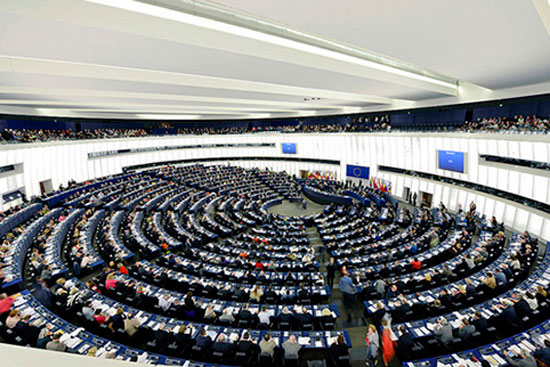

Consequently, the decision report does not relate to any “trials” but to the mass use of “genetically modified organisms”, as clarified from the beginning…
REGULATION (EU) 2020/1043 OF THE EUROPEAN PARLIAMENT
AND OF THE COUNCIL
of 15 July 2020
on clinical trials with medicinal products
for human use that contain or consist of genetically modified organisms and are intended
for the treatment or prevention of coronavirus disease (COVID-19) and the supply of such medicinal products
THE EUROPEAN PARLIAMENT AND THE COUNCIL OF THE EUROPEAN UNION,
Having regard to the proposal of the European Commission,
Following the referral of the draft legislative act to the national parliaments,
Having requested the opinion of the European Economic and Social Committee,
Having requested the opinion of the Committee of the Regions,
Deciding in accordance with the ordinary legislative procedure1,
Considering the following:
(1) Coronavirus disease (COVID-19) is an infectious disease caused by a coronavirus that was recently discovered. On January 30, 2020, the World Health Organization (WHO) declared the outbreak a Public Health Emergency of International Concern. On March 11, 2020, WHO characterized COVID-19 disease as a pandemic.
(2) According to Directive 2001/83/EC2 and Regulation (EC) No 726/2004 of the European Parliament and of the Council3, applications for marketing authorization for a medicinal product in a Member State or in the Union must be accompanied by a dossier containing the results of clinical trials conducted with the medicinal product.
(3) It follows from Directive 2001/20/EC of the European Parliament and of the Council4 that, before the commencement of any clinical trial, sponsors must seek approval from the competent authority of the Member State in which the clinical trial is to be conducted. The purpose of the approval is to protect the rights, safety and well-being of clinical trial participants and to ensure the reliability and integrity of the data arising from the clinical trial.
(4) Pursuant to Directive 2001/20/EC, the approval of a clinical trial is issued without prejudice to the application of Directives 2001/18/EC5 and 2009/41/EC of the European Parliament and of the Council6.
(5) Directive 2001/18/EC provides that the deliberate release of genetically modified organisms (‘GMOs’) into the environment for any purpose other than placing on the market is subject to notification to the competent authority of the Member State in whose territory the release is to take place and to the written consent of that authority. The notification must include an environmental risk assessment carried out in accordance with Annex II to Directive 2001/18/EC and a technical dossier providing the information specified in Annex III to that Directive.
(6) Directive 2009/41/EC provides that the risks to human health and the environment associated with the contained use of genetically modified microorganisms must be assessed on a case-by-case basis. For this purpose, the said directive provides that the user shall assess the risks to human health and the environment that may be involved in the specific type of contained use, using at least the assessment criteria and the procedure set out in Annex III of the said directive.
(7) Clinical trials require the performance of various actions, including the preparation, transport and storage of the investigational medicinal products, the packaging and labelling, the administration of the medicinal products to clinical trial participants and the subsequent monitoring of the participants, as well as the disposal of waste and unused investigational medicinal products. These actions may fall within the scope of Directive 2001/18/EC or 2009/41/EC when the investigational medicinal product contains or consists of GMOs.
(8) Experience shows that, in clinical trials with investigational medicinal products containing or consisting of GMOs, the procedure for achieving compliance with the requirements of Directives 2001/18/EC and 2009/41/EC regarding the assessment of environmental risks and consent from the competent authority of a Member State is complex and potentially time-consuming.
(9) The complexity of the procedure in question increases considerably in the case of multicentric clinical trials conducted in several Member States, as the sponsors of clinical trials are required to submit multiple approval applications in parallel to multiple competent authorities in different Member States. Moreover, national requirements and procedures for the environmental risk assessment and the written consent of the competent authorities for the deliberate release of GMOs under Directive 2001/18/EC vary significantly among Member States. While in certain Member States it suffices to submit a single approval application to one competent authority for both the conduct of the clinical trial and the aspects concerning GMOs, in other Member States it is necessary to submit parallel applications to different competent authorities. Furthermore, some Member States apply Directive 2001/18/EC, others apply Directive 2009/41/EC, and yet other Member States apply either Directive 2009/41/EC or Directive 2001/18/EC, depending on the specific circumstances of each clinical trial, and consequently it is not possible to determine in advance the national procedure that should be followed. Some Member States apply both directives simultaneously for different operations within the same clinical trial. Efforts to rationalize the procedure through informal coordination among the competent authorities of the Member States have failed. There are also discrepancies among national requirements regarding the content of the technical dossier.
(10) It is therefore particularly difficult to conduct multicentric clinical trials with investigational medicinal products containing or consisting of GMOs in which various Member States are involved.
(11) The COVID-19 pandemic has created an unprecedented public health emergency situation which has cost the lives of thousands of people and has particularly affected the elderly and individuals with pre-existing conditions. Furthermore, the very strict measures that member states had to implement in order to contain the spread of COVID-19 have caused serious disruptions to national economies and to the Union as a whole.
(12) COVID-19 is a complex disease that affects multiple physiological processes. Potential treatments and vaccines are currently under development. Some of the vaccines under development contain attenuated viruses or live carriers, which may fall within the definition of GMO.
(13) In this public health emergency situation, it is of major interest for the Union to ensure the possibility of developing and making available, within the Union, safe and effective medicines intended for the treatment or prevention of COVID-19, as soon as possible.
(14) To achieve the goal of making safe and effective medicines available for the treatment or prevention of COVID-19, a series of measures have been taken at Union level by the European Medicines Agency (EMA) and by the network of national competent authorities with the purpose of facilitating, supporting and accelerating the development and authorization of treatments and vaccines.
(15) In order to gather the robust clinical evidence required to support applications for marketing authorizations for medicines intended for the treatment or prevention of COVID-19, multicenter clinical trials involving multiple Member States will need to be conducted.
(16) It is extremely important that clinical trials with investigational medicinal products containing or consisting of GMOs and intended for the treatment or prevention of COVID-19 be able to be conducted within the Union, that they be able to start as soon as possible and that they not be delayed due to the complexity of the different national procedures applied by Member States when implementing Directives 2001/18/EC and 2009/41/EC.
(17) The main objective of EU pharmaceutical legislation is to protect public health. This legislative framework is complemented by the rules laid down in Directive 2001/20/EC concerning specific standards for the protection of participants in clinical trials. Directives 2001/18/EC and 2009/41/EC aim to ensure a high level of protection for human health and the environment through the assessment of risks arising from the deliberate release or contained use of GMOs. In the unprecedented public health emergency situation created by the COVID-19 pandemic, public health protection must prevail. Therefore, it is necessary to grant a temporary derogation from the requirements concerning prior environmental risk assessment and consent under the Directives 2001/18/EC and 2009/41/EC, as long as the COVID-19 pandemic continues or for as long as COVID-19 constitutes a public health emergency situation. This derogation should be limited to clinical trials involving investigational medicinal products containing or consisting of GMOs intended for the treatment or prevention of COVID-19. During the period of application of the temporary derogation, the environmental risk assessment and consent under Directives 2001/18/EC and 2009/41/EC should not be a prerequisite for conducting such clinical trials.
(18) In order to ensure a high level of environmental protection, compliance with Directive 2009/41/EC should continue to be required in areas where genetic modification of wild-type viruses and related activities take place. Therefore, the production of medicines containing or consisting of GMOs intended for the treatment or prevention of COVID-19, including investigational medicines, should be excluded from the temporary derogation. Furthermore, it should be required that sponsors apply appropriate measures to minimize the negative environmental impacts which, based on available knowledge, are expected to arise following intentional or accidental release of investigational medicines into the environment.
(19) Consequently, when submitting an application for a marketing authorization under Directive 2001/83/EC or Regulation (EC) No 726/2004 for medicines containing or consisting of GMOs intended for the treatment or prevention of COVID-19, and for which clinical trials would be covered by the derogation provided for in this Regulation, the applicant should not be required to provide written consent from the competent authority for the deliberate release of GMOs into the environment for research and development purposes, as defined in Part B of Directive 2001/18/EC.
(20) This regulation does not affect the Union rules on medicines intended for human use. As provided for in Regulation (EC) No 726/2004, the environmental impacts of medicines containing or consisting of GMOs and intended for the treatment or prevention of COVID-19 will continue to be assessed by the EMA in parallel with the assessment of the quality, safety and efficacy of each medicine, in accordance with the environmental safety requirements set out in Directive 2001/18/EC.
(21) Directive 2001/20/EC continues to apply, and clinical trials with investigational medicinal products containing or consisting of GMOs intended for the treatment or prevention of COVID-19 still require written approval from the competent authority in each Member State where the trial will be conducted. Compliance with ethical requirements and good clinical practice in the conduct of clinical trials, as well as compliance with good manufacturing practice rules in the manufacture or import of investigational medicinal products containing or consisting of GMOs, remains mandatory.
(22) As a general rule, no medicinal product may be placed on the market of the Union or on the market of a Member State unless a marketing authorization has been granted by the competent authorities pursuant to Directive 2001/83/EC or Regulation (EC) No 726/2004. However, Directive 2001/83/EC and Regulation (EC) No 726/2004 provide for exceptions to this requirement in cases characterized by urgent need for the supply of a medicinal product to address the special needs of a patient, for compassionate use, or as a response to a suspected or confirmed spread of pathogenic agents, toxins, chemical agents or nuclear radiation that could cause harm. In particular, Article 5(1) of Directive 2001/83/EC allows Member States to respond to special needs and to exclude from the provisions of that Directive medicinal products supplied on a non-repetitive, named-patient basis and prepared according to the specifications of an authorized healthcare professional, intended for administration to a specific patient under his direct personal responsibility. Pursuant to Article 5(2) of Directive 2001/83/EC, Member States may also temporarily permit the distribution of a medicinal product that has not been authorized, as a response to a suspected or confirmed spread of pathogenic agents, toxins, chemical agents or nuclear radiation, any of which could cause harm. Pursuant to Article 83(1) of Regulation (EC) No 726/2004, Member States may make a medicinal product for human use available for compassionate reasons to a group of patients suffering from a disease that causes chronic or severe disability or life-threatening condition and for which no satisfactory treatment exists with authorized medicinal products.
(23) Some Member States expressed doubts regarding the interaction of the relevant provisions of Directive 2001/83/EC and Regulation (EC) No 726/2004 with GMO legislation. In view of the urgent need to make vaccines or treatments for COVID-19 available to the public as soon as they are ready for that purpose and to avoid delays or uncertainties regarding the status of these products in certain Member States, when Member States issue decisions in accordance with Article 5 paragraphs 1 and 2 of Directive 2001/83/EC or Article 83 paragraph 1 of Regulation (EC) No 726/2004 concerning medicines containing or consisting of GMOs intended for the treatment or prevention of COVID-19, it is appropriate that environmental risk assessment or consent in accordance with Directive 2001/18/EC or Directive 2009/41/EC should not be a prerequisite.
(24) Given that the objectives of this Regulation, namely to provide for a temporary derogation from Union legislation on GMOs in order to ensure that clinical trials conducted in the territory of several Member States with investigational medicinal products containing or consisting of GMOs intended for the treatment or prevention of COVID-19 are not delayed, as well as to clarify the application of Article 5 paragraphs 1 and 2 of Directive 2001/83/EC and Article 83 paragraph 1 of Regulation (EC) No 726/2004 regarding medicinal products containing or consisting of GMOs intended for the treatment or prevention of COVID-19, cannot be sufficiently achieved by the Member States, but can be better achieved at Union level due to their scale and effects, the Union may adopt measures, in accordance with the principle of subsidiarity set out in Article 5 of the Treaty on European Union (‘TEU’). Due to the importance of ensuring a high level of environmental protection in all policies and in accordance with the principle of proportionality as set out in the same article, this Regulation should be limited to the present emergency situation concerning an urgent threat to human health, where the objective of protecting public health cannot be achieved differently, and which does not exceed what is necessary to achieve the objectives in question.
(25) Given the urgent nature in question, it was considered appropriate to provide for an exception to the eight-week deadline referred to in Article 4 of Protocol No. 1 on the role of national parliaments in the European Union, which is annexed to the EEA Agreement, the Treaty on the Functioning of the European Union and the Treaty establishing the European Atomic Energy Community.
(26) Given the objectives of this Regulation, in order to ensure that clinical trials with investigational medicinal products containing or consisting of GMOs and intended for the treatment or prevention of COVID-19 can commence without delay and to clarify the application of Article 5 paragraphs 1 and 2 of Directive 2001/83/EC and Article 83 paragraph 1 of Regulation (EC) No 726/2004 regarding medicinal products containing or consisting of GMOs and intended for the treatment or prevention of COVID-19, this Regulation should enter into force urgently on the day following its publication in the Official Journal of the European Union.
THEY ISSUED THE FOLLOWING REGULATION:
Article 1
For the purposes of this regulation, the following definitions apply:
1) “clinical trial”: a clinical trial as defined in Article 2 point a) of Directive 2001/20/EC,
2) “sponsor”: a sponsor as defined in Article 2 point e) of Directive 2001/20/EC,
3) “investigational medicinal product”: an investigational medicinal product as defined in Article 2 point d) of Directive 2001/20/EC,
4) “medicinal product”: a medicinal product as defined in Article 1 point 2 of Directive 2001/83/EC,
5) “genetically modified organism” or “GMO”: a genetically modified organism as defined in Article 2 point 2 of Directive 2001/18/EC.
Article 2
- For none of the actions relating to the conduct of clinical trials, including packaging and labelling, storage, transport, destruction, disposal, distribution, supply, administration or use of investigational medicinal products for human use that contain or consist of GMOs and are intended for the treatment or prevention of COVID-19, except for the manufacture of investigational medicinal products, no prior environmental risk assessment or consent is required in accordance with Articles 6 to 11 of Directive 2001/18/EC or Articles 4 to 13 of Directive 2009/41/EC, when the actions concerned relate to the conduct of a clinical trial that has been approved in accordance with Directive 2001/20/EC.
- The contractors implement appropriate measures to minimize the predictable negative environmental impacts from the intentional or accidental release of the tested drug into the environment.
Cyborg #28
- By derogation from Article 6 paragraph 2 point a) of Regulation (EC) No 726/2004 and from Annex I Part I point 1.6 fourth paragraph second indent of Directive 2001/83/EC, in applications for marketing authorisation for medicinal products containing or consisting of GMOs and intended for the treatment or prevention of COVID-19, the applicant is not required to include a copy of the written consent of the competent authority for the deliberate release of GMOs into the environment for purposes of scientific research and development in accordance with Part B of Directive 2001/18/EC.
Article 3
- Articles 6 to 11 and 13 to 24 of Directive 2001/18/EC, as well as Articles 4 to 13 of Directive 2009/41/EC, shall not apply to acts relating to the supply and use of medicinal products containing or consisting of GMOs intended for the treatment or prevention of COVID-19, including packaging and labelling, storage, transport, destruction, disposal, distribution or administration, except for the manufacture of medicinal products, in any of the following cases:
- a) when such medicinal products have been exempted from the provisions of Directive 2001/83/EC by a Member State in accordance with Article 5 paragraph 1 of that Directive,
- b) when such medicines have been temporarily authorized by a Member State in accordance with Article 5 paragraph 2 of Directive 2001/83/EC or
- c) when such medicinal products have become available from a Member State in accordance with Article 83 paragraph 1 of Regulation (EC) No 726/2004.
- Where this is feasible, Member States apply appropriate measures to minimize the predictable negative environmental impacts from the intentional or unintentional release of the pharmaceutical into the environment.
Article 4
- This regulation applies for as long as the WHO characterizes COVID-19 as a pandemic or for as long as an implementing act is applied through which the Commission recognizes a state of emergency in the field of public health due to COVID-19 in accordance with Article 12 of Decision No. 1082/2013/EU of the European Parliament and of the Council7.
- When the conditions for the application of this Regulation referred to in paragraph 1 are no longer met, the Commission publishes a relevant notice in the Official Journal of the European Union.
- Clinical trials falling within Article 2 of this Regulation and approved pursuant to Directive 2001/20/EC before the publication of the notice referred to in paragraph 2 of this Article may continue to be validly used to support an application for a marketing authorization in the absence of an environmental risk assessment or consent in accordance with Articles 6 to 11 of Directive 2001/18/EC or Articles 4 to 13 of Directive 2009/41/EC.
Article 5
This Regulation shall enter into force on the day following its publication in the Official Journal of the European Union.
This Regulation shall be binding in its entirety and directly applicable in all Member States.
Brussels, 15 July 2020.
For the European Parliament President D. M. SASSOLI
For the Council President J. KLOECKNER
- Position of the European Parliament of 10 July 2020 (not yet published in the Official Journal) and decision of the Council of 14 July 2020. ↩︎
- Directive 2001/83/EC of the European Parliament and of the Council, of 6 November 2001, on the Community code relating to medicinal products for human use (OJ L 311 of 28.11.2001, p. 67). ↩︎
- Regulation (EC) No 726/2004 of the European Parliament and of the Council, of 31 March 2004, laying down Community procedures for the authorisation and supervision of medicinal products for human and veterinary use and establishing a European Medicines Agency (OJ L 136, 30.4.2004, p. 1). ↩︎
- Directive 2001/20/EC of the European Parliament and of the Council, of 4 April 2001, on the approximation of the laws, regulations and administrative provisions of the Member States relating to the implementation of good clinical practice in the conduct of clinical trials on medicinal products for human use (OJ L 121 of 1.5.2001, p. 34). ↩︎
- Directive 2001/18/EC of the European Parliament and of the Council, of 12 March 2001, on the deliberate release into the environment of genetically modified organisms and repealing Council Directive 90/220/EEC (OJ L 106 of 17.4.2001, p. 1). ↩︎
- Directive 2009/41/EC of the European Parliament and of the Council, of 6 May 2009, on the contained use of genetically modified microorganisms (OJ L 125 of 21.5.2009, p. 75). ↩︎
- Decision No 1082/2013/EU of the European Parliament and of the Council of 22 October 2013 on serious cross-border threats to health and repealing Decision No 2119/98/EC (EU L 293 of 5.11.2013, p. 1). ↩︎