
The issue could be considered “stale.” Or not. Recently, in our parts, with reference to legislation for same-sex couples, male same-sex couples were accused as the ones primarily responsible for baby trafficking, the trade of “surrogate” mothers… Although it is true that same-sex couples are indeed customers of the “baby production” industry, it is completely false and beyond any historical reality to claim that they constitute the main lever of this industry’s “development.” They represent only a small portion of the relevant “market” as customers. On the contrary, the far larger customer base, and the historically far greater “demand” for “rented wombs,” has been and remains heterosexual couples. The beneficiaries of the baby trade, by an overwhelming majority, are the conventional couples of this world.
For the cyborg, the interest in this “old” (but still “cutting-edge”) issue lies in the relationship between technology and the control of biological reproduction on one hand, and the social ideology and ethics that support it on the other. As we will show, the technical control of biological reproduction through “surrogate mothers” is still only halfway down the road. In the not-too-distant future, the complete mechanization of pregnancy is not merely the goal, but rather one of the “holy grails” of the fourth capitalist industrial revolution.
Baby M.: emotional, family or class conflict?
Richard and Mary Beth Whitehead were a typical American working-class couple, who by 1985 already had 12 years of marriage behind them. The early years of this marriage were not easy: frequent house moves, a temporary separation, living off benefits. Not the best. But at the beginning of the 1980s, things settled down. Richard found steady work as a garbage truck driver in New Jersey, they managed to buy a house with a loan, while their children, Ryan who was born in 1974 and Tuesday who was born in 1975 (when her mother was 18 years old), were growing up in a stable, loving family.
William and Elizabeth Stern, also residents of New Jersey (but in the nicer neighborhoods), were he a medical researcher and she a pediatric oncologist. They lived the pleasant life of their class, except for one issue: a health problem of Elizabeth’s made a potential pregnancy dangerous. Waiting to adopt required time, and the Stern couple was in a hurry. Additionally, William, as the only descendant of a Jewish family that survived the Holocaust, wanted a biological heir.
The difference in “status” and “wealth” brought the two couples into a discussion that was unprecedented in its publicity for the time, and eventually led to an agreement. Mary Beth agreed to be artificially inseminated with William’s sperm (in vitro fertilization), and if she became pregnant, she would give the baby to the Stern couple to raise as their own. The Sterns, for their part, agreed to pay Mary Beth $10,000, a sum that was neither large nor small by the standards of the time, but considerable enough for the Whiteheads’ finances. The agreement was mediated by the “New York Fertility Center,” which had been opened in 1981 by a lawyer from Michigan named Noel Keane.
The case of Keane is interesting. He was a lawyer, not a gynecologist or biologist. But as a lawyer, he had identified the lack of legislation for this kind of surrogacy arrangements. He arranged his first such case in 1976, and by 1985 he had made considerable money (with “sensitivity”…) as an intermediary in such baby adoptions. But in 1985, things turned out differently.
After several months and eleven attempts at artificial insemination, Mary Beth finally became pregnant and on March 27, 1986, gave birth to the baby girl who would become known throughout the Western world as Baby M.: a few days after the birth, Mary Beth decided that she loved the baby she had given birth to, and refused to give it to the Sterns (she also refused the $10,000). Negotiations (and pleas) began from the “clients” Sterns’ side, but as days and weeks passed, Mary Beth became even more determined to keep the baby.


The courts would have the final say—judging by unknown criteria. The first judge ordered that the baby be handed over to the Sterns; the Whiteheads fled to hide in Florida with the baby, but private detectives hired by the Sterns tracked them down. Amid intense media attention and coverage (which at the time overwhelmingly favored the biological mother, Mary Beth), the police “seized” the baby and delivered it to the Sterns, the intended “clients.” This was followed by an appellate trial at the New Jersey Supreme Court, which on February 3, 1988 ruled that surrogacy contracts were illegal and potentially criminal under state legislation. However, the court simultaneously acknowledged that the agreement between the Sterns and the Whiteheads was valid and decided the baby should be given to the Sterns—but not because of the contract, but because it would be “in the best interest of the child”: a wealthier family, with only one other child, compared to the working-class Whitehead family that was already raising two children.
It was an impressive decision, full of contradictions yet with a “hard core” that would determine the future: a) the pregnancy of a child can be the subject of a commercial agreement, and b) the wealth of clients is a stronger criterion than the feelings of the woman whose body they rented—for the sake of the child…
The Baby M. case, which captured attention for many months, sparked intense debates. Feminist groups and organizations of the time were openly in favor of Mary Beth, denouncing the exploitation of the female body in combination with her class (working-class) position. On the other hand, the temptation to “order” a child (or more…) gained legitimacy; evidently for those middle- and upper-class couples who either could not (for whatever reason) or did not want to have a child through conventional means, having the financial means to pay-to-buy one. These factors, along with the fact that artificial insemination was proving to be a technology with significant commercial prospects and profitability, clearly emerged as issues for American society during that time, in the second half of the 1980s, despite ethical concerns and objections.
However, the time would not be far off when practice, habit, and ideology would overcome them.

technology, social relations, body
It is difficult to convey today’s social relations and perceptions to a Western society (the American one) in the early ’80s. However, the feminists’ reaction is significant1. At that time, perceptions were not shaped as a tail of technology (and industry). We would not say the same today.
Amid its contradictions, the court decision that awarded Baby M. (Melissa henceforth) to the couple who had commissioned her created a legal precedent… without precedent. It created a human contractual subject/object of which one can find a distant analogy only in slavery. The baby belonged to those who had ordered her for no other reason (the “good of the child” was the necessary class appearance…) except that there was a contract that stipulated who her parents would be. A kind of forced surrogacy: the specific woman, Mary Beth who carried her pregnancy, was, from a biological point of view, a “co-owner” since her own egg had been fertilized. However, even this was not enough to legally challenge the validity of the rental contract of her uterus (and her psyche…), which was otherwise (at that historic moment) deemed “illegal to criminal.” One would suppose that an illegal to criminal agreement can only lead to illegal to criminal acts by those who insist it is valid. But no. In a strange “Solomonic” approach, the court cut in half not the baby but the process: illegal to criminal at its inception, yet producing legal consequences at its conclusion.
In this way, the newborn simultaneously became, from a legal perspective, an object (which could be seized by the police in Florida as stolen property from the Whiteheads) and a subject (since his own interest, understood as formal life comfort, was to grow up with the Sterns). This duality was to repeat itself again and again, no longer requiring judicial legitimization, as with those babies who were “left over” in 2020 (due to sanitary exclusion) and again in 2022 (due to war) in the clinics of the baby industry and trade in war-torn Kyiv, and (in the second case) should have been delivered to those who had ordered them on Polish territory, with delivery.
The New Jersey court legitimized the separation between pregnancy (and the female / maternal body, including its sensations) and the newborn (as a subject to over-ordering and payment) based on commercial law criteria. It should not be considered strange that what followed was an increasingly larger market for babies.
But (we will argue) this specific legal separation / split was analogous to (and functionally derived from) a technological separation / split: the ability for an egg to meet a sperm without sexual / romantic encounter. Insemination was a technique already applied to domesticated animals (it is still applied to our species), and in any case kept the male body away from the female body. No contact between them was needed, and potentially no relationship between them, not even acquaintance. This thanks to the mediation of the management of both eggs (ovulation) and sperm, understood as the minimum necessary for natural reproduction, by technology / science.
Already, a few years before the “adventure” of Baby M, the first “test-tube baby” had been born: on July 25, 1978, Louise Brown was born, the first baby “conceived” in a laboratory dish – there the egg and sperm met. This technology was upgraded compared to insemination: not only were the first embryonic cells shaped in an artificial environment, but a transfer had to follow (: embryo transfer – in Louise’s case it happened two days later) to the uterus of the woman who would become pregnant.
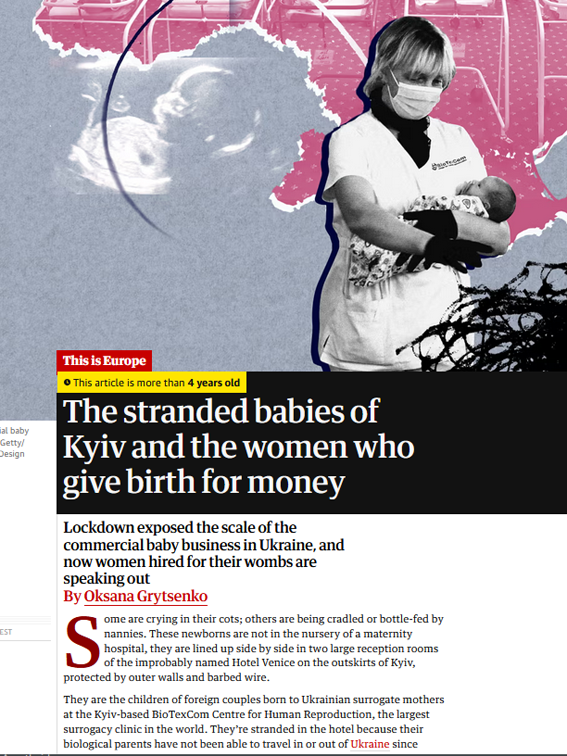

The second technique (in vitro fertilization / embryo transfer) had more prospects. It evolved, became commercialized, became the technological basis of the “cultivation” and trade of babies through “surrogate mothers”; and it made commonplace the cut-with-continuity that we indicated earlier. Between the body (the female) and the outside-the-body (the laboratory, the contract) in relation to pregnancy and birth.
Childless couples have always existed. In all social classes. The most common treatment for the sorrow of childlessness (which for the middle and upper classes was sorrow over the lack of natural heirs to the estate) was adoption, either formal or simply social. In the latter case, the continuity of blood was not ensured, however love, care, and affection found their way through the child of some relatives or neighbors; or, later, of unknown parents, perhaps killed or too poor to raise it.
It was technology as a capability that changed the circumstances (whether in Louise’s case or, with all the legal framework it secured, in the case of Baby M). It was the technical offering that created the social demand. And, of course, it secured legal coverage. If the New Jersey Superior Court had decided that a) the surrogate motherhood contract is illegal or even criminal, and b) consequently Baby M. must be given to the woman who gave birth to her, then the technology would remain available, but would have to find clients underground, always with high uncertainty: what if the X or Y surrogate mother changes her mind and keeps the child?
There were also always desired pregnancies and unwanted pregnancies. It may seem strange today, but methods of termination (not surgical abortion or scraping) have always existed, in very ancient times: it was the woman who ultimately decided whether she wanted to carry and raise a child; even though this feminine knowledge/power, without political and ideological characteristics, remains marginalized.
The technology of reproduction has managed to morally and emotionally separate pregnancy from the pregnant woman, making pregnancy an alienated process, potentially “professional” (we will return to this later). Even if this alienation is acceptable to all parties, it does not cease to be alienation. And initially (in the US, but where do the modern legislations originate from in the 20th century?), the legal aspect / legitimization has pushed to the margins any argument of “altruism” on the part of the woman with the “rented” womb, those with which local legislators are deceived.
It’s a deal, period….
Is it work?
When the critique reaches the issue of the exploitation of women’s (proletarian) bodies by the baby industry/trade, advocates heavily use the argument “a job is a job, and it gets paid.” Additionally, they use the comparison argument with the oldest – profession – in the – world…
However, nothing can be considered as “work” if the worker cannot quit it at will! Can the “rented womb” go on strike, decide that “she’s leaving this job” in the 3rd, 4th, 5th or 6th month of her (so-called) “work”/pregnancy? Nothing of that sort. Can she take sick leave from work? Does she perhaps have holidays off?
However, if it is not possible to go on strike and/or if it is not possible to abandon the “post”; if, to put it as simply as possible, you do not define your time (and your body…) in any way and by no means, then it is not work! (The exact same applies to forced prostitution…). It is not even subcontracting, fashion. Because there too, someone / someone claiming reasons of force majeure can suspend the subcontracting. Possibly, after a court decision, they may have to pay some penalty; however, they will have already suspended the subcontracting.
What then is the “rented” womb, with the strict (medical and not only) supervision for at least 10 months, essentially 24 hours a day, with the strict instructions on what the woman will eat and what she will not eat, what she will drink and what she will not drink, what daily routine she will have and what daily routine she will not have, the continuous (medical…) examinations… what is this?
Conception and pregnancy (who among us is unaware of this?) are not merely a “social process of human production” that can simply be replaced by another “social process” mediated in one way or another. It is a biological, physical, feminine relationship – indeed, this is precisely why childless couples grieve very differently when they have no children compared to not having the house or car they would like.
What is, then, the “rented” womb since it is NEITHER “work” NOR “contracting”? There are great hesitations to call a spade a spade, either to avoid offending the circles of the baby trade, or to avoid offending the proletarian “rented” mothers. However, the only thing with which direct analogies can be found is slavery. Slavery-for-a-fixed-term if you like, but slavery.
Many and varied will be the reactions. “Voluntary labor?” they will say… “Paid labor?” they will add. Yes! we will answer to both. Under certain conditions of proletarian need, individuals can enslave themselves “voluntarily” – as much “voluntarism” as fits into not being able to make ends meet. Why then do various people accept (voluntarily, right?) to become guinea pigs for various drugs, putting their bodies up as collateral for whatever side effects might occur? For the joy of adventure? Why then do various people have to (always “voluntarily,” correctly?) sell one of their kidneys? Because they have too many?
It is common knowledge: within capitalist conditions, at their core, there exists slavery (often extended) in both forms. Both forced (in various kinds of plantations and mines, under the supervision of guards…) and “voluntary.” This “volunteering” is so much determined by needs that it would be at least ridiculous to claim that a woman who undergoes the barbarity of hormone therapy in order to sell her eggs does so out of… hobby!
Let’s now move to the payment. According to what is known in elldistan (which is a global center for baby trade) the “rented” surrogate mothers are paid less than 10,000 euros.
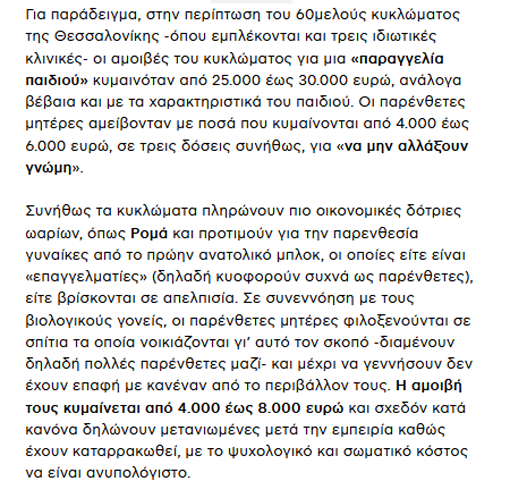
Let’s say 10,000, to make the calculation easier. For the “work”… For “work” of at least 10 months (including the “preparation”…) 24 hours a day. With a rough calculation, this amounts to “work” of 7,200 hours, without recognizing overtime, holidays, etc. Therefore, at best, this “work” is paid at 1.5 euros per hour – in reality, 1 euro per hour or even less.
This is the “payment” that appears as an indisputable argument masking slavery to present it as a job… Does someone work for 1 or 1.5 euros per hour, meaning it as an acceptable case of employment? Or perhaps with such “payment,” even if they worked 8 hours a day, or 6 or 4, would they consider (correctly) that they are a slave?
The “experts” of the …. working class should have answered us. But they won’t bother, and why would they anyway;
Temporary epilogue
The Greek state, consciously and persistently, has organized the trade of babies, having made Greece an “incubator” of global reach. It is a form of “investment” (the profitability of the “clinics” involved in the relevant networks is impressive…) and it is mainly the choice of the position of the Greek state/capital in the global division of exploitation.
We could say a lot about this, but we’ll avoid it. It’s relatively feasible to find several references. We’re more interested in the development towards completely artificial wombs.
The term “artificial womb” has become commonplace among specialists, always accompanied by the “humanitarian” aroma of protecting the lives of prematurely born embryos.
As was the case at the outset of artificial insemination and “surrogate” motherhood, the demonstration that technoscientists always strive to find solutions-to-problems (and not to create highly profitable businesses…) is a tactic of misleading and obfuscation. The same applies to the mechanization of pregnancy.
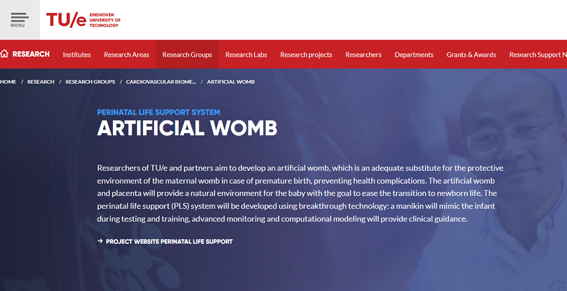
More and more experiments have been and are being conducted2. Either with other mammals or in cases of extremely premature births. Specialists declare themselves satisfied; they are moving forward.
Should we perhaps applaud the upcoming “liberation” of proletarian women from the voluntary slavery of the “rented” womb? Is this perhaps a parenthesis-within-parentheses that will close sooner or later?
Yes… Only that the above liberation will be small, minimal, compared to the “liberation” of non-natural reproduction from human relationships and, especially, from female bodies! The “liberation” of capital, that is, from the material and emotional boundaries of the feminine.
If what (will) be needed for the “construction of humans” is collections of eggs and spermatozoa and large incubator facilities, we can make not unfounded assumptions both for the commercial success of such a development, and for various other “central” exploitations of it3.
We will not make detailed predictions. However, the capitalist tendency is so clear that only cowardice prevents those who declare themselves “anti-capitalist” from recognizing it. From the first “test-tube baby” and Baby M. to the “babies of commerce,” a great distance has been traversed in disconnecting pregnancy and maternity. This was not accidental. But even if all technological inventions were initially innocent and harmless, they have proven over time to be so useful for (genetic) control and so financially profitable that the next steps, the final kilometers, will be covered quickly and with deliberate intent.
Ziggy Stardust





Since today artificial intelligence has been loved so much, why shouldn’t artificial womb be loved too?
In any case, we would recommend Body, pregnancy, recording, representation: the change of the “normal” in cyborg no 7: the electromechanical investment / monitoring of the pregnant body, already “socially legitimized”, is yet another “successful” aspect of the general mechanical mediation / substitute for natural reproduction…
- Even if today they would be denounced as “conservative.” The advances of the “next waves” are not great. In any case, initially, feminist organizations considered the decision a “victory” because it appeared to ban “surrogate mothers” – New Jersey. However, given that clients ultimately took the newborn, how many women / “surrogates” would resort to the courts again if they changed their minds, considering they would lose the child? ↩︎
- In 2016, two “developmental” studies of human embryos were published, conducted ex vivo in a specific laboratory/mechanical environment, for the first 13 days of their lives. A year later, in 2017, embryologists at the Children’s Hospital of Philadelphia announced that they had kept “premature” sheep embryos alive for 4 weeks, again in a laboratory/mechanical environment.
The obstacle to “scientific progress” was a customary/technological restriction that prohibited the artificial preservation of embryos derived from ex vivo/artificial intelligence for more than 14 days. In 2021, the American Washington Post reported that the “International Union of Cell Research” relaxed this restriction, allowing tests for artificial wombs beyond 14 days, provided that the relevant embryos/test subjects would not be implanted into a female uterus. A year later, on August 1, 2022, under the triumphant headline “Scientists Create Synthetic Mouse Embryos, a Potential Key to Treating Humans,” the newspaper celebrated a related announcement by Israeli researchers, notably without using eggs and sperm (from mice). ↩︎ - It is particularly interesting a video that was released in 2022 signed by ectolife (: a project by Yemeni molecular biologist Hashem al-Ghaili) that presents / advertises a farm for the artificial “development” of human embryos and its advantages. You should watch it (and think about it) at https://www.youtube.com/watch?v=O2RIvJ1U7RE
Although the image of the “farm” in this video is rather simplistic, the presentation of the advantages of the completely artificial womb is absolutely compelling: the social characteristics of the couples who would use such a technological offering are already present! Including love for “family” eugenics… Which means that if real industries / human hatcheries appear, they will be accepted with great favor by a considerable part of Western societies… ↩︎