
As the Western perception has been shaped at this moment, any reference to artificial intelligence systems almost automatically refers to dialogical tools such as ChatGPT. These specific tools are categorized under the general term “large language models.” Despite their absolute dominance at this historical moment, they represent a special category of machine learning models, the basic principles of which have been known since the 1950s, but, for various reasons, had fallen into obscurity until about 15 years ago. More specifically, they consist of neural networks, which in turn, despite their heavy name, belong to a broad spectrum of statistical techniques for approximating a function1. In other words, from a technical, mathematical, and strictly scientific perspective, behind the fancy terminology, there is nothing mysterious, magical, or even radical. The “paradigm shift” that these models bring concerns more their ideological baggage and less their scientific content: they constitute the absolute embodiment and the most archetypal example of the perception that sees statistics and correlations as the quintessential scientific way of thinking2.
Two are the main reasons why they managed to enter the public “discussion” (or rather propaganda) with such momentum. First, they have the ability to be trained on linguistic data, resulting in their output not being tables of incomprehensible numbers, but texts with apparent structure and flow which even the most uninitiated can read. Second, as linguistic data abounds on the internet, this gives engineers of these systems the ability to collect them (legally or not so much) in massive volumes with which they feed the models, so that the correlations they learn are typically plausible. Since, so far, they do not possess any (common or other) logic, the only way to impart some coherence to the texts they produce is through statistical learning of as many possible word combinations as possible, something that is impossible without massive training data volumes. A “light” disadvantage, however, of these models is that they systematically prove to be alcoholic; their strong tendency to produce hallucinations and “false impressions” makes them absolutely unsuitable for application in fields with high safety and robustness requirements, such as heavy industrial production.
The fact that the Western camp exhibits such obsessive persistence in systems with “red buttons” and dead-end verbal diarrhea already sufficiently indicates the depth of its decline. With a dose of malice, one could say that the Westerners are building systems that resemble them so they can see themselves in the mirror. This is what social networks and mobile cameras have taught them: to dwell in the consumption of their own self-image. Who could have imagined that large language models, with their “red buttons” and “dilated pupils,” would inflict such blows against “sobriety”? With less emotion, the dominance of large language models in Western minds simply signals the extent to which the West lags behind in the field of tangible industrial production of material goods. It no longer has anything to offer there, and thus initiates mechanisms of hyper-compensation, hoping that with words (artificial or not) some kind of “recovery” will come.
The large language models are here to stay, thus making life “easier” for many. Every office employee can now more easily pretend to be a cog in a bureaucracy that itself pretends to produce “serious social work.” Every student can pretend to be learning what their teachers and professors pretend to be teaching them. Every journalist can pretend to know what they are writing about, addressing readers who will also pretend to possess some secret knowledge because they read somewhere a couple of lines written with the same ease, whether it’s about a football transfer or developments in nuclear fusion technology. And soon, every hack poet of the late hour will be able to pretend to be a pioneer of cut-up techniques because they gave some prompts to ChatGPT to generate non sequiturs, and their amateur admirers will be able to pretend to be deeply moved by “poems that speak directly to the heart and require no intellectual effort.” Unbeknownst to them, the engineers of dialogic artificial intelligence systems have provided a valuable service to Western societies. They have stripped away all the makeup, revealing them for what they are: an amateur performance with bored actors and an audience that attended compulsorily due to friendship or family ties with one of the contributors and to whom they must naturally express their admiration at the end. Deep down, however, everyone knows…

The success of language models was so sweeping that the technology on which they are based quickly expanded and was applied to fields beyond language. Every month some new model is announced, one for image production (even moving ones, i.e. video), another for music production, the next for generating mathematical reasoning. The common element is that they all rely on monstrous neural networks with billions of parameters and that they are trained on huge volumes of data, depending on the application each time (images, musical pieces, mathematical proofs, etc.). All these systems now fall into the category of so-called foundation models. If, therefore, language along with every sense, from vision to hearing, has been mechanized and colonized, is there perhaps a next step, some next terra incognita ready for exploitation? For the designers of foundation models, their problems, beyond the known ones so far (that they tend to produce plausible nonsense and that even when they produce correct answers it is impossible to explain how they arrived at them), are at least two. First, several of them (at least those who have not degenerated into unscrupulous profiteers) persist in claiming that what such models do has nothing to do with the way humans reason and reach conclusions. It is simply statistical correlations. Second, each model is limited only to one specific type of data at a time, whether these are images, texts or sounds.
The solution to these problems? So-called world models, a term that in Greek could be rendered as “models of worlds”3. The ambition of their designers is to construct models capable of simultaneously processing every kind of data, in order to ultimately represent within themselves a complete picture of the external world in its entirety. Since they will not rely on just one sense or aspect of cognition, they will be able to make much better predictions. Moreover, over time, they will also gain the ability to “reason” in a more “human” way, since their predictions will take into account the relevant “context”4. Now, how might the phrase “You’re running very fast” be completed by a language model? With “put your foot down more” or with “slow down”? A world model will be able to “understand” which continuation is more plausible, depending also on the images it has in front of its “eyes” at that moment. The first option is more likely if the scene comes from a speed race rather than from a little street in Kypseli.
World models are still in a very early, almost infantile stage, and there are serious philosophical reasons to be cautious of overblown claims that they will finally allow us to build truly thinking machines. Even the basic assumption on which they rely—the separation between an “external” world and a representation of it within the thinking subject—has faced serious criticism, both from a philosophical perspective (as early as Husserl a century ago) and from specialists in the so-called cognitive sciences. Especially these latter have been dealing for decades with simulation models of human thought without yet arriving at a solution that explains even (let alone simulates and reproduces) mental functions as a whole or even in part. Any failure (which we predict here) of these specific models at the philosophical level does not, of course, imply a corresponding failure at the political and social level. The products that a Taylorist production line yields at its output still fall short of those produced by a skillful human hand. From this perspective, the production line can be considered “failed.” However, from an economic and social point of view, its success was absolute. What could a corresponding “success” of world models possibly mean?
Before we attempt to sketch out some answers to this question, we will need to go back in time for a while, “to when everything began.” The following are some excerpts from a book – a hymn to industrial production.
“A particular advantage that machines offer us is that they allow us to detect cases of negligence, inaction, and cunning on the part of people. Among the most tiring professions are those that require us to count a series of identical, repetitive movements. For example, the number of steps we take while walking constitutes a relatively adequate measure of the distance we have covered. The value of such a practice is significantly enhanced if you have an instrument, the pedometer, that counts for you the steps you take. A similar kind of mechanism is sometimes applied to carriages to count the number of wheel rotations and thus provide a measure of the distance covered. A similar instrument, somewhat different in construction, has been used to count the strokes of a steam engine or the number of coins produced by a press.
…
After completing our review of the mechanical principles upon which the successful application of mechanical science in large industrial product manufacturing facilities is based, we can offer some observations and suggest some research guidelines for those possessed by an enlightened curiosity who wish to examine the factories of one or another country in detail.
…
It is important that all collected information be recorded in writing immediately after acquisition, particularly that which concerns numbers and measurements.
…
The various processes must now be described successively…· then the following information must be provided:
Are the various types of product produced in the same space or in different ones? Are there differences in the processes?
What failures are the products prone to?
…
What forging is allowed?
What checks are performed for product quality?
…
Who provides the tools? The master or the men? Who repairs them?
Are the operators men, women, or children? If mixed, in what proportions?
How many hours do they work daily?
Is it necessary for them to work at night, without interruption?
Is the work by piece or by daily wage?
What level of skills is required and how many years of apprenticeship to acquire them?
The number of times a movement is repeated per day or hour.
The number of failures per thousand.
…”
One could justifiably assume that excerpts such as the above originate from some poem by Taylor, or even from his famous work The Principles of Scientific Management5. The insistence on recording every aspect of the production process in order to identify potential sources of “waste” and eliminate them through rationalization is a hallmark of Taylor’s entire approach. The same concept runs through these excerpts as well, perhaps with a slightly different emphasis. While Taylor focused particularly on what is commonly called worker “slacking” and ways to combat it, here we see a somewhat greater emphasis placed on the mechanical side of the factory. In any case, the detailed recording of all stages of a production process (including machines and people) and their rationalization with the purpose of “optimizing” them constitutes a common denominator.
From a historical perspective, what is intriguing about these excerpts is that they do not originate from the early 20th century (Taylor published his work in 1909), but from the first half of the 19th century. The work continues below by referring to how such a recording can form the basis for a division of factory labor and a decomposition of it into its “ultimate” components.
“The employer (master manufacturer), by dividing the work that needs to be done into different subprocesses, each with its own skill and strength requirements, is able to buy exactly as much of these as is necessary. Conversely, if all the work had to be done by a single worker, this person would have to possess both the highest skill to complete the most intricate part of the job and the greatest strength to cope with the most laborious part of it.”
The author insists, referring to the well-known (from Adam Smith) example with the pins, analyzing all the different stages of their production (from drawing the wires, to straightening them, sharpening their point, etc.), along with the cost of each of these, even summarizing them in a table.
After all this exhaustively detailed description, he arrives at his unequivocal conclusion (emphasized in the original):
“Therefore, the cost of producing pins would be three times greater in relation to their cost if the division of labor were applied.“
The fact that these particular analyses were formulated in Britain in 1832 should not come as a surprise. The most advanced industrial state of the era “owed” it to itself to have produced precursors to Taylor in one form or another. The author’s name, however, reveals a thread connecting 19th-century Britain of the first Industrial Revolution to Silicon Valley in 2025. The work is titled “On the Economy of Machinery and Manufactures,” and its author is the British Charles Babbage. For most people, even among computer science students, the name Babbage remains largely unknown. Unfairly so. Apart from his interest in factories and manufacturing (or perhaps precisely because of this), Babbage devoted a large part of his life to building computational machines. Each time unsuccessfully, to a large extent because the technology of the time could not produce mechanical parts with the degree of precision Babbage required. His first design was conceived in the 1820s and concerned the construction of the so-called difference engine, which would have been capable of calculating the values of a wide range of functions at various points in their domain. In other words, it performed a function similar to that of a pocket calculator. For the standards of that time, such a machine would already have been impressive. However, Babbage was not discouraged by his first failure. In the 1830s, he proceeded to an even more ambitious design for a machine capable of being programmed in a manner almost identical to how electronic programmable devices would later be programmed in the 1940s. In modern terms, we would say that Babbage’s so-called analytical engine would have been equivalent to a Turing machine.
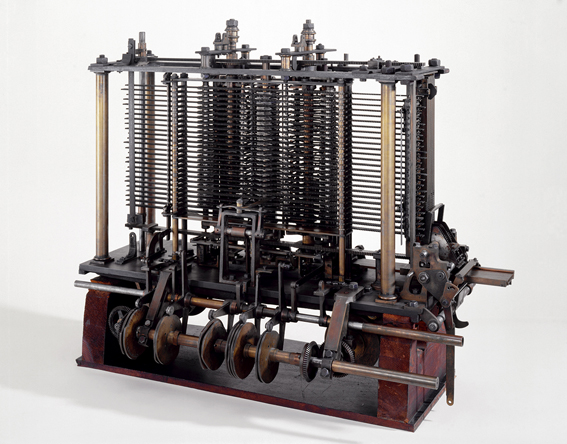
There is much evidence that the designs and architecture of Babbage’s computing machines were influenced by the logic of the factories of his era to a degree that usually goes unnoticed. His interest in the principles of industrial production organization is well documented anyway, simply by the fact that he devoted an entire book to this subject. Even at the level of terminology, however, the influence was strong. When Babbage designed his analytical engine, he proceeded with an architectural innovation. He separated the part of the machine that would be responsible for calculations (additions, multiplications, etc.) from the part that would be responsible for storing the initial numbers and results. He named the computational part the “mill,” while the storage part was simply called “storage.”6 Why did he choose these terms? He borrowed them directly from a prevalent work model of his time and, indeed, from the most advanced in terms of industrial development. From the textile industry, where piles of threads were initially placed in a storage area to then pass through a processing stage and return to storage as finished products. The economies of scale (for the standards of the time) served as his model for designing and naming the parts of his own machine. The choice of this specific terminology could be considered a mere coincidence. As envisaged by its designs, however, the operation of the analytical engine would be based on punched cards for its programming. Nor were punched cards Babbage’s invention. Again in this case, their origin can be traced back to textile factories and the famous Jacquard looms. The innovation of these particular machines was that they could automatically weave fabric with a specific pattern, based on a punched card that encoded the design. A loom of this kind would read the design from the card and execute the corresponding movements to imprint it onto the fabric. Babbage adopted this idea and generalized it for his own purposes.
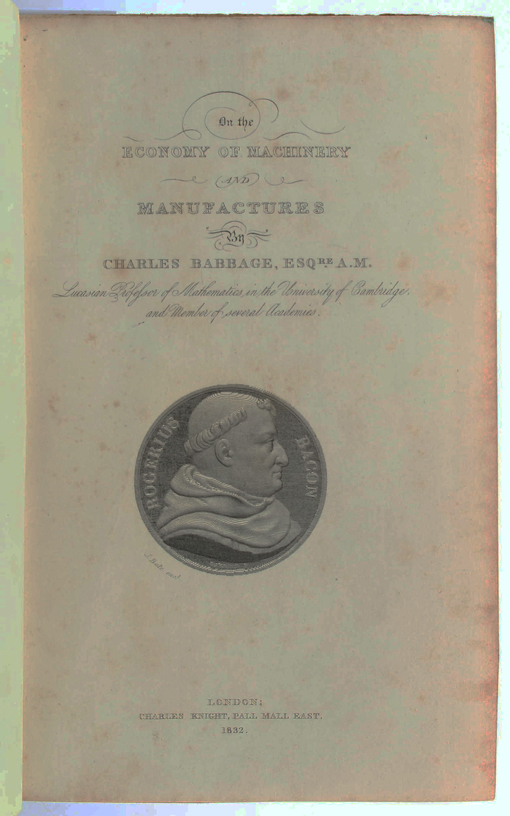
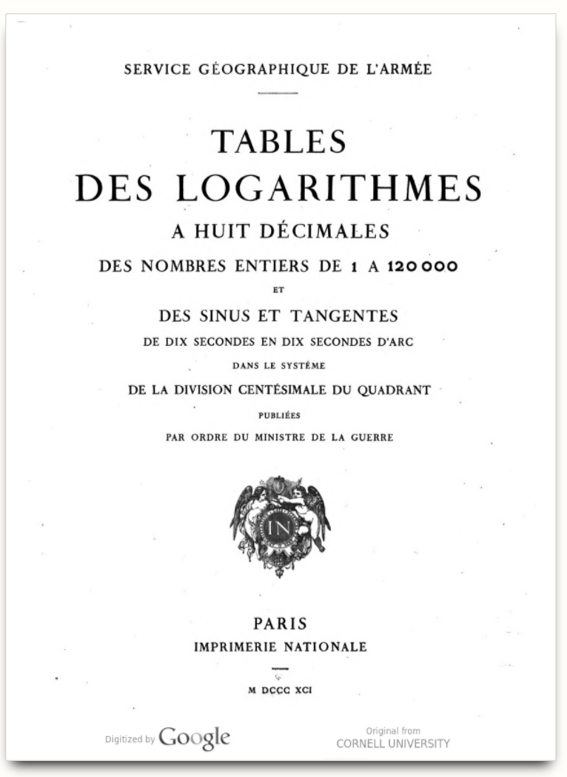
The most significant indication (proof, to be precise) is that Babbage, in his book on machines, included a chapter specifically on the division of intellectual labor (Chapter 19), titled “On the Division of Mental Labour.” What kind of intellectual tasks of 1832 did Babbage aspire to decompose with the ultimate goal of automating them through his machines? These were the tasks we have already mentioned, which his first machine, the difference engine, aimed at: the calculation of values of various functions, mainly logarithmic and trigonometric, from which the remaining functions could be derived. One of the most important techno-scientific problems of the time was the insufficient availability of reliable tables with values of various such functions that engineers could employ in their calculations to carry out precise computations. As insignificant as this issue may seem today, it was of pivotal importance in the early 19th century. The mere fact that navigation relied on related measurements and calculations indicates the seriousness of the matter. The French state was the first to recognize the gravity of the problem and assigned to one of its engineers, Gaspard de Prony, the task of compiling reliable, widely usable tables. To manage to complete his work within a reasonable timeframe, de Prony had an idea that would leave a deep mark on scientific thinking. Instead of assigning the relevant work exclusively to specialists with advanced mathematical knowledge, he established a hierarchical system of three levels. Only at the highest (and smallest) level were the highly specialized mathematicians. At the middle level (relatively more numerous), de Prony placed individuals with moderate mathematical expertise who had the ability to convert the requirements of the upper-level members into elementary steps, into simple “instructions.” Finally, the lower level was occupied by a bulky stratum of mathematically unskilled intellectual workers (largely composed of hairdressers) who received instructions from the middle level and simply executed them to ultimately produce the logarithmic and trigonometric tables. De Prony had already applied the division of labor on behalf of the French state almost a century before Ford attempted the same in his factories. And he had done so targeting “mental” labor. The de Prony system constituted a direct source of inspiration for Babbage. His first machine, the difference engine, was designed in such a way as to be able to replace the lower stratum of de Prony’s hierarchy. The analytical engine, if ever built, would have had the capability to replace even the second stratum of the hierarchy. Babbage therefore attempted to implement in mechanical form what de Prony had managed to embody using human “cogs”: the automation of intellectual labor through its decomposition into the simplest possible steps. Babbage never completed this plan of his. More than a century had to pass before Turing retraced Babbage’s steps.
The most widespread perception of the practice of division of labor is that it was first applied to manual, industrial production before being transferred to intellectual work, after the mass diffusion of electronic computers. As Babbage’s story demonstrates, however, intellectual labor early on found itself in the crosshairs of automation. Automation was, in fact, the practice that deepened the gap between manual and intellectual labor. Labor as labor, before the introduction of automation, could hardly ever be regarded outright as “manual,” except perhaps in extreme cases of toil. Even heavy tasks, such as agricultural or construction work, have always included an intellectual element from the perspective of the necessity of a plan and the resolution of numerous technical problems arising during the work. The social strata relieved of manual labor were generally also relieved of labor in general, unless one is willing to stretch the concepts to such a degree as to include even the work of clerics in the definition of labor. Ultimately, division and automation allowed a type of labor to emerge that was purely manual and carried out by blindly following certain commands. Thus, automation, regardless of where and how it is applied, carries within it a historical and political burden: the attempt to hierarchize labor (whether “manual” or “intellectual”) in such a way that only its managers possess a complete picture of its overall meaning and purposes.
When electronic computing machines finally appeared after World War II, this did not happen in a vacuum. Nor, of course, was their purpose to provide entertainment for teenagers in Western countries. There was already a long tradition of automation, including intellectual labor. Babbage’s machines were perhaps technologically premature for their time. Until they were revived again as Turing machines, however, a whole series of devices for automating office work had already emerged. From Hollerith’s machines (later founder of IBM) in 1890 for statistical processing of that year’s census results, to humble typewriters or even cash registers (which, among other things, aimed to monitor employees working at the till). The electronic computing machines based on Turing’s model came to reunite all these scattered threads and give flesh to Babbage’s dream.
Their development in the post-war years was so dramatic that their political baggage is systematically pushed aside. It is probably not coincidental that Turing enjoys such prominence and recognition, even if posthumously, while Babbage barely manages to find space in student textbook footnotes. The former, after all, was the archetype of the brilliant scientist grappling with high-level mathematical problems. The latter had the audacity to descend into the muddy realms of manufacturing, thus inevitably reminding us, willing or not, of the industrial origins of his machines. In any case, computational machines eventually expanded and found application even in fields beyond what would strictly be called work—primarily in entertainment. It would be naive, however, to think that this evolution proves that computational machines managed to “break free” and transcend the constraints of their origins. On the contrary, exactly the opposite occurred. They succeeded in binding multiple aspects of social activity to the logic of automation, extending far beyond the narrow circle of product manufacturing. In more Marxist terms, they functioned as the vehicle through which even entertainment itself became subsumed under capital. How many people today, then, can honestly claim that they are able to have fun without some form of mechanical mediation?
Not even large language models, of course, escape the logic of automation and intermediation. If anything, they push this logic to nearly its extreme limits. If the production of language and symbols was the hallmark of intellectual work, language models confirm the fears of many who until now believed that their own work was at least secure. Even intellectual labor—especially its repetitive and bureaucratic aspects—can be automated. As for world models, it is again Babbage’s dream that inspires and ignites the neurons of their networks. The difference now lies in the fact that the goal is to automate experience itself, even at the sensory level. Video games were a good start in this direction, but they remain excessively static and require a lot of design and effort. World models are supposed to be open to the real world so that they can “transform” it. Therefore, they will also be able to produce exceptionally realistic variations of this world. In more brutal terms: the goal is the deconstruction, automation, and ultimately the commodification of lived reality itself. Needless to say, it will not be possible for only one such reality to exist. The proliferation of “realities” will become necessary, and (constructed) experience will acquire an unshakeable epistemological authority.
We will close with one more excerpt from Babbage’s book:
“Perhaps the most useful device of this kind is one that can verify whether a supervisor is on duty. It is a mechanism connected to a clock, placed in a space inaccessible to the supervisor. However, he has orders to pull a rope placed at a specific point in his area of responsibility every hour. This device, with its characteristic name “tattletale (tell-tale)”, informs the owner about how many hours the supervisor has missed from his shift and how many of those hours he lost.”
Woe, then, to whoever dares to question the realities that will be offered by world models. At the other end of the cable, some bell will always ring to charge them with the sin of utopian deviation.
Separatrix
- We have made an extensive reference to large language models, with more “technical” details, in a previous issue. See “artificial intelligence”: large language models in the age of “intellectual” enclosures, Cyborg, vol. 26. ↩︎
- The enthronement of statistics at the pinnacle of scientific ideology was certainly not accidental. See Statistics… like state, Cyborg, vol. 30. ↩︎
- The term “cosmic models” would be rather inaccurate as it refers either to cosmology or even to columns in yellow journals. ↩︎
- Other methods have also been proposed to enrich these models with reasoning capabilities. We will not dwell on them here. ↩︎
- It is circulating in Greek from the anti-school editions. ↩︎
- Later, in the 1940s, when the ratios between computing machines and human brains became apparent, the term “store” was replaced by the term “memory.” ↩︎