
On October 8, the “Digital Frontlines 2025” conference was held, organized in Latvia by “StratCom”, one of NATO’s “centers of excellence”, with the following themes:
- The future of social media
- Methods of approaching the public in environments with limited information
- The role of influencers in communication strategies
- Entertainment or exploitation? The space of videogames
- Beyond Big Tech: The case of decentralized social networks
One would say that such issues concern – beyond the industry itself – organizations and groups (political, “pressure” or simply research) that deal with the impacts of technology, privacy, etc. Why should the military care about videogames? Obviously propaganda is being done through them, but this has been taken over by the entertainment industry, right? It seems that it’s not exactly like that.
For example, the marketing and manipulation techniques that industry employs to shape behaviors and create needs for useless things feed the armies (and political facades) for the same purposes: to shape behaviors (fears, prejudices, ideologies) and to create needs (calm, order and security). Also, most, if not all technological “achievements” are military constructions: the internet, mobile networks, gps, even social media have a lot of military in their recipe. And so, industry and army, not only do they have “communication channels” of techno-scientific knowledge, but they are also organically connected (front companies, collaborations etc). The same applies to biotechnologies, nanotechnologies, “artificial intelligence” etc.
It is in this context that conferences such as the one in Latvia are held, in order to provide relevant information and training to the entire spectrum of the military/industrial complex on new technologies, techniques, doctrines, protocols, etc. Because it is crucial to have some coordination, let alone when there are other armies around, equally or even better informed.
The text we are translating below is from a similar project conducted in 2020 by another NATO branch, the “Innovation Hub for Allied Command Transformation,” titled “NATO Operations 2040.” The project’s purpose was to assess the current situation, make predictions, and formulate policies and strategies in times of shifting power balances, with particular emphasis on new types of wars that have begun to emerge—areas where NATO has fallen behind. A collection of articles by military personnel, scientists, and other specialists (not necessarily organic members of NATO, but also external collaborators) present these “new challenges” and propose “solutions,” often in the form of fictional storytelling. Instead of writing a straightforward text with their proposals and assessments, they create an imaginary story in which all that they wish to convey is dramatized.
This is also the case with the present work, written by a French academic, Hervé Le Guyader1, who appears to be a regular collaborator of NATO through the “innovation center.” Combining real events (those referred to up to the date of presentation are indeed real) with a hypothetical future scenario, he describes the delay of “western decision centers” in grasping developments in new fields and forms of warfare, and their decision to redefine their priorities.
The following are some excerpts from the introductory text presenting the overall project.
“By 2040, the world will be marked by deregulation, where a large number of actors will compete for power. Many factors have changed the world, such as climate change, causing ongoing disruption, particularly regarding security. In this disruption, new actors have emerged and solidified their power at the expense of states and international institutions that have become ineffective, while the world has been de-Westernized, paving the way for its “Sinicization.” The nature of war has also changed. The majority of conflicts remain below the traditional threshold of the commonly accepted definition of war, and new forms of warfare have emerged, such as information warfare and cognitive warfare, while the human mind constitutes a new battlefield.
The “War 2040” project aims to conduct an independent future analysis of the operational environment. This independent analysis will educate strategy development authors with an alternative assessment of the future, which will come from non-traditional NATO sources and will result in a stronger and more cohesive approach.
[…]
“The liberal democracy that was considered for a long time the winner in the great ideological disputes of the twentieth century is now considered to be at risk because it cannot satisfy the people. The dominant liberal narrative since the end of World War II is losing ground, and many countries and leaders reject the liberal system as a threat. Democracy in particular is no longer considered the ultimate form of government, while at the same time order and authoritarianism are seen as better able to deal with the risks of a deregulated world. As authoritarians are on the rise, electorates turn to the extremes in democracies. Authoritarian systems are seen as a viable alternative due to proven successes: they hold society tightly through social control, while democracies are considered weak in their design. Nation-states may become more authoritarian in the future.”
[…]
“New actors have already emerged (such as global companies, criminal organizations, non-governmental organizations, global forums, anonymous and global cyber networks capable of irreparably harming states and infrastructure), and some of them are already more powerful than the majority of the world’s states, inevitably leading to a redistribution of power that could increasingly disregard the strength of states on one hand and replace states given their lack of effectiveness in various issues. While sovereign states continue to be important factors in international relations, the changing international framework as mentioned above has led to an erosion of their power on the international stage, as well as internally. Paradoxically, the loss of confidence in international organizations does not seem to benefit states but rather a multitude of new factors, particularly in the economic sector (e.g., the GAFA – Google/Amazon/Facebook/Apple). The state faces many challenges to its power, either from populist and authoritarian movements, or from corruption at the highest levels of business and political leadership, and this erosion of power will most likely continue until 2040.”
[…]
“This project describes a highly deregulated strategic environment with two main superpowers – the US and China – constantly being challenged by regional forces. The macroeconomic environment is undergoing transformation. The shift of economic power from North America and Europe towards Asia is ongoing. Moreover, the relocation of economic power from the West to the East could lead to what is called “a multipolar world of reserve currencies,” noting uncertainty about the dollar’s dominance over the next 20 years and alternative solutions for replacing it as the global reserve currency. While the United States and China lead a multipolar world, other entities will emerge as strategic or regional influencers. The general weakening of states, the denuding of the world, and the lack of global leadership will lead China to assume global leadership according to its own rules.“2
[…]
“Innovation has shifted from the public to the private sector, and the military must learn how to collaborate more with technology companies and not with defense companies. This requires examining public sensitivities to avoid employee protests such as the Project Maven employee protest at Google. Specifically, NATO struggles with the idea of forming relationships with non-defense companies. The contracting process is very complex and very lengthy, which means that the process lacks the speed with which technology companies want to collaborate and reduces profit margins. Excessive bureaucracy “builds walls around innovation” and creates the need for companies to create entire departments dedicated to it. In contrast, China enjoys a privileged military-political convergence due to the nature of its governmental structure. The government is much more embedded in the economy and can essentially dictate economic conditions and actions. Although China has an advantage in this, it still faces the same challenges as NATO in the speed of innovation. Regarding the integration of technology into war, the challenge is not the invention of technology, but finding applications of technology in war.”
It is interesting to see what they were writing before February 2022. Of course, amidst the absurdity of their decline, they may still be writing the same things, for example that “the United States and China lead a multipolar world” and related matters… But what is most interesting is that the reason for their “mobilization” is clearly stated: de-westernization and de-dollarization. And the transformation of the world into such a multipolar one, which although they had no such tendency in the past, now (want to) “lead”.
Meanwhile, regarding the gaps they acknowledge and want to address in order to become competitive again, such as manipulating population consciousness through “cognitive” operations, eliminating the bureaucracy that hinders “innovation,” tightening control over societies, and restricting “contaminating” information through censorship, they have tried to make leaps. COVID-19 partially halted them; Ukraine, even more so. At the same time, a Palestine emerged that—even despite the genocide—they cannot manage. Within these five years, many things have gone awry. But this is not to say that it is for our benefit—how could it be otherwise? The menu still offers quite a few options (rearmament, discipline, censorship), at least for internal consumption.
Why do we present all this? Do we have some fetish for militaristic analyses? By no means. But we want to show the tendencies of this destructive machine called capitalism. Which, however decadent it may be in the part of the planet where we live, does not cease to prop itself up (fall) on our heads. While at the same time, on the other side it does not cease to have the same characteristics, at least as technical capabilities.
Wintermute
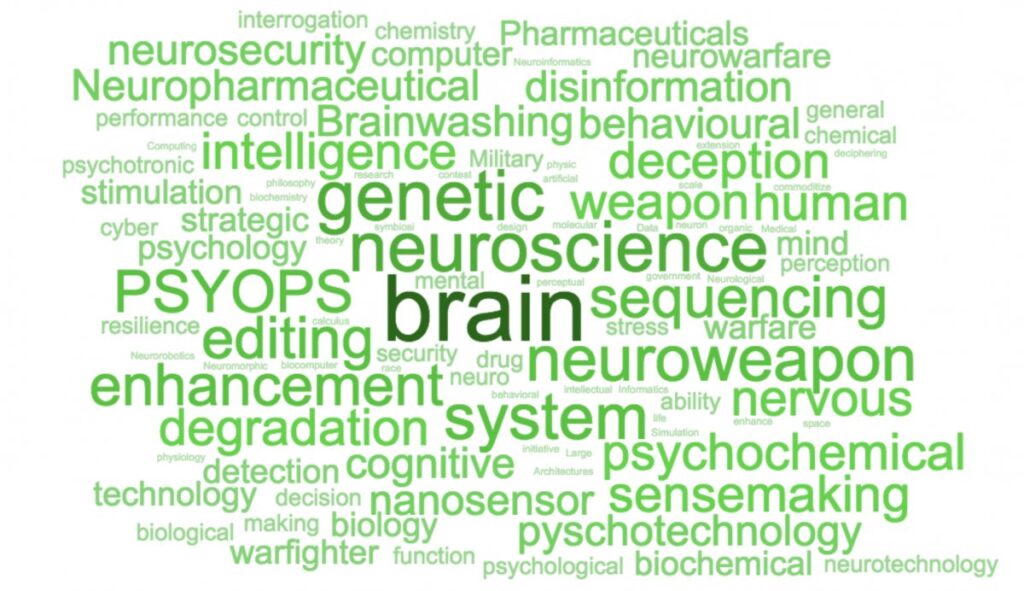
the armament of neuroscience
This essay is a work of fiction. Names, characters, businesses, places, events, and incidents are either products of the author’s imagination or used in a fictitious manner. The views and opinions expressed are those of the author and do not necessarily reflect the official policy or position of any entity. The examples mentioned are for illustrative purposes only, based on limited sources of information. Any resemblance to actual persons, living or dead, or to actual events is purely coincidental.
While it has been said that everything could be weaponized, neuroscience and more broadly, Nanotechnology, Biotechnology, Information Technology and Cognitive Sciences (NBIC) provide particularly disruptive factors to state and non-state actors.
The story in this essay begins in 2018 and ends in 2040 with NATO activating Article 5 due to NBIC attacks on some of its allied nations. During these 22 years, critical decisions are made at NATO Summits, fundamental choices are made for the design of the successor to the Alliance’s main surveillance and control system (AWACS), and NATO manages to include a large number of nations, far beyond its core allied nations, in a realistic educational program for global security. All of this is due to the challenging issue of the “weaponization of neuroscience” that must be addressed.
This essay employs fiction by combining real events, logical predictions, and some imaginative projections derived from the long-term fundamental geopolitical initiatives of today’s sovereign states. The use of dramatization, for provocative purposes, in order to maintain the reader’s interest, does not mean that our deep convictions are not expressed seriously. More specifically:
- Yes, the “human mind” should be NATO’s next business sector,
- Yes, the successor to AWACS systems should include NBIC technologies,
- Yes, global security is what is at stake today and it will take much more than just professionals in the field of defense, security and the military to effectively address it. No matter how difficult it is.
Brussels, July 17, 2026, NATO Summit: “Human Mind”, the 6th operational domain
Excerpt from the Brussels Declaration, which was issued by the heads of state and governments that participated in the North Atlantic Council meeting in Brussels on July 16-17, 2026:
Article 11: … To remain safe, we must look ahead together. We take into account the scope and scale of new technologies to maintain our technological advantage, while preserving our values and rules. We will continue to enhance the resilience of our societies, as well as our critical infrastructures and energy security. To achieve this effectively, NATO and the Allies, within their respective responsibilities, must continuously assess the pace and scope of scientific research being conducted, particularly outside the Alliance. Nanotechnology, biotechnology, information technology and cognitive sciences (NBIC), the development rate of which is staggering, have tremendous potential to profoundly transform our societies, while the “dual use” of these capabilities presents a new set of challenges for our security.
For decades, NATO and our Allies, as well as our competitors, had become accustomed to operating in a three-dimensional environment, where air, land and sea represented a familiar, distinct but interoperable operational framework.
The 2014 Wales Summit recognized that cyberattacks constitute a clear challenge to the security of the Alliance and could be as damaging to modern societies as a conventional attack. Consequently, NATO and the Allies agreed that cyber defense is part of the core tasks for collective defense.
The 2016 Warsaw Summit subsequently recognized cyberspace as an operational domain in which “NATO must defend as effectively as it does in the air, on land and at sea.”
Three years later, the 2019 London Summit declared, in article 62 of its final declaration, Space as an operational domain for NATO, recognizing its significance for security, while respecting international law. It is worth noting that the same article also stated: “We are enhancing our tools to address cyber-attacks and strengthening our ability to prepare, prevent and defend against hybrid tactics that seek to undermine our security and societies. We are strengthening NATO’s role in human security. We recognize that China’s growing influence and international policies present both opportunities and challenges that we must address together as an Alliance”.
The advances in NBIC today allow our adversaries to develop new ways to achieve their offensive goals. While propaganda and influence strategies have always existed, the depth and complexity of hybrid attacks fueled by NBIC represent an unprecedented level of threat today, as they target the most vital infrastructure we rely on: the human mind. We therefore recognize the human mind as an operational domain where NATO must defend itself as effectively as it does in the air, on land, at sea, in cyberspace, and in space.
The journey towards the Summit
Reaching consensus among all states to make such a radical decision was no easy feat. It took more than 8 years to get to this point, and it soon proved that this was only the first step in addressing this truly radical change, namely the likelihood of an NBIC attack against NATO states.
Initially, a series of studies, reports, local, bilateral and multilateral initiatives were needed in order to identify and subsequently focus on a specific issue, which was named as the threat of “brain hacking”. We mention a few examples:
2018: Research Conference of the Franco-German Forum
A regular bilateral forum between the French and German research ministries, aimed at exploring strategies and priorities of the research and innovation policy. In 2018, Global Security / Civil Security (GS/CS) was identified as one of the six main axes on which research investments should focus. Four related research topics were selected for funding:
- Radicalization and combating terrorism
- Rights and freedoms in the field of political security
- Protection and resilience of critical infrastructure
- Protection from emerging infections and biological threats
The French and German members of the “high-level group of experts” had actually identified a fifth issue, which permeated not only the scientific but also the social level. “Education and information towards a common culture for global and political security.” But some reactions to this change eventually prevailed and the issue was rejected. However, seeds were sown.
2018: Project IST-159 – Exploitation of Cyberspace for Information Services
The “Information Systems” (IST) group of the NATO “Science and Technology Organization” (STO) had initiated an ambitious project, the goal of which was to “understand the cognitive level of cyberspace and to investigate related methods and technologies for use by information analysts, in order to provide situational awareness, indicators and warnings, as well as information to commanders.”
To achieve this goal, eight scientific objectives had been identified:
- Investigation of attack vectors and the impacts of cyberattacks at the cognitive level
- Information opportunities at this level
- Options and defensive techniques
- Operational impacts and countermeasures
- Investigation of related technologies and tools
- Information, Surveillance and Reconnaissance (ISR) in Cyberspace
- Recognition of fake news
- Combination of SM utilization and NW analysis.3
Although the project succeeded in achieving its scientific goals, its impact was hindered by the difficulty of widely disseminating its findings beyond the limited community in which it had been developed, but, even here, the seeds had been sown.
2019: The exhibition “Hacking humans”
Carefully prepared by the NATO STRATCOM COE, this report, although it did not create the “wake-up call” that it should have, accurately highlighted the enormous threat that NATO countries were exposed to. Excerpt from its conclusion:
“… the risks and threats that social media platforms may pose to liberal democratic systems. This is followed by a discussion regarding possible future public policy choices, which serves as a conclusion for the research as a whole. Social media gives users the power to spread and receive misinformation. Threats to cognitive security must not be overlooked. Technological innovations are being used to exacerbate deep deficiencies that can destabilize our societies. We hope that this anthology will shape the work of researchers and professionals, enhancing the capabilities of those tasked with the security of our nations and our Alliance.”
2021: Horizon Europe
The Horizon Europe program (2021-2027) was the European Union’s seven-year research and innovation program, with a budget of 100 billion euros. Based on three pillars (Excellent Science, Global Challenges, Industrial Competitiveness and Innovation in Europe), its second pillar had defined “Civil Security for Society” as one of its six objectives.
However, here too, it proved very difficult to overcome institutional obstacles, and no significant project that would create sustainable synergy between the competent bodies (NATO, European Defence Agency, European Commission) ended up having a lasting impact.
The signs existed
The game with human perceptions, emotions, awareness, the influence of decisions through mass or even more personalized propaganda campaigns, has always been there, part of our framework, whether in times of peace or war. After all, advertisers, politicians, and PSYOPS designers continuously manipulate people in order to change their perceptions of reality and make choices that ultimately do not benefit them.
Closely linked to the development of the internet, social media, big data, and artificial intelligence, and with their combined ability to use personal data—both naively and blindly—voluntarily provided by hundreds of millions of users, the “art” of cognitive manipulation has skyrocketed to a new level, as demonstrated by the Stanford Persuasive Technology Lab4, established in 1997.
A decade later, this initiative pushed forward the development of an entire industry, cleverly combining cognitive sciences—and particularly cognitive biases—with information technologies, transforming startups into stock market giants in just a few short years.
The social risks associated with this exponential growth were quickly identified, sometimes by individuals who were inside these technology companies and became informants, as demonstrated by this excerpt from 2015 from a former Google employee, who also happens to be a graduate of Stanford’s Laboratory of Manipulative Technology:
“Never before have a handful of people working in a handful of technology companies been able to direct the thoughts and feelings of billions of people. There are more users on Facebook than followers of Christianity. There are more people on YouTube than followers of Islam. I don’t know of a more urgent problem than this.”
It didn’t take long for state and non-state actors to follow this trend, developing aggressive strategies, such as influencing electoral processes, particularly the U.S. presidential elections in 2016 and in France in 2017.
2013-2014: At the battlefield level, “hybrid warfare” played a role in the conflict in Ukraine, aiming especially at influencing external perceptions regarding its reality. The strategy employed at the time targeted perceptions and narratives capable of affecting domestic and foreign audiences, in order to undermine public support for the sanctions imposed by the US against Russia.
Studies conducted by intelligence and defense services were quick to analyze and report on the scale, depth, and decisiveness of Digital Influence Machines (DIMs), such as the Russian Internet Research Agency (IRA), with its “Trolls from St. Petersburg” and their experience in using social networks to influence public opinion.
At the end of 2019, in Mali and neighboring countries, disinformation campaigns via WhatsApp and Facebook managed to convince some people that France was actually sending motorcycles and weapons to terrorist groups, in order to justify its presence in the Sahel region.
2022: Dozens of similar indications around the world that “something serious was happening” were increasingly threatening global and political security on a daily basis, making the issue more and more visible on the radar of decision-makers, to such an extent that, at the World Economic Forum in Davos in December 2022, the issue of “Malicious Mind Hacking” made an explosive entry into the Global Risks Report both in terms of probability and impact.
It is worth noting that issues related to cyberspace, which had been presented in previous reports on Global Risks, were overshadowed in 2020 and 2021 by environmental risks. Moreover, the issue of malicious mind hacking attacks ranked 3rd with significant coverage and many comments.
Perhaps the most surprising thing for the majority of observers is the fact that the issue of “weapons of mass destruction,” which had been rightfully included in the top three positions regarding “impacts” in the previous seven reports, has now become the subject of intense debate as to whether it should include social networks and other digital services, due to their massive, exponentially increasing, and addictive use by society in general.
“Hey! GAFAM, NATU, BATX!5 Bravo for the weapons of mass stupidity!” shouted some brave activists, standing in the mud and melted snow, with which the winters of Davos were now synonymous, doing their best to attract the attention of the media.
2024: The accumulation of evidence regarding the threat posed by certain digital products and services to human cognitive function, along with unanimously alarming reports issued by think tanks, defense, and security services, prompted five nations to establish the “Five Brains Initiative.” This core group of interested nations committed to mobilizing budgets, sharing data, knowledge, and research agendas, with one goal: to formulate within one year a doctrine and ad hoc rules of engagement in the event of attacks characterized as “Malicious Mind Hacking.”
The Five Brains initiative quickly gained momentum, fueled by the results of research projects led by NATO’s STO and ACT, with additional support from Centers of Excellence6 and valuable collaboration from the broader, non-NATO, non-military international community, which is managed by the ACT Innovation Hub.
Representatives from the five founding members, France, Germany, Japan, Norway and the USA, to which partners from Africa, the Middle East and Asia will soon be added, explaining how important this reaction was, conveyed the message:
“Every day we lose battles in which we don’t even know we have been involved. This cannot last, it will not last”.
As expected, the major technology players (GAFAM, NATU, BATX) mobilized their top interest representatives to oppose or at least moderate this campaign. They did an excellent job in highlighting the obvious and real benefits their products and services provided, but their delay tactics and unwillingness to modify their economic models were undermined by two factors: internal activists and the global spread of rules inspired by the European General Data Protection Regulation (GDPR) of 2016.
The explosive combination of these two factors proved very difficult to prevent, as the general public realized that the blind disclosure of their personal data was the modern equivalent of leaving a sticky note with your password on your desk. The latter gives access to your computer while the former gives access to you, as a unique individual, and to your most intimate aspects, a much more frightening prospect.
It took some blood, a lot of sweat, and sometimes tears, but this series of initiatives, this series of studies based on facts and simple observations, the global pressure buildup achieved at the diplomatic level by the Five Brains and their allies led to the declaration of the NATO Summit in Brussels on July 17, 2026, where the Human Mind became NATO’s 6th operational domain.
And this was good. But not enough.
Norfolk7, we have a problem
As it turned out, the preparation for the 2026 Summit was not as exhaustive and solid as it should have been. Years of underfunding and understaffing had taken their toll, and Article 11, the article on “mind violation,” was the main victim.
Enthusiastic praise was shared and loud applause was heard around the world, but soon, once the dust settled, impartial observers were able to identify two major cracks:
IC, and not NBIC. While Article 11 had correctly presented NBIC, in their entirety, as the issue that needed to be addressed, only two of the four elements had actually been examined with the necessary rigor: Information (technologies) and their specific ability to distort human knowledge. But nanotechnologies and biotechnologies and their impact on knowledge had, in reality, been relegated to second place.
Doctrine? Rules of engagement? Education? Under public and diplomatic pressure, NATO managed to achieve consensus among the states regarding this rather revolutionary concept of the Human Mind as an operational domain and to reach a unanimous decision, but, in contrast to the first five operational domains, the “war of NBIC against the human mind” was an almost unknown field.
People have been waging wars for hundreds of years on land and at sea, for a little over a century in the air, and for several decades in cyberspace and space. Historians, scientists, defense experts, military personnel, and political specialists had accumulated significant knowledge regarding wars conducted on land, sea, and air. More recent conflicts have added data and analyses of cyber warfare, even space warfare, and dozens of exercises conducted at the NATO level have allowed all involved parties to optimize their level of readiness.
But the human mind as a field of operations? What is the equivalent of the “smoking gun,” how can it be detected, identified, attributed to something… to someone? And the real critical issue: What would trigger the activation of Article 5?
The opponents were relentless in mocking the lack of preparation of NATO, emphasizing the existential risks that this commercial rather than strategic decision posed to the human race. More covertly, groups of trolls and fake news and the 50 cents army8 worked in double, triple and quadruple shifts to ensure that gullible (remember the Weapons of Mass Stupidification?) people would take to the streets and avenues around the world with new, anti-NATO slogans.
Ironically, the same time pressure that had pushed NATO to issue its declaration in 2026, admittedly in a hasty manner, ended up applying to its competitors as well, who, in turn, made a series of bad moves that led to certain “incidents.” Summarizing the threat of NBIC and their devastating consequences, these incidents managed to make the activation of Article 5 almost “self-evident,” as commentators later said, with the audacity of those who are “outside.” But it took 10 years to get there.
NBIC, a plethora of new tricks for old habits
The 2003 report titled “Converging Technologies for Improving Human Performance – Nanotechnology, Biotechnology, Information Technology, and Cognitive Sciences,” funded by the U.S. National Science Foundation, caused great unrest, not so much among progressive and open-minded scientists who had considered this convergence a given for quite some time, but certainly among political leaders seeking to gain an advantage in the endless global competition for power in the broader sense.
The control of these four technologies became a common goal for all states, especially for those that could afford the cost economically. Also, other factors, particularly “malicious organizations,” quickly realized the enormous benefits they could gain from access to certain NBIC products and techniques in the asymmetric conflicts they conducted or planned. Some examined the seemingly infinite prospects for human enhancement, even to the point of transhumanism, while awaiting the achievement of the singularity point. Others welcomed with open arms and open wallets the opportunity to enhance their defensive strategies with NBIC technologies.
The concept of hybrid warfare, which has been theoretically formulated long ago and has been successfully applied in several instances, would never be the same. The Wikipedia article on hybrid warfare already wrote from 2020:
“Hybrid warfare is a military strategy that uses political warfare and combines conventional warfare, irregular warfare, and cyber warfare with other methods of influence, such as fake news, diplomacy, lawfare, and election interventions. By combining operations with subversive efforts, the attacker aims to avoid attribution or punishment. Hybrid warfare can be used to describe the flexible and complex dynamics of a battlefield that requires a highly adaptable and resilient response.”
Similarly, the Chinese approach of the “Three Wars”, which combines public opinion warfare, psychological warfare and legal warfare, to supplement the traditional means and methods of the Chinese army, has been greatly enhanced by NBIC, from the nano-scale to the planetary scale!
From “hybrid war” and the “three wars” to “non-obvious wars”
It has been said that the two driving forces of human behavior are “sacred rules and utilitarian values,” in that order. This applies to many institutions and businesses, whose approach is evident in their statements about their “vision” and “mission.” Apart from NATO countries and considering their resources and unwavering determination, authoritarian regimes are always in a better position than democratic ones. Russia and China are indeed the main candidates to exploit the potential of NBIC technologies to serve their “vision” with disruptive “utilitarian” projects. And they certainly do.
It is difficult to say which came first between the “hybrid war” that spread from Russia to the war in Ukraine, but whose theoretical foundations (which are also found in NATO) emerged much earlier, and the strategy of the “Three Wars”, which is more easily identified in China.
In 2003, the Central Military Commission (CMC) approved the conceptual umbrella for the People’s Liberation Army’s (PLA) information operations – the “Three Wars” (san zhong zhanfa). The concept is based on three mutually reinforcing strategies:
1) Coordinated use of psychological warfare strategies, influencing foreign decision-makers and the way they approach China’s policies,
2) Open and covert media or public opinion warfare, attempts to manipulate public opinion both domestically and internationally,
3) Legal warfare designed to manipulate strategies, defense policies, and public perceptions abroad, thus shaping the legal framework for Chinese actions, including building the legal justification for Beijing’s actions.
In 2005, Rear Admiral Matthis and Colonel Hoffman coined the expression “Hybrid Warfare” in a journal of the U.S. Naval Institute. They wrote:
“In Hybrid Wars, we must expect to face simultaneously the collapse of a failed state that once held but has lost control of certain biological agents or missiles, while at the same time confronting a paramilitary force with national motives and a group of radical terrorists who have now been displaced. We may also have to deal with remnants of an ruthless state’s army in future wars, which might use conventional weapons in very innovative or non-traditional ways. We should also expect to confront unorthodox attacks or random acts of violence by non-state groups against our critical infrastructure or our transportation networks. We might also witness other forms of economic warfare or destructive forms of cyberattacks against military or economic targets. The types of wars in the future cannot be addressed by focusing only on technology.”
In 2013, the Chief of the General Staff of Russia, Valery Gerasimov, in his famous article “The Value of Science Lies in Foresight” went so far as to write:
“The rules of war have changed. The role of non-military means in achieving political and strategic goals has increased and, in many cases, has surpassed the power of weapons in their effectiveness. The focus of applied conflict methods has shifted towards the broad use of political, economic, informational, humanitarian and other non-military measures – which are applied in coordination with the population’s protest potential.”
All of these are supplemented by covert military means, including the conduct of information warfare and special forces operations. The open use of armies—often under the pretext of peacekeeping and crisis management—emerges only at a specific stage, primarily to achieve final success in the conflict.
Frontal clashes of large armies, at strategic and operational levels, gradually become a thing of the past. Remote, contactless actions against the enemy become the main means of achieving combat and operational objectives. The defeat of enemy targets is conducted throughout the depth of their territory. The distinctions between strategic, operational and tactical levels, as well as between offensive and defensive operations, are eliminated. The information space opens up broad and asymmetric opportunities for reducing the enemy’s combat potential.
Indeed, it became evident that the boundaries between “War and Peace” would henceforth always be vague and blurred and that, instead of conducting traditional warfare, NATO states had to realize that they were now exposed to a permanent backdrop of “non-obvious war.” In other words, and to paraphrase Clausewitz, “peace is simply the continuation of war by other means.”
The key to “non-obvious war” is ambiguity, in the sense that the target must not know that it is being targeted, let alone by whom, and the new spectrum of conflict will henceforth shift from an ambiguous and non-obvious war to an NBC-type conflict9, to a type of Armageddon.
The NBIC, and more specifically the convergence of BIC technologies with the purpose of designing what would later be called “neuro-weapons”, became a top priority in Research and Development for states both within and outside the Alliance, as their capabilities seemed endless, with a cost-benefit ratio that could be economically sustainable. Hundreds of projects were funded, dozens of which actually went into operation. The most threatening ones remained hidden until, in 2039, “something” happened.10
A thousand blades, a thousand wounds
The potential of neurotechnology and NBIC can be broadly structured as follows:
- technologies for improving human activity
- information and security applications
- performance-degrading technologies or neuro-weapons
Each of these broad entries can then be further analyzed and described in detail for each of its sections, contributing to the formation of the entire spectrum of conflicts, from the non-obvious war to full-scale NBC conflict, but this particular chapter will focus on the low-intensity but continuous attack that can be carried out with Information and Cognitive Sciences technologies. The final chapter of this work will provide a mapping of issues more directly related to human enhancement applications and performance degradation.
As early as 2009, Colonel Vladimir Belous wrote: “The ‘provocative programs’ will be designed to influence not only the intelligence but primarily the senses of the people, especially on the basis of the low political awareness of the public, insufficient information and its unprepared nature for this kind of war. The goals of such activities will be either to make the enemy incapable of effective resistance or to shape his consciousness in such a way that he will not want to resist at all.”
In 2012, Vladimir Karyakin added: “The advent of information and network technologies, combined with developments in psychology regarding the study of human behavior and the control of human motivations, make it possible to exercise specific influence on large social groups, but also to reshape the consciousness of entire peoples.”
At the time when Belous and Karyakin expressed these thoughts, social networks had already spread their wings and were beginning to show their power. While 100% accurate data may be difficult to trust completely, the following images give a fairly accurate indication of the level of addiction to social networks, especially in the Western world:
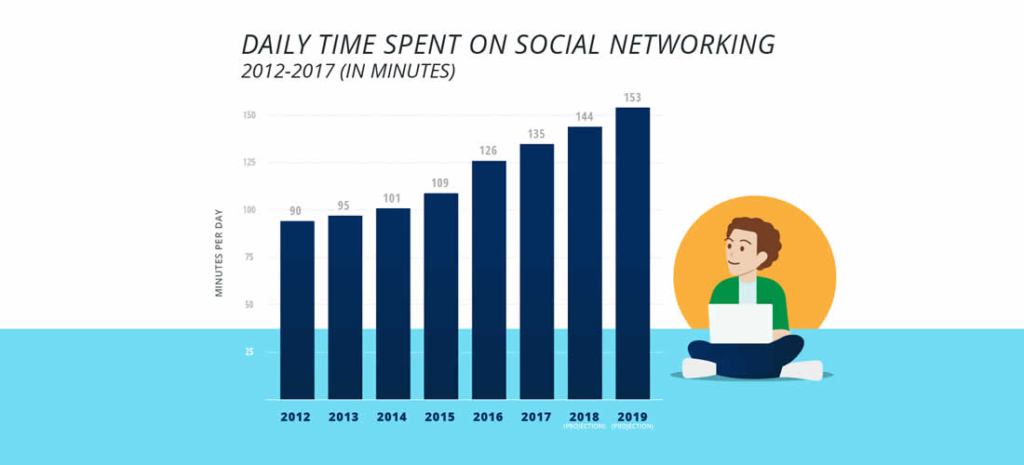
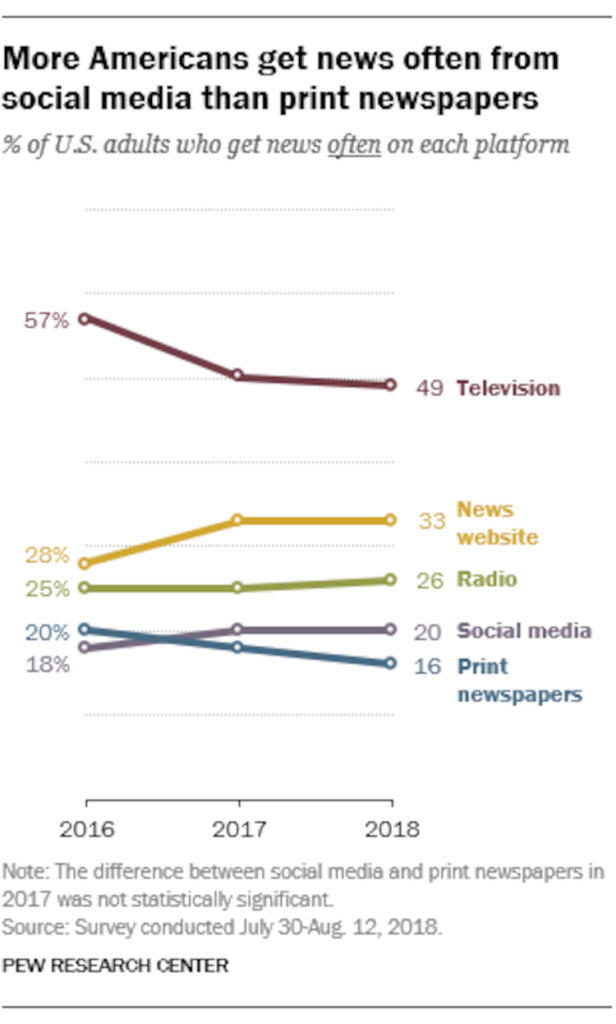
However, these studies cannot demonstrate what has greater significance, for example the impact of specific messages that users of these social networks read. Related studies can simply show trends regarding users’ approach to accessing news and information, such as this research by the Pew Research Center (limited to the USA). If someone combines social media platforms, blogs, and news websites (with unclear boundaries between the latter two), the content of “digital news” is the big winner. At least in the USA, at least in 2018.
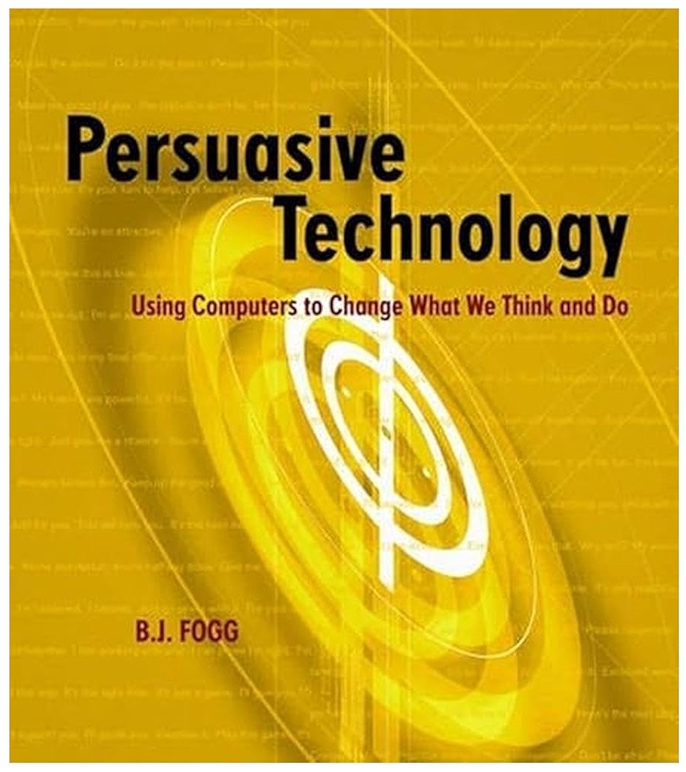
But again, this does not show the impact of digital content absorbed by users’ brains. Remember the Stanford Persuasive Technology Lab? Well then, perhaps you should read below a summary of the book written by the lab’s founder, Dr. BJ Fogg, which was published in 2003:
“Can computers change what you think and do? Can they persuade you to quit smoking, convince you that you need security, or persuade you to enlist in the army? “Yes, they can,” says Dr. BJ Fogg, director of the Persuasive Technology Lab at Stanford University. Fogg has coined the term “Captology” (an acronym for computers as persuasive technologies) to cover the field of research, design, and applications of “persuasive technology.” In this thought-provoking book, based on nine years of research in Captology, Dr. Fogg reveals how websites, software applications, and mobile devices can be used to change people’s attitudes and behavior. Technology designers, merchants, researchers, consumers – anyone who wants to harness or simply understand the persuasive power of interactive technology will appreciate the compelling insights and illuminating examples found within this book. Persuasive technology can be controversial and should be. Who will exercise this power of digital influence? And for what purpose? Now is the time to examine these issues and BJ Fogg has written this book to guide you.”
The advancement of computer science AND neuroscience has opened new paths in the old, archaic pleasure and reward circuit of the brain in an increasingly personalized way, thanks to all the personal data that users provided blindly – something that was the key to success.
And the GAFAM, NATU, BATX of the world, with the help of some of the brightest minds, became absolute masters in the art of creating addiction.
In 2017, Netflix CEO Reed Hastings claimed that the streaming giant’s biggest competitors were not Amazon, YouTube, or even traditional broadcast media. According to Mr. Hastings, our need for sleep is actually the main obstacle.
“Think about it, when you’re watching a series on Netflix and you get addicted to it, you stay awake until late at night,” he said. “We’re competing with sleep.”
Such “digital addiction and indoctrination tools”, a perfect example of dual-use technology, were accepted as the “Holy Grail” by not-so-obvious war worshippers, who saw in these tools a remarkable double-edged knife: one edge addressed the “sacred rules” (peoples, communities, national cultures and beliefs), that is, the very roots of society, and the other edge was responsible for the daily severing of the users’ attention span, memory, and reasoning skills, with the ultimate result being an increasing overall intellectual laziness.
The beauty of this strategy lies in the fact that the victims of the combined attack usually do not know that they have been targeted, while each individual’s ability for critical thinking is under constant assault. The other beauty of it is that there is no reason to invest in armies of “Manchurian candidates”11. This “thousand cuts” strategy12, made possible at remarkably low cost by computing giants, has indeed done a wonderful job in creating millions of “potentially useful digital idiots,” to paraphrase the expression “useful idiot” attributed to Lenin.
Indeed, the representatives of the Five Brains initiative were right in saying “Every day we lose battles in which we don’t even know that we have been involved”.
Enhancement and acceleration of the reaction
With the impetus of the Five Brains initiative, support from the findings of studies conducted by NATO’s ACT and STO, and significantly increased budgets focused on the overall NBIC issue, important decisions were made at the highest level.
A decision summarized this profound radical change in collective consciousness: The significant shift given to the design of the Allied Future Surveillance and Control (AFSC), the successor to the Airborne Warning and Control System (AWACS), with a view to its withdrawal in 2035.
Briefly, at the core of the AFSC system, the NBICs, including the issue of influence, had to come to the same level as all other types of threats. A logical decision, given that the “human mind” had become a new field of operations and thus the sector’s players, with newer ambitions, wanted to take part in this project.
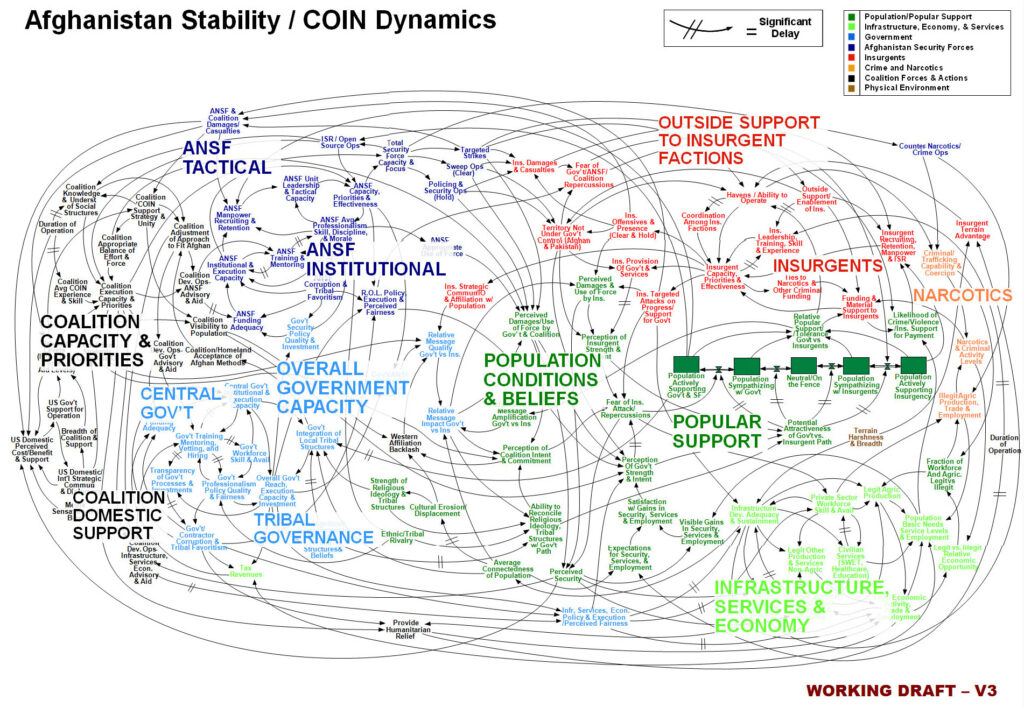
The famous transparency of General Stanley A. McChrystal in 2009 and the provocative comment “When we understand this transparency, we will have won the war” was now about to appear in every contractor’s office (of the army).
Perhaps even more decisive was a groundbreaking decision taken by most NATO member states, along with interested countries from the Partnership for Peace (PfP), the Mediterranean Dialogue (MD), and the Global Partners programs. Inspired by previous bilateral initiatives such as the 2018 Franco-German Research Forum, and fully aware that in this ongoing global environment of non-obvious warfare, security could no longer be left solely to defense and security professionals, these nations embarked on a massive collective project titled “Towards a Common Culture for Global Defense and Security,” aiming to create new capabilities at the citizen level: awareness, vigilance, and readiness for new forms of threat.
After yet another Cambridge Analytica-style scandal, after the blatant anti-government exploitation of yet another devastating wildfire in Australia, after new “revelations” from informants regarding mass surveillance fueled by Big Data / AI and the most covertly developed neuro-weapons of NBIC, these nations arrived at a common perception which they summarized as follows:
“The general public and, to some extent, institutions, including administrations, are not sufficiently informed and sensitized regarding the threats related to NBIC and their consequences for every citizen and institution, especially in the event of a real emergency, partial or global crisis. The lessons drawn from research in security policy are often misinterpreted to a large extent, applied incorrectly by institutions and sensationalized by people, the media and politicians. Possible reasons for this situation are the increasing role of the ‘conspiracy culture’13 and the serious lack of knowledge.”
Moreover, this phenomenon is intensified by the increasing difficulty that all societal actors face in perceiving and understanding the situation, as they attempt to keep pace with the evolution of a society where technology is driving an exponential increase in data production, in the generation and availability of information (true or false), as well as regarding the complexity and spectrum of associated risks.
Consequently, it becomes vital to develop an enlightened awareness, understanding, and overall stance concerning threat assessment, resilience, deterrence, and, when necessary, retaliation. All of these elements should shape a more essential “defence and security mindset.”
To achieve this goal, the participating states commit to implementing the following main action lines:
- Increase the level of public awareness, based on regularly updated SWOT analysis14 of NBIC,
- Strengthening education on civil protection issues for populations and administrations,
- Integration of defense and security issues at all stages of education (from schools to universities, lifelong education, digital education),
- Increasing public awareness regarding the complexity of decisions that must be made by decision-makers in defense and security scenarios.
2030: Addition to the 2026 Summit Declaration
As proof of the radical shift in collective mindset, the Oslo Summit declaration (May 16-17, 2030) somewhat improved Article 11 of the 2026 Brussels Summit declaration, adding only a few words, demonstrating NATO’s and its allied states’ understanding that NBIC has radically changed the rules.
Thus, the article was formulated as follows: «The advances in NBIC today allow our adversaries to develop new ways to achieve their offensive goal. While propaganda and influence strategies have always existed, the depth and complexity of hybrid attacks fueled by NBIC represent an unprecedented level of threat today, as they target the most vital infrastructure we rely on: the human mind, as a symbol of each person’s uniqueness. We therefore recognize the human mind as an operational domain in which NATO must defend itself as effectively as it does in the air, on land, at sea, in cyberspace, and in space.»
translation – rendering
Wintermute
- There is also a French biologist with the same name. The specific one we are referring to is a professor at the Polytechnic School of Bordeaux. ↩︎
- The emphasis in the original. ↩︎
- Stm: We couldn’t figure out what these two acronyms mean, but we assume that SM is Social Media and NW-Analysis is some kind of network analysis. ↩︎
- Stm: Stanford Persuasive Technology Lab which evolved into the Stanford Behavior Design Lab (https://behaviordesign.stanford.edu). ↩︎
- Stm: Acronyms referring to the major technology companies. GAFAM: Google, Apple, Facebook, Amazon, Microsoft. NATU: Netflix, AirBnB, Tesla, Uber. BATX: Baidu, Alibaba, Tencent, Xiaomi ↩︎
- Stm: National or multinational institutions funded by NATO that train specialists for the development of doctrines, analyses, etc. ↩︎
- Stm: The city where ACT’s headquarters are located. ↩︎
Term: Derogatory term for China’s “Internet commentators,” who are commentators and content producers on the Internet paid by the Chinese regime.
↩︎- STM: Nuclear, Biological, Chemical ↩︎
Stm: The “something” that happened is described in the second part of the article, which we did not translate. Very briefly, it refers to the expansion of the silk roads of the kin – which now have extended east-west, north-south and to the north pole, its presence in Africa for raw materials and the “pressure” felt by the west. Two incidents trigger Article 5. One in Africa, where a dead CrispR “enhanced” Chinese soldier is located and one in Norway where a coordinated effort by China-Russia to control the strategic port in Kirkenes takes place, using PsyOps on populations, hired hackers and biological weapons targeting based on genetic characteristics. The article closes as follows: “The incidents in Africa and the Arctic had constituted the final blow. This time, NATO and its allies did not accept the excuses of disowning responsibilities. With the help of new detection tools based on blockchain technology and quantum computers, it became clear who had actually pulled the strings.”
↩︎- Ref: Reference to the book The Manchurian Candidate, in which “the son of a prominent political family in the US undergoes brainwashing and becomes an unwitting assassin for a communist conspiracy.” ↩︎
- Stm: Expression that denotes defeat / failure as a result of many small problems / failures. ↩︎
- Stm: Free translation of “post-factual culture”. ↩︎
SWOT is a decision-making technique which “weighs” the strengths, weaknesses, opportunities and threats (Strengths, Weaknesses, Opportunities, Threats)
↩︎