
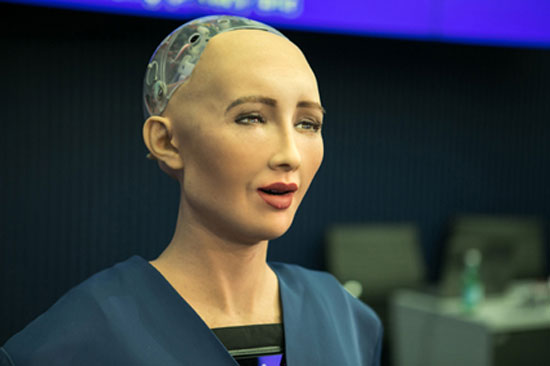
In October 2017, Sophia officially became a citizen of Saudi Arabia, an event that probably wouldn’t warrant any mention if Sophia weren’t a robot. A few days earlier, she had also been presented at the United Nations, which gave her the title of “the first innovation” of the UN’s development program, making her the first non-human to hold a UN title. These moves were more about public relations and publicity rather than having any practical effect, contributing to the expansion of discussions on the ethics of artificial intelligence, both in the “official” academic and the “unofficial” “popular-cultural” level.
The discussion of AI and robot ethics is extensive, both in the issues it touches upon and the scope within which it takes place, even if we haven’t heard much about it, at least at the “official” level. Informally, concerns have entered various discussions for years through entertainment, from books and movies to TV shows featuring robots like Sophia. The “official” discussion, that of theoretical, academic, and legal circles, is also relatively old, but it has gained greater dimensions and weight in the past few years as technology has reached the point of creating Sophias and AI language models, such as ChatGPT.
Thus, within all this discussion, the question arises as to whether robots should have rights like humans and on what basis. It may sound ridiculous—and certainly is—but it’s probably more serious than it appears. The arguments for and against vary and mainly revolve around the concept of “humanity,” what makes a human a “human” deserving of rights. From the outset, it is evident how much this framework is taken for granted. Who defines what a human is and what their qualities are, and who defines what a right is and who deserves it? At an individual level, everyone can define it as they wish, but what matters is how it is ultimately defined by whoever has the ability to grant or remove rights.
Also, given that this discussion is taking place among humans, who have created the concept/practice of rights, how would anything non-human benefit from having rights? If it is to protect it from the bad practices of humans, why does the discussion concern rights for non-human entities and not restrictions on humans? Since the discussion is anthropocentric anyway and could not be otherwise.
What impact do these current discussions have on existing human rights—are they upgrading or downgrading them? What impact do they have on the very concept of “rights”? And more importantly, what role do they play in the concept and attribution of “responsibility”? Since one of the key arguments “in favor” is that “when we can say that the machine is to blame for its actions, then it will be time to give it rights too.” When and how will the “robot” be freed from human labor/design/guidance, if this is ever possible?
If – we say if – rights are not things that are granted and taken away, but a matter of claims and competition, what role does a discussion about a future scenario where machines will be “autonomous” play in current correlations? Are there interests that benefit from the position that wants to make machines “responsible for their actions” and humans conformist with a broader legal framework that has been equally attributed to both humans and machines?
The article we have translated below, with the purpose of presenting a part of this discussion, argues “against” and does not refer to all the questions we posed briefly before. It is written by academics in their language and at some points more technical – from the perspective of dry academic language – than we can bear. Also, at some points it finds us opposed. Nevertheless, it presents a useful snapshot of the level at which the “official discussion” takes place regarding robot rights and the ethics of artificial intelligence, which – in the absence of an “unofficial” one – is the one that will pave the ground upon which those who have the ability to grant or remove rights, to humans and non-humans alike, will (partially) step.
Wintermute
the demystification of robot rights1
For some technology theorists, the moral issue of artificial intelligence must be extended beyond examining what robots and computers can or cannot do to humans. Conversely, humans perhaps ought to have certain ethical and legal duties toward robots, including even the recognition of their rights. David Gunkel refers to this reversal of the discussion on robot ethics as “the other question: can and should robots have rights?” Or, adapting the classic phrase of John F. Kennedy: “Ask not what robots can do for you, but rather, what you can or should do for robots.”
In this article, we challenge the arguments for robot rights on their metaphysical, moral, and legal foundations. On the metaphysical foundation, we argue that machines are not the kinds of things that could be granted rights or not. On the moral foundation, we argue that given the negative impact of machines on society’s most marginalized, it is limits, rather than machine rights, that should be at the center of the current discussion on AI ethics. Legally, the best analogy for robot rights is not human rights but corporate rights—which often undermine democratic electoral processes, as well as the rights of workers and consumers. The discussion of robot rights functions as a smokescreen, allowing theorists to imagine feeling machines, while most current AI and robotics feeds surveillance capitalism, accelerates environmental destruction, and entrenches injustice and human suffering.
Based on theories of phenomenology and post-Cartesian approaches to cognitive science, we ground our position in the lived reality of actual people in an increasingly ubiquitous, automated, and surveilled society. What we find is the seamless integration of mechanical systems into everyday life in the name of convenience and efficiency. The last thing these systems need are “rights” to ensure their acceptance by people. Rights are extremely powerful legal constructs which, when granted unjustifiably, essentially short-circuit the kind of democratic dialogue and empirical inquiry necessary regarding claims of autonomy in our increasingly technologized world. Conversely, the “fully autonomous intelligent machine” is, for the foreseeable future, a science fiction fantasy, functioning mainly now as a smokescreen that conceals the environmental cost and human labor that form the backbone of artificial intelligence. The discussion about robot rights mystifies and further obscures these problems. And it paves the way for a regulatory logic that will allow companies developing and selling artificial intelligence to escape responsibility.
Existing robotic and AI systems (from large language models / LLMs, general purpose artificial intelligence, chatbots, to humanoid robots) are often portrayed as fully autonomous systems and this is part of the call for granting rights. However, these systems are never fully autonomous, but human-machine systems that operate on the basis of exploiting human labor and environmental resources. They are socio-technical systems, with the human factor present throughout the entire process: from the source of the data, to the development of the models and their use, everything depends on people. Very often, the discussion about “rights” starts from the assumption that robotic entities will somehow be autonomous, or worse, that they will not be based on the exploitation of human labor and that they will not harm marginalized society. In today’s reality, however, a discussion is required instead about these technologies from the perspective, needs and rights of the most marginalized and wronged. This means that any discussion about robot rights that overlooks the underpaid and exploited populations that serve as the backbone for the “robots” (as well as the environmental cost required for their development) is hypocritical. As a matter of public policy, the question should not be whether robotic systems deserve rights, but if we grant or deny rights to a robotic system, what impacts arise for the people who own, use, benefit from, develop and are affected by current robotic systems and artificial intelligence?
The time has come to reverse the narrative, from the “rights of robots” to the duties and responsibilities of companies and powerful individuals who now benefit from sociotechnical systems (which are not limited to robots). The harms, damages and ills have been repeatedly documented as a result of incorporating artificial intelligence systems into social reality. Instead of the conjectures of hypothetical machines, the much more urgent discussion concerns robots and artificial intelligence as concrete artifacts manufactured by powerful companies, and further invading our private, public and political space, perpetuating injustice. A purely intellectual and theoretical discussion overshadows the real threat: that many of the actual robotic and artificial intelligence systems built by powerful companies harm people directly and indirectly, and that a premature and profit-driven argument for robot rights risks dissolving already weak accountability systems for the negative impacts of technology even further.
The rise of “gun rights” in the U.S. is merely one of many prefigurative phenomena that should lead to deep and sustained attention regarding the fetishization of technology through rights claims. The emotional bonds of gun owners with their firearms are often intense. In the U.S., gun violence occurs at a higher rate than in any other developed country, and mass shootings are frequent. Nevertheless, the U.S. Supreme Court, through a strained interpretation of the Second Amendment of the U.S. Constitution, promotes gun owners’ rights at the expense of public safety. We must be very cautious regarding the discourse on robot rights, so as to avoid similar developments that would leave judicial bodies protecting exploitative, harmful, and socially destructive technologies from necessary regulation and accountability.
Robot Rights: The Discussion
For many outside the small circle of discussions about robot rights, the very idea of this discussion may seem strange, funny, or even indifferent. However, within the narrow corners of machine/robot/AI ethics, the concept of robot rights has sparked heated debates.
The idea of a robotic personality and related ideas about robot rights have a long-standing, albeit marginal, position. It was directly supported by Inayatullah (2001), and discussed by Solum (1992). Numerous researchers have discussed the possibility and appropriateness of granting some form of legal rights to robots. Arguments in favor of robot rights tend to appear in two broad forms. One set of arguments is built around the idea that humans will be more virtuous and respectful towards each other if they are required to respect certain machines. This set of arguments, which focuses on how granting rights to inanimate objects can cultivate certain dispositions, skills, and abilities in humans, was directly addressed in earlier work by Birhane and van Dijk (2020).
Another set of arguments focuses on the robots themselves, and not on their impacts on individuals. Some researchers argue that there is a mix of properties of present and/or future robots that could warrant the kind of respect that legal systems usually offer in the form of rights so that they can perform certain actions or prevent others from performing certain actions. This and similar arguments constitute the main concern of the present article. To address it properly, we must first carefully examine what the concept of “robot” entails.
The robots in question
Both the approaches to the aforementioned “artificial intelligence” entities and the reasonings regarding the granting/denial of rights vary. Clarifying the nature of these “robots” is crucial. In reality, existing robots include machines that manufacture cars on assembly lines, robots designed to simulate animals (for example, the “robot dogs” built by companies such as Boston Dynamics, for warfare and operations, or those built by Sony, for home entertainment), humanoid robots (such as Pepper), service robots (such as Starship and other drones), and a broader category of machines equipped with sensors, information processors, and massive machine learning systems, such as “large language models” (LLM).
As a practical and immediate issue, the question of granting rights to existing machines (not to the allegedly conscious and super-intelligent futuristic ones, but to the ubiquitous completed algorithmic systems) signals a serious risk. Granting rights to these machines appears to depend on an argument related to complexity: in large-scale artificial intelligence systems, it is no longer clear whether the people who design and operate them can still be considered responsible for the actions of the “autonomous” systems. Consider, for example, a set of AI-powered police robots, which may be “activated” in unpredictable ways once they interact with humans. If a particularly bad outcome occurs, the robot manufacturers may claim that the robots’ actions were unforeseeable. This serves as a way to avoid responsibility, leaving no one accountable for the harmful “actions.”
Such a strategy shifts responsibility away from the owners, creators, operators, sellers, and those who benefit from these systems. Moreover, what does it mean to grant rights to “language models” that reproduce conspiracy theories, lies, and social stereotypes; to systems that collect data en masse without the awareness or consent of the data subjects and reproduce models that perpetuate harmful stereotypes; to robots that could assume all the roles of drones and other technologies that now hyper-surveil marginalized communities; to algorithmic systems that threaten privacy; to bots that spread disinformation; and more broadly to AI systems created at a massive environmental and labor cost, which disproportionately impact individuals and marginalized communities?
A somewhat different form of advocacy for robot rights is rooted in a version of predictive philosophies and futuristic hypotheses. The argument is that science and technology are advancing so rapidly that it is certain that, during our lifetime, some machines will mimic human action, expression, and interests so convincingly that humans will feel obligated to respect them to some degree. If robots exhibit a set of human-like qualities, then there is no reason to deny them rights.
The assumption that future beneficiaries of “robot rights” will be far more advanced machines than those currently in existence is the fundamental argumentative move that supposedly renders the discussion about robot rights reasonable. However, this assumption conceals more than it reveals, since it presupposes a level of machine autonomy and discreteness that has never existed in the history of human-machine interaction and is most likely to occur in the very distant future (if at all). What we mean by this is that machines are never fully autonomous but are, in every case, human-machine systems that rely on human labor and resources to function. Automation and the idea of automata, from their early conception, were based on a clever trick that pushed workers and those performing critical tasks for a machine’s operation into the background. Exploring the historical genealogy of mechanical computation, Daston (2017) emphasized that automation does not relieve intellectual burden but shifts this burden onto other shoulders (often underpaid women), so as to maintain the ghost of the machine. Moreover, as demonstrated by Bainbridge’s (1983) seminal work on aircraft automation, “the more advanced a control system is, the more crucial the human operator’s contribution becomes.” Bainbridge’s idea of the “ironies of automation” goes to the heart of deliberately hidden human labor in an attempt to portray machines as autonomous. In reality, as Baxter (2012), building on Bainbridge, argues: “the more we depend on technology and push it to its limits, the more we need highly specialized, well-trained people to make systems resilient, acting as the last line of defense against failures that will inevitably occur.” Forty years later, Bainbridge’s point still stands. Current cutting-edge AI systems operate on the backbone of exploited and unpaid labor, often outsourced to lower- to middle-income countries such as Kenya (Perrigo, 2023). Effective automation of control processes requires human involvement at various stages, as today’s so-called “autonomous” systems, such as “autonomous vehicles,” still depend on human intervention and on the enhancement of their training through human feedback. The need for human intervention is unlikely to disappear entirely, although its form may change. Thus, the attempt to anchor rights in a particular machine, within this human-machine-society system, obscures more urgent ethical issues, such as who performs the critical labor, whether their wages and working conditions are fair and safe, and whether this socio-technical arrangement contributes overall to human flourishing.
Artificial intelligence, which appears autonomous, does not rely solely on highly paid, highly specialized engineers and scientists, but also, to a significant extent, on low-paid, undervalued, and less visible labor, referred to by various names such as “ghost work,” “micro-work,” or “crowd work.” From image tagging and object detection in images to data annotation and content moderation, this kind of human workforce assists AI in performing tasks and activities it cannot accomplish on its own. This labor forms the backbone of current AI, without which it would cease to function. However, work on platforms such as Amazon MTurk, Clickworker, AppJobber, and CrowdTap is undervalued and often not even acknowledged in the AI workforce pipeline. People performing such tasks are, in most cases, not officially considered employees but rather “independent contractors,” further adding to their precarious working and living conditions. Indeed, a closer look at the actual material conditions of AI reveals that advocating for robot rights is much closer to defending corporate or capital rights, in order to further subordinate those most exploited, rather than being aligned with labor or human rights, which are in reality more at risk than ever in today’s profit-maximizing corporate and capitalist world.
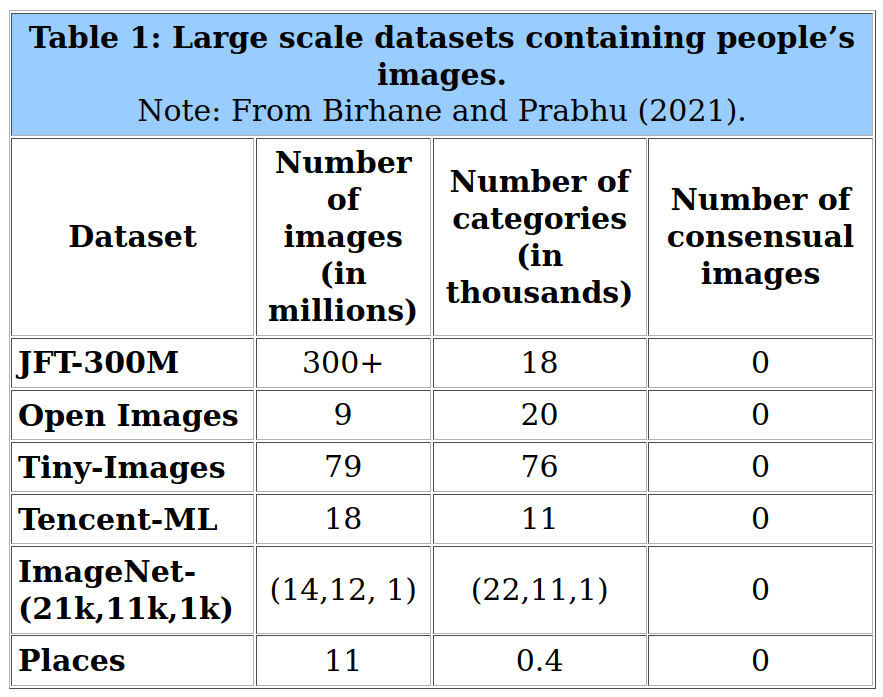
Moreover, beyond the exploitative structure of micro-work, training data, which is fundamental for AI systems, often originates in questionable ways, without compensation and without oversight. AI models based on such data inevitably inherit the problems of the data, encoding and exacerbating social and historical stereotypes. The “machine learning revolution” that radically changed image detection, recognition, identification and generation, for example, was only made possible through data theft, through the continuous collection of images from users who had uploaded them to various platforms, and which are all used without their consent or knowledge. Of the larger datasets used today for training computer vision models, almost none originated from data via consent, as shown in Table 1 on the previous page which has data up to 2021.
Despite the well-documented concerns of current and future AI research programs, some supporters of robot rights argue that social recognition of the powers and value of machines would be appropriate for purely humanitarian reasons. An individual who is forbidden from kicking a dog-like robot, they assure us, will automatically acquire a moral obligation to respect anything else, even if it is not made of silicon. But the moral lesson could be exactly the opposite: that those in power are so devoted to certain inanimate objects that have been granted a different status from that of many individuals who are not adequately protected by existing legal structures.
Indeed, it is a harsh parody of justice to assume that a potential granting of a driver’s license to the Saudi Arabian robot “Sophia” would promote some subsequent action for stronger rights for all women. Likewise, that the “rights” of cleaning robots in the USA would help the hundreds of thousands of worker-cleaners who now suffer in exploitative working conditions. In reality, some of them may already be providing training data to such robots, without compensation and without even being aware. Giving a robot the “right to observe” the people it is programmed to replace has nothing to do with social justice; in fact, it is the opposite, a shortcut in discussions regarding data control and limitation.
Consequently, a “thought school” so dependent on the rhetoric of tinkering, such as the community of robot rights advocates, ends up focusing on and upgrading the power and privileges of capital and corporations. However, this result is not unexpected. Multinational companies have learned the “capital code” well, in order to promote their interests in many ways. Provisions for resolving disputes between investors and states in bilateral investment agreements, for example, can guarantee that multinationals will have returns of money in ways that nullify very important regulations for environmental and occupational safety, all on the basis of their “right” to enjoy the expected returns from their investments.
The Citizens United v. Federal Election Commission (2010) decision gave corporations a “blank check” to promote their views and their own candidates in elections, further entrenching existing power inequalities. Similarly, the rhetoric of “robot rights” is yet another means for the skillful advancement of capital’s interests. Indeed, since robots themselves are capital, “robot rights” correspond to the kind of “capital rights” that only the most ambitious liberals dream of.
The “machines like us” argument: Confusing the map with the territory
After dealing with definitional issues and some related academic discussions, let us consider the claim that future sentient robots should have rights. The argument is that if we can build a machine that resembles a human being, there is no reason not to grant it rights. This argument is based on the vision of a future where machines might be conscious, feel pain, and have desires in a way comparable to how we understand ourselves and others. Since we recognize basic rights for sentient and conscious fellow humans, how could we deny the same rights to other sentient and conscious, yet non-human, beings? Such a denial would be unethical, a case of “speciesism.”
Such arguments are promoted equally by philosophers, scientists and technologists. At its core, the argument is based on making analogies, or even equating, the nature of humans with the properties of intelligent machines, so that it no longer makes sense to make a moral distinction between them. Richard Dawkins, for example, justifies the need to recognize the moral status of artificial intelligence as follows: “there is nothing in our brain that could not be reproduced with technology. I see no reason why in the future we should not reach the point where a robot will be capable of having consciousness and feeling pain”.
Although the argument seems logical, we believe it is seriously flawed in many ways, where the basis of the argument (there will be conscious machines) is based on many questionable assumptions. To begin with, the idea that, since brains are “natural systems” then it is possible to recreate them, is problematic in that it borrows time, resources and technological inventions from the future, which are not guaranteed at all. In fact we could argue that, given the complexity of the brain, it may take as long as the evolution of the human species itself (or even longer) to artificially recreate it. Or in any case, there is no indication that it will happen earlier. This makes the initial argument, even if valid, irrelevant to any logical realistic future scenario. The discussion about the rights of beings that will need several billion years to become reality, is at least premature. There is also no reason why the entire Earth could not be reproduced using elements that will be collected from space; however, few, if any, serious thinkers support that we can discuss the legal or moral implications of a second Earth, given the centuries it would take to build it. However, for some reason the prospect of copying our own brain seems so appealing that huge funding has been invested in this research. These massive investments in this kind of research, is a moral issue in itself, while the failures of the Human Brain Project already warn against simplistic assumptions regarding the future reproduction of humans in silicon.
Ray Kurzweil poses a seemingly more logical challenge than Dawkins. He argues that “if an artificial intelligence can convince us that it operates at a human level in its responses, and if we are convinced that it experiences the subjective states it claims, then we will accept that it is capable of experiencing pain and joy. At this point, machines will demand rights, and due to our capacity for empathy, we will tend to grant them.”
Just as Turing initially used this argument to prove the intelligence of an entity, so too is it argued here that we should grant rights to an entity, based on the idea that we have granted rights to our fellow humans because they exhibit the right kind of behavior that makes them deserving of these rights. Many of the criticisms of Turing’s original argument could be applied here as well. The most important point, however, is that human rights have not been granted to humans because they can prove they are human. Thus, even if Kurzweil’s argument could be used for robots, it would create a situation in which humans would have their rights for different reasons than robots, which would itself be morally problematic. Humans have rights because otherwise they would be oppressed by other humans, and the fact that all parties in this condition are humans is a given, not a matter for debate. For any group of humans who were denied rights in the past (women, enslaved people), it would have been problematic to have to exhibit a certain behavior in order to “join the club.” Human groups that have at some point acquired rights have acquired them because they were “human from the start,” and the fact that they were not recognized as such was the problem that needed to be solved. For robots, the issue is not whether we will someday discover they are human, but that they should be “deliberately designed” to meet certain criteria that will be prerequisites for acquiring rights.
In the final analysis, instead of discussing human oppression and how to solve it, Kurzweil’s argument shifts the entire discussion into this abstract philosophical space where “exploring what is truly a robot” becomes the central approach for analyzing the issues at stake. Meanwhile, at the practical everyday level of human interaction, we know that there is simply no moral problem of this kind regarding robots. Robots are not oppressed or deprived of rights because humans do not recognize their “humanity.” If this were the case, we would not grant rights to robots as robots, but we would recognize that they are “humans from the outset.” All this, however, is meaningless, given that, in the real world (not in abstract, futuristic visions), robots are not the kinds of beings we are: they are pieces of equipment manufactured by humans.
What happens in both mechanical and behavioral arguments is that theorists initially remove elements of the real world in order to subsequently equate human phenomena of intelligence, emotion, and sociality with certain functions of machines. This theoretical move is at the core of traditional cognitive science, which is based on the idea that in order to achieve scientific understanding of human intelligence, we can model the phenomenon of interest through a machine, and by using this model achieve understanding of the natural phenomenon. But believing that the model is an actual aspect of the original phenomenon is dangerous.
This move confuses the map with the territory. Throughout history, we have metaphorically compared ourselves to the most advanced technology of the era, not merely as an epistemological tool, but also mistakenly importing the mechanics of technology into ontological claims. The Danish anatomist Nicolas Steno in the mid-17th century saw the brain as a collection of cavities through which animal spirits flow. A century later, when electricity was in vogue, the brain was considered a battery. (And again, perhaps the battery analogy could help the scientist’s process, but to claim that, in some abstract way, the brain is a battery would be to confuse the map with the territory). By the mid-19th century, nerves were compared to telegraph cables. After the mid-20th century, we have reached the point of thinking of the brain as a computer, as an information processing machine. By making this move, the human mind is presented as much simpler than it really is, and the computer is attributed greater substance than it actually deserves. Or as Baria and Cross put it: “less complexity is attributed to the human mind than it has, and more wisdom to the computer than it should.”
Metaphors are pervasive and it doesn’t seem that we will generally abolish them, as they can illuminate the understanding of one thing in terms of another. But metaphors can also do more harm than good when their proponents forget that they are, in fact, only metaphors. We often forget this, sometimes deliberately, especially when this forgetfulness helps promote a larger ideological agenda. Thus, while sometimes it makes sense for scientists to use natural phenomena as guiding metaphors for designing technologies, it does not follow that the resulting technologies constitute valid scientific models of the original natural phenomenon.
The confusion between the map and the territory is one of the most persistent problems in discussions about artificial intelligence. The limited understanding of the complex nature of intelligence, as well as overly optimistic and overly confident predictions about AI, both old and new, undermine the real progress of AI. Some of the misconceptions that arise are that “intelligence is all in the brain,” as well as the mistaken use of words related to the functions of artificial intelligence and robots, such as “learning,” “vision,” “sensing,” and others that describe human qualities.
For the ethical question, however, something more subtle is at stake here. If computer models are used, as they should be, as vehicles of knowledge, that is, tools, for understanding the brain, there would be no ethical issue at all, because we would never examine whether our scientific methods should “have rights.” They are tools of our mind, not minds themselves. But if we make the conceptual mistake (from an ontological perspective) of equating ourselves with the machines we use to understand ourselves, then we can see the moral problem that arises: because we will have defined ourselves as a machine, we will suddenly have to discuss whether we should or should not grant rights to other “non-human machines.”
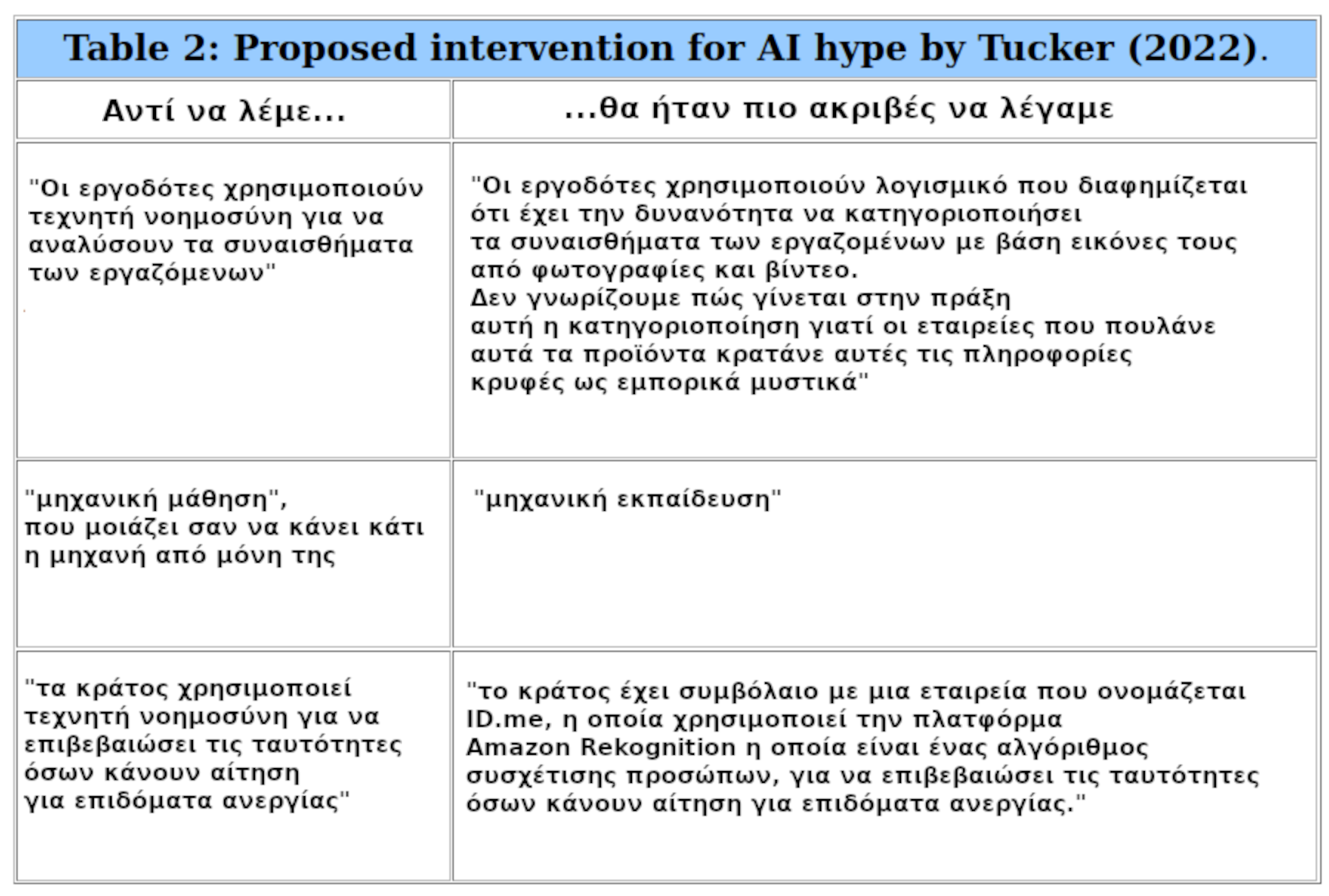
In other words, perceiving robots as “machines like us” silently implies that we must first understand humans in mechanical terms: as complex machines of biological information processing. If we see ourselves as machines, then this means that machines are in some way “like us.” This argument, we say, comes from confusing the map with the territory. For example, because someone is not allowed to walk on the grass in a park, this does not mean we should examine whether it is allowed to walk on the grass in the park’s map, even if that map is a physical object inside the park. We may decide that walking on the map is not allowed, but the reasons for this decision have nothing in common with those for which walking on the actual grass is prohibited. Similarly, we can discuss whether someone is allowed to damage a robot (perhaps due to loss of value or simply because it belongs to someone else), but such a discussion has nothing in common with discussions about whether someone is allowed to harm other people or not. We should not confuse the map with the territory, even though maps are also concrete objects that exist in the territory. Clarity in language is an important step toward demystifying the hype around artificial intelligence. Emily Tucker, for example, suggests that replacing misleading terms with precise language (table 2) would refocus attention on how AI is actually used in practice.
With this defense against the confusion of the map with the territory, we wanted to make the strict distinction between humans (the kinds of beings we are) and artificial intelligence machines (which are cognitive models, applied as material artifacts and have real impacts on human practices). With this distinction, we do not want to define what a human being is, under an objective, materialistic and abstract scheme, and then claim that machines simply do not “measure up” as mechanically equivalent. We certainly believe that today any machine does not “measure up”, but the most important point is that we argue that such a comparison does not make sense for the issue of robot rights.
An embodied enactivist (post-Cartesian) perspective on cognition2
We previously concluded that we should not equate the tools we build to understand humans with humans themselves—a mistake stemming from the indirect equation of human characteristics with the mechanical functions of models, and subsequently comparing them regarding their behaviors. So, how do we define the human being if we refuse to define it in a mechanistic way? Our fundamental philosophical starting points are phenomenology and enactivism, which perceive humans as fundamentally “situated” and “relational” beings, governed by complex, open, self-organizing, interactive processes. These processes are not immaterial, but nor can they be reduced solely to the material conditions of things that could be mechanized. In the embodied enactive view, humans are first and foremost living beings. The human being is constantly engaged in a process of self-maintenance, acting meaningfully within its environment. Intelligence provides meaning: we actively relate to the world around us and strive to leave a mark on it through our actions, as grounded in the self-sustaining nature of life itself. Through the process of self-distinction, living bodies create a distinction between themselves and their environment, where none existed before their emergence, and none will remain after their disappearance. Living bodies are not static organisms passively awaiting influence from their environment, as much of the cognitive tradition assumes. Living bodies are dynamic, networked, and relational, with values, concerns, dispositions, and sensitivities. “Living bodies have more in common with hurricanes than with statues” (Di Paolo, 2018). This holds true at the biological level, but extends also to psychological, intersubjective, and socio-cultural levels. Living bodies laugh, bite, eat, gesture, breathe, give birth, and feel pain, anger, disappointment, and joy. They possess racial, political, and gender identities, as well as diverse abilities, positions, privileges, and powers. They encounter challenges, tensions, problems, and opportunities that constrain or promote their actions and behaviors. They are not fixed, closed systems. They are processes with a specific kind of autonomy, which is not always stable and lacks clear boundaries. “The process of making sense is always in motion” (Di Paolo). This provides a foundation for human rights: every human being has the right to maintain their autonomy in relation to their environment.
And from this, the remaining related questions arise, such as how the rights of one individual can interfere with the rights of another, etc. Describing the precarious, socially embedded, and situated position of the human being, Weizenbaum (1976) wrote that “no other organism, and certainly no computer, can address human problems on human terms.” There is neither a representation nor a model of intelligence or emotion that is accurate, as such a thing would require grasping intelligence and emotions in their entirety. The metaphorical trick mentioned in the previous section reduces the complex, associative, intersubjective, embodied, undefined, incomplete, fluid, active, and dynamic being into a set of characteristics or a process that could be turned into data and mechanized. But a machine is an artifact that can only be achieved once a given, fully defined process is completed, and its existence relies exclusively on this closed and complete definition, whereas the human being is based on a dynamic, temporarily stable autonomy and is simultaneously never fully determined and always open. What is interesting about machines is how they mediate human autonomy, given that technologies can be integrated into interactive, embodied, self-organized processes. Machines could be used by humans to enhance themselves or could be used to oppress others. What is far less interesting about machines, and in fact distracts attention in related ethical discussions about artificial intelligence, is whether machines will become so similar to us that they should have rights.
Transhumanism3
If human existence is characterized as a deeply situated and highly complex interactive phenomenon, and if human beings incorporate elements of their (technological) environment into the flow of their self-sustaining interactions, this can be considered as an argument along the lines of posthumanism. In order to engage in this discussion, we must refer to the two versions of posthumanism that we distinguish. We define posthumanism, without a hyphen, as the philosophical position, based on thinkers such as Bruno Latour, that attempts to enrich the understanding of the ontological condition of humans and non-humans. Post-humanism or transhumanism, on the other hand, argues that the biological human is inadequate to solve its problems. Therefore, we must (or inevitably will) enhance ourselves through technology. This accelerating, transhumanist, and anti-humanist stance regards humans as insignificant and obsolete. We discuss this position first.
Transhumanism or posthumanism is very often at the center of arguments for robot rights. For example, Nick Bostrom, a major supporter of teleological transhumanism, has argued that becoming a posthuman—an entity that transcends human capabilities through technological enhancement—should be the central goal for a techno-utopian future, more important than saving human lives today. Transhumanism intersects with other similar ideologies, such as posthumanism and eugenics, promoting a techno-utopian future in which human disability, disease, and other limitations could be eliminated through technological improvement, echoing the goals of past eugenic movements. Some posthumanists believe it is not just human arrogance, but humans as such, who condemn the planet to ecological crisis. From this perspective, humans, by their very nature, are too selfish, short-sighted, or fragile to address crises such as climate change, or to endure the hardships, say, of interplanetary travel. And so in the future, the artificial replacement of biological humans by something “better,” beyond the “merely human,” will arise. If the mind could be uploaded into an electronic chip, for example, and then operate in a robotic form, this would be a much more resilient form of “embodiment” for these transhumanists. And if it could be done, then these electronic copies of humans would deserve some “rights” against their destruction, as referred to in the cyberpunk novel “Carbon Modified” (Morgan, 2003). This line of reasoning, we believe, is problematic in many ways. It presents a misunderstanding of the actual nature of memory, the mind, and embodiment, as well as of the actual physical resources (time, energy) required to sustain them, as already discussed in the previous parts.
While presented as post-human, transhumanism in reality displays the conceit of “Baconian humanism” (cf. Francis Bacon), upgrading it. The fantasy of a technological copy of the human being is used first to divert attention from the real cause of the ecological crisis: the catastrophic effects of mechanistic techno-capitalist expansion, and subsequently culminates in the vision of a futuristic technological Golem that will solve all problems. While this superhuman is, of course, merely a metaphor for the expanding technological capital that causes all the problems from the outset, the image of the superhuman serves as a distraction from the real challenges to human progress, which are largely caused by aggressive techno-capitalism. A genuine human transformation towards a better future might include new technologies, however not as a replacement (transcendence) of people, but rather as part of a more sustainable, just and ecological human practice.
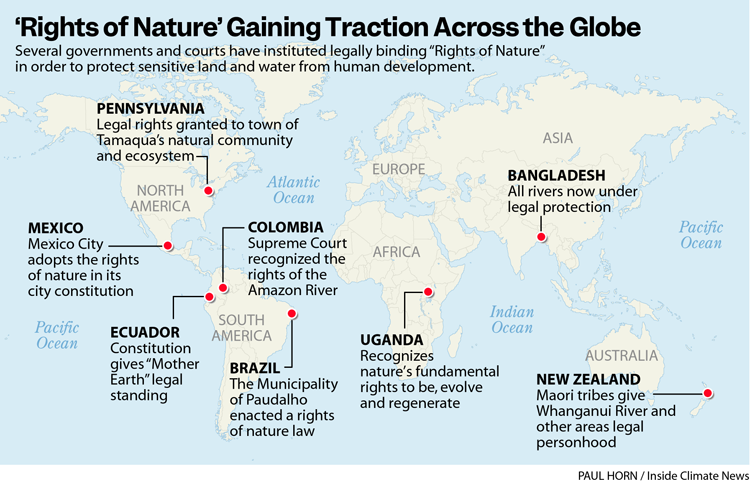
It should be clear that we do not believe transhumanism as posthumanism is the answer. If anything, it represents a way of thinking that is part of the problem. A perspective that could offer a more thoughtful outlook is a posthumanism that questions the arrogance of “baconic humanism” and promotes more harmonious and just relationships among humans and the world at large. More in line with our embodied activist perspective, such ecological forms of posthumanism advocate for a humble, respectable self-image, in which humans do not stand apart from, above, or against the world, and the fundamental movement of human action is not to dominate the environment, let alone to “bend nature to our will,” as Enlightenment principles dictate. On the contrary, our actions should respect the fact that we can “be” only because we are deeply embedded in complex ecological networks, and if we wish to maintain our own existence, we must be respectful and considerate toward the other elements of these networks, and sensitive to the intricate interconnections among them. From this perspective, moral and political theory must move beyond the perception of the Earth as a mere “warehouse of resources” destined to fulfill human needs, or rather, we should recognize the fact that the needs of other beings are indirectly embedded within our own: my needs are interwoven with your needs, because I depend on you and vice versa. If translated into terms of rights, this would balance, for example, hunters’ rights against animal rights; or the rights of off-road drivers to move through a national park against the rights of the park’s rocks, soil, plants, and animals. On the basis of these principles, laws have been formulated that grant rights to rivers, mountains, islands.
Some of the robot rights advocates however rely on this kind of ecological humanism to support robot rights. They include robots in the list of “non-humans” with which we, humans, interact and must take into consideration. The argument is: if animals, rivers and trees are “non-humans” deserving rights, why not robots? Should we not avoid biological chauvinism by granting privileges to “carbon-based entities” and not to those made of silicon, plastic and cement?
However, this argument does not hold. One cannot, on one hand, support post-human language regarding a “non-human” entity and simultaneously bring in, through the back door, an anti-Latourian, Cartesian image of a human mind (that is, a person with feelings, experiences, daily life, history, etc.), project this image onto a robot, and then discuss the rights of this “artificial human” based on feelings that are fundamentally human.
We could proceed with a posthuman thought if it is directed toward repositioning humans within the broader context of planet Earth, that is, by acknowledging our role as one of many life forms dependent upon the delicate balance of the complex ecosystem. From this moderate perspective, it may indeed be reasonable to create laws protecting animals, rivers, and trees against human oppressive tendencies, because ultimately, even our selfish inclinations and capitalist greed could eventually destroy the very ecosystem that sustains us.
Recognizing the complex and interdependent relationships between human life and the more-than-human world, composed of all other life and the planet as a whole, does not lead to an argument for robot rights; quite the opposite. Robot rights advocates cannot have it both ways: either robots deserve rights because they are unlike other forms of matter, such as stones and tables, or, based on an interconnected posthuman ecological vision, robots are not special at all, but simply an element of a larger interconnected ecosystem in which living and non-living things interact and sustain one another. In the first case, robot rights defenders rely on the “humanity” of robots, arguing that robots deserve rights due to certain special characteristics they possess or will soon possess; but this argument cannot stand within the posthuman cosmology of the second case. And in the second case, the argument cannot be that robots are “non-humans” who should be granted the rights denied to them in the first, “humanist,” case—since here too robots are indirectly perceived as “sentient beings,” “like humans,” and it is desired to grant them rights on this essentially humanist basis.
Alternatively, one might fully support the posthuman position, which implies a complete rejection of all classical modern, humanistic distinctions between subject and object, and between material science and sociopolitical theory, as Latour (2007) argues. But before we even begin to discuss the moral issue of robots within such an extreme posthuman paradigm, we must first acknowledge that robots, as we have conceived, designed, and constructed them so far, are the very antithesis of this movement. So far, robots have been the product of human technological dominance over the earth, based on a detached human reasoning that places us outside the “nature” we attempt to control. According to the posthuman image, the robot, as we have designed it, is not “another non-human” like animals, rivers, and trees, which we must recognize and perhaps grant rights. It is not an “end in itself” but merely a “means”4. It opposes the idea of a posthuman condition in which non-humans possess inherent value. Therefore, what we must do is strictly limit it in order to free ourselves from traditional humanism and domination, seeking a better way to relate to the planet in general. Thus, the robot is the natural representative, the absolute paradigm, of anti-posthuman, modernist thinking and therefore, if we truly wished to fully embrace posthumanism in a Latourian sense, we would first need to rid ourselves of it. If we embrace posthumanism, the robot will disappear entirely and the human being in its traditional humanistic image will dissolve along with it. What will emerge instead are complex associations of interconnected bio-socio-technical dependencies, which cannot be fully understood and therefore cannot be constructed with a finite concept (Latour, 2007).
While posthuman thought can help develop new practices for our relationship with the world and for understanding ourselves as humans who are “entangled” in the world, it does not imply rights for robots under any circumstances. At best, robots might be included in discussions about rights that pertain to interdependent relationships. Coeckelbergh had stated regarding this that: “we could arrive at forms of moral assessment that would be less strong than rights, but would still involve certain obligations towards robots within the framework of specific human-robot relationships.” However, this claim conceals more than it reveals. Moral obligations towards robots, in any practical scenario we could consider substantial, do not concern the robot itself, but rather the preservation of relational networks between humans and their environment. For example, if an individual depends on a robot for maintaining their own existence, destroying that robot might constitute a case of moral injustice. But this moral consideration concerns the preservation of the integrity of relational networks in which the robot is merely one element (a means). The larger such network would concern the integrity of the planet in general. But this has been our understanding of human existence from the beginning: human existence is a deeply situated and inter-relational activity, which sustains itself in motion. From this perspective, the same moral issues apply to all things. Someone may depend on a robot, but also on a prosthetic leg, a wheelchair, a pacemaker, an ergonomic desk, clothes, books, or glasses. From a posthuman perspective, there is nothing special about the “robotness” of robots that would constitute an argument for their rights. On the contrary, posthumanism, in our view, primarily extends current discussions about human rights by recognizing that human existence is dependent on the complex environmental networks of which we are part.
Also, something more tangible, robot rights supporters have not yet addressed the massive environmental damage caused by today’s robots and artificial intelligence. AI is not simply abstract algorithms but includes a broader social, political, cultural, and environmental infrastructure. As Crawford (2021) argued, from “smart” personal assistants like Siri to mobile phones, computers, and “self-driving” cars, AI cannot function without materials extracted from the earth. “The AI system, from network cables and antennas to batteries and data centers, is built using elements that take billions of years to form within the earth.” Crawford lists 17 rare earths, including lanthanum, cerium, and praseodymium, which make our devices smaller, lighter, and more efficient. But mining, processing, mixing, melting, and transporting these elements and minerals entails enormous costs, environmental destruction, local and geopolitical violence, and human suffering. For example, half of the planet’s total lithium ion consumption, a critical element for electric car batteries, is consumed solely by Tesla. Moreover, between 2010 and 2018 alone, the computational workload required for data centers increased by nearly 550%. In 2014, a total of 62.6 billion liters of water were used for energy production and for cooling data centers in the US.
Thus, the advocacy for robot rights presented as an extension of environmental thinking is at least irritating, given that “if we visit the mining sites for minerals for computing systems, we will find the suppressed stories of polluted rivers, uprooted landscapes, and the disappearance of plant and animal species that were once vital to local ecology. Artificial intelligence can be felt in the atmosphere, the oceans, the earth’s crust, the deep time of the planet” (Crawford, 2021). Although the scale of energy consumption by AI models is a closely guarded secret, Belkhir and Elmeligi (2018) estimate that the technology sector will contribute 14% of global greenhouse gas emissions by 2040. Emily Bender further emphasized how energy-intensive AI is: “Training a BERT-type language model (without advanced settings) is estimated to require as much energy as a trans-American flight.” Similarly, Jesse Dodge found that training a language model “emits more CO2 than all the emissions of an average American household for a year (including emissions from electricity production, natural gas, oil, totaling 8.3 metric tons of CO2 annually).” Given this increasing material and environmental burden affecting climate and ecosystems, we argue that placing AI in the same category as the environment under the definition of “non-human” entities is a serious mistake, similar to placing Donald Trump in the same category as a freedom fighter, because both “fought censorship”…
Translation, adaptation: Wintermute

- Debunking robot rights metaphysically, ethically, and legally, First Monday – 1 April 2024 ↩︎
- Stm: “Embodied enactive (post-Cartesian) perspectives on cognition” in the original. “Enactivism” is a philosophical position in cognitive sciences that supports that “cognition arises through an active interaction between an acting organism and its environment”, which challenges (and) the dualist position (and more specifically in this article the Cartesian version of dualism) which makes a distinction between mind and body. “Embodied enactivism” is a subcategory, according to which the whole body, not only the brain, participates in the aforementioned interaction. ↩︎
Stm: We consider that Latour’s ecological anthropocentrism, which the authors contrast with cyborg posthumanism, is equally dangerous. The view that we are part of a complex network of interrelations and interdependencies, composed of humans and non-humans, within which everything has equal value, does not differ much from equating machines with humans – from a political perspective. This position serves as the basis for granting rights to mountains and rivers and, while in its “radical” forms it seeks to destroy “the machine as it has been constructed today,” it essentially also tries to find a “harmony” with it. Ultimately, in practice, it functions just as disorientingly as cyborg posthumanism, elevating a “rights-based approach” as the ultimate goal (from institutions that grant and remove rights) and burying the real field of competition. The authors, although they do not fully embrace it, seem to find it in “harmony” with their embodied activist stance, whose main difference, as we understand it, is that they recognize in humans free will and the centrality of their actions, and therefore their responsibilities, in the environment.
↩︎