The Anything But Random Encounter of an Industrial Revolution with a Virus. Whoever has even a basic knowledge of capitalist history knows that the industrial revolutions of the past — the first one marked by the steam engine and steel, and the second one with many “flags,” from the telegraph and electricity to internal combustion engines and the mass organization of production (the large factory) — demanded (and imposed) radical changes. Not only in the organization of labor, although that was (especially in the first) the center of restructuring.
The second industrial revolution, beyond the organization of labor around large assembly lines and the parallel mass creation of “unskilled” workers (Taylorism / Fordism), extended into fields of social reproduction, whose responsibility was taken over by the state. Mass education, mass public health, prisons, the military, as well as urban planning and spatial organization, were all organized based on the model of the large factory. Not as private business ventures, but as state responsibilities (Keynesianism).
This large-scale expansion of the fields where an industrial revolution imposes radical changes — from the narrowly defined spaces and times of labor in the first, to broader areas and institutions of social organization in the second — is anything but random or unexplainable. It is directly related to the expansion itself, as well as the complexity of the methods of capitalist exploitation, extraction, and realization of surplus value. For example, the organization of the mass factory required, at the same time, a new kind of worker discipline, but also care for the “consumption capacity” of this mass (unskilled, semi-skilled, or skilled) working class. It required, on one hand, the generalization of wage labor, and on the other, a certain level of care for the “quality of life” of this working class, at least in terms of housing and health conditions. It also required a certain level of literacy, so that the industrial working class could interact with, understand, and ultimately obey the state bureaucracy and its written instructions.
The third industrial revolution, the “bioinformatics” one, unfolded rather “happily.” Some may consider the creation and rapid expansion of the internet as its emblematic feature. But there were many other equally important aspects: the “decoding of human DNA”; the synthesis between increasingly capable computational processes and medicine, chemistry, and biology, leading among other things to the creation of entirely new materials that do not exist in nature; the generalization of mechanical/computational mediation in information, entertainment, and social relations; the rapid development of “neurosciences” and the creation of technological theories about consciousness and intelligence; 3D printing; and much more. All these transformed not only the spaces and times of labor or consumption, but created the foundations for transformations across the entire spectrum of social relations. All of this happened quickly from a historical perspective (in less than three decades) and in a particularly consensual way...
The fourth industrial revolution, which has already begun, is not simply a “technological upgrade” of the achievements of the third. It also has a critical political difference that surprises and is already creating great confusion. The third evolved without any kind of central planning, whether entrepreneurial or state-driven; more or less “blindly,” with “ideas” and “experiments,” with enormous amounts invested in bold and imaginative startups, but also with a large portion of that being “lost” (dot.coms), with improvisations in the face of the tension between the pursuit of entrepreneurial profits and the idea of (digital) “freedom,” with young “hackers” standing on equal footing, at least initially, with ambitious corporations or state agencies...
Under these conditions, transformations took place mainly in terms of “freedom,” with the “rights of the consumer,” and thus appeared pleasant, widely accepted, easy, “without victims” in the First World...
The fourth industrial revolution has a clear goal: to correct all these transitional “shortcomings,” whose continuation would simply mean “lost profits” for capitalist enterprises, and “lost control” for states. The fourth industrial revolution, by significantly raising both the level of spread of capitalist imperatives and the complexity of the general, universal exploitation of life (not just labor), has already begun and will proceed with a plan! The third industrial revolution created new types of bosses. The fourth industrial revolution is directed by them — it has bosses!!!
In this entirely new map of fields of exploitation and discipline — tailored to the needs and ambitions of the bosses (both private and state) of the fourth industrial revolution — what is called “health,” both individual and collective, has already been conquered. And it is about to be radically restructured. And it’s not just “health.” It’s also “public order,” “social relations” in general and specifically, and again urban planning and spatial organization...
The changes that were consensually made during the third, from the 1990s until just recently, were indeed substantial, outlining what would follow. But they were overly slow compared to the constantly intensifying technological (mechanical) capabilities; and contradictory in their direction. The interests of the bosses of the fourth industrial revolution are no longer limited to securing consent, to commercial magic. They will also impose — and where necessary, already do — their will through violence. Through psychological or outright military operations, through variations of “shock and awe.”
This was the premeditated (there are countless documents) framework within which a coronavirus, relatively insignificant from the perspective of danger — SARS-CoV-2 — happened to emerge in late 2019, and especially in the spring of 2020. Whatever has been done “in its name,” and whatever will be done — not only in its name but also under many more “opportunities” — can only be demystified, critically and analytically, within the framework of the fourth industrial revolution’s pre-specifications. And perhaps, then, confronted.
Otherwise? Otherwise: shock... awe... discipline... internalization... paranoia... and blind reactions...
Ziggy Stardust
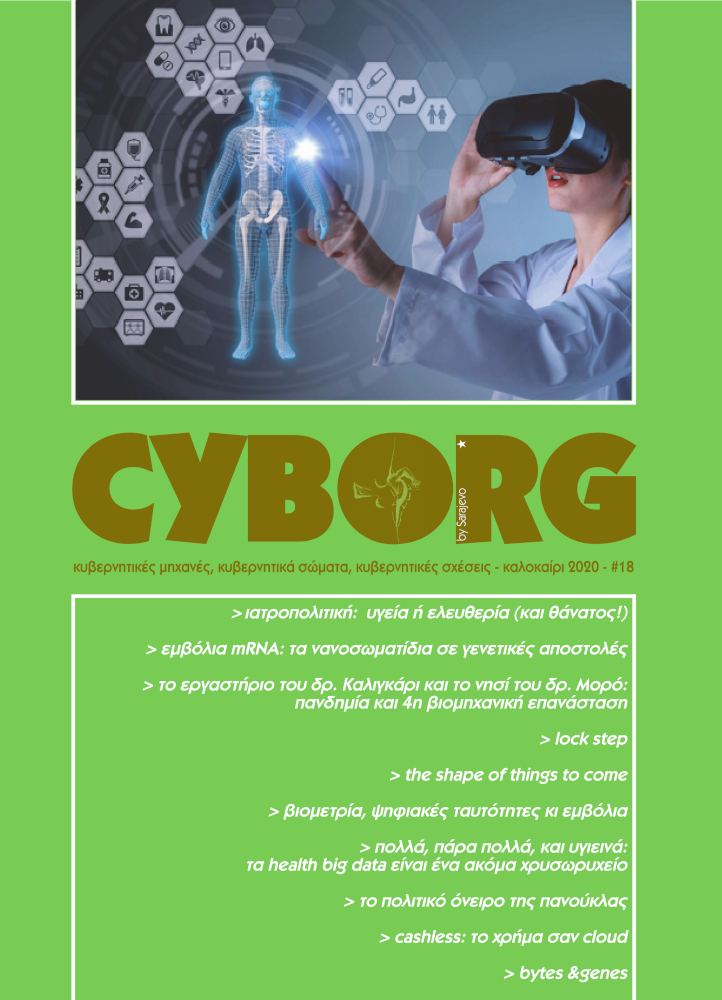
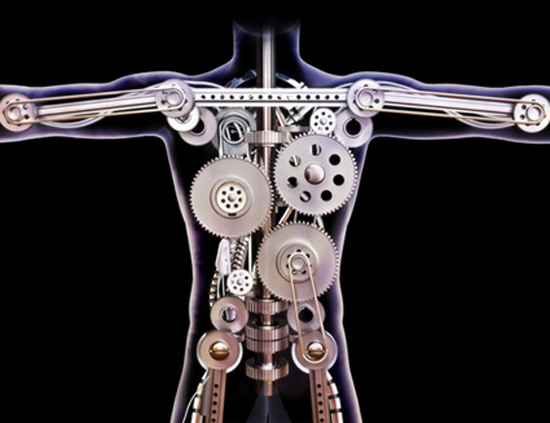
medical politics: health or freedom (and death!)
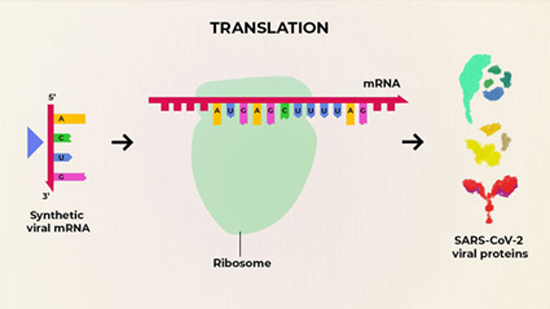
mRNA vaccines: the nanoparticles in genetic missions
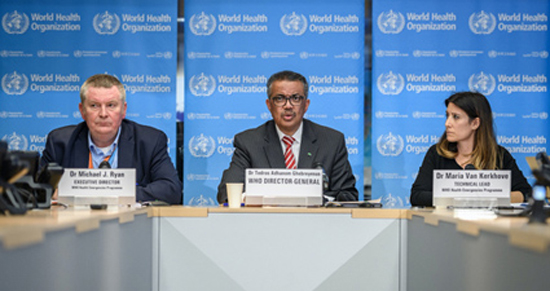
The cabinet of Dr. Caligari and the island of Dr. Moreau: pandemic and 4th industrial revolution

lock step
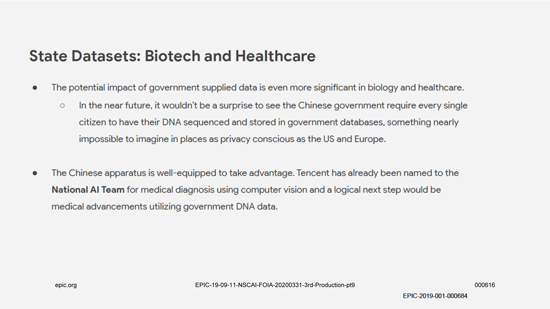
the shape of things to come
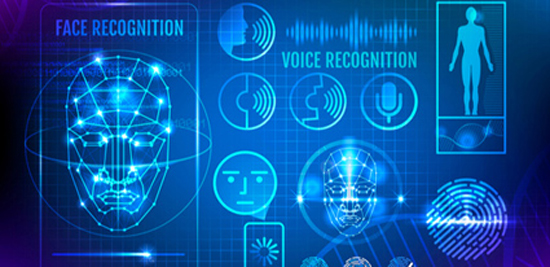
biometrics, digital identities and vaccines
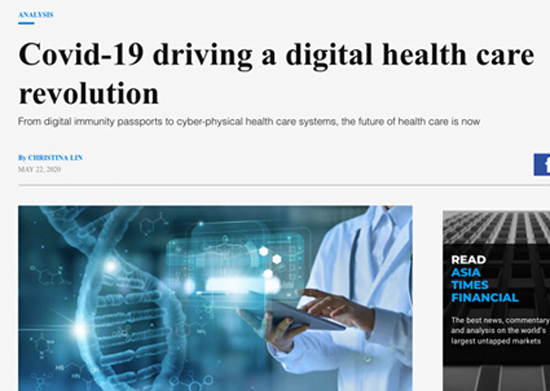
many, very many, and healthy: health big data is yet another gold mine
Plague’s political dream