augmentation? It has been said about this particular company (Apple) that it is engineering “paradigm shifts” in the field of communication and governance. Let’s just say that this is a euphemistic mention. The launch of the Vision Pro, however, is a good entry point into what its engineers call “spatial computing,” while in today’s jargon it is referred to as “augmented reality.”
As one might expect, such bold leaps have realistic hopes of success if they enter through the avenue of entertainment, broadly defined. The Vision Pro is a kind of “glasses” device that, through a rather successful illusion, creates within the confines of the “visor” (not far from the eyes) screens and “desktop surfaces” that appear to float transparently within the field of vision. Navigation through these digital environments is done via iris movements, and of course voice commands also function.
Whether we consider it an exaggeration or not, we believe that what constitutes a real leap is that the Vision Pro organizes and reorganizes gestures — hand movements, and ultimately bodies.
It is widely known that a series of visual technologies, dating back to the 19th century, have already captured (“trained” and essentially modified) the sense of sight. It is also known that after the (traditional) keyboard, which extended the gesture of the typewriter, and then the “mouse,” which organized a simulated, mediatized gaming movement, it was smartphones that not only captured the hands (beyond the gaze and cognition), but also reorganized the movement and use of the fingers — of one hand.
From this perspective, the “augmented reality” of the Vision Pro (and similar gadgets to follow) represents a significant modification of the “role” of the hands. Imagine something like a “touchscreen” that exists only on the lens (a few inches from the eyes) but appears to float transparently in space, a space that seems real but is actually a non-space. Now imagine that you interact with this “touchscreen” by moving fingers or even hands “in the air,” without actually touching anything: micro-cameras on the outside of the Vision Pro glasses “read” these hand/finger movements and translate them into “invisible” actions on that transparent surface — here you “tap” an icon, there you drag the screen to zoom in or out. With a bit of training, you’ll even be able to type “in the air,” without a physical keyboard.
The first users of the Vision Pro are already circulating publicly — in New York and other American cities, for now, but we assume it will soon reach our parts of the world too. They walk around gesturing, sitting, standing, in any posture: this is the kind of bodily behavior that, until recently, would have been attributed to “crazy people.”
Obviously, they are not. Walking down the street and talking to oneself — sometimes loudly arguing — also seemed odd at first, until the tiny Bluetooth device restored the (new) reality. A social one, of course.
Something similar, at a “higher level,” is suggested by this kind of machine vision that allows you to “see something that no one else sees” (unless they are similarly wired and “synchronized”) within that old-fashioned thing called normal, three-dimensional space. The codes of bodily movement are “broken” and reassembled on an illusory basis — and with them, the normal, three-dimensional space is also broken and reassembled on the same basis: it becomes, more or less, the “noise” around the virtual... (We say “normal” because even within the illusions of the Vision Pro, three dimensions can, optionally, exist.)
To the extent that this device, or some of its developments (and surely there will be such developments), becomes cheaper than it is now (in our regions, the price exceeds 3,000 euros) and its use becomes widespread, the gadget whose usage will be threatened will be the most celebrated and commonplace so far: the “smartphone.” There doesn’t seem to be anything the latter serves that the former cannot also serve. Moreover, this “augmenting” device joyfully ushers in the shadow of the entire illusory universe that is now at the gates. Into the (digital) “experience.” Into the (digital) “lived reality.”
Smartphones will become... “archaeology.” As for experiences and lived realities without quotation marks? Perhaps future archaeologists will remember them.
Ziggy Stardust
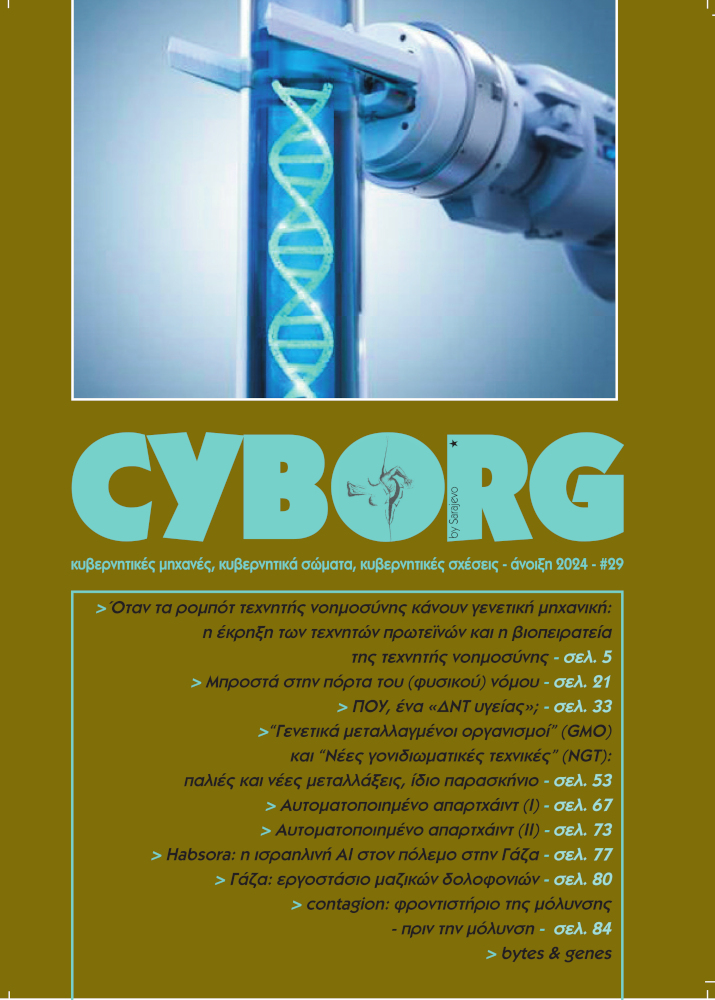
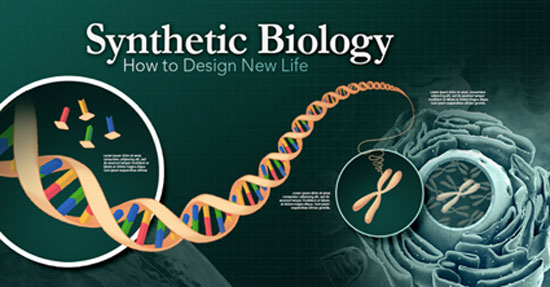
When AI robots do genetic engineering: the explosion of artificial proteins and the biopiracy of artificial intelligence
In front of the door of (natural) law

WHO: The IMF of health?

“Genetically modified organisms” (GMO) and “New genomic techniques” (NGT): old and new mutations, same background

Automated apartheid (I)
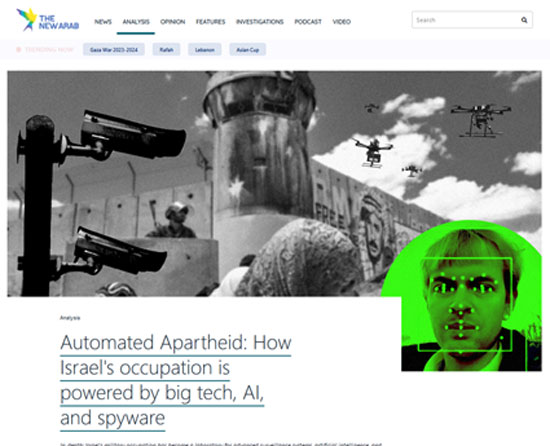
Automated apartheid (II)

Habsora: the Israeli AI in the war in Gaza
Gaza: factory of mass murders