
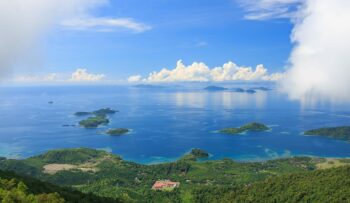
The following text1 can be read as a continuation of the one titled “life at the butcher’s counter“. With a different focus, they show the same thing: how the so-called “climate crisis” has become the “umbrella” for new business ventures and plundering…
On October 28, 2021, political leaders of the Malaysian state of Sabah on the island of Borneo signed an agreement with the Singaporean company “Shell” Hoch Standard, ignoring indigenous communities, granting the company the exclusive right to manage and trade “natural capital / ecosystem services” in two million hectares of forest ecosystem for one hundred to two hundred years. Although the full content of the agreement has not been disclosed, journalistic investigations and a complaint filed by Adrian Lasimbang, an indigenous leader in Malaysian Borneo, revealed that the Nature Protection Agreement allowed Hoch Standard – a shell company with two employees and declared capital of only $1,000 USD, but supported by unknown private investment capital of several billion dollars – to acquire commercial rights to the natural capital of Sabah’s forest ecosystem. The revenues from rights to ecosystem services, such as water provision, carbon sequestration, sustainable forestry and biodiversity conservation, over the next century were estimated at approximately $80 billion, with 30% or $24 billion going to Hoch Standard. It was stipulated that the Sabah government could not cancel the agreement, while Hoch Standard could sell its rights to the natural capital of the Sabah forest to other investors without government consent. Singaporean citizen Ho Choon Hou, who allegedly falsely presented himself as director of Hoch Standard (he was not among its executives, but is said to be a project director and strategic financier of Hoch Standard), is the managing director of the private equity company Southern Capital Group, which focuses on company acquisitions. Financial documents revealed that Hoch Standard, as a shell company, lists only one shareholder, Lionsgate Ltd., a company registered in the British Virgin Islands, where, as a tax haven and base for “black money”, it is prohibited from disclosing the names of company shareholders.
The Nature Protection Agreement between the government of Sabah and Hoch Standard was facilitated by the Australian corporate advisory firm Tierra Australia, which specializes in the financial valuation of natural capital. Peter Burgess, managing director of Tierra Australia, defended the exclusion of indigenous populations from the agreement with a neocolonial, racist perspective, claiming that if it were necessary to “sit around every fire” talking to indigenous populations about the “jungles” where they happen to live, absolutely nothing would get done. According to Burgess, the indigenous communities—there are thirty-nine indigenous national groups in the forest reserves of Sabah, comprising a population of over twenty-five thousand—”in reality do not know that their jungles … will be preserved for 200 years” thanks to the agreement, which aims at “restoring their jungles,” providing benefits so they can “develop … by returning to normal society.” Tierra Australia is closely connected to major multinational banks of the capitalist core, such as Credit Suisse and HSBC, along with major Singaporean banks, which have been heavily involved in natural capital investments. It has collaborated with Hoch Standard, along with Harvard, the Massachusetts Institute of Technology, and Cornell, in creating natural capital platforms for private investments.
The two main supporters of the Sabah-Hoch Standard agreement were Stan Lassa Golokin, who signed on behalf of Hoch Standard, and Jeffrey Kitingan, who represented the government of Sabah. Golokin is a business partner of Burgess in Tierra Australia and is connected to eleven companies registered in the British Virgin Islands. He was listed as an associate of four companies included in the Panama Papers, a database that leaked information on financial transactions of global elites. Kitingan is a deputy minister and state minister of Agriculture and Fisheries in Sabah and was a witness to the signing of the agreement by Frederick Kugan, the principal conservator of forests of Sabah. Kitingan has emerged as the main defender of the agreement within the Sabah government. During the 1980s and 1990s, both Kitingan and Golokin were involved in the Sabah Foundation, to which a million hectares of forest were concessioned for a century, to be managed based on sustainable yield. Kitingan was the director of the Sabah Foundation, while Golokin was the general manager of a company portfolio group for the commercial assets of the Sabah Foundation. As evidence of the exceptional corruption at that time, about 1.6 billion dollars from logging concession fees were lost under their management, while Kitingan’s personal wealth increased suddenly to 1 billion dollars during his nine years as director of the foundation. During the same period, Kitingan’s brother was the chief minister of Sabah.
Since February 2022, the Nature Protection Agreement between the Sabah government and Hoch Standard has been in a kind of legal limbo, according to the Sabah attorney general, as key aspects of the agreement are not binding or enforceable. However, while the Sabah-Hoch Standard Nature Protection Agreement is currently pending, it can be considered part of the global “gold rush” to secure rights to the world’s “natural capital” that is now underway. It is no coincidence that the signing of the agreement on October 28 for Sabah’s multi-billion dollar natural capital deal took place just one month after the New York Stock Exchange and the Intrinsic Exchange Group announced the creation of a new asset class in the form of natural asset companies, defined as financial instruments for owning, managing, and controlling global natural capital assets.
Just three days after the signing of the Hoch Standard agreement, the United Nations conference began in Glasgow for climate negotiations. This coincided with the launch and global promotion of the Glasgow Financial Alliance for Net Zero, which was advertised as a representative multinational banking and financial management entity that holds up to 130 billion dollars in financial assets, led by some of the same multinational banks, such as Credit Suisse and HSBC, with which Tierra Australia was associated. Golokin was present at the UN climate negotiations in Glasgow to seek global funding for the Nature Protection Agreement between Hoch Standard and Sabah, which is claimed to have been designed to exploit the “underutilized (lazy) assets” of the Sabah forest, a term referring to ecosystem services that have not been incorporated into the market. Burgess made a presentation at the International Heart of Borneo Conference in November 2021, aiming to attract investments in the natural capital of Borneo. He portrayed the natural environment of Borneo as a primary target for the global movement aiming at the “financialization of global natural capital.”
It is impossible to overstate the extent of this rush into the natural capital, which is now being promoted by global speculative finance, which since the Great Financial Crisis of 2007 – 2010 has tried to gain real property ownership over the natural environment in order to support the continuing expansion of debt. The conversion of so-called natural capital into marketable exchange value over the past decade is considered to open up almost unlimited opportunities for companies and money managers. In 2012, the Corporate EcoForum, a group of twenty-four multinational companies including Alcoa, Coca-Cola, Dell, Disney, Dow, Duke Energy, Nike, Unilever and Weyerhaeuser, published The New Business Imperative: Valuing Natural Capital in collaboration with the Nature Conservancy, insisting that the then “estimated $72 trillion value of ‘free’ goods and services” related to global natural capital and ecosystem services should be monetized for more sustainable development. The report emphasized the enormous debt “leveraging” opportunities represented by “emerging natural capital markets, such as water quality trading, wetland banking, endangered species banking, and natural carbon sequestration.” As a result, it was imperative to “put a price on nature’s value” or, as stated differently, “a monetary value on what nature does for… businesses.” The future of the capitalist economy lies in ensuring that the market pays “for what were once free ecosystem services,” which could create new economic value for those companies able to convert natural capital ownership titles into financial assets.
In 2016, more than fifty multinational corporations, led by companies such as Dow, Coca-Cola, Nestle, and Shell, joined with Conservation International in the Natural Capital Coalition (now known as Capitals Coalition) to develop the Natural Capital Protocol. This aimed at designing a framework for the monetization of global ecology, using constructed shadow pricing systems based on the market capitalist system. The Natural Capital Protocol was soon accompanied by other initiatives such as the Natural Capital Charter, which was introduced the same year by the International Union for Conservation of Nature.
Economist Robert Costanza and his colleagues assessed the “seventeen” ecosystems of the world in 2011 at 145 trillion dollars annually (in 2007 dollars). The net present value of these ecosystem services, with an interest rate of 1% for the remainder of this century, is estimated to be over 4 quadrillion dollars (4,000 trillion). This latter figure was promoted by the Intrinsic Exchange Group as (metaphorically) analogous to a virtually unlimited set of gold mines. Economist Wilhelm Buiter of Citigroup anticipates that “we will see a global integrated market for freshwater within 25 to 30 years. Once spot markets for water are unified, futures markets and other derivative financial instruments based on water will follow.… Water as a [natural] asset class… will ultimately become the most significant asset based on a natural commodity, surpassing oil, copper, agricultural commodities, and precious metals.” Under this perspective, global freshwater resources, which represent one of the planetary boundaries determined by nature itself, will be monopolized as natural capital by relatively few companies that will be able to extract revenues for ecosystem services.
The plans for the dispossession and accumulation of natural capital by global finance capitalism today primarily target the Global South. According to the UN Environment Programme, the spatial mapping of natural capital shows that there is “a high concentration of terrestrial ecosystem assets in equatorial regions, particularly in the Amazon of Brazil and the Congo Basin.” Marine ecosystem assets are highest in Southeast Asia (the South China Sea) and along coastlines. Indigenous regions cover approximately 24% of the Earth’s surface and “contain 80% of the planet’s remaining intact ecosystems and areas of global biodiversity priority,” making these regions primary targets for dispossession and conversion into marketable natural capital. Sub-Saharan Africa is a target, since “around 90% of the land is estimated to be unowned,” resulting in many indigenous communities who have lived in these areas for countless generations and lack formal land ownership titles losing access to this land due to its “lawful” plunder by corporations. The African Forum for Green Economy, in collaboration with the Natural Capital Coalition and the World Wildlife Fund, declared in 2020 that “natural capital is part of a broader economic system,” implying that Africa’s ecosystems can be fully integrated into the capitalist economy.
The consequences of this rapid financialization of nature, which promotes a Great Dispossession of global commons and the commodification of humanity on a scale that exceeds all previous human history, are immense. This Great Dispossession is justified with the rationale of saving nature by turning it into a market, thus replacing the laws of nature with the laws of commodity value. However, not only is the logic behind this mistaken, but it is also likely to exacerbate corresponding massive economic bubbles, while simultaneously accelerating the destruction of planetary ecosystems and the Earth as a safe haven for humanity.
In order to understand the monumental absurdity of the commodification of land, it is necessary to conduct a theoretical investigation into the classical critique of the “fetishistic character of capital” and the confusion between real wealth and debt, as developed in the work of thinkers such as Karl Marx and Frederick Soddy. This will allow us to understand the necessary conditions for defending the land against current financialization, which demands the largest alliance of workers, peoples and movements in human history.
The myth of the inherent power of capital: Marx and Sontag
In his critique of the “fetishistic character of capital” in the Grundrisse and Capital, Marx emphasized the views—far surpassing the “fantasies of the alchemists”—of the British political economist and dissenting minister Richard Price, a friend of Benjamin Franklin and Joseph Priestley, who lived at the end of the 18th century. Price claimed that, through the magic of compound interest, a universe of wealth could be acquired. In his 1772 sermon to the Public on the Subject of Public Debt, Price went so far as to declare: “A PENNY, at 5% interest from the time of our Saviour’s birth, would have increased to a greater sum than all the gold in 150 million worlds like the Earth.”
For Marx, this assessment of Price was a secular fantasy of “capital’s immanent power,” where capital becomes “a self-reproducing entity… a value that is preserved and increased due to an immanent property,” without any reference to real material and historical conditions. “The good rate of profit was simply obscured by the enormous quantities arising from the geometric progression of numbers… He considers capital as something that acts on its own, without taking into account the conditions of reproduction or labor,” or—as Marx also insisted—the material conditions and the limits imposed by the earth itself. With capital thus conceived, according to Marx’s words, “as merely a self-increasing number,” Price “was able to believe that he had discovered the laws of development in this form.” Indeed, for Price, according to Marx, capital was “a self-activating automation,” incorporating “an immanent property of preserved and increasing value.” How capital accumulation actually occurred, together with its limits and contradictions, was “quite insignificant to him,” since all of this was replaced by “the immanent quality of interest-bearing capital.” Consequently, for Price and those he influenced, Marx wrote, “Adam Smith’s theory of accumulation” for the wealth of nations becomes “the enrichment of a nation through the accumulation of debts.” Here, “the fetishistic character of capital” is complete.
In Marx’s critique of political economy, all human production has a real basis in a “material substratum… supplied by nature without human intervention,” while the labor process “mediates the metabolism between human and nature.” A commodity has a dual aspect both as use value of physical materiality that covers social needs, and as exchange value creating surplus value for capitalists. Use values, which constitute real wealth, were the product of both nature and human labor. A specific use value “does not hang in the air. It depends on the natural properties of the commodity and has no existence apart from it.” Human labor itself had a dual character both as material-biophysical force, transforming the use values of natural matter through production, and as generator of exchange value / value under capitalist conditions. It was the conflict between producing commodities as use values on one hand, and exchange value on the other, that lay at the core of all capitalist contradictions. What nature itself provided, apart from labor time, was in the capitalist system a mere “gift…to capital” and was not directly incorporated into the calculation of value production, since it was treated as a simple external factor. However, the monopolization of rare land/nature elements led to monopolistic ground rents, which were extracted from the overall surplus value that filled the coffers of natural resource owners.
Marx’s analysis led to the concept of the “robbery of nature,” the theft of nature’s fundamental components of production, and thus to the creation of a metabolic rift between nature and society, characterized by the soil crisis of the nineteenth century, during which essential nutrients of the soil were transferred to new urban centers of industrial production, where they contributed to pollution and were lost to the land. In the political-economic critique of Marx and Friedrich Engels, the material conditions of production were incorporated into the developing science of thermodynamics of their time, which emphasized the environmental/energy limits of production. According to ancient Epicurean materialism, nothing came from nothing, and nothing that was destroyed was reduced to nothing. Marx cited the statement of Pietro Verri that “all phenomena of the universe, whether produced by the hand of man or by the universal laws of physics, should not be understood as acts of creation but exclusively as rearrangements of matter.”
In neoclassical economics, as it emerged in the late 19th and early 20th centuries, in contrast to classical political economy, the concept of natural use values was removed from the basic framework of economic analysis, leaving only exchange value as the notion of wealth. Land, as a factor of production—assuming that human capital could substitute for it—was ultimately entirely excluded from the neoclassical productive conception, which consists simply of labor and capital. Consequently, all essential relations of capital with nature were erased, along with any perception that material production depends on the laws of thermodynamics. The idea that capital growth was in any way constrained by the natural environment was also eliminated.
All of these fed the myth of capital’s inherent power. As ecological economist Herman Daly has written, “Perhaps the paradigmatic example of failed concretization [reification] in economics is ‘money fetishism,’ which applies the characteristics of money—its symbolism and its role as a measure of wealth—to wealth itself. Thus, if money can grow forever through compounding, then perhaps [real] wealth can do the same,” as if there were no natural limits.
The ecological/energy critique of money’s inherent power, introduced by Marx, was further developed a century ago by Frederick Soddy, the 1921 Nobel Prize winner in Chemistry and a pioneer in ecological economics, starting with his 1922 publication Cartesian Economics: The Bearing of Physical Science upon State Management. Soddy was one of the pioneers in studying radiation, introducing the concept of isotopes. 29 He was concerned early on about the destructive potential of exploiting atomic energy, stating in his 1926 book Wealth, Virtual Wealth and Debt: “If the discovery [of how to release atomic energy] were made tomorrow, there is no nation that would not put into its heart and soul the duty to apply it to war, just as they are now doing in the case of newly developed chemical weapons of poisonous gases… If [atomic energy] were to come under existing economic conditions, it would mean the reduction to absurdity of scientific civilization, a rapid extinction instead of a not prolonged collapse.”
Soddy viewed the capitalist economic system, particularly the debt economy that this system encouraged, as the greatest threat to global stability. In the early 20th century, during his most productive period as a chemist in Glasgow, he encountered socialist ideas, especially the romantic-radical tradition, the main inspirational sources of which at that time were figures such as Percy Bysshe Shelley, Thomas Carlyle, John Ruskin, Walt Whitman, and William Morris. This was a crucial environment influenced by Morris’s Socialist League and the development of community socialism. The miners’ strike of 1911–12 paralyzed British industry and highlighted the dependence of production on energy derived from fossil fuels, with Soddy pointing out at the time that the modern economic world had found its foundation in this specific form of low-entropy matter/energy.
Soddy was involved for several years in the Independent Labour Party. In 1918, he joined the newly formed National Union of Scientific Workers, through which he became closely acquainted with the zoologist, Marxist, hyper-materialist and author of An Outline of Psychology, Henry Lyster Jameson, with whom Soddy had extensive correspondence. In the context of his correspondence with Jameson, Soddy began studying Marx and Ruskin, as well as the work of the late nineteenth century banking and credit theorist, Henry Dunning Macleod.
The result of these studies was Cartesian Economics (originally two lectures presented at the Student Unions of Birkbeck College and the London School of Economics), in which Soddy challenged the inherent power of money. Cartesian Economics was published in the same year as Soddy’s Nobel lecture presentation in 1922 and marked a decisive turn in his work from research in chemistry to the critique of economics and the role of money derived from the energetic perspective of thermodynamics.
Soddy, like Ruskin, entered the economic discussion as an outsider having only a rough knowledge of economics itself, combined with a radical disposition. As a result, his views have generally been ignored by professional economic analysts. Approaching economics from the perspective of physical science, he reintroduced the concept of real wealth as useful embodiment of matter/energy, thus challenging the exchange-value orientation of capitalist economy. Like Ruskin, he saw wealth as life or as metabolism, related to the rational use of energy flows, which ultimately originate from the sun. Wealth was “the humanly useful forms of matter and energy.” All human production had its roots in energy flows, and from this the real wealth was composed.
In this context, Soddy revived the perspective of use value in classical political economy, viewing real wealth as consisting of use values of natural material, distinguishing it from exchange value and simple economic claims to wealth. Through John Stuart Mill, Soddy emphasized the Lauderdale paradox, named after James Maitland, the eighth Earl of Lauderdale, according to which the destruction of public wealth increases private wealth. By highlighting the Lauderdale paradox, Mill had pointed out the destruction represented by a situation in which clean air became so rare and monopolized that it could be transformed into a commodity, thereby enhancing private wealth at the expense of the community through the monetary exploitation of nature’s “gift.”
The main error of the capitalist economy, according to Soddy, was the confusion of real wealth, which is governed by physics, with money/debt, which was a mathematical quantity. Money itself should primarily be considered as a commitment to future production and, therefore, as a debt of the public (the issuer of the currency) to the holder of the money. All “debts” in a commodity economy, he argued, “are subject to the laws of mathematics and not of physics,” and thus are separated from natural processes and limits. In the case of money/debt, the law of entropy—the tendency of natural systems toward greater disorder—did not apply, but was replaced by the magic of compound interest. Real wealth, on the other hand, came from solar energy and photosynthesis, and was inherently limited and subject to the law of entropy—although it could, nevertheless, be further developed in terms of utilizing energy flows. Following Aristotle and Ruskin, Soddy argued that the economy as practiced by capitalism had taken the form of chrematistics or the mere art of acquisition, rather than economy or household management (from which the words economy and ecology originate). The economic successes of Britain and other developed economies, he contended, stemmed primarily from the exploitation of energy from fossil fuels and the practice of modern imperialism, in contrast to the illusion of the inherent power of capital.
Soddy emphasized repeatedly Marx’s insistence that real wealth in the form of use-values had its roots both in nature and in material labor (the latter being itself a force of nature). If, in Marx’s critique of political economy, as Soddy explained, the exploitation of socially necessary labor power was the sole source of “exchange value or money-price” in capitalism, this had to be distinguished from real wealth, where nature and labor together formed the fundamental bases—something that many of Marx’s own followers failed to understand. Marx, therefore, had underscored the natural-physical basis of wealth. However, although he expressed admiration at various points for Marx’s analysis as he learned it from Marxist thinkers such as his friend Jameson, Soddy himself was not a Marxist. Moreover, by the time he wrote about the role of money in the 1930s, he had completely moved away from socialist critiques of capitalism and was interested in schemes for radical monetary reform. Unlike Marx, Soddy was not at all concerned with the social basis of value and capital—partly because, from the perspective of a natural scientist, he believed that plants engaged in photosynthesis were the ultimate sources of wealth—but more so due to the narrower issue of the conflict between the monetary world and the physical world.
Marx had harshly criticized Macleod for his alleged “discovery,” in The Theory and Practice of Banking, that “currency… is capital,” anticipating the issue of value. Soddy similarly saw Macleod as a fetishist of financial capital in advancing his argument that debt should not be treated as a “negative” quantity, but rather as a positive economic value in its own right. Indeed, for Macleod, “the great modern discovery is that it makes the debts themselves marketable,” and that it builds an entire upper-tier credit and financial system based upon this, which would increasingly govern the capitalist world. Banks, in Macleod’s terms, were “institutions with the express purpose of buying and selling debts,” or the “Debt Industry.” Macleod’s emphasis on how banks under capitalism internally (or endogenously) created credit money out of nothing, combined with the explosive character of compound interest divorced from all relations with the physical world, expressed for Soddy the modern fetishism of money deeply embedded in the capitalist economy, which, in its irrational economic explosion, endangered all existence.
Indeed, according to Soddy, the extreme fantasies of capital, money and finance were leading the world towards final destruction. The delusional pursuit of a perpetual motion machine was pushing the world towards yet another global war, as country after country sought unlimited competitive expansion and all hell broke loose. Moreover, the mythical belief that compound interest had a real basis in material reality, in defiance of the law of entropy, created a set of unstable economic relationships that further threatened human self-sufficiency. If economics were not placed on a stable, physical foundation, the growth of the debt economy would drive humanity towards destruction. In his 1935 preface to The Frustration of Science, a work involving leading British leftist scientists such as J.D. Bernal and Patrick M.S. Blackett, Soddy referred to the loss of soil productivity and the general waste in the economy, arguing that society must be governed by its productive elements that deal with “the creation of its wealth and not its debts” and that maintain a connection to the land. Science “must tell the truth when the sky falls on our heads.”
As Daly explains, commenting on Soddy, in Capital, Dept, and Alchemy, capital, when defined in economic terms, is an expected “eternal net flow of income” derived from an underlying asset “divided by the assumed interest rate and multiplied by 100.” Current money is created through the calculation of a “permanent claim on the future real output of the economy.” Therefore, the capitalist growth economy, while continuing to profit from its creative destruction along the way, ultimately faces the physical limits of a terrestrial system, which does not grow exponentially like compound interest. Real natural wealth, originating from nature and ultimately from solar energy, is subject to the law of entropy and cannot generate endless rapid growth, unlike “symbolic monetary debt!” The conflict between finance-based economic expansion and society’s ecological foundation is thus inevitable.
The Exploitation of Nature as a New Ecological Regime
The year 2009 will be remembered in world history for two global destabilizing events, each representing a significant turning point. Not only did 2009 mark the peak of the Great Economic Crisis, which began in 2007 in the United States, but it also signified the exceptional failure of climate negotiations in Copenhagen. Paradoxically, when the financial explosion that characterized modern monopolistic financial capital was immediately renewed afterwards, it was set to be combined with the search for new bases of real assets from which global financialization could further benefit. This search immediately focused on the financialization of ecosystem services, which had not previously been incorporated into the economy, based on global carbon markets and environmental protection financing, offering as a solution to the global ecological crisis the monetization of land, thus creating a new financial ecological regime.
The concept of natural capital, we should remember, emerged in the early 19th century, before the term capitalism itself, in an effort to defend land and natural resources from the developing logic of industrial capitalism and the dominance of exchange value. In this initial context, it was argued that natural capital or the stock of capital of the earth—a term that emerged at the same time—should become an object of defense against the artificial capital created by the system of cash flows. This use of the concept of natural capital, as an embodiment of the use value of the natural materials upon which production is based, was maintained throughout the twentieth century, but in the last three decades it has given way to a concept of natural capital in terms of exchange value, and was therefore understood as a tradable asset that can be integrated into the capitalist economy. This is what George Monbiot, in a 2014 talk at the Political Economy Institute of Sheffield, called “The Natural Capital Agenda: pricing, valuation, monetization, financialization of nature in the name of saving it.”
A turning point from this perspective was an initial 1997 article titled “The value of global ecosystem services and natural capital” by Costanza and his collaborators, aiming at pricing the planet. This was based on a reductionist approach that applied an artificially constructed pricing system derived from capitalist market relations to significant aspects of a given “ecosystem service” or function, such as atmospheric oxygen production or hydrocarbon synthesis by plants. Each ecosystem service was then assigned a uniform dollar value, followed by the aggregation of the world’s “seventeen” ecosystem services. Such a system of imposed market values relies on treating the asymmetric natural processes as comparable. In such an accounting of the Earth, demand curves are constructed by determining consumers’ willingness to pay. However, since there are no real markets for ecosystem services—that is, they are not essentially commodities that are actually purchased—consumers’ willingness to pay is calculated through various methods, known as contingent valuation and hedonic pricing. In hedonic pricing, valuation is done by drawing parallels with narrowly related services that are commercially available. Thus, in the United States, a category known as wildlife fish user days has been used to calculate the value of various species of wildlife in cost-benefit analyses—for example, to determine whether it is economical to eliminate wildlife by constructing a dam. In calculating wildlife fish user days, various forms of wildlife are valued according to the average monetary amount that an individual amateur is willing to pay to hunt a particular species of wildlife with the expectation of killing it, thus determining its value. Similarly, the value of a specific area of wilderness is determined in hedonic pricing by consumers’ willingness to pay at a parking lot to visit it. Contingent valuation, on the other hand, takes the form of creating hypothetical markets based on which consumers are asked to determine what they would hypothetically pay for a particular environmental service and what compensation they should receive for its loss.
Based on such studies of inferred consumer preferences, Costanza and his colleagues apply a “benefit transfer” (or value transfer) method, projecting some “defensible” value for a specific ecosystem service in a local context, such as the role of water purification of a specific river system, where consumer preferences are given, and then extending it to entirely different ecological contexts, in which no studies have been conducted. Subsequently, the results are aggregated to determine the price/value of the ecosystem service on a planetary scale. This same method is applied to the “seventeen” identified global ecosystem services in order to price the planet as a whole.
The object of these complex exercises is to assign a value to ecosystem services or natural assets that are currently outside the market. The justification offered for this is that, if economic value is not given to nature’s services, they will continue to be treated as a gift or “externality”, to be stolen. However, according to the words of heterodox economist Gay Standing, while it is argued that “if you don’t put a price on every piece of nature, it won’t be considered to have value”, it is nevertheless true that “a price only comes when something is for sale, when it becomes a commodity”. The UK government now supports that landowners, due to their mere possession and monopoly of land, are “ecosystem service providers” who deserve to receive monetary compensation for providing these land-related “services”, which were previously considered gifts of nature, such as ecosystem services of water purification, crop pollination, biodiversity and carbon sequestration. (Of course, in many cases, especially in conventional farms, current practices usually cause ecosystem “damages”, such as water pollution and biodiversity loss). The monetization of the environment thus allows a massive expansion of the circuit of exchange value and monopolistic revenues in the name of ecological sustainability. According to Monbiot’s words, this means that “you essentially push the natural world even further into the system that eats it alive… All the things that were so harmful to our living planet are now sold as its salvation. Commodification, economic growth, financialization, abstraction. Now, we are told, these destructive processes will protect it”.
The laws of capital movement are governed by the process of accumulation. The acquisition of revenues from the environment ultimately means its attraction to the market and subordination to the uncontrolled dynamics of accumulation, for which a rational, sustainable relationship with the environment is by definition impossible. For example, according to established principles of forest management in capitalism, a forest consists of so many million cubic feet of timber. Such timber services, according to the market rule, should be “harvested” whenever the current interest rate exceeds the rate of increase in the value of the timber, which is determined by the natural growth rate of the trees. Given that in an old-growth forest, where trees are sometimes a century old or more, the growth rate of mature trees is greatly reduced, falling below the interest rate, the market demands that this old vegetation be liquidated on-site. To be replaced by newer, faster-growing trees. These will be cut within twenty to thirty years, with chemical substances being increasingly applied during wood processing in order to compensate for its lower quality.
Generally, the monetization of the complex biological-physicochemical fabric of the Earth, even in the name of its protection, will tend to replace natural systems of reproduction and evolution with reductive, market-based criteria, the goal of which is profitable expansion. Following market rules, ecosystem services are analytically integrated into commodity markets where a given accumulation of private wealth predominates. However, this contradicts the sustainable demands of ecosystems, indeed of the Earth System. In the capitalization process, global commons will be fragmented and monopolized by a few private interests, which will convert them into revenue streams combined as financial assets, including various types of stock exchange derivatives.
Regarding the actual conservation of natural assets, a “mixed” economic arrangement is usually adopted, whereby governments bear most of the cost, owning and investing in forests, while private companies reap the benefits, taking a disproportionate share of the resulting revenues. Today, alternative funding sources such as carbon credits and debt financing, piled on top of already excessive debt burdens of developing countries, make forest investments marketable and more profitable for international capital. In the voluntary carbon market, carbon credits, offered for already existing forests (with indigenous inhabitants), can be purchased or subjected to financial management, so that they supposedly constitute compensation for carbon emissions elsewhere in the global economy, thus making actual emission reductions unnecessary. Carbon credits can be obtained by simply liquidating a natural capital asset more quickly than would supposedly occur otherwise. However, some of the problems associated with using carbon offsets—apart from the fact that polluters are not actually required to reduce their pollution levels—can be seen in cases where the very forests exchanged as emission offsets elsewhere have already burned extensively in the large global forest fires caused by climate change, thus increasing carbon dioxide emissions.
In 2012, the UK’s Ecosystem Markets Task Force referred to the need “to harness the City’s financial expertise to evaluate the ways in which these combined revenue streams and securitisations [of natural capital assets] enhance the investment return of an environmental bond.” Commenting on this and the overall logic of the Natural Capital Agenda, Monbiot wrote:
What we are talking about is giving the natural world to the City of London, the financial center, to take care of. What could go wrong? Here we have a sector whose wealth is based on creating debt. That’s how it works, by accumulating future obligations. We mortgage the future to serve the present: that is the model. And then this debt is sliced into debt securities with collateral and all the other wonderful constructions that worked so well last time. Now nature must be captured and placed under the care of the financial sector.… The same Task Force says that we must “unbundle” ecosystem services [from the rest of the Earth’s system] so that they can be traded individually.
Once unbundled from the rest of nature, these ecosystem services can then be repackaged as financial assets to promote economic gains. In today’s carbon market, focusing on offsets, financial interests purchase credits in bulk from suppliers to “bundle” them, combining various derivative instruments and pooling them together into portfolios comprised of carbon and offsets related to widely different forms of natural capital. Biodiversity financing within the framework of protection financing now includes mechanisms for “aggregation and bundling,” relating to “different ways of packaging multiple ecosystem goods and services, including biodiversity, for sale to environmental compensation systems or to attract incentive-based protection funding.”
As indicated in the Credit Suisse report for 2016 titled Levering Ecosystems, funding for protection increasingly depends on debt financing based on expectations of rapidly growing revenues from natural capital. Such approaches rely primarily on the concept of the “inherent power of capital” (what Marx called the “fetishistic character of capital”), combined with recognition of the increasing scarcity of natural capital, allowing the expansion of the circuit of exchange value for all ecosystem services. The economic goal under these conditions is “ecological credit financing,” creating a “mixed return” from managing natural capital “that can be astronomical.” The ultimate result, however, is to impose a system oriented toward economic growth and debt expansion over natural systems, which are naturally limited, and where the critical conditions are those of reproduction and sustainability. According to Burgess of Tierra Australia, in a report on the capitalization of global ecosystems, starting with the natural capital of indigenous populations in Australia and the state of Sabah in Malaysian Borneo, generating revenues from global ecosystem services can ensure an entirely new global financial system, providing through “its productive value… the underlying advantage for a stable universal medium of exchange.” In reality, what is meant is the leveraging of the global credit/debt system through the financialization of land, based on the dispossession of indigenous territories.
The negative consequences expected from the expansion of capital fetishism into nature as a whole are planetary in scale. According to a critical study by ecological economists,
Production systems that rely on high debt exert negative impacts on the economic system’s ability to enhance the sustainable use of natural resource stocks.… The debt-fed development model requires ever-faster growth rates to allow for the repayment of ever-increasing debt.… Thus, the profit-seeking behavior of businesses and speculative agents… leads to the improper use of credit (debt), which consequently brings about systemic instability… Economic systems based on debt may lead to the complete collapse of both natural and economic systems.
As John Maynard Keynes observed in The General Theory of Employment, Interest and Money in 1936, in the midst of the Great Depression: “Speculators as bubbles cannot harm a stable enterprise. But their position is serious when the enterprise is a bubble in a whirlpool of speculation.” Today, this has become even more serious, in an era when the “enterprise” that is being transformed into “a bubble in a whirlpool of speculation” is the metabolism of the Earth System itself.
The first published estimates of the global value of natural capital/ecosystem services led to celebrations in financial circles over this new “asset class” and the enormous market they foresaw, worth hundreds, if not thousands of trillions of dollars, now potentially open to appropriation and exploitation by capital. From this perspective, the pricing of the planet resulted in a massive increase in global wealth. However, operating on the principle of thinkers such as Marx, Ruskin, Soddy, and Daly, where real wealth consists of use-values of natural material, indeed the land itself, what was measured in the valuation of ecosystem services was not real wealth, but rather the increasing depletion of the world’s resources, their growing scarcity. Based on this, the realm of commodity exchange was strengthened—not for reasons of protection, but as a further basis for capital accumulation, representing an acceleration of the processes that had created metabolic rifts in natural ecosystem processes. The trajectory, for now, unless halted through global collective action, is toward a world of expanding destructive capitalism characterized by intertwined economic and ecological crises, based on the myth that nature can be transformed into a new profitable asset category.
Ecological Capital and Environmental Proletariat
Starting with The Poverty of Philosophy in 1846, Marx – who, like other social and radical critics, had initially referred to “natural capital” in terms of use value, offsetting it with exchange value and artificial human capital – had to abandon this approach, as it tended to naturalize capital itself. Instead, he made a distinction between earthly matter, that is, material existence, and the capital of the earth; between natural-material conditions and processes and the capitalization of the earth. Nature, or earthly matter, was eternal (in the sense of the first and second laws of thermodynamics), while earthly capital was not. The creation of capital of the earth, as a distinct social form, required the creation of titles of private property, and therefore the initial alienation of the land/soil, turning what was previously common into a realm of commodities of private value. The monopolization of land led to a system of rents, imposed by owners on the social whole, which were paid from the total production of surplus value.
Ralph Waldo Emerson observed that “nature is endlessly significant,” since as material beings, we must return to it in every action we take. Historically, materialist thinkers have traditionally referred to the “indissoluble unity” of humanity with the “universal metabolism of nature.” Today, however, nature has become alienated along with labor, forming the basis of the capitalist system of exploitation. The concept of natural capital, as used today, is nothing more than an attempt to extend this alienation to nature and to humanity as a whole, commodifying ecosystem services in order to create a new economic ecological regime: a social and historical relationship in which the entire earth is for sale. For Paul Hawken, Amory Lovins, and L. Hunter Lovins, capitalism cannot be said to exist unless it is “natural capitalism” that incorporates the totality of nature into its own logic.
The game with the logic of land alienation can be seen in the efforts of the neoclassical environmentalist Edward Barbier to promote the idea that ecosystems, extending throughout the Earth system itself, are nothing more than capital, designed in terms of exchange value. All existence is therefore capital. «If ecosystems… are considered capital assets», then by definition, he tells us, they are «natural capital» that must be captured in terms of exchange value. Consequently, natural capital as a whole represents the totality of global ecosystems, considered to be mere «forms of capital». All ecological problems for Barbier have a single solution: «to capitalize nature». From this perspective, nature, the Earth, the basis of all life and existence, which perhaps extends to the universe itself, is capital, measured in money. This even undermines the concept of Price regarding compound interest leading to wealth equal to «150 million acres, with their gold», since Price referred to a mathematical process of compounding—not to the idea that the Earth itself and the universe were nothing but solid capital. Here, we see the fetish of capital emphasized by Marx and Sontag in its most extreme form. Capital is not only considered as an inherent force. Now, in the fantasies of modern economists, it has essentially replaced matter itself, creating what Marx called «cosmic confusion».
The historical reality of capital as a system of social relations is concealed behind this fetishized concept of natural capital as an inherent force with potential monetary value, originating from the earth itself, replacing even the earth/nature/matter as the most fundamental element of existence. The monetization and financialization of the earth’s ecosystems, reimagined as limitless “natural capital,” is simultaneously a Great Dispossession, leading to a broader environmental proletariat (and ecological peasantry). The system of primitive accumulation, the enclosures, which was the basis for the creation of the industrial proletariat and the modern system of labor exploitation, has transformed into a planetary extremist, a system of plunder that encompasses the entire earth, leading to a more universal dispossession and destruction. The result is the creation of a global environmental reserve army of the dispossessed, a product of capital’s drive to monopolize the planet’s biogeochemical processes, at the expense of humanity as a whole.
The results of this rupture in the metabolism of the earth and in the social metabolism of humanity with the earth are evident everywhere, including in the most developed capitalist states, as witnessed by carbon markets and the privatization of water. However, the attack on nature/natural capital today is mainly directed towards the Global South, where the economic benefits from the appropriation of land in the name of natural capital management and offsets are the greatest. And it is here also that an increasingly deprived environmental proletariat is most clearly emerging. Everywhere, the class struggle of production converges with class struggles for environmental justice regarding food, air, water, and the conditions of social and ecological reproduction.
The global resistance of indigenous communities, together with peasant farmers who produce means of subsistence, against the increasing land grabs associated with the accelerated capitalization of nature is one of the most significant developments of our time. In the case of the attempt by Hoch Standard and the Sabah government to seize the natural capital of the forests of Malaysian Borneo, it is the indigenous communities, threatened with expropriation and displacement, who are on the front lines of the ecological and cultural resistance movement, defending the inseparable unity with nature. This struggle is taking place across all three continents of the Global South, and in regions of the Global North, an indication of how narrow the bonds are between neocolonialism and natural capital. In Kenya, for example, members of the Sengwer community—who over the past decade and a half have faced violent mass evictions under the threat of weapons, and the burning and destruction of their villages by the Kenyan Forest Service in alignment with international capital—are fighting to defend the forest and the natural water reservoirs (rainfall on mountains and highlands that become water sources for irrigation of lowland areas and human consumption).
Many African states inherited a dual land management system from the previous colonial era, which continued into the post-colonial period. In Zambia, for example, 94% of the land, until the beginning of this century, was utilized based on customary rights, while all land officially belonged to the state. Now, with land grabs caused by companies often supported by governments, indigenous and rural communities see their land being taken over by large foreign private enterprises. In Zambia, farmers are fighting against the economic dispossession of their land by Agrivision Africa, which has among its investors the International Finance Corporation of the World Bank. Some countries, such as Ghana and Botswana, have promoted laws that give traditionally controlled areas the legal status of private ownership. But in most of sub-Saharan Africa, indigenous land rights are weak in terms of private property. Given the increasing scarcity of resources and the relentless push for natural capital, indigenous and smallholder communities struggle to defend their lives, communities, and lands. In this context, the fact that such populations are generally the best land managers is often overlooked by companies in their effort to turn nature into gold.
The substantive basis for resistance to the colonialism of natural capital is agroecology, presented as a more rational ecological alternative. Via Campesina launched the Global Campaign for Agrarian Reform in 1999. The Landless Workers’ Movement (MST) in Brazil has also played a leading role in combating the capitalization of nature. According to João Pedro Stedile, the national coordinator of MST, “When you create a car factory, you expect to gain 13% profit annually. When you take control of a natural resource and turn it into a product, like water, for example, you have profits of over 700%. This is what they are seeking.” The massive farmers’ movement in India in 2020–21 represented a tremendous mobilization of small farmers against the growing dominance of agribusiness in Indian agriculture and efforts to turn land and food into capital. In the United States, the mass solidarity protests of 2020/George Floyd, largely stemming from the working class and youth in support of a Black-led movement, can be seen as an indication of the level of resistance to racial capitalism that is expected to erupt as material conditions, particularly in urban environments, become increasingly polarized.
In all these struggles and many others, the ultimate goal is sustainable human development, necessarily combined with resistance to capitalism, racism, colonialism, imperialism, and ecological destruction. Within this broader collective perspective, in harmony with natural science, human production is rightly considered complementary to natural material systems and cannot be reduced to a universal system of commodity value—based on the erroneous notion that all existence is commensurable and can be measured in monetary terms. The goals that guide the struggle for a sustainable future are necessarily those of substantive equality and ecological sustainability, together defining socialism in our time. Scientific criteria and criteria of human development are complementary elements in creating a comprehensive path toward an ecological future. Behind this lies the recognition that an exploitative system that believes in the “fetish character of capital” at the expense of all human existence and life on the planet can only lead, if unchecked, to ultimate destruction.
As Red Nation declared in the Red Deal2, the philosophy of money is what drives modern society and “the main method of relativizing its destruction. There is another word for a system based on money and expressing its existence through destruction: capitalism. Capitalism destroys life. It pollutes the rivers. It scars the mountains. It starves the deer, the wolves and the salmon. It alienates our bonds with each other and with the Earth. Its very existence requires our disappearance.” The only answer to such a destructive system elevated to a planetary level is a global struggle for nature and humanity, demanding the sovereignty of peoples over the earth and production. “The coming global ecological revolution” means “returning to humanity and our origin as good relatives” of the earth. It means rational regulation of the metabolism of human society with the universal nature of which we are an inseparable part.
translation – adaptation: Ziggy Stardust
- John Bellamy Foster – Monthly Review Volume 73, Issue 11 (April 2022)
Accessible at https://monthlyreview.org/2022/04/01/the-defense-of-nature-resisting-the-financializaton-of-the-earth ↩︎ - Organization of American indigenous peoples, which considers decolonization and Marxism as the means for the liberation of indigenous peoples. Founded in 2018. The Red Deal was a response and complement to the Green New Deal, which was published in 2021. ↩︎