
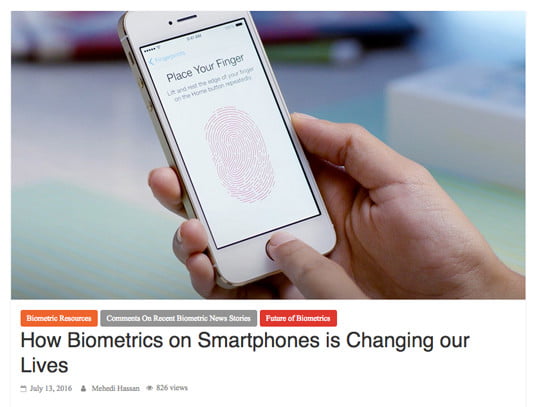
When one “locks and unlocks” one’s mobile phone with one’s finger feels safe… isn’t that right? That if it is lost or stolen it will not be able to be …
The data in the bank’s gis
400 million Indians will have to go through facial recognition to access their bank accounts. More than 400 million people in India who have bank accounts where benefits or various …
Technologies that make us sick
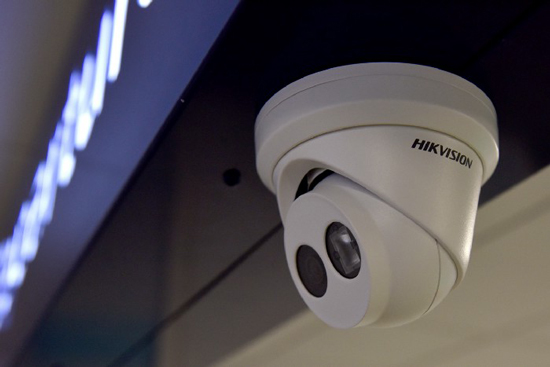
In just six months, fever cameras have become a hyper-developed industry In October 2016, a company named Sunell, based in Shenzhen, conducted an experiment: it installed thermal cameras and facial …
biometrics, digital identities and vaccines
Since 2016, ID2020 has been promoting an ethical, privacy-protecting approach to digital identity.For the one in seven people globally who lack the means to prove their identity, digital identity offers …
From small…
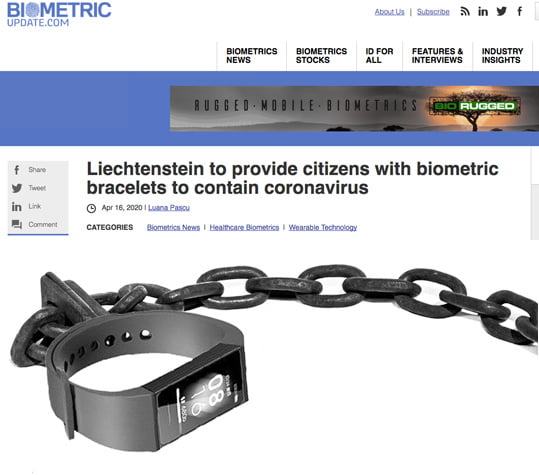
It’s a tiny, microscopic principality; its area is just a little more than 1/20 of Athens. A population of barely 40,000. Yet it has a capital called Vaduz. It’s mountainous, …
The smart surveillance weapons of the fourth world war
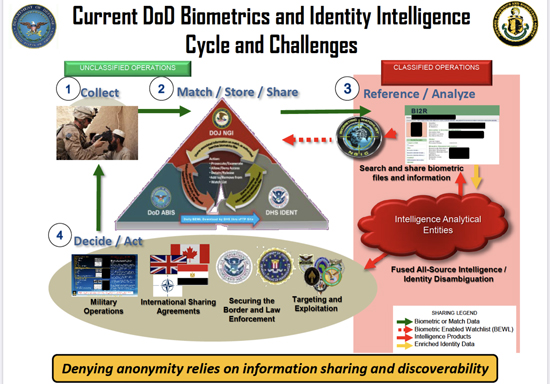
September 19, 2019: An attack by American drones in the Afghan province of Nangarhar resulted in the mass murder of 30 farm workers and the injury of another 40, while …
DIYbio: self-improvement in the 21st century

One would assume that biohackers are a marginal cosmopolitan phenomenon, some “geeks” here and there. Indeed, numerically speaking, biohackers may be few in number, for now. Ideologically, however, biohacking indicates …
portable, wearable, subcutaneous: the body as a motherboard

When the Swedish Epicenter (“incubator / greenhouse” for more than 100 startups in Stockholm) began planting passive microchips (RFID: Radio Frequency IDentification) in its employees at the beginning of 2017, …
- Page 2 of 2
- 1
- 2