
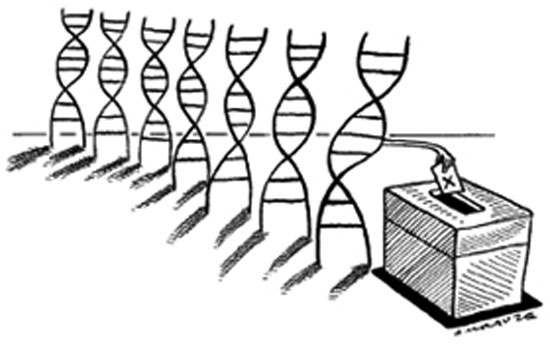
… In the past, political scientists were certain that social forces – among them, as the most significant, parents and the immediate environment during childhood – strongly influenced whether people …
cyberterritorial history

The evolution of cyberspace is both a quantitative and qualitative perspective that has followed the course of the Internet and network and computer technology almost faithfully. In 1991 the creation …
How did those living in the late 19th and early 20th centuries imagine the year 2000?
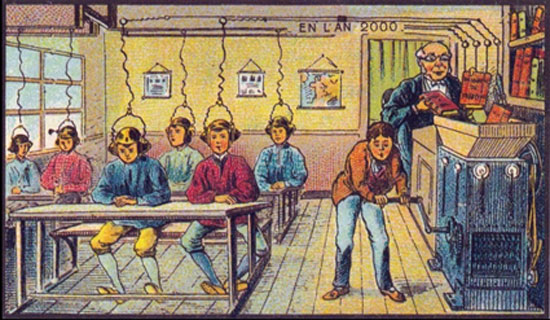
The strong impressions from the technical inventions and applications until then shaped the material of the imagination of those who had the time and inclination to predict the future. From …
“robotic scientist”
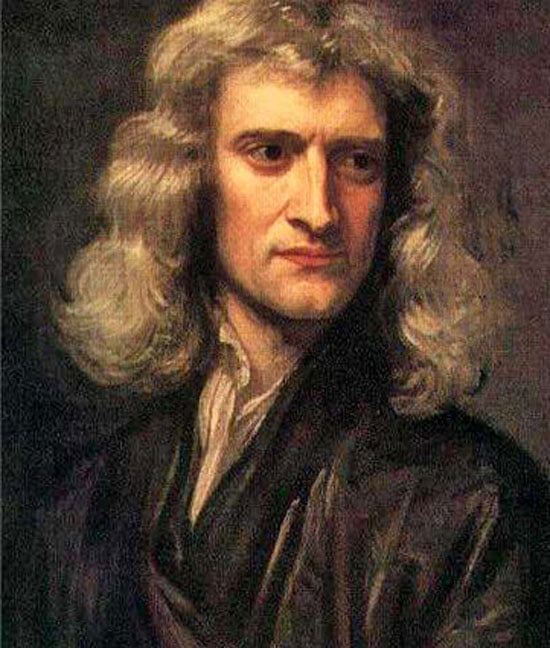
The person depicted is Isaac Newton. Now, an algorithm named “Sir Isaac” in his honor is, according to its creators, a small but decisive step toward the “robot scientist.” The …
About paradigm shift

The words paradigm change are used sparingly but steadily in recent decades in international commentary (or babble) when it comes to commenting on some of the changes (sometimes real and …
Do machines live?
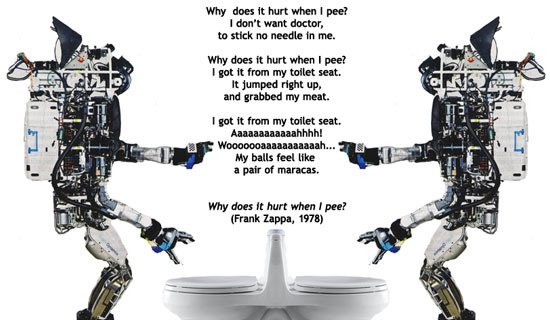
The same year that Norbert Wiener published his treatise on the “human use of human beings,” in 1950, another exceptional figure in the history of computer science, Alan Turing, posed …
The pregnancy of the cyborg

…Here I want to interject an important element: words like Life, Purpose, and Soul are completely unsuitable in pure scientific thinking. These terms acquired their meaning because we recognize the …
“A Cyborg Manifesto”: thirty years later
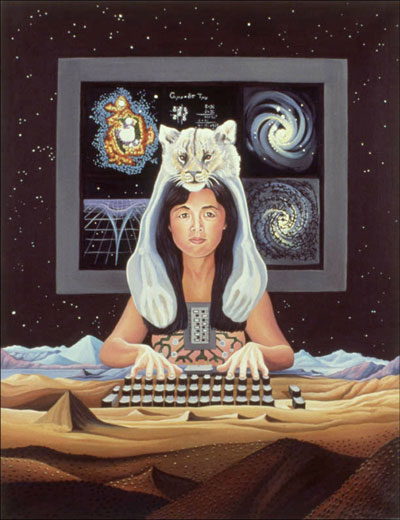
Cyborgs are ether, the quintessence We are now traversing the sixth decade since the writings of Manfred Clynes and Nathan Kline gave substance to the cyborg construct/artifact. Today, although it …
The piston, the worker, the hook: anatomy of cyborg ancestors

It is by no means necessary for someone to use a machine (from a smartphone to a robotic analyzer) to keep in mind how each wave of mechanization fits into …
the constructible body
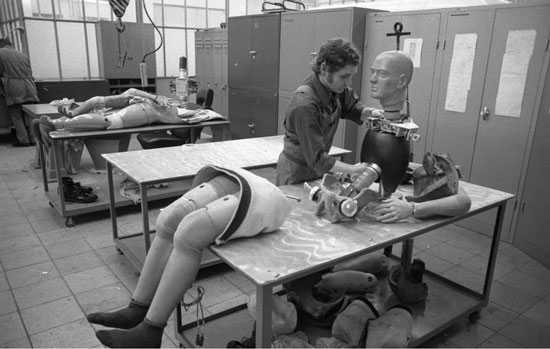
In the last decades of the 18th century and the first of the 19th century, the rising bourgeoisie constructed its own cosmology, its own reasons-for: for social relationships, for political …
Spirit: science as an idea

The following pair of texts, as a fictional juxtaposition of viewpoints, is directly related to two presentations/discussions organized by the game over assembly during the winter and early summer of …
the possibilities of post-humanism

In the summer of 1995, I visited the MIT Media Lab and met two graduate students who were working on computers that could be worn (wearable) and advanced human-machine interaction …