neurotechnologies > On one hand, we know it. On the other, we don’t. Water constitutes a significant part of our body—between 55% and 70% of our mass. A large portion of this water contains ions, that is, atoms that have either gained or lost an electron, resulting in either a positive or negative electric charge. Therefore, human bodily fluids (including water) can be considered electrolytes, as they are rich in ions. This means they can either function as weak electric current transmitters or act as “antennas.”
So far, nothing unusual—even by common everyday experience: for example, someone approaching the antenna of a small radio may cause interference. Or, under certain subjective conditions, one might touch something metallic and feel something akin to a mild electric shock.
The subjectivity in these not-so-uncommon experiences lies in how the animal (and thus human) nervous system “works”: through the flow of these positive or negative electric charges that shape the intensity, density, and frequency of neural stimuli. Ultimately, they determine the intensity, density, and frequency of brainwaves: those related to emotions and/or perception.
This natural, animal trait becomes literally “wild” when it falls into the hands of capital’s technicians and scientists. We already know about the use of electroshock therapy—which, after being semi-banned in the 1970s, has returned as a form of “treatment,” with all its side effects.
As early as the 1950s, the Spanish scientist Jose Delgado conducted experiments in the U.S. on “electrical brain stimulation”—experiments on animals. In 1962, another specialist, Allen H. Frey, created auditory hallucinations in humans using pulsed microwaves. Fifty years later, Frey accused American governments of having concealed experiments on the effects of microwave radiation on living (especially human) organisms, in order to prevent the public from learning about the development of related weapons.
But techno-science doesn’t care much for such accusations, especially when backed by state protection. Frey made his accusation in 2012. Just one year later, in 2013, then-U.S. President Obama signed the American state funding for the “BRAIN Initiative”—neurological research aimed at “mapping” the brain—with hundreds of billions of dollars. Related laboratories sprouted like mushrooms, aiming to “record” the electromagnetic activity of the human brain with precision down to tenths of a millimeter using imaging techniques.
These “scientific branches” known as “neurotechnologies” or “consciousness sciences” have firmly entered the main highway of progress… And, as always happens, when explanations are needed for the “general public,” ready-made “good intentions” are offered: Alzheimer’s therapy is their banner.
Of course, that’s not really what it’s about! Somewhere far away (as distant as the UN Human Rights Council), whether for the sake of arms control or because some genuinely fear the creation of neural weapons, on August 8, 2024, a resolution (A/HRC/57/61) was issued on “Protecting the Rights of Human Bodies and Functions.” Among other things, one might read (Chapter 2, paragraph 5) that:
“…The uniqueness of neurotechnologies lies in the fact that they allow direct, immediate connection between the human brain and external devices, and consequently provide the ability to interfere with moral and conscious functions. The unprecedented capabilities offered by neurotechnologies to external actors to influence individual rights raise serious ethical concerns and questions regarding the understanding of fundamental human rights principles. Neurotechnologies are unique in their potential for societal disintegration because, generally:
a) they allow exposure of conscious processes;
b) they permit direct modification of individual moral processes and thoughts;
c) they bypass personal conscious control and self-confidence;
d) they enable external access to thoughts, emotions, and moral states without consent;
e) they rely on ‘neurodata,’ essential for their operation, regulation, and efficiency improvement; and
f) they collect, analyze, and process vast amounts of highly sensitive personal data.”
There are many who will indignantly argue that such institutions (such as, for example, the “Human Rights Council”…) are outdated, full of “nonsense,” and should be thrown in the trash…
We know: the sanctification of mechanical innovations has always been one of the weapons of the ruthless when they hold power. At the end of the day, behind the illuminations and fireworks of techno-scientific “progress” here and there, what we constantly have before us (and have given up answering) is this: capitalist powers…
Z.S.


data: mine, factory … or?

digital technology encodes social relationships

our daily bread (the machine-produced one)
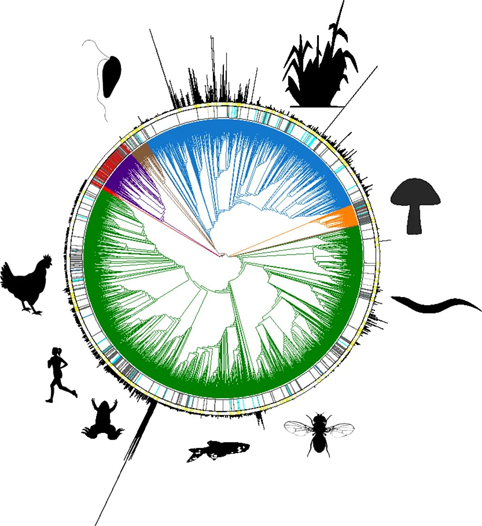
digitalization and recording of the genome: the case of biopiracy

the industry of illness and its profitable institutionalization (a few more notes)